Showing posts with label surrender. Show all posts

Saturday, February 29, 2020

Why Medical Matins was private, even after residency was over

As you may have read, this blog was private from December 2017 to February 2020. While I was thus censored by my institution, I continued smilingly recruiting for it, and then serving as a chief resident. It made the last year and a half of residency (already difficult because of the responsibilities of the role of an upper-level resident, the added weight of administrative chief duties, and the process of applying for fellowships) a white martyrdom.

Inside the Student Jail, Heidelberg, Germany.
CC License. Wikimedia Commons.
Gradually I opened up to more people about this event. But during it, I could tell few people how painful this was: two friends in the residency, one attending who happened to also be a personal friend, my family, and a few friends outside the program. I want to share a short post which was originally written on March 23, 2018. Writing this post two years ago, during outward silence, felt like scrawling on the walls of a strange prison. The topic of the post was what I should do with the now-private Medical Matins.
What should I do with the blog itself? I am tempted to post a lot of very unedited content while the blog is private, then launch it again as public when I am no longer employed by this institution (and no longer bound by amiable agreement not to publish it). I am tempted to leave the blog derelict, floating in the massive amount of online content, for others to find. I want this so that I don't have to do any more work, and yet so that others can think well of me if they find the good things available on the blog. 
I know derelict internet things die, and I don't want Medical Matins to die. It's a helpful outlet for me. The blog gives me an occasion to pray the litany of humility (which I set as the default text of each post before I replace it with the actual content of the post), and then organize my thoughts and prioritize my emotions using the blog.
And I think Medical Matins is good for others. At least half a dozen (I've never counted and I'm trying not to over-estimate) medical students and others have contacted me through this site to ask about pro-life and pro-NFP residency. And it's been found by others who have disagreed, and resulted in dialogue.
So why, you might ask, didn't the blog pop back up in July 2019 after I graduated from residency? Well, at the close of residency, I didn't ever want to fight anyone, ever, again. I didn't want to be called into offices, I didn't want to give explanations, I didn't want to be chastised. I didn't want to diplomatically meet with others about whether my chastisement was just. I didn't want to write letters and discuss issues. To show you why I felt so deeply cowed, here is some more writing from March 2018, three months after I took down Medical Matins. I wrote this post into a draft which remained unpublished for the past two years. (It's also important that you know that I wrote it after a long week of nights, and after some additional personal disappointments, and I know my emotional milieu was messy.)
Should I continue blogging? It has caused me so much pain. This is a blog about my experiences, and I always return to that mission when I feel like a post has strayed. And the experience of my blog being censored is one of the most painful experiences of my residency. Why would I not write about it? Why would I not continue to write after this censorship is over?
I'll tell you why. I am an introvert, I am vain, and I am proud. This is a terrible combination in someone made to fulfill a public vocation, to train long into adulthood and be corrected by others, and to witness publicly to unpopular truths in an unfriendly culture. My introversion and faults are punishingly heavy because of my recent mistakes and failures, with a background of my censorship and another large-scale issue that I might open up about soon. My soul's problems can be a prison, without anyone's censorship! A prison that I am sadly used to, and one that I am striving to grow out of. The introvert grows quickly exhausted with people, and the vain person grows depressed and angry with failure. Perfectionist, the vain and proud cannot cope with failure. So I walk into a prison of my own making whenever I am corrected, disliked, or discovered as less-than. This is one reason why I don't think I can restart MM--I can't spring back when I have so many prison doors between me and the future.
Dore's depiction of Lucifer, as described by Dante in the Inferno.
CC License. Wikimedia Commons 
Faith shows the reality in all this turmoil. Humility makes me acknowledge that yes, I am correctable, not always likeable, and lesser in many ways. But Christ welcomes me in my humility and does not wait for me to become loveable to embrace me. In a way, I say "Thank God!" because to be loved before becoming worthy of love is a warm relief in the coldness of others' disapproval. But in a way, my pride interferes with God's unconditional love and says "But I want to perfect in se, I want to be admirable before I approach God." 
I stand where Satan stood, able to lock myself into a self-made prison. Let me avoid it. I must let go of the desire for any merit in myself and only look to love God and find comfort in doing His Will. If I do this, I will find strength to fight again. I will find the ability to restart MM if that is what God wants.
Inside the Templar's Prison.
CC License. Wikimedia Commons
Let's pull up that litany of humility one more time:

O Jesus! meek and humble of heart, Hear me.
From the desire of being esteemed, deliver me, Jesus.
From the desire of being loved...
From the desire of being extolled ...
From the desire of being honored ...
From the desire of being praised ...
From the desire of being preferred to others...
From the desire of being consulted ...
From the desire of being approved ...
From the fear of being humiliated ...
From the fear of being despised...
From the fear of suffering rebukes ...
From the fear of being calumniated ...
From the fear of being forgotten ...
From the fear of being ridiculed ...
From the fear of being wronged ...
From the fear of being suspected ...
That others may be loved more than I, Jesus, grant me the grace to desire it.
That others may be esteemed more than I ...
That, in the opinion of the world, others may increase and I may decrease ...
That others may be chosen and I set aside ...
That others may be praised and I unnoticed ...
That others may be preferred to me in everything...
That others may become holier than I, provided that I may become as holy as I should…

Please pray for me as I continue occupying this small part of the internet with my own opinions, for my own good and perhaps the good of others.

Thursday, November 30, 2017

Burnout: There is No Fix

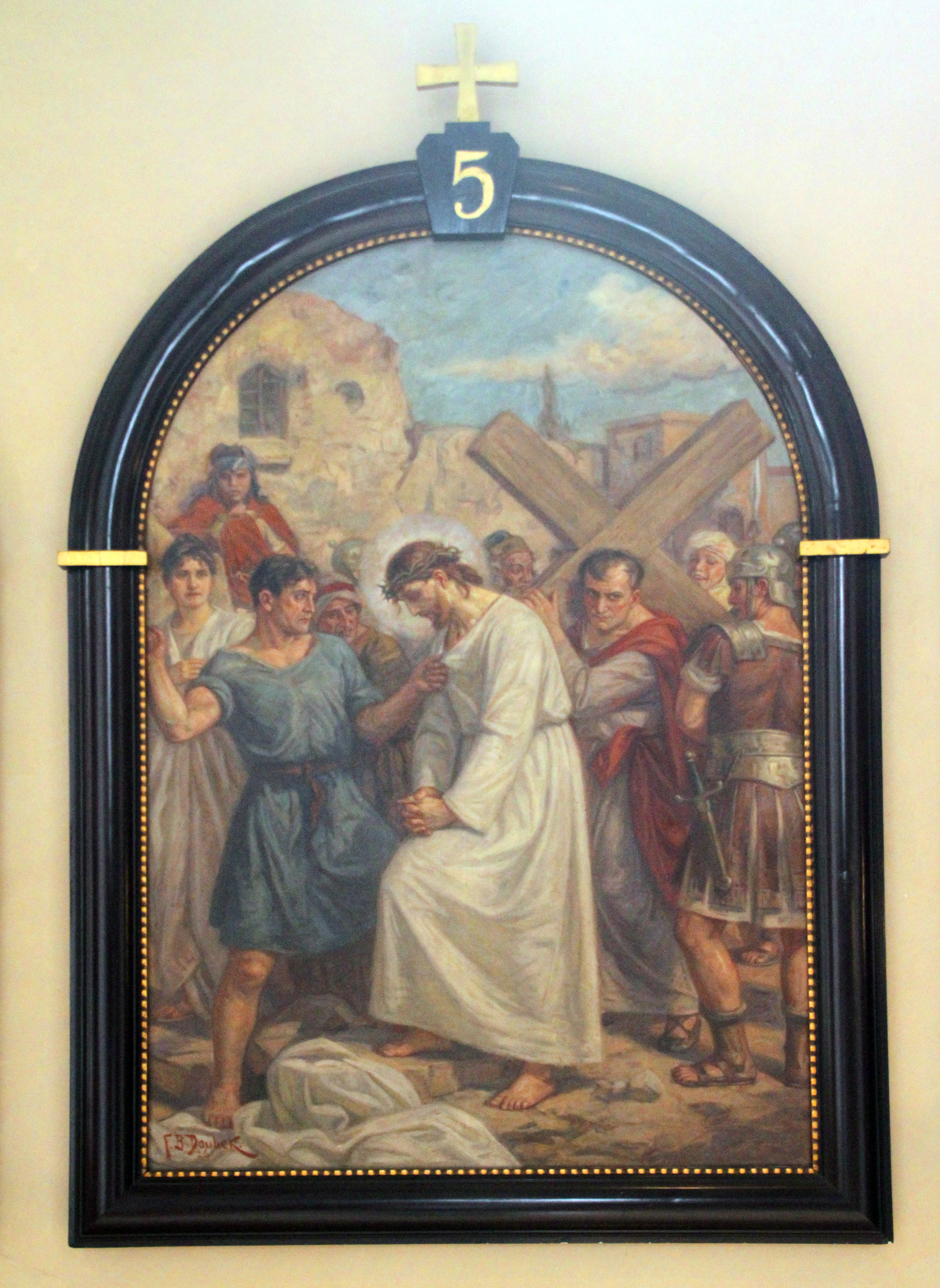
I like the contrast between how resigned Simon
is to this situation, and how resigned Christ is.
I couldn't go to the recent CMA conference, but several friends told me it was great. It focused heavily on burnout, as have the past five or so years. One of my parishioners, a family med resident who attended, reported that the talks were very holy and quoted lots of saints, but finally she didn't feel like there was a real "fix" to burnout.

My experience of the last two CMA conferences I've attended have been similar. Lots of discussion of personal holiness and the sacraments. Lots of discussion of holistic medicine and the importance of relationships and integrity in practice. Lots of discussion of hope, courage, and mercy for times of desolation. Not a lot of easy fixes. And I think that reflects the truth.

There is no easy fix for burnout. There's rest, hobbies, leisure, exercise, healthy eating, meditation, good marriages and friendships, and patience through desolation. None of those are easy. You have to force yourself to make time to rest (and then actually use that time to rest), you have to force yourself to exercise, you have to force yourself to develop relationships, you have to force yourself to pray. There is a lot of violence in pursuing the virtuous life. And, if you believe Augustine (and I do), we never get to the easy part of habitual virtue by ourselves. God's grace makes a way for us to become saints.

There's a small amount of relief whenever you acknowledge an unpleasant truth, be it some personal imperfection or some fact you can't control about the outside world. There is no "fix" for burnout, just the continued pursuit of a virtuous life and patience through desolation.

Sunday, October 15, 2017

Quick Takes as Fellowship Comes Closer

#1

Professionals of all stripes use LinkedIn. Basic science researchers use ResearchGate. Private physicians use Doximity. And, of course, everyone still needs a paper CV or resume. This sets up an obvious problem for the (hopeful) academic physician with a strong community presence. Aware that tl;dr has its own meaning, I affectionately call this resume problem "TLDR." Whenever I have something to put on my CV, it has to go in four places: Text, LinkedIn, Doximity, and ResearchGate. (And I haven't even mentioned the fact that NRMP, the "common app" for residency and fellowship, makes you build yet another CV in its system.)

#2

This month I went to wedding, two conferences, and a strategic planning meeting. One of the conferences overlapped with call, so I flew back through recently-flooded Houston the night before I showed up for a 24-hour shift. I feel like I'm always leaving friends and family behind, never present to them. All in all, I am traveling 4 out of the 5 weekends of this month. (I spent the other weekend TLDRing.)

#3

Hello Internet is a podcast by CGP Grey and Brady Haran. I used to watch a lot of YouTube science, so I knew the creators and listened to a bunch of the podcast while collecting data for a research project. One interesting episode talked about time management across four categories: work, family, health, and friends. Grey made these categories analogous to four lightbulbs, and posed the question of time management in terms of how bright (or dim) each bulb is or should be, given limited wattage for all four. He related personally that his "health" bulb hadn't been on in the early years of starting a successful YouTube channel. As I listened to the podcast, madly collecting data, I felt similar. I, too, am self-employed in a way. I'm in that phase in my career that involves aggressive self-improvement. I'm looking for excellent skills, rare opportunities, good connections, advantageous relationships, and strategic projects. And that "health" bulb is really dim! I'm trying to turn it up a little, but the wattage limit and my chronic ambitious habits are making it really hard.

#4

I'm homesick. When I applied to residency, I had few incentives to stay in my hometown because the public hospital rejected my ethical choices, the good private hospital had residents I didn't want to work with, and I thought the other private hospital was a dead-end career choice. Now I might be able to wedge my way back in, and I'd really like to. I don't like being the stranger at Christmas, that "older sister" who is never present to my siblings' lives. I want to be near my parents and be in the city I know and love. I can't tell how important these feelings are, though. Should I prioritize training in this important stage in my career? Should I go somewhere for the sake of a key mentor or a key set of experiences? And the all-important question: will they take me?

#5

You know the fable of the man who started with a piece of straw and ends up a millionaire? I feel that way sometimes. I started in homeschool and traded up to a good private elementary school. This allowed me to trade up to an academically decent but philosophically terrible private high school. From there, I could have jumped academically higher (and philosophically lower) into college, but instead traded overall "up" to TAC. But TAC is a "straw" in terms of the rest of the world. (All the Thomists may now laugh at TAC being straw.) But I was still able to trade up to get into medical school. From a community program, I traded up again to an academic residency. I wonder whether fellowship will be another trade "up," or whether I've maxed out my potential. 

#6

Can I admit something? It relates to "maxing out potential." There is a barely perceptible but real glass ceiling over me because of my moral choices. I can't go to top places because they don't want someone with my "limits." I am not comfortable putting a list of places I'm blocked from online, because I still have steps left in my training and don't want to close doors. But I have this long-lasting frustration with being inferior. I guess it started at TAC: I felt like I took the moral high road, and my high school classmates who had gone to better colleges were getting into better med schools. Then from my state med school, I felt that again I was getting fewer competitive interviews. In any given city, there's a glass wall between me and the big hospital and the big research projects. It makes me irrationally hungry to go to those places and do that research. There is a lot more funding and networking in those places, and I could do more. Wouldn't it be good if I could do some animals studies to further the possibility of ectopic rescue? Wouldn't it be good if I could study methotrexate more?

#7

I look at the last quick take and part of me thinks: "Networking and funding are fancy words for power and money. Don't look to those things. The Lord doesn't want you to do things independently. He wants you to be His Bride and He will make all the rest possible for you, even if it requires more work and you do not meet with success." There is more purity of heart in this response, I think. Less slavishness to ambition and outward things. More peace. Please pray for me, that I can have this peace and trust in the Lord, rather than anxiety over worldly things that I miss because of adherence to the truth. Please join me in that trust, in whatever opportunity you have in your life.

I will start applying for fellowships in July of 2018. I will start preparing my application around December, when interview season for the entering intern class of 2018 is over. Please pray for me! If there are priests reading, please consider saying a Mass for me.

Sunday, January 15, 2017

Suffering and Joy in Catholic Medicine (CMA Conference)

I went to the CMA conference last October and spent most of the time with my poster and networking with people. I was late to almost every talk! There was lots to take away, but there were also things missing.

From Ashley Fernades' talk before the first panel began, I took away that not all hard days are bad days. The idea that suffering and joy are not mutually exclusive is still hard for me to integrate with my life. When I am exhausted, I have no energy to be happy. My reason accepts that happiness and joy are not the same, but when there is no reason for satisfaction besides God it is rather hard for me, a sinner, to be joyful. Dr. Fernandes made it a point to say, on day one of the conference, that joy is a choice made each day.

Bishop Conley drilled this further. Joy seems like hard work, he said, but it is possible with Christ. He can work a total transformation in us. Our entire lives must be missionary joy, it's an unshirkable responsibility. This doesn't have to be overwhelming, the Bishop said. This is cor ad cor missionary work--one heart to one heart at a time.

Michael Aquilina spoke on the emergence of the hospital, which paralleled the rise of Christianity. Mr. Aquilina observed that there were resources for hospitals in the ancient world, but the hospital only came about once a religion that valued solidarity, charity, human dignity, and the redemptive value of suffering became legal. He asked a rather chilling question: will the hospital survive in a post-Christian world? I think it's already gone in most ways. The hospital now is a cog in healthcare and research systems, embedded with lots of bureaucracy for the purpose of payment and prestige. Of course, as long as there is illness and as long as there are charitable caregivers, there will be that spirit of merciful care of the sick. But the hospitals of St. Basil, St. Pio, and even St. Theresa of Calcutta are not the ones that western doctors work in now.

Then came the practical advice of John Travaline, a physician and deacon who spoke about practicing like a real Catholic. He stressed the importance of seeing opportunities to restore human dignity to those with diminished personhood, to look for chances to be present to others (e.g. don't double book, imagine the workplace as a holy place, make your office accessible). He stressed that wounds are a sign of God's presence, chances to participate in Christ's restoration of man.

Src: www.catholicmedkc.org
Finally, Dr. Greg Burke reviewed a sample examination of conscience for physicians. Several things were relevant to this theme of missionary suffering and joy. Am I ashamed of my Catholic identity? Am I plagued by guilt without sin (blamed or self-blaming for a case when you acted according to your conscience)? He reminded his audience that it is humanly impossible to know everything. "Don't beat yourself up for being human," Dr. Burke said. Strive to become more and more a saint instead, consult appropriately, avoid scurrilous conversation, and don't worry about the messiness of how it plays out.

All these men encouraged attendees: find in medicine a chance to become Christlike. It was a great message.

This post wouldn't be complete if it ended without my personal reflections on going to the conference. Perhaps this is because I'm used to the breakneck pace of residency, but I found the conference a little slow and a little repetitive. For the first time I was frustrated with the CMA for ignoring a few elephants in the room. Why wasn't anyone talking about NPT and evidence-based gynecology? Why wasn't anyone talking about virtue-based pediatrics? The conference was refreshing because it was more anecdotal and had a looser schedule (very effective for burnout prevention), but I was still hungry for more at the end. Going through the talks again was helpful, but I wish there was more original research and open discussion at these conferences.

Friday, December 30, 2016

Control and Being a little Legislator

I have realized that I can't control anything, and I'm trying to live with that.

This is as much a psychological milestone as it is a spiritual one. Human beings can't influence most of what happens to them: we can't change the weather, we can't change history, and we can't change the people around us or their choices. Christians embrace this like they embrace the inevitability of suffering: they see that God has made it a way to go to Him.

It's refreshing to admit I can't control a lot. As a doctor, I can't control who will page or call me and whether it means I get out of bed on call. I can't control who will walk into my clinic or how long they'll need to talk about it. I can't control who will come into triage or the ED and whether they'll need a complicated workup or a surgery that day. At the most extreme: I can't control how placentas and cancers grow and I can't stop babies and women from dying. There's a vulnerability that can be exhausting (another patient? I already need to see twelve. Another ultrasound? Another phone call?). It's hard to maintain generosity and avoid being lazy. Also increasingly since residency is the inability to control my body: I can't just stay up as long as I want--my body turns off after 36 hours on and I miss meetings that I schedule after that.

The doctor-patient coin has two sides. I can't control how my doctor interprets the evidence on re-scoping versus empiric titration. I can't control what she'll find on that colonoscopy, either. I can't control what the meds will do, I can't control whether I develop extraintestinal manifestations, and I can't control whether or when I'll lose my colon or get cancer. (I also can't control the past, which includes a lot of knowledge about UC that I sort of wish I didn't have.)

And there are a scattered other few things. I can't control whether my siblings will stay Catholic, whether my married friends will stay married, whether my archdiocese will close my parish, whether the state will stop payment from CMS to my hospital....

There are some things that I can control a little more, but always weasel out of my grasp. I can't always seem to control the cleanliness of my apartment. Sometimes it looks like six frat boys live there and I can hear my German-standard cleanliness mother (who had us wipe the microwave and oven doors as part of the list of things to do with the dishes) tsking in my mind. Mom, I think I've wiped the oven once and vacuumed three times since moving here.

Then there are the things I wish were in my control and might be in my control, but I don't think my will is disciplined enough. These are all the parts of the life of virtue that I think I could do better on, even though my life now in residency tempts me to excuse all kinds of stuff. I have to learn to live like a saint even while working my current schedule. What if I died in residency? What will be my excuse that I didn't possess my own heart in each moment, form my conscience, and use every opportunity to love God and calmly grow in virtue?

But my old approach to virtue doesn't work now. (Lots of people said this about med school, that they're undergrad method of studying didn't work in med school. I didn't have to make that transition from TAC, but perhaps it'd have been better if I did, because I'd have recognized this need for something new sooner.) I can't legislate little changes any more. 

In med school, I wanted to be able to floss every day, so I made a little law for myself, invented a method for predisposing myself, created positive self pressure (a dental appointment), and unconsciously created negative pressure (shame). And it worked. The same thing worked for a lot of pious practices and projects. Now I can't get myself to floss, even though I applied all the same interventions. The same problem exists for a lot of my pious practices and projects. I don't know why this is, but I have a strong hunch: the core battle of my life, chronic exhaustion, makes it hard to pressure myself to do things. There's not enough energy for sustained enforcement upon myself. 

But the other day I had a realization. Considering the relationship between myself and God, I am never the legislator. God makes the laws and He stands under the reality in which I exert my free will with His help. This helped me realize what doctors of the Church and saints have long known: all that is needed for holiness is to follow one's conscience in each moment. When each opportunity to floss presents itself, I accept His grace and take care of my body. And because God's will is less totalitarian than man's, I might even decide (shocker) that flossing is not indicated in certain situations. (Do you floss after 30 hours at work? I fall into bed.)

Tuesday, August 30, 2016

Chapel Veil Story

A few Fridays ago I got off early and went out to one of the monasteries for Mass. Too late I remembered that on Friday the conventual Mass was in the morning, not the evening. On my way home, I decided I might as well scope out the 24-hour adoration prospect I'd heard about at a parish near my house. I couldn't remember where it was and used some Google and GPS to find it. But it turns out that there are two St. Paul parishes in my diocese, and so by the time the whole evening was over I'd been to three churches.

And somewhere along the way I lost my chapel veil. I remained blissfully unaware of this fact until I got ready for Saturday evening Mass, which I was scheduled to cantor. My whole parish knows I wear a chapel veil, so I began to be irritated when I couldn't find it. "They'll all wonder why I'm not wearing it," I muttered as I turned my car and apartment upside down, "especially in the sanctuary...."

Eventually I gave up. God apparently wanted a dose of humility that day, and a lesson to keep a closer eye on my belongings! After all, the counsel of poverty encourages me to treat everything I own as borrowed from a highly respected friend.

My parish is an average 21st century parish: there is no basket of veils as in TLM communities. I went to the church ready to go bareheaded. I was the first one to arrive and started to flick lights on in the sacristy. Then an older couple entered, not dressed for Mass, and carrying boxes and bags. "Excuse me," said the woman in a quiet voice. "Are you a sister?"

The fabulous Jen Fulweiler veiling.
"I'm a consecrated virgin," I said smiling. "It's quite similar. What can I do for you?"

She held up the box in her hands. "Father John told me to knock on the door and to bring these in. My mother died and she left some items to the parish."

I helped her and her husband carry the things into the sacristy. She seemed a little reticent but asked me to open the box. "There are some weird things in there," she said, sounding embarrassed, "like those covers that women used to wear."

"The lace veils?" I asked.

"Yes."

Oh my goodness, I thought. This is so perfect. "Do you mind," I asked timidly, "if the parishioners use the veils?"

"No," said the woman. "That's what she gave them for, I suppose."

The woman and her husband left, and I opened the box. There were three black lace veils. (For any not familiar with the custom of veiling, unmarried women wear white, and married women wear black. This is analogous to nuns and sisters wearing white veils during their formation and black veils after they take vows.)

I'm not married, I thought. That was the reason why I retained my white veil: the only person in a church to wear a white veil and a ring should be a consecrated virgin or a sister who is part of an order without a habit. To veil in black is laden with meaning. It says: I am not available the same way, I now belong, I am absorbed by a husband and family.

But perhaps He is telling me that I am not available, I am absorbed like that. I wore the black veil at Mass. It was very strange: I've never veiled in black.

It made me think, though, about my relationship with Christ. How am I acting like a wife? St. Therese was once motivated to love God more by seeing a devoted newlywed wife. Shouldn't I act just as committed, just as completely taken, as a wife?

So for right now, I'm veiling in black. It's happened to me before that I've lost spiritual articles for very good reasons. (The best example I can think of is losing my Little Office of the Blessed Virgin Mary in college, a story for another day.) Perhaps this, too, was a good loss.

I am noticing more and more that I need to allow God to love me, to receive His grace, to be attentive to His wishes. I am drawn closer to the contemplative part of my vocation: more prayer, more practice of recollection. Being absorbed in Him doesn't exclude good works, but it does change my availability for them. 

Monday, April 11, 2016

Objections (and New Sidebar Gadget)

"You live at a breakneck pace. It stresses me out."

"How can you be a good consecrated virgin with all this work?"

"How can you be a good doctor when you're doing these side projects?"

The first objection comes most often from my body. Ulcerative colitis and residency don't play together well. A UC colon loves a predictable schedule, well-cooked and wholesome food eaten slowly. Those things are basically impossible in OB/GYN residency, where I'm eating quickly between triage patients and deliveries and trying not to have an episode of diarrhea during a C-section.

The second and third objections come from my conscience. I work a lot, and not by choice. I worked 2430 hours in the 244 days between July 1 and February 29. That's 11.6 hours for six days a week, with a seventh day off (and includes the days I was not at work while on vacation). I'd like for things to calm down so that I can focus more time on my relationship with Christ. I could work to the bone my entire life and never get to know the man who saved me and stooped to make me his little consecrated virgin. That would be a horrible tragedy.

I am also pursuing several projects on the side, including a video (done with shooting by the time this comes out!), a set of brochures (should be done with this one completely by the time this post hits), home improvement, blogging for two sites (including this one), keeping up the scholastic life (which includes writing and submitting essays to various journals), research (don't remind me about the phone calls I have to make for my research right now...), and attempting to network with others fighting for the culture of life (which involves archdiocesan events, meeting people for dinner and coffee, and emails). How can I take care of patients when I am so tired and have to finish all these notes so quickly? How can I study and be a good learner when I'm trying to get four doctors with crazy schedules to Chicago to shoot a video?

I just thought this picture was funny.
My response to these? Part of me argues that I'm in a rare time in my life when I can spring back from fatigue after working these hours, and I can spend this much energy on things. But the other part of me completely concedes that the objections are true and I'm doing it all wrong. 

It's unrealistic to respond by promising I'll never go to another pro-life or pro-family event, or that I'll never write another paper. I need to establish a new balance of work, leisure, and prayer.

Part of being less overwhelmed is beginning to assume that the duties of adult life (taxes, car maintenance, housecleaning) are not a project and are just like brushing teeth: no big deal, just gotta do it.

The other part is limiting my projects. I used to limit myself to five active projects in medical school. This may sound like a lot, but I remember when I said "no" to eleven awesome-sounding opportunities in one week. It was a good lesson: not everything that sounds awesome is really important to a career (much less to a life). I'd like to introduce you to a new side-bar gadget: the Project Kitchen. I'm not allowed more than two active projects, with up to four on the back burners.

Monday, March 21, 2016

Behold the Wood of the Cross

This post conforms to the blog rules.It's now time to tell another story I was afraid to tell for a long time.

Although I was loud in college about ethics, I became a coward by the time my second year of medical school was half over. I never explained it on the blog. I let it seem spontaneous. But in reality, it had a clear beginning, during our Reproductive Sciences block.

I was trying to start a pro-life group. I was blogging about ethics. I was going into tidy journalistic fury over the shock (shock!) of being taught to abort. I was standing outside of clinics. I was glad that I had a good upbringing and a sound education. It made me strong in the culture war, and I was loving the fight!

A few months into my second year, I began to discover that the fight wasn't straightforward. One of the pro-life M1s I was hoping to groom for the new head of the pro-life group didn't want to lead because she'd had an abortion. She didn't think the group was going about things "the right way" (whatever that meant). The conversation was awkward--I remember that neither of us stood, and that there was another M1 there (moral support for the M1 I'd asked?) standing as well, silently watching us. I stammered an "all right, I'd love whatever help you can give me." I ended up not seeing her much after that, and I moved on in the semester.

Later that year, I saw on the schedule that we had a lecture on "Abortion: Spontaneous, Missed, Threatened, Therapeutic." I steeled myself that morning and tucked my little plastic fetal model into my pocket. I look back on that morning and see it as a little theatrical, but at the time it was genuine. I felt like I was headed into the mouth of the beast, where impressionable, vaguely liberal college grads were taught that abortion was part of medicine.

Credit: prieststuff
I sat in my usual spot. One of the other Catholic students sat next to me. The lecturer began to talk about elective abortion. I fingered my fetal model and felt powerless. All my classmates were hearing this as if it were just another way to manage just another condition.

On a whim, I pulled out the model and passed it to the Catholic sitting next to me. She looked at it for a long several seconds, then made as if to hand it back to me. "No, pass it that way," I said. She looked as if she didn't know what to do, then reached across the few empty seats between herself and the next person. I signaled to that person to keep passing it.

I didn't get it back at the end of the class. I'd watched it travel around the room for a few minutes, but then I'd gone back to listening about threatened AB.

It was several weeks later (I'd completely forgotten about the entire thing) when I received a concise email from one of the School of Medicine's administrators--the lawyer who gave us a lecture on how we could get kicked out for unprofessional behavior. She asked if I had time to meet with her and the dean that week.

My blood pressure spiked at first, but I reassured myself: I'm a good student, I haven't done anything wrong. Perhaps she wants to ask me about someone else? I gave her a time and showed up to the meeting. It was Holy Thursday.

The instant that I walked into the room and saw her face, I knew that I was the one in trouble. Her expression was stony, her voice was clipped. The dean sat in a chair by her desk, only marginally less terrifying.

I don't remember all the exact words. She asked me whether I passed around a model of a fetus during the lecture. I said yes, I had. She told me that not only was that disruptive in the classroom, but it had upset several of my peers and that one or two had come to her crying about it. I instantly regretted so thoughtlessly picking my pro-life trinket out of my pocket and passing it around during class! I already learned that there were post-abortive women around me! Why hadn't I thought of them? What a painful thing I had done! I'd been warned that I was going about things the wrong way and I hadn't done anything about it!

Credit: timmatkin
From the shame of being in a disciplinary position on top of the distress I felt at what I'd done to my peers, I started to cry. "It hurts me," I stuttered, "to think that I caused someone pain." I offered to apologize in some anonymous way to the girls I'd hurt. I was declined. I spent a miserable rest of the day.

The next day, I attended the Good Friday service. Christ on the cross looked as miserable as I felt. "And as miserable as I made those girls," I muttered. I felt like Pilate, more than I ever had in the dozens of times I've said "His blood be upon us and upon our children" and "Crucify Him" on Palm Sunday.

That day I had a small change of heart. I realized that everything I lacked (poise, foresight, compassion, circumspection, thoughtfulness, and a sense that I was on the right side of things) I truly lacked. I wasn't just feeling a temporary loss of those virtues: I never had them to begin with. So I asked Christ for all his virtues, to replace all my disasters. It was a beautiful Good Friday, one I will never forget. Even now at Mass, when I go to communion, I often think of that Good Friday and ask Christ to give me everything of His soul, including all his virtues.

But this episode had one very unfortunate effect: it made me afraid. It was not until the beginning of my fourth year that I began to uncase myself from that cold fear that I would once again hurt someone or bring on the shame of that terrible disciplinary meeting. I realize now why I was so afraid. I stopped short in accepting something of Christ's cross: His courage.

Now I behold the wood of the cross and recall my misery. I know that I have made lots of scandalous mistakes that have caused a great deal of pain. So I ask Christ to replace my viciousness with His perfections. And even though I'm a liability to His glory, He asks that I fight for him, and gives me His courage.

Now, as a resident that fearlessly but happily refuses to prescribe, I am a warrior. But the strength I fight by is not mine. So behold, the wood of the Cross, on which our Savior poured out all His virtues for us and provided an almost-irrational courage for us, even though we're such disasters.


P.S.: It was recently pointed out to me that if a person is so fragile as to cry at the sight of a fetal model, he or she is in need of some serious healing, and that confronting that person with the truth may have had a good effect. While I agree, it's still not the best way to show someone the truth. And even if the "disruptive" thing wasn't true (because the lecture was teleconferenced from forty miles away), I still think I acted carelessly and hurt someone. May God bring some good out of it! Please pray for the people that I hurt that day, because I'm sure their souls are deeply wounded from whatever in their past made them so upset at the sight of my little plastic fetus.

P.P.S.: By the way, one of the first things I stuck in my new resident coat was a new and improved fetal model. I showed it to probably sixty people in my first month of residency. I did it calmly and gently, after considering whether it was the right way to show the truth or not. And I haven't regretted it yet.

Friday, October 30, 2015

Two months in review (9-10/2015)

In the past two months, I've been on Labor and Delivery, and on the clinic service. During this time, I clocked my personal best and worst weeks in terms of duty hours. I logged 92 hours on week on L&D (when I worked two weekends on either side of a busy week), and I logged 30 hours on a (very average) clinic week.

I got a lot done during that month of 30 hour work weeks: doctor visits, dental appointments, making curtains, a car wash, moving forward on research projects (18 patients recruited for my survey study, phone calls towards one patent, drawings for a manufacturer on another, and signing on to another device study at my hospital), and moving forward on fun projects (contacted an illustrator on two children's books [was turned down but hey at least I contacted someone], and went live for beta testing on another [sorry I can't link or it'd compromise anonymity]). I also furthered some of the NFP projects, completing fundraising on a video project for NFP-only interviewees (now that's gonna compromise anonymity when the video comes out...so I'll probably have to delete that later), completing a final version of new-evangelization-style NFP handouts for patients in our metroplex (and getting half of the funds for that!), and half-finalizing the manuscript of the pocket-Napro book that myself and another NFP-only resident are working on.

I have learned to do a discharge summary in ten minutes. I have learned to do dishes once every two weeks without inviting every bug in the metroplex. I have started walking to work more (because I hate scraping cars).

I'm still chronically exhausted. A major spiritual battle right now is how to deal with fatigue; it's actually the core battle of my life. At the same time, I am tempted to think I do not pray, sacrifice, or love God enough. But the reality is, that my prayer (outside the starvation rations of just MP, EP, and meditation) is the prayer on the Cross: complete obedience and self abnegation. And my penance is the penance of Christ's ministry: who needs flagellation when all personal time is lost in a 90 hour work week?

P.S. There are two additions that need to be made to OB/GYN Ethics 101: methotrexate for ectopics, and emergency contraception. I'm also working on elevator speeches and details on the post-fertilization effects of IUDs. Thank you for being patient! The next five months will be very, very hard for me and I have posts scheduled through that time, but new material will be slow to come out.

Saturday, August 29, 2015

Two months in review (7-8/2015)

In the past two months, I've been on night float and on the ultrasound service. I've worked an average of 68 hours per week and used 1-2 servings of caffeine per 24 hour period. I've delivered 35 babies, done 5 C-sections (as primary surgeon), and done about 160 ultrasounds of various types.

I'm learning how to admit patients to triage, evaluate them, "dispo" them (send them home or keep them), answer dozens of types of nurse and patient phone calls, and "update the board" (keep abreast of what every patient is doing in labor and delivery). I'm also working on ways to wash laundry only every other week, recycle in my small borough, cook only once a week, make a bed while getting out of it, and shower in the time it takes to sing a Credo. I've replaced a car battery, hung blackout curtains, and bought several loads of furniture. And most importantly, I'm trying to make space in all this work for the liturgy of the hours, meditation, the rosary, confession, and Mass. I've made a lot of mistakes, but I'm being patient with myself as I try to do better. It's been a challenge.

I enjoy the work, especially when the deliveries are beautiful or I get things right. I'm at a good hospital with excellent and friendly nurses and my upper levels and chiefs are paying it forward, being kind to me so that I can be kind to the students and the next generation of residents in the future.

Things to learn in the future are how to not miss morning meditation, how to write discharge summaries in ten minutes, how to round on a dozen people in an hour and a half, and how to do dishes only once a week without starting an impromptu microbiology lab. I am also working on having local NFP resources printed for handing to patients in clinic (which is happening in the next two months) and having my elevator speeches together for when I am doing nothing but seeing postpartum and clinic patients. Any prayers would be appreciated!

Monday, June 29, 2015

On the Eve of Residency

On March 15, I was hired as a doctor. Sort of.

Src: theurbanresident.com
March 15 was Match Day. I walked up to a stage (to a mandatory 30 seconds of music that I had to buy; I picked "Son of Man," by Phil Collins) and picked up an A6 manila envelope. I opened it, with all other medical students nationwide, at noon and discovered where I will spend the next four years learning to take care of patients. To my great joy, it was my first choice: my discernment had been correct, and God chose what I'd chosen. I left the Match Day ceremony early (before I even pinned my picture over my new home) and went to Mass with my mother. I spent thirty minutes after Mass in deep happiness in front of the tabernacle, thinking of how good God is and how much He loves us. He had loved me into a program that had everything I wanted, and (so I've already discovered) far more than I knew. I'd signed a contract as a physician. So I was hired as a doctor, sort of.

On May 9, I became a doctor. Sort of.

May 9 was graduation. I walked across another stage in a tam and robes with green chevrons. (As a TACer or maybe just because I like "distinctive dress," I appreciate the meaning of regalia and feel honored and dignified in it.) It was deeply satisfying to accept my diploma and attain the goal I had hoped for, however vaguely, since I was four. I remarked to my father that I enjoyed this graduation more than my TAC graduation, because I did not understand what the last year of TAC was for, but I had understood my medical education. Medical education is an imperfect but powerful experience, and I'd completed it. Sort of.

On June 16, I started my new job as a doctor. Sort of.

June 16 saw the beginning of orientation. I'd moved in the day before, after a day-long drive to my new state, and a week-long retreat in solitude (final preparation for the consecration). I didn't have a stick of furniture, apart from my kneeler. I had to borrow the next month's rent from my parents. During orientation I scrambled in my new city to find Masses, grocery stores, gas stations, post offices, employee health clinics, pharmacies, train stations, and a dozen conference rooms in two hospitals. I ostensibly learned how to operate a new electronic health record, how to meet the expectations of me are on each rotation, how to resucitate patients during codes, how to do obstetrical procedures, and how to triage women who present to the hospital. So I was ready to act like a doctor, sort of.

On July 1, I will actually be a doctor. (Sort of.)

I will be one of the thousands of "interns," first-year physicians who are still learning the ropes of patient care. I will be rounding on antepartum and postpartum, and signing prescriptions. I'll work the night shifts over the holiday and I'll evaluate and manage (and maybe deliver) patients. During the rest of July I will be learning to perform ultrasounds, and in August I'll be working nights as one of the four awake OB/GYNs in the hospital. September, I'll be on labor and delivery during the days; October, I'll be working full-time in the resident clinic (30ish patients per half-day, NBD). November and December will be more time in labor and delivery, and some time in the OR for gynecology. And in 2016, we'll repeat those six months over again. By the end of it, I hope that I will have actually been someone's doctor. (There will be lots and lots of help to get me to that end-point, which is why I tacked on "sort of" again.)

Right now, I'm afraid. I'm excited to see patients and manage them, but that excitement is proportional to my confidence that this will be easy (i.e. that I have knowledge in my head about what to do when I see them). My confidence is quite low, so my excitement is very small. Instead, since I hear all these comments about how July is hard and interns start out slow, I'm very scared!

I'm trying to remember that God loves me, that slowness in the first few months of residency doesn't matter in the grand scheme of becoming a saint. That even if I am embarrassed and am the last resident in the class (which I may be; these people are all SUUUUUPER qualified and have advanced degrees and research and children), if I remain with Jesus throughout each day, it doesn't matter.

But prayers will be appreciated, because on Wednesday I'll be an intern. I am excited to begin this new chapter, but I need God's help to stay peaceful, more than I need my upper-levels' help to be a better intern.

Thursday, March 12, 2015

More on Guessing and Pride

As a follow-up to the last post, I made a flowchart of all the little worries and calculations that can go on in a med student's head whenever someone asks a question. The more pride, the more anxiety, timidity, pompousness, envy, and regret. Right-click>open in new tab/window for full size.


Monday, March 9, 2015

Guessing and Pride

Vocabulary: Pimp (v.): to ask questions, often in front of other trainees or professionals, to assess a student's or resident's preparedness, medical knowledge, or professionalism
Third year medical students get used to getting pimped. We're advised (by survival guide books, by older students and residents, by faculty) to guess if we don't know an answer. This advice is logical. A third year knew even the smallest biochemical details of the pharmacology he's being asked about a mere six months ago, but after STEP 1 and two or three other rotations, he's refocused so many times that he can't exactly recall the correct answer. A third year sort of knows what to study for clerkships, and definitely never knows what to study for particular attendings. In general, a third year has just enough knowledge to know what's being asked, what the answer choices mean, and what he's missing to know the correct answer. (It's a very frustrating experience.)

We're advised to guess because we have enough knowledge to say something vaguely correct. I followed this advice, and had good and bad results.

I should have played the lottery during my pediatrics rotation. That's how lucky my guesses were. One outpatient physician with particularly pronounced ADHD forgot that he told me the most common cause of URI was "viral." When he asked me the question and I informed him that it was "viral," he was very pleased. I answered a few more softballs correctly, then he hit me with a hard one. "Why no fluoroquinolones for this patient?" he asked.

Fluoroquinolones! My M1 box of memories contained something about teeth...or was it cartilage? Tendons? Shoot! I had to pick between them. Because I remembered "cartilage" and "tendons," I eliminated "teeth," and then flipped a mental coin. "Cartilage malformations," I said. The whole internal answer-picking had taken only a fraction of a second.

"Correct!" the attending said. I got a fabulous evaluation.

Inpatient looked like it was going to be a different story. Our attending was demanding and taught in a more classical fashion: we presented patients in front of everyone on rounds, wrote detailed notes, and did long mock case workups. While I was in front of the room at the board (pen in hand) pretending to work up a child with renal failure, he told me a stool culture came back positive for Shigella.

"So," he said. "You wanna give him antibiotics?"

His CBC was terrible, he was febrile, he already had an IV in, and I very much wanted to give antibiotics. I remembered that Salmonella and Shigella had funny reactions to antibiotics...something about the child would feel better but there would still be bacteria in the stool...for even longer? But that was only for one of the two species (darn the person who named these two things so similarly!!)... Do I hazard a guess, or do I just give the antibiotic? I gambled.

"We could," I said, "but doesn't it prolong clearance in the stool...?" I trailed off gingerly, just in case I was wrong.

The attending raised his eyebrows.

"It does," he said, surprised. Apparently I'd skirted the trap he usually set for students. He then told a few case histories of patient's he'd treated. "So," he concluded, "if it's just going to be fluids, what do you want to use?"

"D5 half-normal," I replied. That wasn't a guess; that's what everyone in the unit was on. He gave me a mischievous look and pressed further.

"There is one case in which you would consider using quarter. Do you know who?"

Time for another guess. Babies are all water balloons at birth, so my brain spat out:

"The neonate?"

The attending clapped and grinned. "That's hot!" he said (which must have meant something different when he was a teenager). "Strong work." And I got another fabulous evaluation based on guessing.

But this has terrible effects, especially when we're asked to guess in front of other people. Those of us with the vice of pride (which is many doctors and student-doctors, and (so I'm told) a few other humans) do terribly in this environment. We have one of several reactions. It's a little complicated, so I made a flowchart.

I was typing this post while my attending was at a meeting; he came back and we had a mini lecture/pimping session on hydrocephalus. And I guessed some more. It will never end.

Thursday, March 5, 2015

Daily Meditation with 70+ Hour Weeks

After I realized during my third year that I needed to prepare better for prayer, I started to create a list of verses that were easy to use and fruitful for meditation. I then expanded it to over 365 verses and sorted them so that I could use my imagination as meditation directs us.

I'm sharing the result on this blog because it is part of the experience of a Catholic medical student, and it might be helpful to some. This list is long, and it's got its own page: A Year of Meditation for Busy 21st Century Souls.

The list is still growing. The entirety of the life of Christ is present, but many Old Testament stories and many epistles are still untapped. It also needs the refinement and development that will come with use and time. But if you find it interesting to see how a 70+ hour work week can admit 30 minutes of daily meditation, take a look.

Thursday, June 12, 2014

The Third Year Manifesto, last part: An Analysis

There are days that I want to ask the hospital at large: “When do I get my personhood back? When am I treated like I have the dignity that everyone else does?”

I want to be comfortable where I work. I want to be safe to be myself and express my limitations. Instead, I cork up dozens of questions a week. I’ve violated the sterile field a half dozen times and don’t bring it up. I hate being told that I can’t do something because being so uninvolved, it's not what I’m paying for, and I have more to offer. I hate being told that I can do something because I will be watched, I will fear derision and misunderstanding, I will fumble out of fear, I will put on my game face and fumble out of incompetence, or I will get lucky and be deluded so that the next fumble hurts more.

I want is to be satisfied with the way my life is going. I want the basic esteem of others. “Oh,” is all I wish that people would think when they saw me, “she’s a medical student. You know, those people can’t do much. But they sure try.”

#

Once, I caught myself apologizing to someone in these exact words:

“I’m so sorry for taking up so much space!”

After uttering this ridiculous sentence, I went out the nearest door in a polite rush. Only after the door shut behind me did I shake my head and think, “what a stupid thing to say. I’m taking my own personhood away; apparently, I don’t need anyone else’s help.”

So, now that it is the fourth year of medical school, I am deciding: no one is taking my dignity away, least of all me. If they demean me in the OR, they are doing something inappropriate. I will graciously excuse them, like one ignores a person passing gas.

I am determined never again to agree with the lie that I am a worthless idiot. That lie leads to an psychological hell.

Part of the reason I became such a doormat/basket-case of self-critical emotions and permitted everyone else’s criticisms (petty or cruel) to sink me, was that I had a lousy idea about humility. I had this glorified picture of religious life in somewhere between 1600 and 1900 in which saints were made by kissing floors. Didn’t St. Bernadette, St. Jeanne Jugan, St. Therese, and many others have to be grossly misunderstood and abused to become saints? Don’t you have to believe all the derogatory things people say about you if you want true humility? Yeah! So, I was excited because I’d heard (correctly) that the third year was a lot like a floor-kissing novitiate.

But there is a basic misunderstanding there. Cultures that file away at personal dignity crowd out holiness! A person tossed around in such a culture becomes so distraught over himself and convinced of his incapacity that he can’t have the magnanimity a saint needs to become like the all-loving God. Believing himself to be a microscopic locket—always too small, always wanting, always disappointing—this miserable man can’t imagine becoming a vault, a temple.

It is a lie of Satan that I am worthless. I want to do great things for God. I want God, I want to be like Him, and I expect He will make us that way. So if I ever stoop to another floor for a kiss, it will be because Jesus is there, waiting to kiss me back and make me His gorgeous, eternal, perfect bride.

Wednesday, June 11, 2014

Third Year Manifesto, Part 2: Stories

In which I vent all the stories that I've kept bottled up so as not to be a whiner. The last part of this trio of posts is coming tomorrow.

#

I obediently submitted to being taught how to insert a Foley every time I inserted one. Today (the first day of fourth year) was the first time no one approached me and said, “oh, let me show you how….” It was disorienting. Wasn’t someone going to smother me with their preferences?

I breathed. I felt free! But the freedom was not to last. As I proceeded, I heard a very distinct “hmpf!” behind me, in the same tone people use when they raise an eyebrow and say “well, that’s interesting!” and really mean something much less benign.

#

The first vaginal delivery I attended on L&D, I did what the clerkship director told me to do: I protected the perineum and stayed close, in case I could actually be allowed to deliver the baby. This is called, good-naturedly, “being aggressive,” and it’s a good quality in medical trainees.

In that first delivery, a senior resident and an intern were also there. I guess if I were more shrewd, I would have known that it was bound to be the intern’s delivery. But who was I to know that what the clerkship director told me wasn’t right?

The senior resident decided to put an end to my aggressiveness. She put her hand on my hands and pushed them away from the field. Pushed. No exaggeration; the equivalent force could have shoved a gallon of milk several feet. The embarassment (and the sheer force) moved me to the back table for the rest of the delivery. When she asked me later, “did you see how the baby did xyz during abc stage?” I felt like saying, “No, of course not. If you want me to see things, don’t push me away.”

#

When a gentler resident was graciously allowing me to suture subcutaneous tissue in the OR, I put my needle driver down on the field, with the needle still in it. It was the first time I had ever done this, because it was the first time I had to cut off my needle to tie. (It was the first time I wasn’t using 4-0 and subcuticulars in the skin). The scrub tech slapped my hand, chiding me verbally. I blushed with angry embarassment underneath my mask, but tractably apologized, etc. Then, she said these words exactly (I remember them and you’ll see why):

“There are some people,” she said self-righteously, “who’ll slap your hand for that. I won’t, but there are some.”

I tried not to stare at her blankly. I guess it never dawned on her that she, SHE had ACTUALLY (not metaphorically) slapped my hand. I guess people who use that phrase end up acting on it without realizing it?? She has been the only one to do that.


#

One day in surgery I learned that the scrub tech, the scrub-nurse-in-training, and I were all within a few years of each other. I was the oldest. I was paying, snipping, uncomfortable, and chastised during the surgery. The other two, who were allowed to take a lunch break (during this six-hour surgery), were paid and thanked.

The fact that I’m paying to be there seems to some surgeons to mean that I’m not to be thanked and that I’m automatically incompetent. It seems to say, “she can’t do anything.”

“No, no,” one surgeon said when I reached for a towel to drape a patient. The scrub tech, who had offered me the towel, knew me better than that surgeon. He was being a pal, and he knew I have seen patients draped dozens of times and I could do it. But no! “She’s a medical student, she doesn’t do that,” the surgeon said.

“Excuse me, Doctor Bossy-Pants,” I burned to say. “I am a medical student and I can do that. Watch!” But it’s her sterile field, it’s her OR time, I’m her responsibility and (the real reason) she’s grading me. So I didn’t do that. I backed down. I abased myself.


Tuesday, June 10, 2014

The Third Year Manifesto, Part 1: Cutting Suture

I will now discuss the stuff of third year that is not happy and glamorous. Having a blog places slight pressure on a person not to whine. But not to disclose the negative parts of medical school would be dishonest. So it’s time to air a few grievances, and (because I can’t seem to not do this) discuss morality and holiness at the same time.

At some point during my third year, I got very demoralized. It’s hard for a person who wants to do great things well (and is used to doing great things well) to find herself unable to hope even for mediocrity.

One response to this predicament: Ah, what a chance to grow in humility!

THIS IS AWESOME.
"Ah," goes this response, "I have had many peers, past and present, who have struggled to get the things I’ve gotten, like A’s and letters of recommendation and leadership positions and success…. Now, God is making me more like them, to help me see that they are my brothers in everything. I have nothing of my own and am happy to have God, because I truly lack nothing."

Another and much more human response to this predicament:
THIS IS TERRIBLE.
In its severest form, this disappointment becomes sadness, loneliness, isolation, depression, and despair.

It was a war between these two responses for the second half of third year. However, it is old news that 1) I am a little soul and 2) there's a war going on in me between holiness and not-holiness. God is exerting Himself to the maximum and employing all kinds of things (sacraments, virtues, habits, circumstances, living people, dead people, people I’ve never laid eyes on, angels, and even me) to make me like Himself. On the other side are all kinds of things (occasions, vices, habits, circumstances, living people, dead people, people I’ve never laid eyes on, angels, and especially me) persuading me to stay in my nice little hidey-self-in-hell-hole.

But morality aside for a teensy moment: seriously! This year was so demoralizing at times!

Do you have any idea what it is like to stand in a surgery, not allowed to do anything except trim suture? Somebody ties a knot around [whatever], and I come in with scissors and snip it. That is 90% of my intraoperative action. This is especially painful because I’ve been given great responsibility and responded rather well to in the past. I wish I could speak my mind in those ORs.

“You know, I am a person.”

Snip.

“With an intellect.”

Snip.

“A rather good intellect.”

Snip.

“And I have pretty good hands, too. Did you know I paint? And I’m handy around the house.”

Snip.

“And if you let me stick-tie the ovarian vessels/close the fascia/dissect adhesions/use a bovie/debride dead tissue/MANY OTHER EXAMPLES, I bet I could do it.”

Snip.

The worst part is, I am not even permitted to stupidly cut as I like. I am chided because I am not doing it properly. Since the clinical years of medical school are a dizzying merry-go-round through services and surgeons, I can never acquire expertise in one thing. Many have pretened to, but no one ever has, given me a comprehensive lesson in how to properly cut all types of suture in all places according to the preferences of all surgeons. (I expect even the Eternal Father would have difficulty with this one. Just kidding, Abba.)

“Whoa!” says one surgeon. “Too short.”

Or again, the surgeon is uncomfortably silent after I cut. I timidly ask, “too long?”

At least I have never cut someone’s knot. There was once when I took the blame for a broken knot. A few minutes after I snipped, one of the resident’s knots came undone. To save the resident face, I said, “Oh, I cut your knot, didn’t I. I’m sorry.”

I became the queen of taking flak this year. There was an “Oh, thank you,” after every correction; there was a sincere-sounding “I’m sorry,” after every action someone objected to.

Today, while snipping, I grew less and less successful. I began to wonder whether there was a problem with the scissors. Surgeons and residents are quick to ask for a different instrument if the one they’re holding does something silly or inefficient. Not being a surgeon or a resident, I waited out my silly, inefficient instrument for a good five more snips. While I waited, a new scrub tech clocked in. This meant I lost the rapport I’d built up with the first one (my pulling a gown and gloves, helping in setup, etc) I didn’t think anything of this at the time, but now I wonder whether er shift change made a difference in the answer I received when I eventually asked, “Do you have another pair of scissors?”

There are at least four pairs of scissors in almost every set. I know because I know their names: curved Mayos, Mets, tenotomies. There are also Potts and Dietrichs, but even I wouldn’t use those for suture (now I’m just showing off how many types of scissors I can name without looking things up). The suture scissors are called “heavy sciz” by some, but their real name is straight Mayos. Technically, you’re supposed to use the straight Mayos for stuff, like foam, suture, and mesh. Cutting these undelicate things with the better scissors would dull the blades and damage tissue. But I’ve seen surgeons get frustrated with a pair of straight Mayos. They drop them to purposefully exclude them from use, then start to use the curved Mayo’s or the Mets. I’ve even seen someone use the tenotomies. So certainly it would not have been absurd for me to use a different pair of scissors. But what did the scrub tech say?

“Is it the scissors, or is it you?”

I felt like exploding.

Please,” I wanted to say, “even if it is me, could you think of a different way to say it? Maybe ‘show me how you’re cutting’? Or maybe, just maybe you could humor me? I humor people to ridiculous extent. Could you just hand me the curved Mayos? Maybe then I’ll learn that it is, in fact, not the scissors. And you know what else? Even if it’s not the scissors, I don’t like that you said ‘me,’ as if I/me/my person is a problem. My technique might be lousy, but why the ad hominem? Why do I become a problem because I don’t cut suture properly? And anyway, who has taught me how to cut? No one! I have had to cobble things together myself!”

See the med student, doing nothing?
Oh wait, I forgot to get them in the camera view.
But I said, smiling doormat that I have become, “Oh, probably me.” And she said what I should have been doing. My success was unchanged: some good cuts, some lousy ones. In retrospect I think the scissors were fine and I was fine. The problem was that the incision was getting deep (down to the retroperitoneum) and therefore the sutures were getting further and further away from me. When you have to stand on tiptoe and crane your neck and reach to cut something, nothing works quite as well. I can’t wait to be the surgeon or the resident and have a legitimate place to stand so that I can see the operative field all the time.

Friday, March 14, 2014

Fruits of the Flare-Up

  1. This.
  2. I discovered I need to be way more compassionate with patients. I had no idea the depth of the terms "malaise" and "fatigue."
  3. I used to wonder how patients could stand just lying in bed all day, not doing anything. Weren't we boring them to death, like kenneled animals? Nope. Nope, when you're sick, you don't care. Bed is good, or as good as it gets.
  4. Life is only about becoming more and more dependent on God. That is all. And even when all I could do was lie in bed and stare at the wall, I could still depend on God. So I was still able to become a saint, even with near-zero function. Wow!
  5. In fact, it was easier to depend on God when I was sick. Now that I'm closer to better, I keep thinking I'm the captain of my life again. (The pill box is a good reminder.)

Wednesday, March 12, 2014

Plot twist!

I have not posted in a long time because at the beginning of this calendar year I became sick and was eventually diagnosed with ulcerative colitis (UC). This post is long, but it contains no gross images! Yay!

On the first day I had symptoms, I formed a little differential. By day three at the latest, this thought had occured to me: "huh; IBD would give me this. UC, to be specific. Could I have UC?" But for several reasons, I thought that was unlikely. The most prominent reason: I was not special enough. Patients were special people! They deserve special treatment, they have these big gifts from God, they're special cooperators with him in redemption.... I was not one of those people. I was just plain me, just one of the patients' helpers.

We had to memorize a chart like this as M2s.
I remember when my mom was diagnosed with a lifelong autoimmune condition, I thought: "Wow. God gave her something big. It's permanent. He's not taking it back, (barring a miracle). He must really want her help with someone's case." But I wasn't that special.

So for a week, I ignored the symptoms thinking that my subclinical IBS (which 60%+ of med students have due to stress and environmental factors) was just getting worse with the crazy schedule and heightened stress of IM. Or maybe it was because I didn't have enough yogurt. But then, things persisted; then, things got worse.

I knew I had to say something to my upper-level to explain why I was ducking into the bathroom and sitting down on the job so much. I didn't want to say anything. I wanted to tough it out and be invincible. But my conscience was pricking me: you're not invincible and it's pride to think and act like you are. Admit your weaknesses. It's humility; it's human; it's the truth; and it will explain why you're randomly in the restroom. But I could never find a good time! I was seldom alone with the upper-level; the other med student was always there.

At last, I had a chance. She and I were in the ER physician's work-room. The room had frequent in-and-out traffic and the walls are glass, but we were alone. In this relative and extremely transient privacy, I wrestled with my conscience.

"But I don't want to tell her!" I whined to myself. "It's just because of that new medication I started a few weeks ago."

"That wouldn't last this long," my better judgment pointed out. "You know that's not a side effect of that med. You're sick, it's the truth. You need to tell her. And this is an opportunity for humility. And somebody is going to pop in here any minute, so you need to act NOW."

I spoke up: "Say, Laura," I said timidly, "I need to tell you something: I'm sick. I just wanted to let you know that I'm not uninterested in what's going on when I leave...I just have to be in and out of the bathroom. A lot."

Well, then she did the inevitable reflex thing that I figured she would do and took a mini-history. ("What's going on? How long? Did you see someone? Do you want some Imodium?") And then she told me, to my great relief, that she knew I wouldn't slack off and that I was free to do whatever I needed to do to get better. "Take some days off," she urged.

"Take 'em while you can," chimed in an attending, because someone (of course) had come into the work-room. At least they hadn't heard exactly what my chief complaint was.

"I think I'll be okay," I said at the time (ha!). "I just wanted to let you know."

Fast forward a few days, and I'm collapsing on a chair as I pass by it while rounding with the other med student and his intern. I wasn't dizzy/lightheaded, but I was just so malaised that I couldn't stand up any more. That got people's attention. Interns have an even stronger reflex to take a history, so I had to tell her even more. It was embarassing; I know everyone is medically curious, but I would have liked to keep things closer to the vest among people I was working with.

And it was frustrating! As much as I wanted to be flat in my bed, I also wanted to be a good med student. And that day (the day I collapsed) we were going to observe a tracheostomy and some other cool stuff. Darn colon! </rant against my own organs>

I became alarmed when the intern said I should go to the residents' clinic and probably to the ER after that. "What?" I thought to myself. "Go to the hospital? For this? Whoa. I guess I could imagine my story in the top paragraph of one of those admitting H&Ps."

I ended up not going to the ER. Instead, I got a work-in appointment with my GP across the street. (We still went to the resident clinic, where two of the seniors took my blood pressure and took another HPI. And then a partner of my GP, with whom I later worked, asked a few questions that seemed sheerly to satisfy his own curiosity. Yeesh people. Shoo!) All this time I was very tearful, because I was very embarrassed.

At the appointment, becoming an inpatient came up again, as did the ER. I asked my GP to keep me as an outpatient, but my story still apparently bought me a CT. My GP wasn't in clinic that afternoon, but she told me to stay on the hospital campus until she phoned me with the results (in case she had to admit me?? The unsaid words were louder than the ones she said). My first CT went well. It really is a fast test, except for the hour you spend drinking the two doses of po contrast. They couldn't find a vein for IV contrast, so I just did po, and that stuff was tasty. (No, honestly. I gulped it, it was so nice. </digression about grape-flavored radiation>)

She called first about the bloodwork. "Labs are all normal," she happily told me. I was less happy.

See, it seems like every time I go to a doctor, they tell me that everything is normal. That's another big reason that I didn't tell anyone about my symptoms. Every time I come in: "Well, it doesn't matter." "Well, you just need more sleep." "Well, your bloodwork was all normal." Remind me that when I'm a doctor I'm not giving up until the patient feels better!!

So, once I heard that the labs were normal, I figured it was inevitable that I would get the "well, looks like nothing" treatment. But I really wanted it to be something! I was terrified that the CT would come back negative. While I waited for her call about the CT read, I attempted to nap in a dark, empty exam room. All the while, I was thinking to myself. "IBS. It's IBS. I'm making all this fuss over something without pathological findings. Labs normal, imaging normal. Don't even think about biopsy. I'm wasting all this money and time and people are all in a fuss; how embarassing. And since it's IBS, it's all my fault. I do have bad eating habits...."

Finally the call came. And as soon as I put the phone to my ear and didn't hear an immediate "everything looks good," I was happy. I immediately recognized the Pause that comes before "bad" news.

This is not me. Source.
[Pause.] "So, mmatins, your CT showed [Pause] a pattern of [Pause] proctocolitis."

I was so overjoyed that it wasn't normal that I didn't hear the last word. "Of what?" I asked. I was so relieved, I could have sung (except that I was exhausted x10^23).

"Proctocolitis," she repeated.

Silently, I said to myself, "Sounds like UC. I bet I have UC."

"So," continued by GP on the phone, "even though the most likely cause is infection in your age group, I still think you should see GI if this pattern... [Pause] recurs."

My brain was saying, quite calmly, "I have UC. How about that." Before that day was out, I said (even aloud) "I want a colonoscopy." But I tractably accepted her plan of a 10-day course of antibiotics and a GI appointment later that month. The antibiotics which made me more nauseous and more malaised than I hope I ever feel again. (Remind me never to prescribe levaquin and flagyl so flippantly again!) And I didn't get better. And so my brain kept saying, "I have UC."

I missed about a week of work. When I came back (not physiologically better but psychologically better for not bottling it up and for being rather far along in the Kubler-Ross due to my constant self-diagnosis), I still hadn't seen GI. And people still wanted mini-HPIs! My upper-level finally ran into me in the hallway and, finding that I was no better and agreeing with my provisional self-diagnosis, texted a GI doc. (I protested; I didn't want to be treated differently from any other person.)

My GP called the next day and, finding I was no better, asked "Can't I just put you in [the hospital]?"

And I said, "At this point, I really wouldn't object."

"We could put you on teaching [the service the residents work]."

"Ah," I said. I'd always thought I'd want to be a patient of residents if I were ever in the hospital (to pay back my debt, you know?), but I didn't think that it would happen during my IM rotation with the residents I just worked with. "Actually, I think I'd prefer if we didn't."

"Okay," my GP said. "Now, I have a med student working with me right now, but you don't know her, right?"

"Actually, we're pretty good friends."

"Oh, all right. I'll just round without her. But this way, you can get in to GI faster."

I'd just come off wards, so my BS-reasons-for-being-in-the-hospital meter was still very accurate. "Do you think I could just get an outpatient appointment?" In the end, my GP also texted the GI doc. Apparently, when a specialist gets two texts in two days, you get a work-in appointment within the week.

As I sat in the GI doc's office, I heard her speaking with the patient in the next room. (This doc is delightfully loud, direct, fast, and very competent.) She was giving her colonoscopy prep instructions. "That's me in twenty minutes," I mused, resting my head against the wall behind me nonchalantly. I'd worked at a pharmacy in college and knew what Golytely was like. "I guess I'll find out how bad it really is," I thought.

Actually, she gave me a new-fangled prep that was super easy, so I have nothing to complain about. I was scoped and found to have abnormal but confusing findings (UC or Crohn's?), and had bloodwork done with showed probable UC. I'm now on meds to get me into remission...and we're (almost) almost there.

Was it hard to adjust to the fact that I have UC? Meh. Not really. I had the possibility on the back burner from the beginning, and I had lots of time to adjust. The view I have of chronic illnesses also helps. Now I get to be a prayer/suffering warrior and care for them!! (What a deal!) And life is not that different; as my GP remarked to me the other day, it's a good time in history to have colitis. (Mesalamine is amazing.) It's not a very inconvenient illness. Stress and other unknown factors might bring on flare-ups (and those might get pretty bad), there are some nasty complications and some extra-intestinal effects (all of those are yikes yikes yikes), and there's an increased risk of cancer (which brings lots and lots of colonoscopies into my future)...but I've got a very moderate case and there are a lot of ways to treat it. In the end, I gained a lot from the flare-up and I'll say more in a future post.