Showing posts with label CMA. Show all posts

Sunday, January 15, 2017

Suffering and Joy in Catholic Medicine (CMA Conference)

I went to the CMA conference last October and spent most of the time with my poster and networking with people. I was late to almost every talk! There was lots to take away, but there were also things missing.

From Ashley Fernades' talk before the first panel began, I took away that not all hard days are bad days. The idea that suffering and joy are not mutually exclusive is still hard for me to integrate with my life. When I am exhausted, I have no energy to be happy. My reason accepts that happiness and joy are not the same, but when there is no reason for satisfaction besides God it is rather hard for me, a sinner, to be joyful. Dr. Fernandes made it a point to say, on day one of the conference, that joy is a choice made each day.
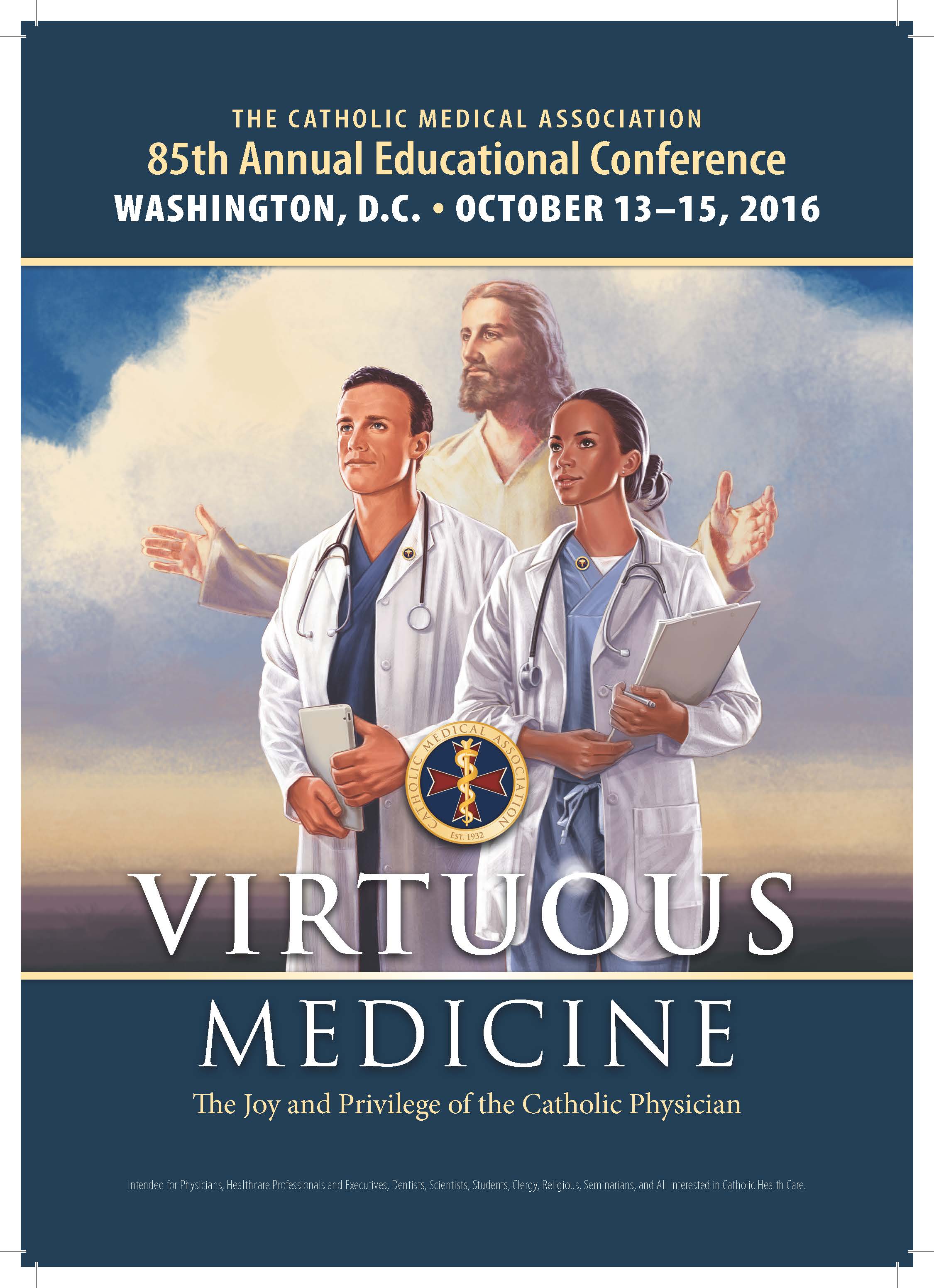
Bishop Conley drilled this further. Joy seems like hard work, he said, but it is possible with Christ. He can work a total transformation in us. Our entire lives must be missionary joy, it's an unshirkable responsibility. This doesn't have to be overwhelming, the Bishop said. This is cor ad cor missionary work--one heart to one heart at a time.

Michael Aquilina spoke on the emergence of the hospital, which paralleled the rise of Christianity. Mr. Aquilina observed that there were resources for hospitals in the ancient world, but the hospital only came about once a religion that valued solidarity, charity, human dignity, and the redemptive value of suffering became legal. He asked a rather chilling question: will the hospital survive in a post-Christian world? I think it's already gone in most ways. The hospital now is a cog in healthcare and research systems, embedded with lots of bureaucracy for the purpose of payment and prestige. Of course, as long as there is illness and as long as there are charitable caregivers, there will be that spirit of merciful care of the sick. But the hospitals of St. Basil, St. Pio, and even St. Theresa of Calcutta are not the ones that western doctors work in now.

Then came the practical advice of John Travaline, a physician and deacon who spoke about practicing like a real Catholic. He stressed the importance of seeing opportunities to restore human dignity to those with diminished personhood, to look for chances to be present to others (e.g. don't double book, imagine the workplace as a holy place, make your office accessible). He stressed that wounds are a sign of God's presence, chances to participate in Christ's restoration of man.

Src: www.catholicmedkc.org
Finally, Dr. Greg Burke reviewed a sample examination of conscience for physicians. Several things were relevant to this theme of missionary suffering and joy. Am I ashamed of my Catholic identity? Am I plagued by guilt without sin (blamed or self-blaming for a case when you acted according to your conscience)? He reminded his audience that it is humanly impossible to know everything. "Don't beat yourself up for being human," Dr. Burke said. Strive to become more and more a saint instead, consult appropriately, avoid scurrilous conversation, and don't worry about the messiness of how it plays out.

All these men encouraged attendees: find in medicine a chance to become Christlike. It was a great message.

This post wouldn't be complete if it ended without my personal reflections on going to the conference. Perhaps this is because I'm used to the breakneck pace of residency, but I found the conference a little slow and a little repetitive. For the first time I was frustrated with the CMA for ignoring a few elephants in the room. Why wasn't anyone talking about NPT and evidence-based gynecology? Why wasn't anyone talking about virtue-based pediatrics? The conference was refreshing because it was more anecdotal and had a looser schedule (very effective for burnout prevention), but I was still hungry for more at the end. Going through the talks again was helpful, but I wish there was more original research and open discussion at these conferences.

Saturday, November 8, 2014

CMA Conference Summary

It has been over a month since the CMA conference. As I proceed through the interview season, I am so glad I went. I actually had an open conversation about NFP with a fellow interviewee on the airport shuttle and was unashamed and excited about it. Thanks, Courage in Medicine.

I'm going to review the five or so talks that I found most meaningful. Check out the entire program booklet here, and order copies of these talks here.

Cardinal Burke: Physicians as Standard Bearers in the New Evangelization
This opening talk was a spiritual alarm clock that I desperately needed. I took copious notes during this talk, and I can't squish it into a short blurb, but here are some pearls:
  • Virtue is the primary method of the New Evangelization.
  • If we have the heart of God, our patient care will transform us, our patients, and the culture.
  • We are not saved by a discovery or work, but by a Person who assumes us.
  • The moral norm isn't an abstract--it's Jesus, so get to know and love Him.
Cardinal Burke urged us to form our consciences with moral study to stave off doubt that there is a moral norm. Since I was thinking of my own timidity and upcoming interviews, the message came through loud and clear that I needed to comfortably, boldly live my faith, reason, and religion as the most formative part of my life. My responsibility (since I've been told the truth) is greatly increased, and I wasn't attending to much of the iceberg of my responsibilities to glorify God.

Mike Aquilina: Challenges Before Us in Historical Perspective
The recent changes in healthcare, pointed out this speaker, are a perfect storm to drive out the people who want to serve. He went through ancient history (especially Roman historians like Tacitus and Pliny) recounting some of the same cultural phenomena we see today, such as the increasing tendency to lavish attention on dogs and to go childfree (to be clear to childfree readers: I list those as two separate tendencies). Mr. Aquilina emphasized that the cultural changes we see now are not original: every time a culture forgot to separate what is good from what is desireable, it excluded some persons (females, elderly, unborn, infants, children, various races, prisoners) from personhood and devalue them. However, Mr. Aquilina also showed that there is a history of the aberration of Christianity upsetting dysfunctional cultures. He concluded that there is no better time for us to be alive and serve; God will equip us, as he has historically.

Father Roger Landry: Bifurcation of Faith and Reason: Unleashing Radical Secularism and Its Impact on Medicine
This priest is remarkable for his use of the word bifurcation and his Latin three-word summary of how we should live. We should live, he says, etsi Deus daretur, as if God was a given. (Obvious as this may sound, it is difficult to do in the sea of relativism that is mainstream education above the sixth grade in this country.) When we live this way, unafraid that robust faith saves and strengthens reason, our lives are integrated. We also reap the following benefits:
  1. We rediscover wonder.
  2. Technological advances don't outstrip moral development. (More on this in a future post, I hope.)
  3. We don't forget the splendor of being a child of God, and we thus avoid devaluing persons.
We should challenge ourselves and our culture: what stands in the way of your practical atheism being carried into Nietsche's will to power? A hazy self-faith, godless altruism, natural law? Impossibly webby barriers to "might makes right." If you don't buy the CD of any other talk, get this one.

Father Robert McTeigue: Moral Courage in Medicine
Chosen to give the title talk at this conference was a very humorous Jesuit priest. Fr. McTeigue charged his listeners with duties to acquire the virtues (which, by the way, are humanizing and good for people). He pointed out that courage exists for the protection of the good. One of the most surprising things he said quoted St. Teresa (I think?) on the two beautiful daughters of Hope: anger and courage. This is why the evil spirit wants so desperately that we despair: when we hope, we have just wrath, and we pounce on evil! We defy it! We unabashedly judge deeds (our own and others'). Fr. McTeigue's final piece of advice: pray "Jesus, I trust in You," and mean, "I don't trust myself."

Dr. Fernandes: Catholic Medical Professionals: Reclaiming Surrendered Ground in Bioethics 
If I wasn't morally awake after Cardinal Burke and the other speakers, Dr. Fernandes would have gotten me out of any relativistic torpor left. This Wright State attending (gently, with humor) lit a fire underneath me. Like Cardinal Burke's talk, I'll just have to give you some soundbites:
  • Make yourself reasonable. Confuse them [relativists and practical atheists].
  • If people are worm food, why should we suffer, delay death, or respect religion as an add-on?
  • Cultural relativism is wrong. What if a culture is intolerant?
  • "Loving" "People" is easier than truly loving persons in front you in the present.
  • Between good and evil, there is no safe place.

Dr. Patrick Yeung: Fertility and Infertility Within a Catholic Moral Vision
Dr. Yeung, who is a professor at St. Louis University and directs the Center for Endometriosis there. He, being a napro-trained OB/GYN, had lots of relevant advice for me. "Do not look at it as a bunch of things you cannot do. Make it green and holistic and positive." "For best results," he also quipped, "follow God's design." One more neat quote: "Optimal medicine is holistic and doesn't solve one problem at the expense of [creating] others."

Sunday, September 21, 2014

I Can't Hide Forever

Me during most of med school.
Credit: CavinLicense
I laid low during medical school. I mean, I started a pro-life med student group, got Maureen Condic to come talk to on our campus, and prayed outside Planned Parenthood in my white coat, but I didn't have a lot of frank discussions with my peers, residents, or attendings about abortion, contraception, and primary sterilization. I stayed in the cocoon of "I don't have to do any of those things, so I don't have to explain why I'm not doing any of those things." (By contrast, one of my friends at another med school started a high-powered NFP group and is always ready to talk about it with poise.)

But I'm beginning to realize that as my responsibilities increase, my ability to hide decreases. A few circumstances have recently brought home how soon my cover is about to be totally blown. Worse yet: I'm about to be required to blow it myself.

Chairman's Letter
When you apply for residency programs through ERAS, you need letters of recommendation; minimum 3, maximum 4. Some programs require a "chairman's letter," that is, a letter from the department head of your chosen specialty. For this reason, I took an elective in the chair's specialty (urogyn) and spent several afternoons in his clinic, trying to show off my clinical skills and seem like an awesome person. I tried NOT to bring up anything related to contraception (should have been easy in urogyn, right??), but the Chair is apparently smarter than that.

Myeughh...why are you so perceptive and direct?
Credit: Niklas. License same.
The first thing he noticed was my cross. I wear the cross of San Damiano every day to remind me to be as humble and pure and excited as St. Francis was to rebuild the church. He asked about it, and he thus learned that I am Catholic. Immediately, he asked me about contraception and abortion. So I explained. 

Later, I arranged a meeting with him to ask for a letter. I forwarded the resume I was going to send to residency programs, which included my pro-life work, degree from TAC, and the Notre Dame Vita Institute. These meetings are one degree above formalities: at them, the letter-writer will inform the letter-seeker that yes, he/she can write a good letter. The writer may ask about career plans and other resume items, or things not on the resume.

He sat me down and said he'd be glad to write me a letter, but he needed to know more about how I would act in a few situations. And then the meeting became like an oral board exam: he pitched two scenarios and asked me what I would do. I knew my letter was hanging on this. Would I help in a C-section followed by a tubal if I was the resident on call for the night, and no one else was there? (Yes to the C-section, no to the tubal; not a great hardship for the attending, I think, if the attending is already scrubbed.) Would I refer to a partner MFM if I, as an MFM, was sent a patient who wanted an abortion? (I would recuse the referral and refer to the front desk.) This caught me slightly off-guard and made me realize that time is coming.

Running the Adolescent Clinic

On one of my rotations (adolescent medicine), I was frequently exposed to sexually active patients requesting hormones, for contraception or otherwise. This made me deeply unhappy and I was not at peace in that clinic, but I deferred management to the attending for the most part, which was easy as the student. I couldn't put in orders without a cosign, so everyone put in their own orders. I would talk around the prescription of oral contraceptives ("She's currently on ortho-cyclen.... She says she needs refills today"). 

One particular attending, an older gentleman, couldn't use the EMR. The residents and fellows usually put in orders for him, but one day there was no resident and no fellow in clinic. As the fellow sent me to clinic from morning rounds, she said, "you're just going to have to put in orders. I'll co-sign them later. Sorry for the trouble; you can figure it out, though."

I was in dread. Happily, a pediatrics resident showed up, so she put in all the orders. There was only one scare: I was the last one to leave clinic (woo-hoo for being a "good" med student), and the nurse ran up to me and said "Someone's order wasn't put in for her depo. Can you put it in?" Luckily I was able to text the fellow. But it's clear that my window of safety is closing.

Preparing for Interviews

I have been repeatedly advised to disclose my "beliefs" to program directors on the interview trail. This makes total sense to me: a residency program is a cross between a large and very consuming practice, a family, and a class. The perspective of a typical OB/GYN resident toward an intern who suddenly announces (after match or just before July 1) that she doesn't do x, y, or z is that the intern is deceptive, lazy, and manipulative. That sort of intern isn't well-liked, and she probably isn't going to get what she wants.

If, instead, the whole package (smiling, interesting, professional applicant with solid CV, grades, and letters, plus some relevant personal beliefs that will require extra work) is sold at once, the bait-and-switch and resulting resentment is all avoided. I might even hope to make the other residents curious about why I've chosen to do what I do.

So the time of hiding is over, and I must know show myself as I am. It'll be hard for me, because I have a strong desire to please, and the "limitations" that I insist on are not pleasing. I need to focus on how true, good, and beautiful my choices are; I need to be unafraid of being misunderstood; I need to be confident that God has a plan (hopefully a residency) for me where I can do His will safely.

Now it's time for courage, which is why I'm so glad that the CMA conference this year is on Courage in Medicine. I'm bending my schedule over backwards to go to it (carving out part of my sub-internship and making a 20-hour drive to my next away rotation), but I want the help. Please help me with your prayers as well.


Friday, February 22, 2013

I'm a Codfish

Source
So, once upon a time I was headed back from an awesome CMA conference, poster tube in tow after presenting the results of a literature search on IVF alternatives. I get in line to board the plane and someone gets in line beside me  whom I perceive to be liberal. I couldn't tell all at once, and it's hard to explain or excuse, but I could tell (and I was right) that this person probably disagreed with 95+% of my social issue positions. I don't remember who initiated the conversation (probably me, believe it or not), but eventually the gentleman asked about my poster tube.

"So, what's that?"

"It's a poster," I explained. "I presented some findings at a medical conference this weekend."

"Oh, really? What's it about?"

And I had a chance to say, "it's about IVF alternatives. Did you know that there are methods that are cheaper and more effective than IVF, but IVF is still treated as 'first-line' therapy by most infertility doctors? Isn't that weird? You'd think couples would like to try something better first, especially if it didn't involve drugs and masturbation. And with everyone complaining about our healthcare system, you'd think we'd prefer cheaper stuff. Right?"

But did I do this? No. My fear of being alienated was so strong that I just said, "IVF."

"Oh really?" the gentleman was pleased. (He seemed sort of leery of me before. Like, 'you're dressed like you think you're body's sacred or something. You must be benighted, backwards, and indoctrinated.')

"My sister is doing that," he said.

Feeling wretched and ashamed of myself, and still not strong enough to tell him what the poster was really about, I started the sympathy song: "Oh, wow. That can be really hard."

"Yeah," he said, his tone and body language heartily agreeing. The conversation went on about how I'd been to college in California (facepalm) and how L.A. is a bastion of liberalism (the first true thing said).

I'm such a coward!

But wait, it gets worse. Last month our class had an exam. A few minutes before it was scheduled to start, the classmate behind me and I struck up a friendly conversation about our streams. I told her that I ranked so that I'd get OB/GYN sometime in the winter. "Oh, that's right," she said pleasantly. "You want to do OB/GYN!" And then, "Are you interested in infertility?"

"Yes!" I said warmly. And I'd already hashed out my shame at the airport failure, and resolved to be more courageous and here was an opportunity. I could have said something like, "I'm really inspired by the speed and success rates of fertility-awareness based infertility workups. Have you heard of that?"

But I didn't. And while I was hesitating, she went on. "I'm an IVF baby," she said happily, smiling as though I would be inspired by this.

There was a very small pause, then I said "Aw, wow!" and my delight was real: I am glad that she was born and glad that she was my classmate. But I was also thinking to myself "oh, gosh, IVF right in front of me," and "glad I didn't say anything bad about IVF," and "I guess Mormons must not see a problem in IVF" and "can we please start this GI test so that I can make decisions on multiple-choice questions instead of with conversations and IVF??"

More courage is needed. Good thing it's Lent.
Finally, draw your strength from the Lord and from his mighty power. Put on the armor of God so that you may be able to stand firm against the tactics of the devil...and, having done everything, to hold your ground. So stand fast with your loins girded in truth, clothed with righteousness as a breastplate, and your feet shod in readiness for the gospel of peace. In all circumstances, hold faith as a shield, to quench all [the] flaming arrows of the evil one. And take the helmet of salvation and the sword of the Spirit, which is the word of God. With all prayer and supplication, pray at every opportunity in the Spirit. To that end, be watchful with all perseverance and supplication for all the holy ones.... (Ephesians 6)

Friday, October 12, 2012

The Priest and the New Evangelization

Rev. John Bartunek's presentation entitled Making All Things New: The Priest in the New Evangelization was arguably the best talk at the conference. (So if you haven't bought any recordings yet, now is the time.)

The priesthood, Fr. Bartunek stated immediately, is for the Church and for others. Rather than give a theological exposition of the priesthood, he instead listed three demands being made on priests now, and ways laypeople can help meet those demands.
  1. Priests will need to be ready for martyrdom.
    There were no analogies about "a kind of martyrdom." This is real death he's talking about. The springtime of the Church comes only after the planting of seeds, and the seed of the Church is the blood of the martyrs.

    Things laypeople should do: pray for priests
    .

  2. Priests will need to work harder than ever. There are more souls in grave need than ever before due to increased population, decreased prevalence of Christiantiy, increased prevalence of ex-Christianity and new atheism, and new sorrows (abortion, drugs, porn). There are fewer priests in many places.

    Things laypeople should do: connect the spiritually and physically needy to the priests (keep the priests busy)
    . Things like the Legion of Mary, Regnum Christi, and dozens of other lay movements are terrific at this. New media initiatives are also excellent.

  3. Priests will need to renew their commitment to becoming experts in things of God. Priests should be examples of great holiness and they must be specialists in promoting the interior life or the encounter with God. They must pray, be men of God, and nourished by grace.

    Things laypeople should do: ask priests to do priestly things! It reminds them of their calling.
    Have a priest give a benediction to your group or bless your house/office/car/dog/wine (I'm serious)! Just like patients remind doctors of their vocation, laypeople remind priests. It's a brilliant setup.
The last one is my favorite, but I love it all. Bl. John Paul II said that the world looks to the priest in this time of turmoil. Let us look to the priest, strengthen him, and help others to find him, too!

Wednesday, October 10, 2012

The Call to Holiness = The Foundation for Catholic Health Care

St. Basil, one of the founders of the
Catholic hospital (a.k.a. one of the
founders of modern hospitals)
This was the title of the talk given by Fr. Joseph Johnson at the CMA conference last week (except he used a real predicate instead of an equals sign).

I completely agreed with his thesis before Fr. Johnson ever stepped behind the podium. Ever since reading How the Catholic Church Built Western Civilization and being floored repeatedly by the chapter on the Church and healthcare, I've agreed with this thesis.

Thomas E. Woods, author of the above, chronicles saints' work to build hospitals and fill them with the sick, especially the poor, the family-less, and the homeless. Importantly, Woods emphasizes that this work stemmed directly from the saints' understanding that their faith demanded it. Becoming holy required God-like deeds which (for a religion proclaiming a God who was Mercy itself and had exhibited that Mercy in countless healings and acts of supreme self-sacrifice) meant works of mercy.

(This makes me want to spiral off into a discussion of love, and how true Love is only had by mirroring Christ and anyone who agrees should readily understand the doctrine that there is not salvation outside the Church...but we'll stay on-topic.)

Medicine, Fr. Johnson said, is elevated from a career to a vocation because healthcare workers earn their daily bread by touching Christ in their patients and being Christ to their patients. Asked what the solution was to the healthcare crisis, Fr. Johnson simply said, "we need saints." We need people who will restore compassion to healthcare and repair the patient-doctor relationship to the Love with which it was inflamed in the first hospitals.

A Catholic doctor wishing to become such a saint seeks more than good bedside manner; he seeks a sincerity that stretches him and makes him more Christ-like.

Isn't it naive, an objector might ask, to approach the culture of death (so many problems!) with only these scant recommendations?

Hardly, Fr. Johnson retorts. The above is a full-bodied prescription for sainthood. Here are its ingredients:
  1. Formation. Nemo dat qui non habet, and action follows contemplation just as it did for the saints Woods discussed. Prayer and study of Scripture and theology fill us and motivate us to love others and teach others. Without prayer and study, all our frenetic activity lacks meaning!
  2. The Sacraments, especially the Eucharist and Confession.
  3. Sacrifice, which allows us to learn to love as He loves.
  4. Adherence. Never excuse yourself from this! This represents a change in the spiritual diet, but be a compliant patient of the Divine Physician. Remember that your patients need a doctor who is Christ-like.
A crucifix in Vilnius. (The triumph of love.)
Simple, but not easy. We need to learn to love better, or we need to learn to allow Christ to love for us. Luckily, medicine presents constant opportunities for the physician to increase in love, Fr. Johnson said. The need of others becomes an opportunity to serve Christ. In fact, some of those early hospitaller saints would call patients "my Lords, the sick and the poor." This reminds me of the additional Divine Praise that Missionaries of Charity say at Benediction: "Blessed be God in his most distressing disguise," meaning that each poor person they serve is God.

To become a saintly doctor, Fr. Johnson concludes, is exciting. It is to realize St. Teresa's poem; it is to become a lover, not a fixer (because Jesus is a lover, not a fixer); and it is to triumph, because we already know that Love has triumphed.


Monday, October 8, 2012

The Crisis of Modernity: The Past two Popes and the Church of the 21st Century

The first speaker of the CMA conference last week was George Weigel; this was probably vital since the conference had stolen its title right from Weigel's 1999 book A Witness to Hope: The Biography of Pope John Paul II.


Still being in student-mode, I took copious notes. Mr. Weigel, alluding to Alisdair MacIntyre, began by saying that our culture possesses the language of morality without theoretical or practical comprehension of what the language expresses. I vehemently agree! Post-Christian healthcare as it insists on human dignity and simultaneously affirms unbridled human autonomy doesn't realize what it's talking about.

To discover how we got into this situation, Weigel next reviews Marx, Bentham, and Hume: Marx, who thought that the good was some glorious society of men, the pinnacle of evolution; Bentham, that the good was the benefit to the greatest number; Hume, that morality could not be derived from reality. Granted, each of these develops into a different dystopia (for Marx, see 1984 or your history book; for Bentham, see Brave New World or the newspapers; for Hume, see both).

But all three had direct political and practical effects: morality, unrelated to reality, became arbitrarily or socially derived. Politics, unrelated to reason, became a business or utility. The purpose of life collapses into social or hedonist utility and the long-asked, bigger questions about beauty, goodness, and being become irrelevant.

Utility (not dignity) became the measure of a man's worth, because to dismiss these questions (as part of a dismissal of higher purpose, need for salvation, etc.) is to dismiss man's nature, designed to appreciate created and uncreated truth, goodness, beauty, and being. A dismissal of such a particular rational nature includes all that comes with it, including dignity, since man's nature alone (among material creatures) was made in the image of God.

This leads to "a pulverization of the fundamental uniqueness of each human person" (Henri de Lubac). Fortunately, the cure is well-known and easy, if long: we must daily confirm the richness of each person, founded on the Incarnation* and defended by true philosophy. Practically speaking:

  1. By applying Christ, our Remedy, we can heal. Therefore, promote the Sacraments and Scripture and transform our lives to be Christ to others.
  2. The culture is not neutral or permissive to passing on the faith. But don't just sit there pouting about it and feeling all righteous. Convert the culture, with a return to virtue ethics!
Long story short: great talk.

Sunday, October 7, 2012

CMA Conference Debriefing

Cathedral of St. Paul, St. Paul, MN.
Last week I attended this year's annual CMA conference, held in St. Paul, Minnesota! It was a very good conference. At first, I was captivated by the excellent lectures by speakers such as George Weigel and Rev. Michael Keating. (Recordings available in the CMA online store.)

But soon, I was very surprised to realize that there was very little medical content in the talks. There were a dozen talks about philosophy, history, law, diabolical forces, vocations, the Vatican, politics, new media, the priesthood, personal holiness, and beauty. There were only three or four talks directly related to medicine: Rev. Robert Sirico of the Acton Institute lectured on allocating scarce resources; Dr. Lester Ruppersberger shared how he went from prescribing contraception to using NFP only; Dr. Wes Ely discussed end-of-life ethics; and Jere Palazzolo shared his work toward a stateside Casa Sollievo della Sufferenza.

I was also amazed by the number of people attending the conference (six hundred), which was much larger than the 2008 attendance. The medical student number had doubled or tripled.

Is this the same CMA?? I wondered. I liked that many of the talks in 2008 were medically-driven and given by physicians, and I'd been amazed and pleased that ethics was consistently dicussed about every medical question, not just the hot-button issues. (For instance, there was a talk on when plastic surgery is morally appropriate; the surgeon giving the presentation described how the body is an important part of us and can affect our esteem, health, and peace. Any surgery advancing could be defensible. He especially focused on rhinoplasties and breast reduction.) In addition, physicians were very thoughtful of their patients and of the human person. (Another example: there was a talk about sexuality in the older patient, and questions to ask to ensure that he or she was undergoing the aging changes well or needed help in this weighty area.) I spoke to several of this year's attendees who remarked that even last year's conference was more medical.

But after a little thought, I realized that this year's conference was very necessary, and very good. The explicit political-commercial healthcare crisis the Church in the U.S. is facing exposes the need to confront the culture more than ever and dramatizes our call to holiness. This might explain the high attendance and the shift in topics.

Imitation of the Pieta, Cathedral of St. Paul.
Like 2008, this year's conference didn't skimp on the perks: the Rosary was prayed each morning, Holy Mass (with bishops, ten priests, chanted introits, and an organ!!) followed, the Blessed Sacrament was continually available for veneration, confession was offered almost constantly, and the conference culminated in the White Mass held at St. Paul's beautiful Cathedral.

Like 2008, there were many religious there, including the Religious Sisters of Mercy and some Little Sisters of the Poor, both of whom I love.

Unlike in 2008, this conference was made an indulgenced act (there was an indulgence granted to all who attended and who met the qualifications to receive it)! The Church and her Master are so, so good! Imagine: I can gain a plenary indulgence for a soul by spending a day at a professional conference, receiving Our Lord, praying for his Vicar, and being free from sin. Talk about making ordinary acts holy....

I'd like to spend a few posts reflecting on the talks I think were the most content-rich, necessary, and effective. Until then: this has been your shameless plug for the CMA.

Monday, September 17, 2012

YAY!

So, the meeting today with CMA-SS's advisors about whether we're going to become an actual chapter of the national CMA-SS was...a complete success!

The advisor who expressed doubt about the cost/benefit ratio of chapterhood spent 90% of his time talking about how we could raise funds to pay the dues. The other advisor did the same. It was great to sit down and talk about what the group can realistically be. (And what we can be is exciting!)

Aaand, that's all I have to say. Sorry for the measly blog post.

Sunday, September 16, 2012

Fortnight of Frenzy?

If I survive the next two weeks, it will be a feat of incomparable scheduling gymnastics. Watch what's happening:
  1. Sept 17: CMA meeting to decide if our local CMA-SS will be a chapter of the big CMA-SS (involves finances and money, etc yuck)
  2. Sept 17-20: Lectures covered by Exam 2
  3. Sept 20: MedSFL reception in Houston (I'm going for fundraising and networking) [too crazy]
  4. Sept 21: Exam 2
  5. Sept 24-27: Lectures covered by Exam 3
  6. Sept 23: first (mandatory) meeting of bible study I signed up for
  7. Sept 23: monthly Mass with CMA-SS members
  8. Sept 25: MedSFL meeting at my school (big event I've been working on for about a year, or maybe since June 2011)
  9. Sept 26-30: CMA Conference, at which I am presenting a poster. If it seems odd that I be in Minnesota at a conference and at home taking an exam, don't be confused, because...
  10. Sept 25: I take Exam 3 early (four days after Exam 2)
In order to do this, I am studying Exam 3 material now. (It's awesome, it's all about cardiac conductivity; I just wish things were a little more spread out.) I'm grateful that I'm not in the anatomy lab, that I've been taught cardiac physiology at every level of my education since age 14, and that Our Lord is present in the Eucharist all the time, waiting for me to lay the head of my soul on his Heart when everything gets too hectic. 

Hopefully, this won't be a frenzied time, just a very, very busy one where I hang on to Christ's peace until the whirlwind is over.

Friday, September 14, 2012

Law, Tests, and Posters

After taking Spirituality in Medicine and Literature in Medicine, I jumped at the newly-opened chance to take something a little more hard-core: Law and Medicine. We're learning all about the role of the expert witness, which is how doctors (who aren't being sued) see the inside of courts most often.

Also, today I took the first Cardio exam! It went well.

Afterwards, I picked up the printed poster I created for the upcoming CMA conference! I am very excited. Here's the abstract that goes with the poster:
Repair of Fallopian tubes (tuboplasty) was the standard of care for tubal disease before the advent of artificial reproductive techniques like in vitro fertilization (IVF). Tuboplasty is a morally acceptable treatment for women with tubal factor infertility. 
The recession and the upcoming compensation changes in the Patient Protection and Affordable Care Act provide stimuli for mainstream medicine to prioritize what Catholic gynecologists know to be the ethically superior treatment. This year, the Practice Committee of the American Society for Reproductive Medicine (ASRM) edited their Opinion on tubal surgery: where they had recommended IVF as the preferred treatment option for any woman with tubal disease, they now recommend tubal recanalization techniques for treatment of several tubal disorders in young women with no other significant infertility factors. 
This presentation aims to review the research prompting the ASRM’s shift and the potential corresponding shift in medical practice. Surgical techniques reviewed include falloposcopy with a linear everting catheter, guidewire cannulation, coaxial cannulation, falloposcopic catheterization, selective salpingography, fluoroscopy, and hydrotubation. The best of these techniques have success rates similar to those of IVF and should be preferred for medical and economical reasons, if not moral ones. 
In conclusion, there are manifold opportunities to increase availability of IVF alternatives in mainstream gynecology, especially to young women who suffer from tubal factor infertility. At the same time, gynecologists have a chance to popularize ethically superior alternative treatments and raise discussions among their colleagues about other morally excellent practices.

(Like NFP.)

Wednesday, July 18, 2012

The Stuff I've been Knee-Deep in

So, you probably already know this, but there is a small explosion going on in the world of contraception. I am talking about 1flesh.org, the brainchild of BadCatholic's Marc Barnes plus (an apparently large) number of young adults. They've taken Janet Smith and added all the flippancy of the meme age. PP and Jezebel aren't happy. Excellent.

EDIT! I am also super excited about IuseNFP.com. I was thinking 1Flesh was getting a little negative and needed some positive "this is what NFP is" action, and the next day they linked IuseNFP.com. How perfect!


In other news, I am working on abstracts for the poster session of the CMA. One is about tubal surgery to open/heal fallopian tubes in women with tubal factor infertility. This is an ethical alternative to IVF and growing in popularity in mainstream gynecology because it can allow a pregnancy rate very close to IVF's. I'm super excited about this, because I'm discovering I love surgery and tuboplasty has long been a part of surgical naprotechnology.

I deferred my application to the Pope Paul VI institute's Medical Consultant program because of lots of commitments during this school year. However, I asked them to hold my application for two years, since I hear fourth-years have tons of time.

In the meantime, WYA is launching Fertility Education + Medical Management (FEMM), and with a weekend in New York this September, I might be able to become a FEMM teacher.

I've finished the opening work on my local Med Students for Life and CMA-SS websites (no, I won't be linking those) and I've put out emails so that people can review and offer to add content. Hope that works....

I made really tasty Jambalaya...I soaked and cooked red beans in water with onion powder and chicken bouillon, and there was just enough water from the beans to cook all the rice and shrimp. Admittedly, I used a mix, but I still felt like a chef.

School starts in three weeks. I have that familiar back-to-school feeling: May seems long ago, but at the same time it feels like yesterday.

Tuesday, May 29, 2012

Personal holiness vs. Service?

Cool things happened last Friday: I went to early morning Mass and received the Eucharist from my CMA-SS chapter advisor (the altar server and extraordinary minister). Later in the day, learned that if I complete the PPVI Medical Consultant program, it will go in my dean's letter (!). Still later, I gave a quick presentation on our CMA-SS chapter to the incoming M1 students. Finally, I met with a neuroscience faculty member to present TAC's modus operandi. (It's not clear to me that TAC's style is doable right now for my medical school, but I enjoyed showing off how it is the ultimate, perfect, and best style for integrating knowledge.)

But the post is not about the whole day, it's about something interesting I noticed when I gave the CMA-SS presentation. I was the first of the ten organizations presenting, followed by the Christian Medical Association. My focus was strongly placed on personal holiness--our main events are prayer before class, Mass together, understanding Church teachings, and attending CMA conferences. By contrast, The Christian Medical Association mentioned bible study, but spent most of the presentation on their mission trip.

Photo credit: basictheory
Mission trips are excellent (I do not want to be misunderstood at all: mission trips are wonderful). But in my experience of American Christianity there is an overemphasis on service and an underemphasis on perfection. This is sadly ironic, because it not only depletes our interior lives but undercuts service! (If we do not have our own souls in order, how can we bless others?)

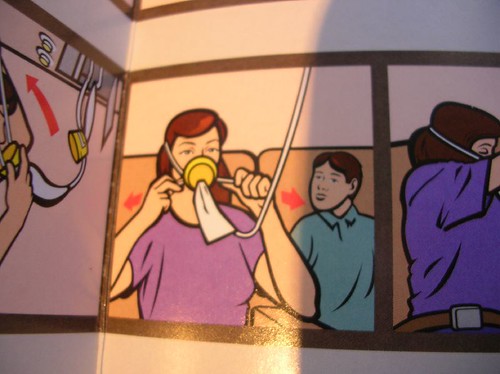
Some might say, how can we focus on ourselves before others? That isn't Christ-like! I reply that serious and continued formation before placing oneself at the service of others is necessary and rational. (What to the flight attendants tell us about oxygen masks before every flight?) What is rational is Christ-like: Truth Himself is sensible, not only in an abstract and absolute sense but in His intimate knowledge of our human nature.

Source: nashvilledominicans.org
The Dominican sisters of St. Cecilia articulate the relationship between personal holiness and service nicely:
The glory of God and the salvation of souls has been the goal of the Order of Preachers since the Order’s foundation in the thirteenth century. Following in this tradition, Dominicans continue the mission of preaching and teaching, contemplating and giving to others the fruits of their contemplation, in order to achieve this end.
So, hopefully, our CMA-SS will continue to focus on personal holiness to enable our avocation of service and enrich it. I am planning to host a website for our chapter and will make a point of drawing attention to this.

Saturday, April 28, 2012

Catholicism > humanism, based on rigorous criteria

When you join the CMA you get a pin. Now I can replace the "Humanism in Medicine" pin on my lapel with the AWESOME Catholic pin which is not only bigger, but in color. Add a precious feet pin and I'm all set.

The coppery humanism pin has a picture of a heart-shaped stethoscope on it.
The CMA pin has a gold caduceus superimposed on a red cross over a deep blue  background,
rimmed in gold. It's practically a coat of arms. "Epic win" is now spelled "h-o-l-i-n-e-s-s."


Thursday, March 29, 2012

Catholic Medical Association: Student Section

So, I realized the purpose of this blog is to record my experience as a Catholic medical student. So here's something to report:

This week our Catholic medical students group brought in a priest and an ER doc to answer questions. I forgot to count how many people came, but I estimate we had almost 20. That's about four times the usual attendance, so I'm pretty excited! There were still a few Catholics in my class who didn't come, though, so there might be room to improve.

I want our group to be a chapter of the Catholic Medical Association - Student Section and am working toward this. Surprisingly, I feel some pressure from our advisors about Catholic identity. The same advisors who said we couldn't host a pro-life Catholic speaker (excuse was being a publicly-funded university system) say that the dues the CMA charges might be too steep for the benefits we gain.

What?
  • First of all: grace is priceless. The graces of community (with other Catholic medical professionals) and the merits of others' prayer and sacrifice are beyond purchase. Invisible, but invaluable.
  • More earthly now: the Linacre Quarterly is the bomb. It's like the NCBC publications, except medical enough to be fun. Plus, there's other members-only content on the CMA website.
  • Also earthly: CMA membership = CMA conference scholarships. And CMA conferences are incredible. Are you going to A Witness to Hope: Medicine and the New Evangelization in 2013?
  • And last: what's $45? Sure, membership in lots of other medical associations is free for students, but truly...what's $45? Four days of groceries, tops. So fast for the Fridays in Lent and you've bought yourself a CMA membership.
Anyway, the upshot is: the Catholic group here is giving me mixed feedback. This has been your report on my experience as a Catholic med student.

Tuesday, October 18, 2011

CMA plug

The Catholic Medical Association (CMA) is an excellent group: its theology is orthodox and its priorities are straight. I've been to one of their conferences before, and I was floored: solid philosophy, wholesome theology, strong science, daily Mass and confessions, relics of St. Gianna Molla, exposition of the Blessed Sacrament...I could go on. It has a Students Section (CMA-SS), and a student wrote a reflection on this year's conference:
This year’s national conference could not have come at a better time in my medical school career, a time when I am nervous about choosing my specialty and honestly struggling to balance my work responsibilities with the time needed to lead a fulfilling, God-centered life. I feel like God placed this 3 days of conference right where I needed them to re-center my purpose in medicine and to rededicate myself to a life centered around Christ. I once read that it is the most important things in life that we need reminded of most often. This conference was my reminder.

Continue Reading A Reflection on 2011 CMA Conference

Brian B., another student of CMA-SS blogs at The Catholic Medical Student. He is very articulate and writes longer, more focused pieces than I do. I highly recommend his work.

I am becoming a leader in my school's chapter of CMA-SS, so I'm thinking a lot about the CMA lately. I hope I can be a good leader; there are some lukewarm Catholics among my classmates, and I would love to aid Christ in seizing their souls.

Thursday, September 1, 2011

Daily Schedule 2

My day has changed a little bit, since I'm part of some study group and my roomie has moved in.

7:00ish - wake up, pray. Only sometimes walk to mail kiosk, get mail.
8:00 - breakfast
8:30 - leave for school
9:00 - class
12:00 lunch/interest group meetings
1:00 - more class
3:00 - more class or lab (some days) or group meeting
5:30 - Mass, only sometimes
6:30 - go to group meeting (or to anatomy lab)
9:00 - go home, study
11:00 - Evening prayer and bed

Ew. I liked the first schedule better. (Guess who's going to quit some groups?) I want daily Mass, and I want more prayer. Meetings and stuff take the best parts of my day and keep me in the tunnel of a very worldly day. Here's my goal for the next two weeks:

6:45 - wake up, pray
7:00 - walk with notecards on iPhone (get mail)
7:30 - get ready
8:00 - breakfast
8:20 - leave for school (traffic is up since the undergrads started school last weekend), Rosary in car
9:00 - class
12:00 - Midday Prayer, lunch, study (occasional interest group meeting: I only want to be part of OB/GYN and psychiatry, but maybe I'll dip into internal med and family med)
1:00 - class and studying afterwards
5:30 - Mass, sometimes confession beforehand, read from the Church fathers on virginity
6:15 - go home and study
10:30 - Evening Prayer, dishes, bed


Friday, August 26, 2011

Med Student Life and Premed Questions, pt 1

First and second year. One of the things I really wanted to know as a premed was what med students' schedules look like. I have attached my schedule for this week and next week as pictures. We have a block curriculum and have tests every two or three weeks. Click to enlarge.


Premeds: ask the first- and second-years (not the people who present the curriculum) what the curriculum is like: how often do you have tests? do you learn by system, by region, by clinical presentation...? when do you get clinical skills? do you have problem-based learning or clinical correlations? are you required to shadow or volunteer? when do you see standardized patients or use the simulation center? are the students competitive?