Showing posts with label surgery. Show all posts

Saturday, December 30, 2017

OB/GYN Ethics 301

In OB/GYN Ethics 101 I went over topics for medical students, residents rotating through OB/GYN settings, and OB/GYN interns. In OB/GYN Ethics 201 I reviewed topics for OB/GYN residents in generalist settings. Now I need to review a few subspecialty concerns with a fine-toothed comb, especially those not focused on pregnancy and maternal/fetal vital conflicts.

Please remember that I'm not a moral theologian. I'm one resident talking to another, and I am happy to engage in discussion and to retract whatever is in conflict with Church teaching.

REI

Img credit: RWJMS IVF Program, Wikimedia commons.
As in OB/GYN 101, observation of almost everything is okay. Observing gives you a better ability to talk to non-healthcare practitioners (e.g. patients, parishioners, priests, even ethicists) about things they may never see.

You can participate in and perform follicle scans, simple procedures such as transvaginal cyst drainage, medical management with provera (or other progestins), letrozole (or other aromatase inhibitors) clomid (clomiphene), follistim (urofollitropin), trigger shots (b-hCG), GnRH pumps, and anything else that won't have post-fertilization side effects.

You can participate in prenatal genetic diagnosis (or screening) with great caution. PGD is a biopsy of a large percentage of a human embryo's body; it's a significant procedure for that little person, but in itself it's a biopsy, not an act of killing or mutilation. If you know or suspect that the embryo being tested may be rejected (destroyed or cryopreserved), this may be proximate cooperation in evil and you may incur some of the guilt in that act. It's rare that the embryologist would let you do this, anyway.

You can observe but not participate in semen washing, egg harvests, and intrauterine insemination (IUI). These replace or interrupt intermediate steps in sex (semen washing replaces filtering and capacitation of sperm; egg harvest interrupts local motion of eggs; and IUIs replace local motion of sperm after ejaculation. (To clarify for those who have done bench research: semen washing of animal samples or of human samples intended for research does not carry the same gravity, even if the human samples were obtained through masturbation. The participation in masturbation is remote, mediate, material cooperation in the evil and does not confer guilt in the act.)

Family balancing by selecting embryos after prenatal genetic diagnosis is immoral; family balancing that includes embryo destruction is gravely immoral. Selective reduction is gravely immoral. Avoid witnessing destruction of embryos or selective reduction. Counsel against selective reduction.

The standard of care is now clomid/IUI for unexplained infertility, followed by homologous or heterologous IVF with embryo transfer (ET) if that doesn't work. But you'll find a lot of acronyms in Catholic bioethical literature. These are mostly from the early days of IVF when people were attempting to find techniques that boosted success rates. Eventually, REIs and ASRM realized that IVF/ET was easier and nothing else made a difference, except for ICSI (see below). Bearing that in mind, here is a quick list of acronyms, defnitions, and comments that you might encounter from bioethicists:
  • GIFT/TOTS: gamete intra-fallopian tube transfer, not permissible because it replaces the marital act, if sex is every involved (e.g. by collecting sperm in a perforated condom) it is only accidental
  • ZIFT: zygote intra-fallopian tube transfer, ethically analogous to ET, which transfers an embryo into the uterus (see below)
  • LTOT: low tubal ovum transfer, moving an egg from the ovary to the isthmus of the fallopian tube or even to the uterus, without removing it from the body is LICIT when there is intention of fertilizing it with an act of intercourse and not IUI.
Img credit: RWJMS IVF Program, Wikimedia commons.
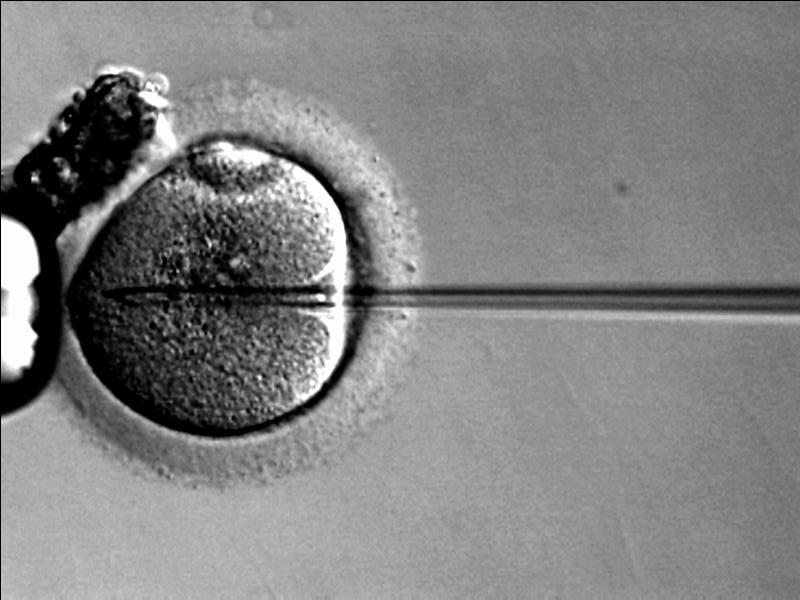
Intracellular sperm injection (ICSI) injects a sperm directly into an oocyte (see left). It's used for very abnormal or poorly motile sperm and low sperm count. It replaces part of the sexual act and is not licit; do not participate, although you may observe.

Embryo transfer is a slightly hot topic within bioethics. However, I don't see it as that contentious. Fertilization has already occurred, and the sex act has been totally replaced. The local motion of the embryo into the uterus is actually a step in gestation. It seems that ET, therefore, is not illicit and you should actually rejoice that an embryo is being given its rightful place instead of being condemned to that "absurd fate" of cryopreservation.

INVOcell is a new technology being marketed as "mini-IVF," and it basically replaces the embryology lab with a small plastic capsule carried inside the patient's vagina during a several-day incubation period. This conserves funds used to pay an embryologist, maintain sophisticated lab incubators, and maintain multiple federal standards. INVOcell still involves removal of the egg from the patient or use of a frozen egg, masturbation or sperm donation, fertilization outside the body, and ET. It can still involve PGD and embryo destruction or cryopreservation. Treat INVOcell as you would IVF.

Third party reproduction is use of a gestational carrier or use of donated gametes. As a trainee, there is little to nothing you can do about it, as most couples will come to their REI already with a gestational carrier in mind or will elect to use donated gametes without your counseling. If offered the opportunity to counsel on third party reproduction (especially gestational carriers), offer the patient the complex legal truths surrounding these entities, and recommend they speak to a lawyer, to trusted friends and spiritual leaders, and to seriously consider the possibility of adoption.

Transgender medicine is a misguided effort to alleviate real suffering that individuals feel due to a mismatch between their phenotypic sex and their psychological perception of their gender. Hormonal treatment in these cases, like in cases of fertile women seeking contraception, is manipulation of a healthy organ and not medicine. Surgical transition is mutilation of healthy organs. Do not participate.

Sexual Health

There is a lot of material in treatment of orgasmic disorders that amounts to pornography and masturbation. You may teach a woman the location of her own organs with diagrams and even with a mirror, but be very careful to maintain clinical professionalism and (obviously) always have a chaperone in the room. You may explain the function of these organs and how women experience orgasm (including how they experience it differently). With the magnificent teachings of the theology of the body, reassure women that sex is good, that it is meant to be enjoyed.

You may recommend a patient to psychological or psychiatric services for comorbid disorders. Be careful when recommending her to mental health services simply for her sexual dysfunction, as they may recommend illicit methods to become more comfortable with sexuality. Do not refer her to explicit websites or video series. Do not recommend self-stimulation. Do not recommend experimentation with more than a spouse.

Psychiatry

A relatively prominent problem that has come up since I've started this blog is quality of psychiatry services. Some mental health professionals, especially those who adhere to the whims of the APA, not only have incorrect ideas of sexuality but also have incorrect ideas spirituality and medications. Others are incompetent.

I've seen OB/GYN residents and fellows of all stripes struggle with conflicts with consultants. Bottom line is: if you don't think the provider will offer benefit to your patient, don't consult them. Consult someone else. If there is no one else, use experts available in other venues (online, prior institutions) to answer your clinical question.

Vulvar care

As with sexual health, anything amounting to masturbation should be avoided. In general, the other meds, lubricants, behavioral modifications, and hygiene counseling in vulvar care is licit.

End-of-life (GYN oncology)

Futility of surgery: many, many times residents in my program have operated while not being excited about it, although we're young and maybe don't understand everything. If your conscience moves you to protest a surgery based on a patient's medical fragility, say so and consider escalating it to the ethics committee if you have an appropriate way to do so.

Some oncologists do not give percentages for success for treatment unless a patient asks. Others always deliver expectations. If a patient asks for a percentage of success, always give an evidence-based, up to date number or offer to ask someone for the answer and do not rest until the patient gets an answer or says she doesn't want one after all. If you believe someone is being led to chemo or to hospice out of a wrong idea of percentages of success or failure, ask the attending and ask the patient what their view of the situation is, before wading in.

Ethics committees are great except when they're ineffective or pancretist. When faced with an ethics committee that cannot find the moral truth, many trainees are powerless. It is licit to withdraw your opposition in the face of impossible odds, but it is best to make it clear that you still maintain your position and beliefs.

Hospice is great except when its not. Sadly, since I've started this blog I've realized that not all hospice programs are focused on the patient's autonomy. If hospice personnel at the program that will be covered by the patient's insurance demand code statuses that the patient does not want, or demand POLST or other documents the patient does not want, offer to provide similar services (e.g. narcotic and benzo scripts, DME scripts, megace/nutritional scripts, anticholinergics) through the resident clinic or another venue. Never participate in physician-assisted suicide. Counsel actively against it.

Saturday, August 30, 2014

Organ Donation: Is Your Soul Gone when Your Brain Dies?

I had some experience while on my trauma/acute care rotation with brain death and organ harvesting. One of my good friends was on the transplant service at the same time. "I think there's a harvest tonight," I said to him one day. A patient on our service, who had come in with severe brain damage after a hallucinogen-associated accident, had been declared brain dead. His family had consented to donation. I saw the organ donation representative with his binder and papers hovering around the room. And the patient's name disappeared from our check-out list (the list we keep of the patients so that we can hand them off to the night team). Sure enough, there was a harvest that night.

It sounds macabre, and it is. Late one evening, I was walking down the long hall of operating rooms to get a snack out of the physician's lounge. I passed by the screen at the front of the OR that displays all ongoing surgeries. Each operating room has a row, and the cases stretch out like long ribbons along the row, with every hour taking about three inches on the screen. Because it was 7:00 or 8:00 in the evening, no elective cases were scheduled. There was a laparoscopic appendectomy posted for the near future: it was about eighteen inches long on the screen. But at the bottom of the screen stretched an enormous band of orange, disappearing to either end of the screen. "HARVEST" was the procedure.

I walked down the hall. Outside the room's door were many styrofoam crates with plastic bags labeled "human organ for transplant" and advisories about temperature and transport. There was a liver box, a kidney box, a heart box, a box for blood.... No shades were drawn over the windows, so I looked in. The body on the table looked pale; I later realized that this was because blood was being taken. And instead of a cot or hospital bed waiting outside the door, as in every surgery, there was a long box on wheels. A tank, from the morgue.

The Catechism, in 2296 (in the section on Respect for the Person in Scientific Research) has this to say about organ donation:
Organ transplants are in conformity with the moral law if the physical and psychological dangers and risks to the donor are proportionate to the good sought for the recipient. Organ donation after death is a noble and meritorious act and is to be encouraged as a expression of generous solidarity. It is not morally acceptable if the donor or his proxy has not given explicit consent. Moreover, it is not morally admissible to bring about the disabling mutilation or death of a human being, even in order to delay the death of other persons.
I had heard the horror stories about people (rather than bodies) being harvested. But med school gave us training to recognize legitimate brain death. This included forceful reminders that that two physicians must agree on the criteria. But is brain death a suitable way to determine that the soul is gone?

Maureen Condic, Ph.D. wrote a helpful essay entitled "Life: Defining the Beginning by the End." Published in 2003 by First Things, the essay discusses the beginning of life by considering death. I was already a Condic fan, because of her phenomenal (and unsung) white paper on the beginning of life, and because I was a Vita Institute participant.

Condic highlights the distinction between cellular (or even organ) life and life of the organism. (Busy people read the bold.)
Brain death occurs when there has been irreversible damage to the brain, resulting in a complete and permanent failure of brain function. Following the death of the brain, the person stops...sensing, moving, breathing...although many of the cells in the brain remain “alive” following loss of brain function. The heart can continue to beat spontaneously for some time following death of the brain (even hearts that have been entirely removed from the body will continue to beat for a surprisingly long period), but eventually the heart ceases to function due to loss of oxygen....

The fact that the cells and organs of the body can be maintained after the death of the individual is a disturbing concept. The feeling that corpses are being kept artificially “alive” as medical zombies for the convenient culture of transplantable organs can be quite discomforting, especially when the body in question is that of a loved one. Nonetheless, it is important to realize that this state of affairs is essentially no different from what occurs naturally following death by any means. On a cellular and molecular level, nothing changes in the instant of death. Immediately following death, most of the cells in the body are still alive, and for a time at least, they continue to function normally. Maintaining heartbeat and artificial respiration simply extends this period of time. Once the “plug is pulled,” and the corpse is left to its own devices, the cells and organs of the body undergo the same slow death by oxygen deprivation they would have experienced had medical science not intervened.

What has been lost at death is not merely the activity of the brain or the heart, but more importantly the ability of the body’s parts (organs and cells) to function together as an integrated whole. Failure of a critical organ results in the breakdown of the body’s overall coordinated activity, despite the continued normal function (or “life”) of other organs. Although cells of the brain are still alive following brain death, they cease to work together in a coordinated manner to function as a brain should. Because the brain is not directing the [diaphragm] to contract, the heart is deprived of oxygen and stops beating. Subsequently, all of the organs that are dependent on the heart for blood flow cease to function as well. The order of events can vary considerably (the heart can cease to function, resulting in death of the brain, for example), but the net effect is the same. Death occurs when the body ceases to act in a coordinated manner to support the continued healthy function of all bodily organs. Cellular life may continue for some time following the loss of integrated bodily function, but once the ability to act in a coordinated manner has been lost, “life” cannot be restored to a corpse”no matter how “alive” the cells composing the body may yet be.
If that sounded interesting to you, I encourage you to read the rest. Condic goes on to talk about how this definition excludes persistent vegetative state (i.e. we can't argue that Terry Schiavo should die from agreeing that brain death = death), and that this definition does not hang on consciousness or cognitive function (i.e. we can't euthanize the unborn, the disabled, or the demented because we agreed that brain death = death). I disagree with a few of Condic's assertions, notably that we cease to think upon brain death. (who, with the light of faith on matters like the communion of saints, would say that the soul, separated, cannot think without the brain?) But the rest of her work is medically excellent as far as I, eight months from M.D., can see. This is also philosophically sound as far as I, a bachelor in philosophy, can see.

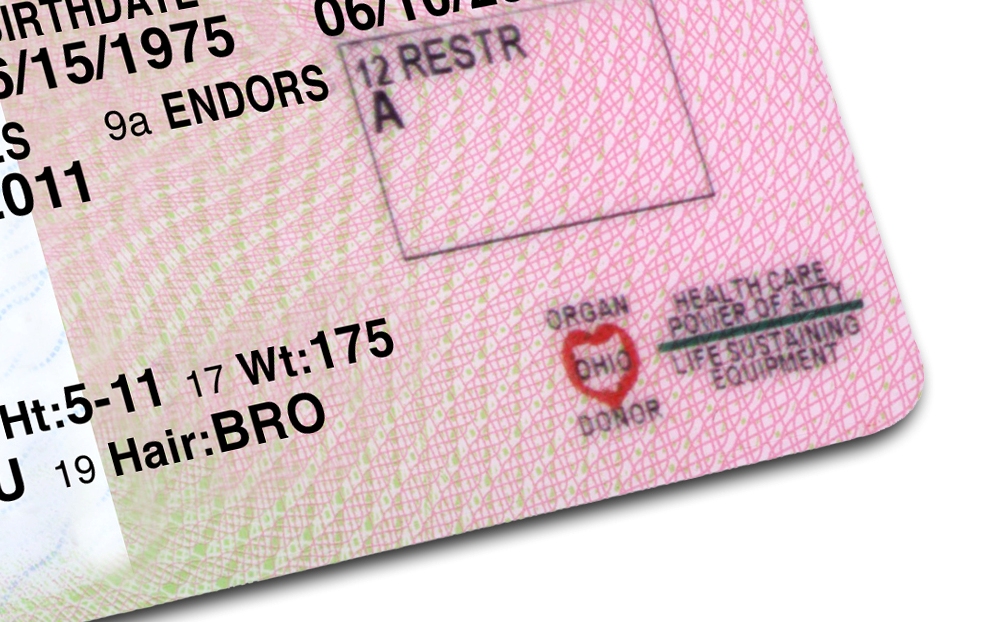
When I initally got my driver's license, I was still undecided about organ donation. I renewed it recently, and I'm now a donor. I encourage you to prayerfully consider donation, too. Besides saving up to 8 lives, you could also bring closure to your family after your death, all in accord with Catholic teaching, sound philosophy, and accurate medicine.

(Spoiler alert: that's not my license at left.)

Wednesday, June 11, 2014

Third Year Manifesto, Part 2: Stories

In which I vent all the stories that I've kept bottled up so as not to be a whiner. The last part of this trio of posts is coming tomorrow.

#

I obediently submitted to being taught how to insert a Foley every time I inserted one. Today (the first day of fourth year) was the first time no one approached me and said, “oh, let me show you how….” It was disorienting. Wasn’t someone going to smother me with their preferences?

I breathed. I felt free! But the freedom was not to last. As I proceeded, I heard a very distinct “hmpf!” behind me, in the same tone people use when they raise an eyebrow and say “well, that’s interesting!” and really mean something much less benign.

#

The first vaginal delivery I attended on L&D, I did what the clerkship director told me to do: I protected the perineum and stayed close, in case I could actually be allowed to deliver the baby. This is called, good-naturedly, “being aggressive,” and it’s a good quality in medical trainees.

In that first delivery, a senior resident and an intern were also there. I guess if I were more shrewd, I would have known that it was bound to be the intern’s delivery. But who was I to know that what the clerkship director told me wasn’t right?

The senior resident decided to put an end to my aggressiveness. She put her hand on my hands and pushed them away from the field. Pushed. No exaggeration; the equivalent force could have shoved a gallon of milk several feet. The embarassment (and the sheer force) moved me to the back table for the rest of the delivery. When she asked me later, “did you see how the baby did xyz during abc stage?” I felt like saying, “No, of course not. If you want me to see things, don’t push me away.”

#

When a gentler resident was graciously allowing me to suture subcutaneous tissue in the OR, I put my needle driver down on the field, with the needle still in it. It was the first time I had ever done this, because it was the first time I had to cut off my needle to tie. (It was the first time I wasn’t using 4-0 and subcuticulars in the skin). The scrub tech slapped my hand, chiding me verbally. I blushed with angry embarassment underneath my mask, but tractably apologized, etc. Then, she said these words exactly (I remember them and you’ll see why):

“There are some people,” she said self-righteously, “who’ll slap your hand for that. I won’t, but there are some.”

I tried not to stare at her blankly. I guess it never dawned on her that she, SHE had ACTUALLY (not metaphorically) slapped my hand. I guess people who use that phrase end up acting on it without realizing it?? She has been the only one to do that.


#

One day in surgery I learned that the scrub tech, the scrub-nurse-in-training, and I were all within a few years of each other. I was the oldest. I was paying, snipping, uncomfortable, and chastised during the surgery. The other two, who were allowed to take a lunch break (during this six-hour surgery), were paid and thanked.

The fact that I’m paying to be there seems to some surgeons to mean that I’m not to be thanked and that I’m automatically incompetent. It seems to say, “she can’t do anything.”

“No, no,” one surgeon said when I reached for a towel to drape a patient. The scrub tech, who had offered me the towel, knew me better than that surgeon. He was being a pal, and he knew I have seen patients draped dozens of times and I could do it. But no! “She’s a medical student, she doesn’t do that,” the surgeon said.

“Excuse me, Doctor Bossy-Pants,” I burned to say. “I am a medical student and I can do that. Watch!” But it’s her sterile field, it’s her OR time, I’m her responsibility and (the real reason) she’s grading me. So I didn’t do that. I backed down. I abased myself.


Tuesday, June 10, 2014

The Third Year Manifesto, Part 1: Cutting Suture

I will now discuss the stuff of third year that is not happy and glamorous. Having a blog places slight pressure on a person not to whine. But not to disclose the negative parts of medical school would be dishonest. So it’s time to air a few grievances, and (because I can’t seem to not do this) discuss morality and holiness at the same time.

At some point during my third year, I got very demoralized. It’s hard for a person who wants to do great things well (and is used to doing great things well) to find herself unable to hope even for mediocrity.

One response to this predicament: Ah, what a chance to grow in humility!

THIS IS AWESOME.
"Ah," goes this response, "I have had many peers, past and present, who have struggled to get the things I’ve gotten, like A’s and letters of recommendation and leadership positions and success…. Now, God is making me more like them, to help me see that they are my brothers in everything. I have nothing of my own and am happy to have God, because I truly lack nothing."

Another and much more human response to this predicament:
THIS IS TERRIBLE.
In its severest form, this disappointment becomes sadness, loneliness, isolation, depression, and despair.

It was a war between these two responses for the second half of third year. However, it is old news that 1) I am a little soul and 2) there's a war going on in me between holiness and not-holiness. God is exerting Himself to the maximum and employing all kinds of things (sacraments, virtues, habits, circumstances, living people, dead people, people I’ve never laid eyes on, angels, and even me) to make me like Himself. On the other side are all kinds of things (occasions, vices, habits, circumstances, living people, dead people, people I’ve never laid eyes on, angels, and especially me) persuading me to stay in my nice little hidey-self-in-hell-hole.

But morality aside for a teensy moment: seriously! This year was so demoralizing at times!

Do you have any idea what it is like to stand in a surgery, not allowed to do anything except trim suture? Somebody ties a knot around [whatever], and I come in with scissors and snip it. That is 90% of my intraoperative action. This is especially painful because I’ve been given great responsibility and responded rather well to in the past. I wish I could speak my mind in those ORs.

“You know, I am a person.”

Snip.

“With an intellect.”

Snip.

“A rather good intellect.”

Snip.

“And I have pretty good hands, too. Did you know I paint? And I’m handy around the house.”

Snip.

“And if you let me stick-tie the ovarian vessels/close the fascia/dissect adhesions/use a bovie/debride dead tissue/MANY OTHER EXAMPLES, I bet I could do it.”

Snip.

The worst part is, I am not even permitted to stupidly cut as I like. I am chided because I am not doing it properly. Since the clinical years of medical school are a dizzying merry-go-round through services and surgeons, I can never acquire expertise in one thing. Many have pretened to, but no one ever has, given me a comprehensive lesson in how to properly cut all types of suture in all places according to the preferences of all surgeons. (I expect even the Eternal Father would have difficulty with this one. Just kidding, Abba.)

“Whoa!” says one surgeon. “Too short.”

Or again, the surgeon is uncomfortably silent after I cut. I timidly ask, “too long?”

At least I have never cut someone’s knot. There was once when I took the blame for a broken knot. A few minutes after I snipped, one of the resident’s knots came undone. To save the resident face, I said, “Oh, I cut your knot, didn’t I. I’m sorry.”

I became the queen of taking flak this year. There was an “Oh, thank you,” after every correction; there was a sincere-sounding “I’m sorry,” after every action someone objected to.

Today, while snipping, I grew less and less successful. I began to wonder whether there was a problem with the scissors. Surgeons and residents are quick to ask for a different instrument if the one they’re holding does something silly or inefficient. Not being a surgeon or a resident, I waited out my silly, inefficient instrument for a good five more snips. While I waited, a new scrub tech clocked in. This meant I lost the rapport I’d built up with the first one (my pulling a gown and gloves, helping in setup, etc) I didn’t think anything of this at the time, but now I wonder whether er shift change made a difference in the answer I received when I eventually asked, “Do you have another pair of scissors?”

There are at least four pairs of scissors in almost every set. I know because I know their names: curved Mayos, Mets, tenotomies. There are also Potts and Dietrichs, but even I wouldn’t use those for suture (now I’m just showing off how many types of scissors I can name without looking things up). The suture scissors are called “heavy sciz” by some, but their real name is straight Mayos. Technically, you’re supposed to use the straight Mayos for stuff, like foam, suture, and mesh. Cutting these undelicate things with the better scissors would dull the blades and damage tissue. But I’ve seen surgeons get frustrated with a pair of straight Mayos. They drop them to purposefully exclude them from use, then start to use the curved Mayo’s or the Mets. I’ve even seen someone use the tenotomies. So certainly it would not have been absurd for me to use a different pair of scissors. But what did the scrub tech say?

“Is it the scissors, or is it you?”

I felt like exploding.

Please,” I wanted to say, “even if it is me, could you think of a different way to say it? Maybe ‘show me how you’re cutting’? Or maybe, just maybe you could humor me? I humor people to ridiculous extent. Could you just hand me the curved Mayos? Maybe then I’ll learn that it is, in fact, not the scissors. And you know what else? Even if it’s not the scissors, I don’t like that you said ‘me,’ as if I/me/my person is a problem. My technique might be lousy, but why the ad hominem? Why do I become a problem because I don’t cut suture properly? And anyway, who has taught me how to cut? No one! I have had to cobble things together myself!”

See the med student, doing nothing?
Oh wait, I forgot to get them in the camera view.
But I said, smiling doormat that I have become, “Oh, probably me.” And she said what I should have been doing. My success was unchanged: some good cuts, some lousy ones. In retrospect I think the scissors were fine and I was fine. The problem was that the incision was getting deep (down to the retroperitoneum) and therefore the sutures were getting further and further away from me. When you have to stand on tiptoe and crane your neck and reach to cut something, nothing works quite as well. I can’t wait to be the surgeon or the resident and have a legitimate place to stand so that I can see the operative field all the time.

Friday, May 23, 2014

Abortion Hurts Women: I've seen It.

This post conforms to the blog rules.
I witnessed emergency surgery on a woman with complications after abortion. Someone had perforated her uterus, and she was rushed to our hospital.

I only heard about the case incidentally. I was on a different service (not the gynecology service, and not even on my OB/GYN rotation). I happened to be down in the main OR, and I was just leaving when I saw one of the OB/GYN chief residents I knew. I’d been trying to arrange a meeting with him about residency program selection. I was eager to hear what he had to say, because I happened to know that this chief had interviewed specifically to avoid performing abortions, or “terminations” as OB/GYNs often say. We’d never gotten to talk because he was out of town for vacation, I was out of town for the cardiothoracic surgery rotation, etc. When he saw me, he seized the moment to sit down in the physicians’ lounge and give me a list of programs he liked and a list of programs he didn’t like.

As we were talking, I noticed that not only was he there, but so was the third-year GYN resident, their attending, and the medical student on gynecology. This meant they had a pretty intense case. (The rarer the case, the more likely the upper-levels are involved. And to have two residents in on a case is rare indeed.)

The third year resident (R3) noticed that I was counting and surmising. “Something's coming up from the ER,” the third-year said, to explain why they were all there.

“A perf’d uterus from an abortion,” the chief said. The attending sat wordlessly by, watching the television.

“Your dream case, right?” the R3 said to the chief, smiling. From his comment and tone, I surmised that the R3 was probably pro-choice, and was joking with the chief, who had never done an abortion but who (I guess?) needed to log one. “Are you going to count this as an abortion?” the R3 joked.

The chief smiled back good-naturedly. “Yeah,” he said quietly, “ ‘open abortion,’ ” he said, referring to how he would make his incision. What must it be like to be pro-life among pro-choice colleagues for four years of training?

I asked to observe the case, even though I knew I couldn't scrub in (because there was already a med student and two residents, and because I wasn't even on the gynecology service). The attending gave her permission, and I went to see the patient in preop. She lay there on the ER cot she'd come in on; next to her was her significant other. She looked like a woman in pain—physically and emotionally. The other medical student (the one actually on the gynecology service) was scrubbing, so I took my place at the foot of the table, behind a machine and next to the kick bucket (where the used/bloody sponges are tossed).

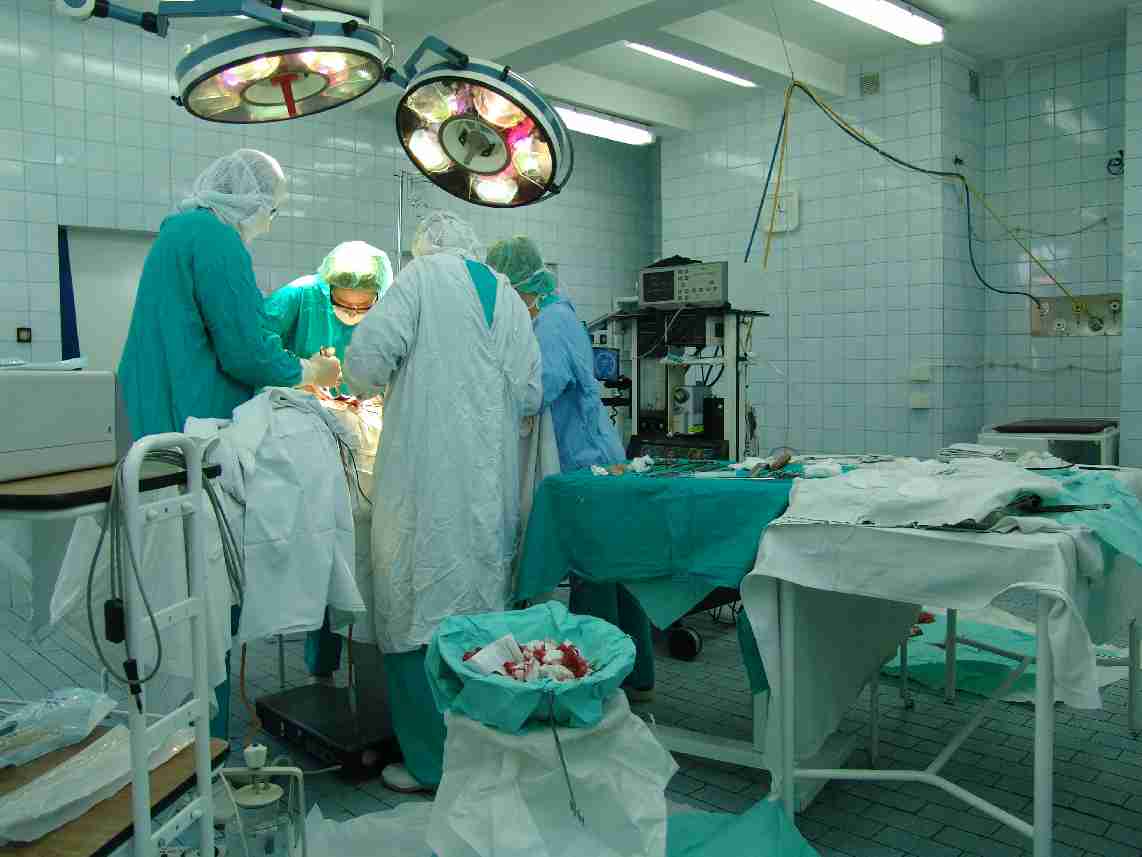
There were a dozen people in the OR. This is a stock photo.
Once the patient was asleep, the chief resident made a large midline incision. Blood and clots came out as he reached the peritoneal cavity. The anesthesiologist ordered two units of red blood cells. I literally had to be careful not to get splashed as bloody sponges were tossed into the kick bucket in rapid succession.

The chief and the attending opposite him pulled the incision open like an emergency C-section, and then the chief reached in to explore the patient’s body with their hands. The chief resident emerged and passed something to the scrub tech, who placed it on her mayo stand, just a foot away from me. It was the head and shoulders of a fetus—a tiny, perfect bust the size of a plum. Next, they found the uterus and pulled it up. I could see it: part of it was a healthy pink, but one corner was mangled, raw, purple, and bleeding. They then explored the surrounding organs, and found the sigmoid colon nearly transected, the proximal and distal limbs held together by a pencil-sized strand of mucosa or mesentery (I couldn’t tell). When they pulled that up, there was an instant of silence as everyone in the room mentally said something between “oh my gosh” and an explicit oath.

“We need colorectal,” the attending said commandingly.

“Colorectal?” repeated the circulator, lifting the phone.

“Stat,” replied the chief resident.

The other medical student, who had already been on the trauma service, turned to me and said, “that’s worse than I ever saw on trauma.”

Again, stock photo. The OB/GYNs didn't need
headlights or loupes (or that sternotomy
retractor), but the rest is accurate.
Then began the fastest and bloodiest hysterectomy I’ve ever seen (and the only supracervical hysterectomy I’ve ever seen). As they cut away the fallopian tubes and ovaries, I heard the anesthesiologist say, “can we get two units stat?” The OB/GYNS continued to work like machines, clamping vessels and cutting uterine muscle, while the anesthesiologist updated them: the patient’s blood pressure was dropping, and he couldn’t get it up. “We need a trauma tray,” he finished.

“Trauma tray!” confirmed the circulator.

The anesthesiologist was starting an arterial line at the patient’s wrist. Beneath the sterile towels he’d draped over her arm, I saw that her fingers and fingernails were white, like the bodies we’d dissected in gross anatomy. The patient had started as a beautiful shade of bronze—she must have lost a lot of blood to be sheet-white like that! I started to pray.

Colorectal arrived—an attending and two fellows. Because I was the only one in the room without a job, I gave them the one-liner presentation. “This is an **-year-old female with perforated uterus and sigmoid after therapeutic abortion earlier today.”

“I heard,” the attending said grimly. He and one of the fellow got gloves and gowns. The OB/GYN attending looked up at them, her bloodied gloves holding two enormous clamps that disappeared into the patient’s pelvis. Her expression was remarkably calm. “We’re almost done,” she said. “We’re taking out the uterus.”

At that moment, my pager went off. I thanked the attending and went to see the patient I was paged about. It was a very boring “trauma,” for which I did nothing and the patient was wheeled (completely stable) to the CT scanner. As soon as I was free again, I went back up to the OR. The case had just ended, and the chief was writing the post-op note in the physician’s lounge.

I only had one question for him: did she make it?

“Yeah,” he said. He told me about the remainder of the case, most of which I don’t remember. I talked with the medical student the next day and he had more information.

“It was a cornual pregnancy,” he said. “So whoever was doing the abortion was going to perforate the uterus no matter what.” He knew I was against abortion, and I expected he said this so that I didn’t go on an abortionists-are-so-incompetent march. What he said fit with the appearance of the uterus—one corner destroyed.

“She also got a colostomy,” the med student went on. “And she didn’t know that. So when I went to round on her this morning and asked her how she was doing with a colostomy, she didn’t know what I was talking about. And she was pretty upset when she found out.”

This woman lost her baby, her uterus, and part of her colon. Although her colon would probably be reanastomosed later, she currently had a colostomy and unexpected time away from work, plus a long new scar and postop pain. Add to this that she was not safe during this surgery: her blood pressure was very low during it, and I was afraid for her life.

*SIGH* Stock again; her baby would have been much
smaller, less developed, and in the horn of the uterus.
I was very unhappy for her. Laws were recently enacted in my area to require preop ultrasound. Would preop ultransound have shown the location of her fetus? Had it been done? Had it been done carefully and well? Did they rule out cornual pregnancy? Did they see it but think they could do it anyway? Did they tell her she had a cornual pregnancy? Did they really give good informed consent?

I left with the overwhelming feeling that abortion clinics don’t provide best medicine to patients. And I already this, but now it was impressed on me forever: abortion hurts women.