Showing posts with label medical matins. Show all posts

Saturday, July 15, 2017

Third party reproduction

This post conforms to the blog rules.About a year ago, a gestational carrier of twins was admitted to our antepartum wing. Her condition required a long-term stay and she was not in her home state. To make matters more complicated, the presenting twin was not vertex. There was heated disagreement between the intended parents and the gestational carrier about mode of delivery because my attendings recommended a cesarean section for the twins. The carrier did not want a C-section. The physicians' hands were tied: we couldn't do a C-section on a non-consenting woman without committing assault and battery. But the agreement signed (while not designed for this state) did specify that the gestational carrier was to comply with physician recommendations on mode of delivery.

To translate into colloquial terms: about a year ago, a surrogate carrying twins for a gay couple came to our hospital while out of her home state. Because the first twin was not head-down and for a few other reasons, my attendings recommended a C-section for delivery. There was a painful, days-long disagreement between the surrogate and the couple, because the surrogate didn't want to have a surgery. We couldn't do a C-section without the surrogate's consent, but the contract signed by the surrogate and the couple said we should have been able to. ("Surrogate" is not a term preferred by the ASRM or third party reproduction lawyers.)

The ethics committee was, as I recall, rather unhelpful. No member of the healthcare team ever saw the agreement signed between the intended mothers and the gestational carrier. All residents whose names were not already in the chart were encouraged not to open the chart or see the patient out of concern for legal repercussions. The intended mothers of the children became rather forceful, asking that the healthcare team discuss matters with them before discussing them with the patient and lurking around the floor to catch any healthcare providers who might be discussing the case of their children. When it once appeared that the twins might suffer some adverse neurologic outcomes because of the disagreement, one of the mothers stated she did not want the child if there was brain damage.

All of this was a rather unpleasant ethical case that ended as well as it could, since the gestational carrier agreed to a C-section eventually and both babies were born. I have many dissatisfied feelings about the way all five people's lives changed during this pregnancy episode. I began to wonder whether the true nature of things (a contract about goods belonging to the adults) came out in the unpleasantness.

Recently my program has been adding more IVF experience for us. A few months ago I drove out to the IVF clinic of the new professor we'll be working with. As luck would have it, there wasn't much on the schedule and I didn't have to explain much. Although I've written about being "inside IVF" before, this one afternoon included actual experience of ARTs (two IUIs and an embryo transfer). Since I know how these procedures are done, in a way it wasn't earth shattering. But in another way, it was painful. By the end of the morning I felt nauseous and had to talk aloud with the Lord in the car about the experience.

Unfortunately, this isn't the end of this topic. I haven't covered it much on my blog, as I've mostly focused on contraception and sterilization. But now that I'm becoming a third year resident, who will spend two consecutive months on the REI service, it will become a topic of much more discussion.

Thursday, March 30, 2017

Baptizing Daughters (Hope for Heather)

This post conforms to the blog rules.I waited a long time to tell this story because I didn't want to change many details. What follows is an accurate but anonymized version of my two encounters with "Heather."

The other day I was in clinic and a young teenager (think junior high or early high school) came in for her new OB visit. She was there with her "mother," but the mother was probably fifty years older than the patient, and she was of a different race. I don't know why that was--perhaps this was a grandmother or a foster-mother--but I didn't ask. This is how I met "Heather" and her mom.

Heather was in her late first trimester and pregnant with twins. When I saw her in our MFM clinic, she had just had been told from an ultrasound that she had two daughters and that they were monochorionic/diamniotic, meaning that they were at risk for twin-to-twin transfusion syndrome. They were at risk for a lot else, but TTTS is what most of our initial conversation was about. Heather had not planned this pregnancy and she had thought about abortion, but her mom talked her out of it. Heather herself really wanted the babies now. Her boyfriend was not in the picture. Heather told me in the presence of her mom that she had experimented with cocaine. But she was obviously tough. She had accepted the fact that she would be pregnant at school and finish a year late. She was clear on her new policy about drugs and sex: "One giant nope." This made me hopeful for her.

Heather's mom was suffering, but it was almost imperceptible. She was clearly not the type that engaged in drugs or sex at such a young age. Her hair was grey, she was plump, she wore grandma shoes and pastel pants, and she had perfect grammar. (In fact, she was eerily like one of my apartment neighbors, who is a nun.) I could tell that Heather's mom was working hard to accept Heather and her choices, but that those choices were very far from what she wanted for her daughter. She was never openly disappointed with Heather during our visit, and asked many helpful questions to support her daughter during the beginning of pregnancy. This made me even more hopeful for Heather.

I tried to cover basic obstetrics and adjusted it for an adolescent, mentioning by requirement that Heather was legally the one to make the decisions about her pregnancy, any birth control, and her daughters' care. I closed my visit with Heather cordially, planning ahead for six months of careful TTTS screening in addition to routine prenatal care. Our MFM clinic is not a continuity clinic (super bummer), so I did not expect to see her again.

A few weeks later, I was working labor and delivery and the upper level resident was in a C-section with the L&D intern. I was sitting at the L&D desk in her stead. The details of this next part of the story are fuzzy because there were about eight phone calls/conversations about how Heather should come to L&D and how she was asking for me by name.

The charge nurse called me over and simultaneously, my zone phone rang. On the phone was the triage intern. "The ER is sending up are seventeen-week twins, apparently super uncomfortable." The charge nurse, meanwhile, wanted to ask me whether the seventeen-week twins in the ER should come right to L&D. I said to start them in triage. Then the triage RN called the charge nurse and asked that I come to triage. The charge nurse was in the middle of asking me to go over, explaining that they knew me by name, when the intern called me again. "I'm sending this seventeen-weeker over, she's five centimeters. She's also...asking for you?"

Readers probably know that a woman in labor near term has to dilate to 10 centimeters. You might not know that tinier babies don't need 10 centimeters of dilation. Seventeen week twins would certainly and easily fall out of a five centimeter cervix.

Heather was given the room next to the statue of Mary. Mary is at the end of the L&D hall and those rooms are the quietest and frequently used for women losing children.

Heather was having a very difficult time due to pain. She also didn't know what labor at seventeen weeks meant! She had texted friends to come visit her because she was having her babies. They were all excited. She asked to get some pain medicine before they arrived.

When I heard this, I started her pain control and then explained to her that her daughters would die today after they were born, unless they had already died in her womb. She was in shock and this did not appear to faze her, but she at least registered it. Now she was on emotional overload, with confusion, mixed sadness and relief (now she would be able to finish high school without maternity leave).

I prayed that her daughters could be born alive for baptism. I delivered her first daughter alive. I asked her if she would like the baby to be baptized before she died. "I don't know," she said, "I've been thinking about that. But my mom's Catholic, and she wanted it."

I knew this little daughter had very little time on earth, but I also knew about the validity of sacramental baptism. "Heather, this is your daughter. You must ask for baptism."

After a small pause, Heather said, "all right then. Can we baptize her?"

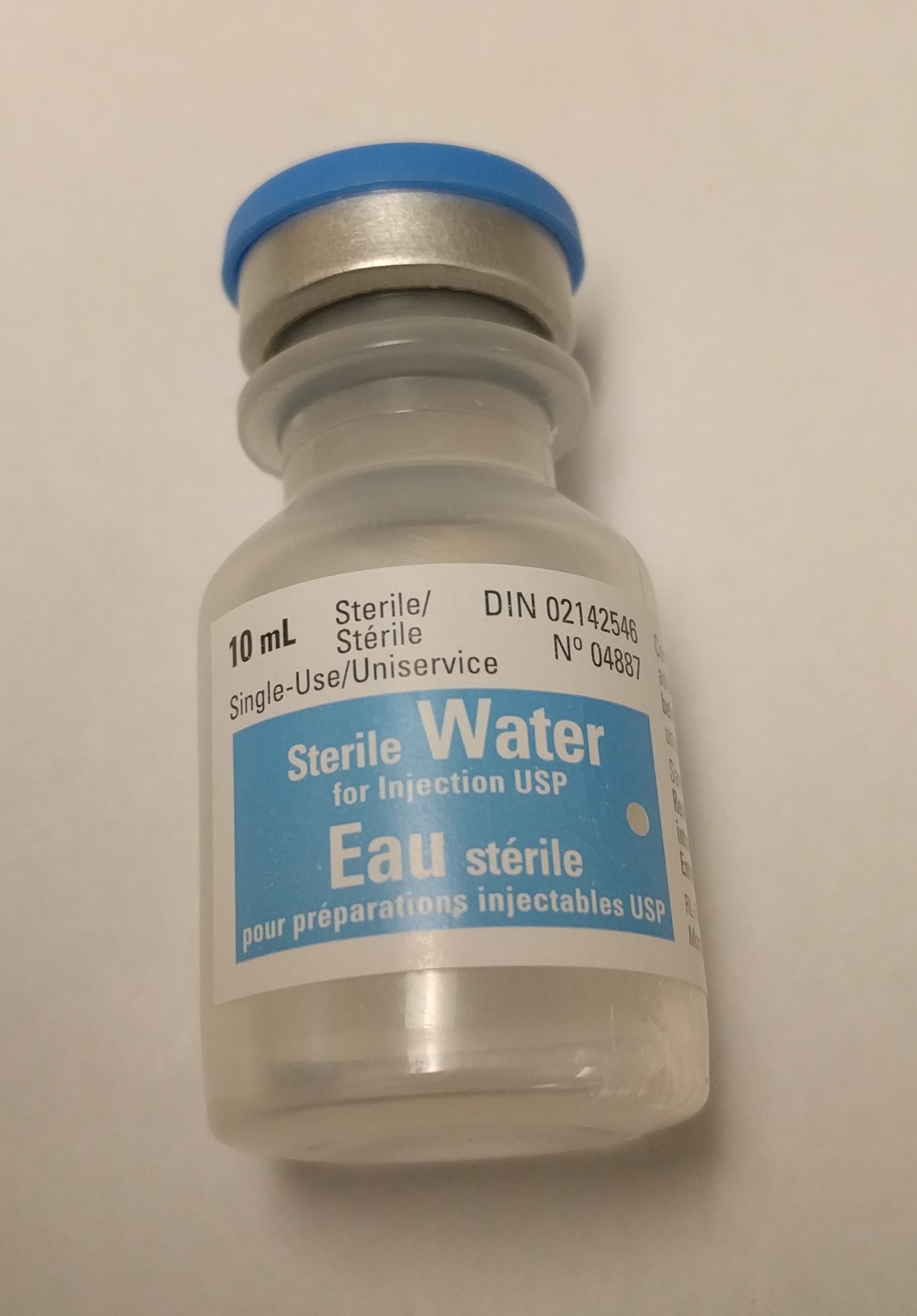
The nurse had called the chaplain, but sometimes they take forever to come. They don't realize the urgency of the matter and come after reviewing the mother's chart. Often, I think they don't see the difference between baptism and blessing the baby's body. Frequently, they see their job as more of a crisis emotional counselor. So I called for sterile water (and yes, I did say the word "stat").

I asked Heather what the little girl's name was. She had already picked out first and middle names for both daughters. The nurse handed me a bottle of sterile water. I poured a little water into the bottle cap, mentally making sure I knew the words to say for a conditional baptism, in the case that the baby showed no signs of life by the time I turned around. I touched the baby and noticed that she recoiled, so I baptized her with the formula for living people. Shortly thereafter, the second daughter was born, and I baptized her as well. (Between baptisms, Heather's high school friends came to visit and I sent them packing to the waiting room.)

The chaplain arrived after everything was over. I pronounced Heather's daughters dead that day and filled out two birth certificates and two death certificates. But I know there were two saints praying for their young mother. I prayed to them immediately after their deaths, and I still pray to them every once in a while. I have not seen or heard from Heather since I discharged her postpartum day two. But in a tiny way, these are my spiritual daughters, so I talk with them to keep in touch with their other mother.

There are two saints praying for Heather. Strangely, I am very hopeful for her now.

Tuesday, February 28, 2017

Most emotional delivery of my life

This post conforms to the blog rules.I was recently in a delivery with an attending and the baby was extremely stressed out and had failed an operative delivery. We went back for a C-section. We ended up doing a "red" (emergent) C-section even though heart tones weren't down in the OR, because the mother started to have a seizure. Between her tonic-clonic activity and the baby's profound asynclitism, molding, and caput, it was the hardest C-section I've ever done. I couldn't get the baby's head out, so my attending tried. She couldn't, so I tried. I couldn't, so she tried again. Everyone was screaming. And meanwhile, because it was a red section, the room was in chaos. My chief was pushing from below and another attending was called. The original attending couldn't get it out, and I tried one more desperate time (all the while screaming for a Murless) and got it out.

It looked dead, but it had a good one-minute Apgar. It's doing fine now, and so is mom. I spent the rest of the C-section crying, though, because I thought the baby was dead. Five minutes feels like so much longer when your brain is screaming, "the kid's heart rate is slow, the kid is dying!" And that baby was more limp than any other baby I've seen.

Except, perhaps, for the vaginal breech I did the other month. That was awesome.

All's well that ends well, but that C-section was the worst delivery I've ever been in. Please pray for me. The 19-day streak that I mentioned at the end of the last post turned into a 26-day streak followed by one weekend and another 24-day streak. I am so tired!

Wednesday, June 15, 2016

Three Words: Rode the Bed

This post conforms to the blog rules.There's been a paucity of stuff on the blog lately because it's suddenly really tiring to blog. After the huge burst of energy that rose up in answer to the challenges of intern year, I am at an emotional, cerebral, and spiritual low tide.

But these human tides are a natural phenomenon, so this is no surprise. In the mean time, I might do some more simple blogging. Today, I'll tell you a cool story that will take no research or soul-searching. This blog was originally designed to be a story repository so that I could write a book like Danielle Ofri or Perri Klass. So here's a story.

I was in triage seeing a patient with a hypertensive disorder of pregnancy. I had some questions about her management and my chief agreed, so she came over to talk with the patient about management options. I went to the next bay to see the next patient. She was a slender woman in her late second trimester, but there wasn't much time to smile and get to know her. She was obviously in pain: she moved around the bed holding her stomach. As I introduced myself I reached for her abdomen. It was taut, like a basketball.
This shows a single loop of prolapsed cord.
My patient had a whole bunch of loops and a four centimeter cervix


She was in so much pain that I left the room and came back with an ultrasound, immediately concerned for abruption. I scanned her quickly: no abruption that I could see, but her cervix was definitely open. And there was definitely a loop of the umbilical cord going through it. I used color to highlight the cord in the cervix. (The picture on the right.)

That is a very bad situation. Luckily, my chief was closer than she'd ever been all week: right next door. (Typically, she'd be over in L&D, which is a minimum ten-second walk if you go briskly.)

Not bothering to walk out of my patient's room and knock next door, I called my chief while setting up sterile gloves and a speculum. "Gina," I said, "I have a cord next door."

This is a funic presentation. The essential difference is that cord is
not through the cervix outside of the amniotic sac.

"A cord" is a euphemism for "a prolapsed cord," which is an obstetrical emergency. My chief immediately stopped her conversation with the hypertensive patient and she was in the room the next minute. She repeated my scan. "Spec her," my chief said, "it could be a funic presentation."

My very ginger pelvic exam revealed naked loops of cord outside of the cervix. I angled the speculum towards Gina. "Elevate the presenting part," my chief said gravely. "We're going to the back."

A little background: when the cord falls out of the uterus first, the baby can asphyxiate. So, we push up the presenting part of the baby (i.e. the head if the head is down) to take pressure off the cord. Then, the person pushing up rides the bed with the patient as we go back for a C-section, which is the only way to deliver the baby without impinging on the cord in the vagina. Interestingly, my chief and I had just gone over management of obstetric emergencies like this the day before. It was all very academic and educational then; now, it was very real.


This patient was still on a triage cot. In a single motion. I raised the foot of the bed and knelt on it, my hand still elevating the fetal head. The nurse was meanwhile unplugging everything from the triage bay walls: the fetal monitor, the O2 saturation monitor, and the tocometer. She flipped the brake and the cot slowly began to roll down the hall to the operating room.

We picked up quite a speed as we approached the 90-degree turn into the OR hall. I almost fell off the cot! (Thank goodness for side-rails.) As we rolled into the OR, someone put a hat on me and stuffed a mask into my free hand. I knelt on the floor next to the OR table and continued to elevate the presenting part as the patient was placed on the OR table, as a foley catheter was placed (yes), and as general anesthesia was induced.

"Can you feel pulsations in that cord?" asked my chief.

"All I feel is her shaking right now," I shouted from underneath the drape. The patient was shaking from her general anesthesia.

"Skin!" I heard from above me. That's the signal that a C-section is starting: the surgeon calls "skin" and "uterus" so that the nurse can chart time to delivery. Within a few seconds, I felt the pressure of the baby's head disappear. "You can come out now," called my second year.

I extracted myself from underneath the drape. I discovered that someone had attempted to put shoe covers over my clogs while I was genuflecting on the floor. I fixed them awkwardly as I walked over to a computer to put in orders for a PCA for after the general anesthesia wore off.

To ride the bed is an adventure in residency, a tale you tell to lower levels like a grandfather's fishing story. And I got to do it as an intern!

Sunday, May 3, 2015

Stacy's Story

This post conforms to the blog rules.A patient I met and, in the wash of clerkships, left behind, left an incredible impression on me even though I barely knew her. Almost every detail about this person is altered to protect her.

"Stacy" was a middle-aged woman who became pregnant under extremely bad circumstances. Her family started to notice that she was acting strange. To their alarm, she began to tell them she saw and heard things they could not see or hear: she was hallucinating. The duress of her pregnancy had affected her so severely that she had become disconnected with reality. She went to the emergency room after suffering a psychogenic seizure, and I rounded on her her shortly thereafter.

As I flipped through her chart before going to see her, I asked the nurse what was going on.

"It's crazy," the nurse said, speaking of the situation. She gave me more and more details as I went through the records, underlining hCG values and the ER course. "And her family doesn't want to keep it," the nurse finished.

I froze. Doesn't want to keep it. They wanted an abortion.

"What does she want?" I asked.

The nurse shrugged. "She can't say, most of the time. She has these good times when she makes sense, but sometimes she babbles and acts bizarre. Sometimes she doesn't know she's pregnant when you ask her."

I continued reviewing records mechanically, and went to see the patient, wondering what I could do. The first time I spoke with Stacy was during one of her lucid times. After introducing myself and seating us in a private and comfortable place, I told her I wanted to talk with her briefly and then gently asked her, "What brought you here?"

She gazed at me innocently, almost emptily, with warm brown eyes. "I'm pregnant," she said simply.

"That's right," I said.

"I'm eight weeks," she added.

"Exactly," I said with a smile. "Do you know what that means?"

She shook her head.

"It means your baby's heart is beating," I said, "and he has all his fingers and toes."

"Oh," she said, her voice inflecting for the first time, a little flicker of a healthy mind. "Maybe I'll keep it."

Those were her exact words, and I cannot forget them. The interview went on, and I wrote my progress note and left. At rounds a few minutes later, the story became even more nightmarish as I discovered that my attending and my fellow students were all hoping that she could get an abortion. Perversely, we carefully looked up what psychiatric drugs she should most safely take in pregnancy and consulted a psychiatrist with experience in that. Even as we hoped that Stacy's embryo would be eradicated, we protected that embryo from possible adverse effects of the medicines we prescribed.


The week churned on and I moved away from Stacy's floor while other students worked on her care. I heard new of her remotely when students would talk about her, and the reports were not good: she had fewer lucid times and finally none at all despite changing her medicines. Meanwhile, her family was trying to arrange for an abortion. I stormed heaven and asked friends and family to do the same.

Stacy's case became very complex and the hospital system ethics committee met over a weekend, weeks after her admission, to decide whether she could have an abortion. Her case was described in detail at our rotation's grand rounds, where another student presented and the general feeling among my peers and professors was annoyance that the "stupid" hospital was keeping this woman from her healthcare. I felt dizzy sitting with them, as if I were in a horror movie or some barbaric country.

After that rotation ended, I texted Stacy's attending and asked about Stacy. It was then that I discovered that the first ethics committee did not approve her abortion, but she ended up having one somewhere else.

I have so many sad thoughts about this case, including things like, should I have insisted on seeing Stacy beyond my time on her ward? It wouldn't have been impossible. Should I have talked with her more about her baby? I didn't want to be coercive but I might have saved a life. Should I have at least documented her desire to keep the pregnancy? I'm sure it might have meant something to the ethics committee if it didn't to her attending and my peers. I was afraid to write it, because I worried that her flip-flopping between options would be seen as a sign of worsening psychosis (which wouldn't be good for the baby's survival or for her), and because I didn't want to be accused of disturbing her "decision."

What a hard case! Please pray for "Stacy" and her family, and her little child. She is apparently back to her normal self and out of her psychosis, but she is not finished dealing with what happened to her this year.


This post was a draft for over a year. I marked it as a "perpetual draft," one of a set of posts that will never be released to protect my career and to protect vulnerable patients. But I decided to release it after I matched, and since it has been such a long time since this occurred.

This post was a draft because I experienced a bit of resistance in my psychiatry clerkship from a pro-choice fourth year (who couldn't believe someone wouldn't do this patient's abortion) and from professors (who called me into an impromptu meeting when I asked too many questions about homosexuality and gender identity disorder). Now, I'm putting it out.

Friday, April 17, 2015

24-Hour Call on L&D: A Breath of Fresh Air

This post conforms to the blog rules.This minipost started during an away and was never written. It's the story of two 24-hour L&D shifts in the middle of a urogynecology rotation. The attending belittled me and taught me nothing, and I missed obstetrics. So when I heard that "acting interns usually take the Thursday 24-hour shifts," I was ecstatic. So, as an escape from my attending (and away to see more of the residency program, because this was an audition rotation), I took call. It was wonderful to be with laboring women, L&D nurses, infants, and fathers. I saw a D&C for retained placenta, a sacral dystocia (yeah, weird), and a few sections (at one of which I legitimately impressed the resident with my running subcuticular, which I have been perfecting since the summer after M1). It was wonderful.

Sunday, April 12, 2015

Stories from the ER: Bedbugs

This post conforms to the blog rules.In college, I devoured books written by medical trainees. I read Singular Intimacies, Complications, and A Not Entirely Benign Procedure (and others) as a college student. Having read these, I think I could've said about medical school what St. Therese said about the convent: I went in with my eyes open, and I was right.

When I read Danielle Ofri's story of a homeless, bug-covered man who came in through Bellevue's emergency department, I thought, "I know med school is an experience, but that's too crazy to happen to anyone but people who write books." Crazy books about crazy NYC hospitals.

Nope.

A disclaimer: this story contains a few nasty things, including bedbugs and elder abuse. There will be no exaggeration. There's a happy ending.

During my ER rotation, a woman was brought in covered in bedbugs. The attending sent me in to see her and I went into the room at my usual busy pace. One of the EMTs, still packing up his stretcher, halted my progress with a few words. "You might want to...." the EMT started, then tried again: "She's sort of...covered."

Then my eyes registered the hundreds of mini-M&M sized insects swarming in and out of her clothes, around her arms and legs and fingers, on her neck, and on her sheets. I stopped short, my shoes almost squeaking on the lineoleum with the abruptness of my deceleration.

The woman herself was moaning.

"What's the story?" I asked the EMT.

"She called about pain. We had to break the door down. Found her in a chair, in feces and urine and--" he gestured to the insects "--those. Vitals were stable in transport."

With that, he left. From a safe distance, I took a history as best as I could. (I was a little disgusted.) The woman lived alone. She was unable to get out of her chair. She didn't eat or drink. Everyone once in a while a neighbor brought a sandwich. The last time he'd come was three days ago. The neighbor doesn't get too close. Nobody cleans her. Nobody cleans her house. She had home health, but they didn't come too close. She had had pain "in her seat" for a while, but didn't talk to anyone about it. She called 911 about it today.

I left the room without doing a physical exam, as the ER nurse was posting a "DECONTAMINATION" sign on the door. I was angry; elder abuse is something I feel very strongly about. I went to my attending and told him the situation.

"Someone's going to get sued," he said, meaning the home health organization.

"I'd like to help decontaminate," I said.

"Be my guest," he replied.

Outside her door, nurses were gowning up as if the patient had Ebola. I joined in: boots, cap, two gowns (the flimsy ones that only cover half of you; one for each half), and mask with face shield. None of us were wanting to take bedbugs home. We were already itchy.

I turned my anger into zeal and worked alongside the nurses, overcoming my disgust and turning myself into Love to this woman. We brought in large trash bags and a dozen packets of moist skin towelettes. Then we took off and threw away the woman's clothing and all the sheet's she'd touched. We wiped bugs and bug carcasses off her body. I cleaned where the nurses didn't. It turned out she had two decubitus ulcers from sitting so long.

It was a terrible day (that patient, plus a death, plus family troubles). That night I told Jesus all about it. "What was Your day like?" I asked, in a slightly complainy tone. And He answered, in my imagination. (This is the happy ending.)

"Someone cleaned Me."

Tuesday, April 7, 2015

Stories from the ER: Motherhood

This post conforms to the blog rules.While working in the ER last semester, I met a woman who surprised me by her reverence for motherhood. Because there was real concern that she might have colon cancer (like classic-history, I-was-actually-scared-for-her concern), a CT scan was being ordered.

But one of the CT scanners was broken, so there was a long line for the other one. Worse, trauma cases kept rolling in that night. This woman had been in the ER for seven hours, and she was still awaiting her scan. She threatened to leave. The attending talked to her and came back. The nurse returned twenty minutes later. "She says she's gonna go," the nurse said. Her (perfectly acceptable) facial expression said, "And I'm resigned about it."

"I'll talk to her," I said. Talking to upset people is one of my favorite things to do, ever since I deescalated a potential emotional explosion in the psych ER waiting room and someone told me I was good at it. My theory is: it can't get any worse, and you can only make it better!

The attending was busy, so he let me. I went in and sat down, preparing for a long haul. My intention was to sit with that woman and talk with her until a radiology tech came to take her to the CT scanner. It was something I was uniquely poised to do, because I didn't have true clinical responsibility and I could be functionally absent for whole hours, if necessary. It would be good for this patient and our ER if she stayed--she'd know more about her colon (cancer?) and the ER wouldn't have her back in two months with inoperable disease. So the attending let me go, and I plopped down at her bedside, hoping to distract her.

It worked beautifully.

After a few minutes of expressing her displeasure about the wait, I got her talking about all kinds of things. TV shows, her day, traffic, weather, her old jobs, her family. Her favorite topic was her grandchildren. Her voice changed from unpleasant to soft and full of fondness. When she started talking about when she first became a mother, something peculiar happened.

Alfred Gilbert: Mother Teaching Child
"Oh," she said, looking at me with something between mischievousness and envy, "when you find your man and have a baby...! There ain't nothing like it, no where in this world. Nothing like giving birth, it's--tch!--can't be described a'tall. Miraculous."

Our roles suddenly reversed. I was no longer in power, pinning her down as one who knew better. She was instantly a queen, telling a little girl about magic.

"Really?" I asked.

"People say it's painful. I say 'ha!' Pain is nothin' compared to what you have. Your baby growin' inside you, then your baby in your hands. Just you wait, you're gonna be a good one. Now," she said, pragmatically, "how long I gotta wait for this CT?"

I grinned enormously. She'd taken me off my guard and my silver-tongued attempts to keep her in bed were suddenly exposed. I have a feeling she knew what I was up to the entire time, and was letting me win.

"I'm being honest," she said. "I still want to go."

"I'll ask," I said. I found out she was third in line and went back to her. "Number three!" I said, like we'd both won the lottery.

"Three?" she said, smiling. "Guess I'll stay, then."

I have no idea what the results of the CT were (it was read after my shift was over), but I got her to stay until she was in the scanner. She stands out in my mind as someone who values motherhood; even if she knew what I was up to, she was serious when she described how marvelous it is. I think of her frequently now and I try to have that esteem for motherhood, too.

Saturday, April 4, 2015

Stories from the ER: Elder Neglect

This post conforms to the blog rules.The ER rotation was four weeks of shifts during interview season, during which I saw the entire spectrum of urgent to extremely-emergent care. I inserted IVs and foleys, I did ultrasounds, I put on splints, and I stitched up lacerations (the highlights of which were a flap closure on a woman's nose and an 11-centimeter arm lac). I also saw patients and attendings work their way through crises, deaths, and long waits for the CT machine. Here are a few of the stories that had the strongest impact on me.

An elderly man with COPD on oxygen came in with vague complaints. He had been to the ER (brought by EMS) several times in the past for similar things. He was cachectic, his lips were terribly chapped, and his saliva was thick and white. As I took his history, it became clear that this was a case of elder neglect: his children didn't visit and he was alone all day. He said he didn't drink much water, because his oxygen tubing wasn't long enough for him to get to the bathroom in time. His teeth were caked in plaque and tartar because of his dehydration. I saw in the medical record that he'd declined home health nursing before, and I knew I had to do something to change his mind.

It was a long history-taking session. I knew my attending would be wondering what took so long, but for once, I decided not to care. This man needed someone to sit down and be quiet, to appreciate his loneliness and change it. At the end of a long monologue of truly tragic complaints, I said. "I'm sorry."

"It's not your fault," he said.

"But it feels terrible to be isolated."

His eyes stayed on me for half a second, because he saw that I'd understood. "Yes," he whispered.

I asked him about his previous decisions on home health. He didn't like that home health nurses made such quick, business-like visits. We talked about more prolonged companions. As I left he squeezed my hand. "Thank you," he said. I smiled, and I went back to my attending and with a very short presentation. "This is an 89-year old white gentleman with COPD who is suffering from a very lonely home situation, and needs a social work consult for an in-home companion." As I moved onto the next patient, social work was arranging something.

I wish we took care of our elderly in our homes. When interviewing out of state, I stayed with one Catholic family who gave me the best example of this I've ever seen. They had emptied their front living room of furniture so that their elderly, demented mother could have a hospital bed and a lift chair there. This woman was nonverbal and could not move by herself, but her daughter kept her at home. The room opened onto the kitchen so that this elderly mother could join in family meals and engage with her grandchildren doing homework at the table, in the very limited way that she could. She could be heard if she moaned, and she could be checked on easily. 

In this case, both spouses were physicians (one a retired, stay-at-home parent), so I know they were competent to do this. But in many situations, competence in caring for an elderly parent is easy to gain from a few weeks of home health visits. It's not competence, but generosity that is frequently lacking. Most don't realize how isolating and miserable life becomes for someone so rich in life experience and so used to social interaction. It takes generosity to place yourself in the position of an elderly person, and further generosity to improve that position by opening your home.

This patient could certainly be cared for in a son or daughter's home, provided that someone was at home for at least half a day. I ask any young professionals or young married couples reading to please remember to care for your parents!

Saturday, October 11, 2014

The Truth Turned Someone Away from an IUD

This post conforms to the blog rules.Because of my conversation with a patient, she chose not to have a hormonal IUD implanted, a form of long-acting contraception that can end a zygote's life. All I had to do was tell her how it worked.

I was on an audition rotation in a pretty pro-birth control clinic. A young patient with extremely severe menorrhagia was failing oral management (i.e. NSAIDs and high-dose birth control pills weren't helping). Her compliance with daily pills was in question and at the last visit my attending, Dr. L, had discussed mirena with her. I would have been comfortable giving her a mirena, except that she was sexually active. And I know that the mirena can cause damage to a zygote ("fertilized egg" to some, but a person nonetheless). So I told her that the attending would be speaking with her about that prescription, but that there were nonhormonal options, too (lysteda or amicar). I counseled her about the nonhormonal options and about mirena and nexplanon. She couldn't decide what she wanted to do.

"What would you do?" she asked. My heart sang.

"HA! She ASKED," I thought victoriously. "I told myself that I wouldn't make my own recommendations in opposition to the attending unless explicitly asked. AND SHE ASKED!"

"Actually," I said aloud to the patient, "I don't recommend mirena." I explained how it affects the endometrium and can cause loss of the cells that forms after sperm and egg fuse. "And when that embryo is lost, that's an early miscarriage. And I don't want that--"

"I don't want that either," broke in the patient.

"--so I won't in conscience recommend mirena to my patients. But Dr. L does prescribe it, so..."

"No," the patient said. "I guess I'll try the other things."

I left the room promising to bring back a pamphlets on those meds. I returned to the charting room and faced the pamphlet rack. As I pulled out a lysteda brochure, Dr. L said, "Tell me about your lady."

I presented her. "This is your 14-year-old African American patient with a two year history of disabling dysmenorrhea. She hasn't had relief with ibuprofen, orthocyclen, or ogestrel; we talked about mirena and nexplanon but she's interested in something non-hormonal. I counseled on lysteda and she wants more information. Physical exam is benign, she's had guardasil, and HEADS survey is unchanged since last visit; same male partner, 100% condom use. No tobacco, alcohol, or drugs."

My attending was pleased with my presentation, but not pleased that the patient didn't want a mirena. Dr. L joined me at the pamphlet rack and began to pull out brochures for nuvaring, nexplanon, and skyla. She stuffed the sheaf into my hands and sent me back into the patient's room.

(Skyla, btw, has the a disturbingly and tragically accurate advertising campaign, featuring sexually-active women explicitly prioritizing activities over children. How can people ignore the identical mindset behind contraception and abortion?)

I showed the patient the whole stack, but emphasized that everything that has hormones works like mirena. I gave her the pamphlet she wanted, and went back to my attending. "She's still going with lysteda," I said.

Then my attending went in with me. I was a little afraid that she might dissuade the patient from her decision. But this attending actually walks the walk when she supports "patient autonomy," so my patient was allowed a limited trial of lysteda. I have no idea what happened after that, but at least for now, that patient is aware of what hormonal contraceptives can do.

Tuesday, May 13, 2014

Miracle in the Operating Room

This post conforms to the blog rules. Recently I witnessed a miracle. I was on the Acute Care / Trauma surgical team. When someone comes into the emergency room and the ER doctor thinks they need a surgeon, an AC/T resident is consulted. During the day and even overnight, we operate: taking out inflamed appendices and gallbladders, draining abcesses, debriding necrotizing infections, and repairing trauma patients. Whenever someone comes in with a gunshot or stab wound, or after a car accident, the AC/T team is paged and responds. It can be a very dramatic scene: a dozen people crowding around a person with nasty wounds, urgently managing serious injuries. The role of the medical student in our institution is: A) don't get in the way and B) look like you're trying to help. I usually end up getting the warm blankets and C-collar, putting in a Foley, and then standing around stupidly. Most of the traumas I've been paged for haven't exactly been movie-quality. In fact, some are downright boring: the patient is stable, just has a few fractures, and we roll them to the CT machine and stand around while the images populate with (surprise) the fractures we already knew were there.

But one day, someone came in from a bad, bad accident. He'd been hit by a car as a pedestrian. I got the page while sitting with the residents right outside the door of our last trauma. "Another autoped," I overheard a nurse say. "But this time a head lac; exposed brain."

I raised an eyebrow. "Lac" is short for "laceration," And a cut so bad that the brain was exposed sounded awful. The other day, we had a motor cycle crash, which gave the man a twenty-centimeter head laceration down to the skull. But exposed brain? That was a new level. They wheeled the unfortunate man in, and I couldn't see brain, but I could see lots of blood.


To make a long story short, he crashed in the trauma bay. "Crashed" means "died" in medical slang. He "desatted" (had very little oxygen delivery to his tissues) to 54% (you're at 99-100% reading this) at one point, had a difficult airway to manage, lost blood pressure, we couldn't find a pulse... Finally, the AC/T attending shouted to the bay at large, "I'm doing an ER thoracotomy."

I couldn't believe my ears. I'd read that ER thoracotomies existed, but I had no idea they were really done. But before my eyes, she seized a scalpel and there, in the ER, without so much as a surgeon's cap, she slipped her blade through the skin, a red line of blood springing up as if from a paintbrush. With one stroke, she cut down to ribs, then exposed his heart and lungs. She did open heart massage, and clamped his aorta. Then, just like that (with his chest open) we wheeled him to an operating room. There, I scrubbed in with the attending and two of the residents.

The patient was in a shaky situation. I watched his exposed heart as it beat an organized but thready rhythym. It wasn't enough to generate a pulse, meaning that his brain (and everything else) wasn't getting blood. The attending couldn't even feel a pulse in his aorta. Her gloved hand up to mid-forearm in his body, she shook her head. "I can't get a pulse." After some discussion with the anesthesiologists, she shook her head again. "We're slamming blood and fluids, the aorta's clamped, he's on epi, we gave intracardiac epi... Am I missing something? I'm thinking this is futile." The residents stopped their work in the abdomen.

I looked down at the patient. I had been slipping off spontaneous prayers and and fragments of Hail Marys during the case, because this was the most desperate I'd ever seen a person on the operating table. Now I knew something drastic needed to be done, because this was very likely the day of this man's death. Why had he lasted so long, though? With an injury like this, with a heart like this...why was he still hanging on? Somehow I knew the answer.

"He needs help to avoid hell," I thought. "Who do I ask?" And I couldn't think of anyone for a moment. No saint's name came to mind, even though I scrambled to find one. Then a name came to my mind: Chiara Lubich.

"Chiara," I prayed, "help this man to live long enough to make it to purgatory."


"Oh," I heard the attending say aloud, her hand still buried in the chest of my spiritual brother. "Whatever you guys just did, it worked. I've got a good pulse at the aorta now. Yeah, it's good."

I could barely control my excitement. We all looked down at the heart. It was contracting much more efficiently now, with a confident double "lub-dub," rather than a wimpy "meh." And then people sprang back into action. The residents closed the abdomen and the attending began to close the chest. The aorta was unclamped. Plans were made to transfer the patient to the ICU.

But a change happened after the aortic clamp came off. The heart again began to beat inefficiently. As soon as I saw it, I knew what would happen next. "Thank you, Chiara. That must have been just enough time. Thank you, My Lady; thank You, my Jesus. I trust You." I was full of joy and peace. The patient was pronounced dead shortly thereafter.

As far as I can tell I witnessed--maybe even took part in--a miracle. When you read this, thank God, and pray for the souls of those dying right now.

Sunday, January 19, 2014

Internal Medicine

This post conforms to the blog rules.I am one week in to my second month of inpatient medicine, and I am run-down. I have seen a lot of sick people and learned a lot. It has been exciting, emotionally draining, and physically taxing. I wish I could tell you the story of the man with an enormous malignant pleural effusion, the story of the man with a hemoglobin of 1.8, the story of the man whose foot was amputated in the middle of the night, the story of the man with a failing heart, the story of the woman who presented with flu and was found to have leukemia, the stories of the several people found down, the story of the pregnant woman with flu, the story of the man with the three-foot aortic dissection, and the story of the man I thought was having a heart attack but who was really lying to me about his cocaine use....

Daily Mass and meditation have been hard to get to, and that sends me into a tailspin of scrupulosity and humiliation. However, I was able to go Mass almost every day in the past week and formation is still going on. When you read this, please pray for my bishops; they are making some important decisions and need your help!

My schedule now looks like this:

4:50 Rise, MP
5:30 Drive to work
6:00-8:00 See patients and write notes
8:00-12:00 Round with resident or intern
12:00-1:00 Noon Conference with residents (Midday prayer doesn't happen during the week)
1:00-5:00 Lecture, studies, or other learning with resident or interns
7:00 Mass, EP
8:00 Home, mediation
9:00 Bed (NP doesn't happen much right now)

Unless I am on call (working 6:00-9:30), then I exempt myself from Mass and meditation.I am on call every fifth day, and this means that there are some days I work on Sundays and Saturdays. The day after call ("post-call") is also a workday, so if call lands on a Friday, I work Saturday (that happened this past week.) If call lands on a Saturday, I work Saturday and Sunday. The residents call this a "black weekend," but because of the way the call schedule works, it is always followed by a "golden weekend" of both Saturday and Sunday off. Obviously, when call was on Sunday once, I went to an anticipatory Mass.

When I'm on call, my team picks up the new patients coming in to the hospital. This means that I am sent down to the Emergency Room, with nothing but my notebook, pen, and stethoscope, and asked to write an admission note (an H&P or history and physical exam) on the person. This means I need to find out all about them. Why did they come in? If for pain, where/when/how/how bad is it, and what makes it better/worse? Have you had this before? What other problems do you have? Surgeries? Family history? What medicines are you taking? And then, I ask them the "review of systems," basically asking about every other medical symptom I can think of, even if unrelated to their chief concern, so that I have a complete picture and can make an accurate diagnosis. Then, I examine the patient and attempt to make a diagnosis. I meet the intern outside the patient's door or in the physician's work room in the ER, and "present" the patient. "Mr. So-and-so is a 45-year-old white male with a past medical history significant for diabetes and CVA in 2001 who presents with a four-hour history of dizziness...." I consolidate my whole interview and exam with the patient into a one-minute presentation that ideally ends with my assessment and plan. This is all terrifying, but fun.

Two days before the call day, I am "on codes." A "code" or "code blue" is called when a patient goes into cardiac arrest. I carry a special pager on code days that goes off whenever a code blue is called, anywhere in the hospital. When that pager rings, it flashes where in the hospital the code is, and I immediately drop everything and walk/run there. I have been to three total, I think. There are usually plenty of people at a code, so I usually stand in the background. I gave chest compressions once. All three times, the person died. (The survival rate to hospital discharge from a code blue is extremely, extremely bad--don't let the medical dramas fool you.)

What does a medical student do in the hospital? I come early and see the patients assigned to me (usually three, yesterday four). I go into their rooms, (usually) wake them up, and ask them how they're doing. I follow up on their pain, nausea/vomiting, breathing, constipation/diarrhea, urine output, medicines, etc. Then I examine them. It's amazing how natural this is becoming! Then, I update them on any test results that I have seen and they haven't been informed about yet. I always leave big news for the resident or specialist, but if there is something simple I can tell them, I do. I ask them if they understand everything that's been told to them. Often, the answer is "no," and I know enough to help them understand. Then, I ask if I can do anything for them, and if not I leave and find a computer.

I pull up their chart in the EMR and write a progress note, including what I think should be done for the patient that day. Should we continue the IV fluids? Should we give a diuretic? How long have they been on that antibiotic and is that enough? Should he be taking a beta-blocker for that telemetry strip? Should we try an enema? Should he have an ABG? Can we adjust the FiO2? Do we need to consult someone? Can they go home today? If they have multiple problems (and almost everyone does), this takes longer than the actual patient encounter. Juggling lung disease, dizziness, heart failure, and acute kidney injury (for example, as I am with one of my patients right now) is a very tricky business. Managing pain is another huge undertaking. And making sure all the medicines are working for the patient is work as well, especially when they are often on so many! I like to really prune back the list, but sometimes it's impossible. Admission for a single heart attack (with no other medical problems) earns a person about eight drugs, right off the bat.

I submit my notes before 8:00, which is when the interns review my notes and see those same patients. They usually formulate their plan without taking mine into account (my notes are more for my education than the patient's care), but I have had some take some of my text and use it in their notes! Sometimes I round with them, but more often I join the "upper-level," a second-year resident. She has to see all the same patients again, too, because she checks the interns' work (and the attending physician checks hers). This is how doctors train! Daily practicing medicine with less and less supervision.

Rounding with the upper-level, we present the patients outside the door or while walking and then go in and see the patient together. We are supposed to know everything about the person--down to the last lab test result. So, I carry around a single sheet of computer paper per patient, crammed with an organized and traditional shorthand full of medications, symptoms, and results for up to fourteen days. For example, writing numbers in the four "fishbones" at right gives me 22 test results. Because each result has its traditional place (the white blood cell count always goes to the left of the CBC fishbone), I don't have to write down "white blood cell count is" or even "WBC."

Noon conference is mandatory free lunch with lecture. Every day, we learn about something in medicine. I'm sure the upper-levels have heard some repeats, but repetition is the mother of learning. After noon conference, the med students have additional lectures and we also do practice questions or join the interns for some teaching. "Teaching" from a young doctor is different, depending on the doctor. With one of my interns, I trooped up to an ICU and we found a patient on a breathing machine so that he could give me a one-on-one mini lecture (with questions and practice cases all throughout it) on ventilator management. With another intern, we did practice board exam questions. With a third, I was left alone to read and do practice questions on my own.

As you can imagine, I'm learning a lot. This ended up being a respectably-long and mildly interesting post...I dive into IM again tomorrow and have a black weekend the next week, so I probably won't be blogging again soon. Pray for me, and for my bishops!

Monday, November 25, 2013

First Delivery!

This post conforms to the blog rules.O I just got off 24-hour call, from 7:00am Sunday to 7:00am Monday. It was very eventful: I scrubbed in to four vaginal deliveries and two C-sections. And I delivered my first baby! And guess what his name was? I can't tell you because that would be breaking the law, but it may have been remotely related to one of my favorite people, and that made me really happy. Plus, the couple was really wonderful: the wife was beautiful, and was working really hard and keeping a great attitude the entire time. And the husband was kind and supportive, and when I handed him his child, he started to sniffle (hiding it as best as he could, which was not at all) and hadn't stopped sniffling when I left the room. They were young, and this was their first baby.

Positives and negatives: I also got shoved away (literally, my hand was boxed out of the field) from an earlier delivery, which was just although a little harsh. It was one of the interns' patients, and the intern had come on her day off between rotations to deliver the patient. I'd seen the patient before, and was just trying to do what our clerkship director told us to do by holding a sterile towel to the perineum. I'm constantly trying to find the "aggressive" that's looked upon as praiseworthy in surgical subspecialties; one one side is true getting in the way or overstepping what we're allowed to do, and on the other side is not getting experiences and looking uninterested or lazy. I guess my upper-level answered that question for me this time: get out of the way, this is the intern's delivery!

I was also in on a delivery where the mother had chorioamnionitis. The mom's body was palpably hot. The baby also had other complications like meconium staining and late decelerations. But her delivery was remarkable for a really supportive family.

The last delivery I was in on last night almost moved me to tears. The mother had been laboring for days in the inactive latent phase. Suddenly, she went from 3 centimeters dilated to completely dilated, and her pushing was extremely effective. She pushed seven times, and her baby was born! She played soft country music from her iPad during her pushing, and she turned the TV off. She had one female friend with her (a friend, not a doula, but serving pretty much the same purpose). What was most remarkable was how strong and clear her emotions were about the delivery: her love for that baby struck me with awe. When the baby was born and I placed it on her chest, her expression and her quiet almost-sobbing words of love made me tear up. And then, when the baby needed a little resuscitation a few minutes later because of some complications (baby is fine now), she was anguished. She controlled her anxiety, but just barely! And she spoke to her baby across the room (where the NICU team had him under a warmer with a respirator) by name, calling out softly and encouraging him to cry. And finally, when she got to hold him again, I could see that the entire world was turned off for her, and there was only she and her son. She wanted and needed nothing else. It made me think of God's attitude toward us, and it filled me with hope and joy and admiration, both for this woman and for God who created her and who created us, and who aches for and loves us each even more desperately than this.

Saturday, August 17, 2013

A patient teaches me how to trust Jesus

This post conforms to the blog rules.I just finished a week working on the trauma floor of the psychiatric hospital. On this floor, patients who have been abused or undergone some other traumatic experience undergo intensive therapy so that they can return to normal functioning. The hospital I am working at is one of the top in the nation for this, so patients come in from out of state to live on this floor and work through their pasts. If ever I went into psychiatry, it would be for this. It has been the most fascinating, intense, and beautiful week of the rotation so far.

There are several patients on this floor with dissociative identity disorder (DID, which used to be called "multiple personality disorder") because of their trauma. I am following three of them. One of them, an older woman named "Bernice," is unforgettable. She underwent a very difficult childhood and has several "alters," all of whom are children.

Bernice is a petite, white-haired woman who uses a walker for stability. I rounded on her the first two days of my week in trauma and learned about her past, her course of treatment, her marriage, her neighbors, her houseplants, and her alters. She was in the hospital now because she was beginning to dissociate again after being integrated for over ten years. She was not co-conscious with two of the alters who had recently appeared, and they had made frank or angry comments Bernice would never have made to others.

"Bernice, how many alters do you have?"

"I don't know," she said. "Before I came in, my therapist was trying to help me meet them. She suggested that, every night before I go to sleep, I ask them to come around a table, and we'd talk about how the next day would work."

My work with other DID patients reveals they often have an inner landscape, so that they can exile alters to islands, meet with alters, put child alters in safe places, and be co-conscious and supervise alters who come out. They describe their alters as "fronting" when they take executive control of the body; they can be "co-conscious" if one is in control and another is standing just behind or listening and thinking about the goings-on of the alter current in front.

"But," Bernice said, reflecting on the meeting strategy, "I would come to the table, but the children would never come." I found it striking that the personalities are different enough to seem to have their own wills. "So," Bernice went on, "my therapist suggested that I find a safe place for them, so that they wouldn't be afraid to meet with me. She had me read the Narnia books. So now we go to Narnia. Have you read the Narnia books?"

I told her I had. Bernice nodded and went on, "so now I go to Narnia, and I start at the lamppost. And Jesus follows me. He's always behind me. Even when I first started therapy, the very first time someone hypnotized me, Jesus was the first thing I saw. My doctor asked me, 'What do you see?' And I said, 'Jesus!' And when the session was over I saw he [the doctor] had tears in his eyes, and I asked him what was wrong and he said, 'Nothing, I just never heard anything so beautiful.'"

Parenthetically, I don't think Jesus is one of Bernice's alters, nor is she hallucinating. He is just such a strong part of her waking life that when she descends into her soul, she finds Him, real and vibrant, waiting to help her. She described her most recent meeting with her alters.

Src
"So Jesus follows me, and we go to look for Aslan. I think we have to find a different place, though, because Aslan represents Jesus and if I have Jesus...well, you see the point. Anyway, this time we went into Aslan's mane and there was a rocking chair and a baby. I sat in the rocking chair and rocked and nursed the baby, and then the children [her alters] began coming out of the shadows. I saw little Bernice [the first alter who ever appeared] and Lucy [an alter she had named after one of Lewis' characters], and about five or six others far off, beyond where I could see their faces. They looked like a paper doll chain, all holding hands. I didn't see Mattie, the one who was so angry. But Lucy I saw clearly for the first time. She had straight brown hair a little past her shoulders."

"And I think," Bernice mused, "Jesus gave me a gift, with the rocking chair and being able to nurse the baby. Because those children have never had a mother, that's the problem. And so when they saw a mother in me, they weren't afraid to come meet me."

I was struck completely speechless. She said more about Jesus: "He's so gentle," she said. "I'm never afraid. Sometimes he disciplines, but He's never unkind."

Another day I went to see her, I found her just as she was leaving group therapy early (which you're not supposed to do; the trauma program is very disciplined, and she apparently had poor group attendance). I softly called out her name.

"Bernice!"

"I hafta go take a nap--" she began, and then she saw me and her face lit up. "Oh, it's you!" she said girlishly. "Okay, I'll come. I thought you were going to be angry that I was leaving."

"No," I said. "Can I talk to you?"

"Sure," she said brightly. "But I have to get a ser'quel first." Seroquel is a drug that the patients are allowed to take as needed for sleep. She said "seroquel" in such a strange way, though. Bernice was an articulate woman and the way she skipped the second syllable was a little too...childlike.

When Bernice and I went into the little office and I closed the door, I asked, "so, who do I get to talk to today?"

And to my amazement, the person in front of me replied, in a pleased but bashful tone, "My name's Mariana."

Emily McGee
And for the next half hour, I talked with Mariana, a seven-year-old girl. Mariana's voice was a higher pitch, her sentence structure was simpler, and she sat like a little girl in the chair, legs drawn up like a little ballerina (whereas Bernice sat like any other older woman with osteoporosis). And Mariana used "we" instead of "I."

"We were thinking about you last night," she said, for instance. "We were thinking about how you have such pretty skin and thought you'd look good in pink, and now you're wearing pink!" And she beamed. She also related to me how pretty her therapist was and what beautiful skin she had.

"Mariana, is this the first time you've come out?"

"Yes," she replied. "It gets so noisy in that group and big Bernice goes away, so I came out. We don't like that group. We hafta talk about our bodies and," she said, looking down at the body of an older woman, "big Bernice used to be really pretty but thirty years of psych meds....so I don't like that group."

"How many girls are there?" I asked.

"There's seven of us," Mariana answered matter-of-factly. "Lucy and little Bernice and--oh! And the one that gets us into trouble when she comes out OOoh!" Mariana made a very exaggerated face of displeasure.

"Mattie?" I asked.

"Yes!" exclaimed Mariana with some surprise. "Did big Bernice tell you?"

"Yes," I said. I wanted to ask more about Mattie, but we ended up talking about the meeting in Narnia, and I got the story from another perspective. "Big Bernice was telling me she rocked the baby, and then she saw little Bernice and Lucy," I said. "And she saw some children holding hands like paper dolls. Were you one of those?"

Mariana was puzzled. I shouldn't have been surprised--after all, it was Bernice who saw the children in the shadows and was reminded of paper dolls. If Mariana was one of those, she wouldn't have that mental image. "I guess so," Mariana said eventually. "But we came because big Bernice looked so motherly. How were we supposed to come to a table if we didn't even know her?"

I learned a lot about Mariana. She told me a little about everyone's history, and how Bernice had to deal with her alters when they first started coming out. Mariana giggled as she recounted some of the troubles that little Bernice caused when she first came out.

"And she was only two! So of course, she di'n't know how to drive. So when big Bernice went somewhere and then we switched, little Bernice didn't want to drive and so we was stuck. And then once little Bernice finally had to drive once, so she got behind the wheel and drove probably twelve miles and hour all the way home. We were so scared! But then she grew up to five, and now we're all seven."

One of the most interesting comments she made was about the group dynamic. Early in the conversation, she saw the blank Progress Note form by my elbow and asked, "Are you going to ask me questions?"

"No," I said, pushing the form away. "I just want to find out more about you. Mostly I just write how people are doing and if they're having a big problem."

Mariana looked worried. "Do you call switching a big problem?"

I shrugged. "No."

She looked visibly relieved. "Some people do," she said secretively. "But it's not fair for only one to be out all the time. We should all get our chance."

Soon, Mariana began to look tired. "We want to go sleep," she said. "And when we wake up, big Bernice will come back."

"Okay, go get some sleep," I said, and sent her on her way. That was yesterday. Today I went to talk with her again (even though I wasn't supposed to round on her) and expected to see Bernice, herself, again.

But Mariana was still out. She looked very tired, even though it was just after breakfast. "I like your chair," she mused sweetly. "It's got a high back, like a queen's chair."

"A queen of Narnia," I said smilingly.

Her face lit up. "You read those books?" she exclaimed. I nodded, and she almost clapped her hands with glee. Just a few days ago, I had told Bernice (big Bernice) the same thing and got a very different reaction.

We talked briefly. "It's hard to look at all those people out there," she said, speaking of the other patients on the trauma unit. "We look at them and see that three-fourths of them will never be well. They will get better, but then they will go back to the hospital. Just like us: we thought we were well, but we weren't. Now we're back in the hospital. We will never be well. We won't."

I gazed at the person speaking to me who had the body of an old woman, the mind of a little girl, and a disease so terrible it ripped her identity into pieces. What an incapacitating condition! (She has trouble with adult friendships and jobs because children come out! Once so functional, she's now in a mental hospital, stuck with problems most people never imagine because they're one whole personality.) I wondered whether I should comfort or reassure her. I didn't, and I am so glad I held my tongue, because she said something I will never forget.

Src
"But you know Jesus? He only gives you what's good. One of the letters that Paul wrote, I can't remember what he says but he asked Jesus to take away something, I don't know what, he asked him three times but Jesus didn't take it away. And that's how it is with us. We think we're at our very worst but we're not. That's when we're giving him the greatest glory. We don't think we can do anything but we can and we do."

I was struck speechless again, this time completely overawed.

What trust! I decided that I have no idea what trust in Jesus really is. I recently read Consoling the Heart of Jesus and thought, "aha, now I know how to trust Jesus!" Formation has been focusing heavily on one simple concept: "God loves me immensely." And so I thought, "aha, I live like a beloved daughter of God so vividly now!"

Nope. I have no idea what trust is. I have no idea what living on divine love is.

Bernice and Mariana do. They walk with Jesus in total simplicity, attached to nothing in this world, not even the hope of being integrated or having a life back. With no vengeance, anger, entitlement, or greed, they walk like children, relying on Him for everything and thanking Him even if nothing seems to come.

At that moment, my attending poked his head in the room. "I'm in here talking with Mariana," I explained, so that he wouldn't address her by the wrong name.

(This is old hat to him; he's been in psychiatry so long that he still has a copy of the DSM-II (we're now in the DSM-5) and he's worked psychoanalysis and trauma for so long that he's apparently legendary. "People come from all over the country to be here," he said shuffingly to me one day, "and part of it's to see me.")

So my attending looked at Mariana and said nonchalantly, "so how long are you all planning to stick around?" He was asking about when she wanted to be discharged. I don't remember what Mariana answered; I was still struck dumb by what she had just said. My attending charted "young alter Mariana out" and we left, but I will never forget that conversation.
Therefore, that I might not become too elated, a thorn in the flesh was given to me, an angel of Satan, to beat me, to keep me from being too elated. Three times I begged the Lord about this, that it might leave me, but he said to me, “My grace is sufficient for you, for power is made perfect in weakness.” I will rather boast most gladly of my weaknesses, in order that the power of Christ may dwell with me. Therefore, I am content with weaknesses, insults, hardships, persecutions, and constraints, for the sake of Christ; for when I am weak, then I am strong.

Friday, July 5, 2013

Thoughts on Psychiatry

This post conforms to the blog rules.Phew! There has not been much time to blog lately. Two weeks ago, my first rotation started. Since then, my schedule has approximately been:

6:00am: wake up, drive to Mass
6:30am: Mass, Morning Prayer, and drive to the hospital
8:00am: see patients with my attending and one other student
12:00ish: lunch, Midday Prayer, and sometimes commuting to another place.
Afternoons were very variable: since I just finished two weeks on the alcohol and drug dependence unit, I often got out before 3:00. But on Wednesdays, I worked until 11:00pm in Admitting (and I would go to an evening Mass the following day so that I could get some extra sleep). Three afternoons, we had lecture, so I got out at 4:00 or 5:00. Since I am living at home now, I
Some time during the day: 30 minutes of Meditation
9:50pm ish: Night Prayer
10:00pm to 12:30am: bed

There have been about a hundred stories I wanted to retell here. I had no idea that opportunities for "medical matinses" would come so thick and fast in the third year. In almost every patient I see a huge, magnificent, intricate tale that deserves treatment by Homer or Hugo! I'm very grateful to be living at home because people are willing to listen to me, and that has replaced some of the function of this blog (good thing, too, because talking with someone has a much smaller activation energy or barrier cost than writing a blog post, in terms of time).

But I've also struggled with this rotation. I have had a sheltered life, and to see so many dysfunctional families, so much drug and substance abuse, so much poverty and desperation, and so much mental illness all in two weeks was a little overwhelming. There was a woman around my age seeing and screaming at her hallucinations, while I was trying to talk to her. There was a young man who can't accept his diagnosis because it doesn't fit into the reality created by his psychosis, so he can't see that he needs medicine. There was a little girl with new-onset intrusive thoughts, who cried in my arms because she was so afraid of her own thoughts and scared of all the other (even worse) pathology on the pediatric unit. And then there were all the addicts, with pasts full of loss and with futures of fragile sobriety (and I could never tell when they were lying to my face). Will the ones I got close to be safe on the outside?

I was struck by how human everyone is (and I've talked about that before). For instance, I spoke with at least two men who came in with homicidal ideations. In both of the conversations that I am thinking of, I was not afraid, but only filled with compassion and love.

I'm also in the process of pursuing my vocation, which means I'm in formation one night a week and trying to use Sundays for formation, too. I'm navigating the city and trying to attend daily Mass and Adoration in the midst of a crazy schedule. I am living more and more of the particulars of my future life, and it's hard and wonderful. I might post my vocation story here...we'll see.

Monday, February 11, 2013

Dark Diagnoses and Extraordinary Forms

This post conforms to the blog rules.
I told you I needed to be more poetic, and this is the story I was trying to write when I realized some parts of human lives are too great for clunky prose.

A man came into the office, I saw him, and he left with a diagnosis that will either accompany him or hurry him along his walk towards death. And although he feared a diagnosis like that (or at least, his wife did), I truly don't think he expected to get it. His major goal of the day was to figure out what was wrong and fix it, so that he could get back to the way life was before his symptoms were bothering him. But instead, he walked out of the clinic with a dark diagnosis.

His 'dark diagnosis' is one of many that I store in a mental box in a corner of my growing art. Myasthenia gravis, multiple sclerosis, diabetes, some cancers, HIV/AIDS, hepatitis C, congestive heart failure, chronic obstructive pulmonary disease, etc. I am not the master of these diseases, but I am the one who sees the signs of them and shakily opens that slim black case and pulls out the corresponding diagnosis, handing it solemnly to the person as I introduce them to their unwanted companion.

Sorry for getting so very poetic so quickly.

Actually, I'm not sorry. All death is poetic. Prose isn't adequate for sacrifice, suffering, birth, death, heaven, hell, love, or God. All these things overwhelm the speech of ordinary life and we need the extraordinary forms of poetry or song.

And these dark diagnoses are a kind of death, because I must tell them, "Life is different now. I wish I had different news to tell you, but you can't go back to the way life was before."
"Now your body is not the instrument you knew it was: it won't obey you, you can't rely on it. Now you have to do special things and change the focus of your life."

I study this dark box often because these diagnoses have many effects and are chronic, debilitating, and common. Many times I had spoken with patients and they had said "and I have COPD" or "I'm diabetic." They already carried their darkness.

But I had never visited with someone, examined him, presented his case my preceptor, and heard that we must open that box. Hearing my presentation (which is made privately outside the patient's room), Dr. H's mouth fell open and he said with raised eyebrows, "You think maybe organ failure?" as if saying, "are you opening that black box?"

And I could have said, "Oh, no! Not that, not for him." I had though his symptoms were from a relatively benign condition. And I liked this patient. We were alike somehow, even though he was a huge man with the build of a sailor, a square jaw, and the bronzed skin and bleached hair of decades of work in the open sky. We had a good rapport. (Maybe because we were both choleric?)

But I instantly knew my preceptor was right: organ failure fit with the patient's story much better than my idea, although my idea was still on my differential. In that instant I swallowed my "No!" and answered aloud evenly and honestly, "I don't know, but..." and I continued with the presentation. I watched as every word I said corroborated Dr. H's diagnosis and the lid of that box opened wider and wider.

We walked into the room and I looked at the patient with different eyes. Now I recognized the signs of that diagnosis in him. Now I saw that he had a dark companion which he did not know about but I did. It was like I could see his future, and I saw that he would become a different man.

(Sadly or happily, this man didn't grasp the impact of that diagnosis. He was relieved to have a pill to start taking to fix the problem so that he could go back to work. Dr. H may have broken the news to him a little too gently for a man so choleric. But I won't go around asserting that I know how to break bad news better than a successful, experienced, and sensitive family doctor. I actually started to see the wisdom of Dr. H's approach: the patient may be more likely to come back for follow-up if he feels his goals were met. And coming back for follow-up is good for chronic and serious diagnoses. The impact of the disease might change based on how the patient fares in two weeks.)

And I can't help it: I have to draw a spiritual parallel because it's not actually a parallel, it's a true instance of what I'm talking about. We all have a dark diagnosis--much, much darker than anything in medicine's little box. The name for people with this chronic, hereditary, debilitating disease (the name for all of us): sinners. Our appetites are not the instrument we knew in Eden: they won't obey us, we can't rely on them.

And alone with this condition, our future is completely black: we spiral down gradually to eternal death or separation from God, who is all that is loving and good. But God planned mercy, prepared us for it, and executed it beautifully by sending a Physician (or, better), the Cure Himself.

And now we work out the cure in our own souls day by day. Now we have to do special things and change the focus of our lives. And since it is simultaneously a kind of sacrifice, suffering, birth, death, heaven, hell, love, and is altogether of God, it sometimes takes extraordinary forms.

Thursday, January 31, 2013

Paper

This post conforms to the blog rules.This post reflects a real encounter, but it has been heavily anonymized.

"There's someone coming in for anxiety," Dr. H said. "You want a challenge?"

That didn't sound like a challenge to me. Challenges are chief complaints with differential diagnoses that are full of conditions with long names and specific treatment regimens and prognoses and diagnostic techniques...none of which I know! And most conditions patients have, and most new ones I learn about in clinics (salpingitis isthmica nodosa?) prove my disastrous lack of knowledge. But anxiety? That's not like "headache," or (heaven forbid) "chest pain," which have are important, enshrined, carefully-built differential diagnoses. But anxiety is not something I know nothing about. All you have to do with "anxiety" is talk to the person. And that, I can do.

"Sure," I said happily to Dr. H. Maybe he thought I was being a good little aggressive medical student, because he smiled and chuckled, nodding me toward the exam room.

Dr. H's office uses electronic medical records, but because I don't know the system, I just bring in sheets of the same lined paper I use to take notes in lecture. (It has AMDG and JMJ printed at the top, but no one notices because it's very faint.) This has turned out to be a blessing: I can sit and face the patient and ask them questions without the computer as a third wheel. I was especially glad to have paper this time, because it allowed me to really pay attention to the person in front of me.

I walked in and saw that she "looked her stated age, appeared non-traumatic and well-nourished," to use some stock descriptors from presenting clinical cases.

But I noticed that she moved very little and her face was not very expressive, although I shifted my weight occasionally during the conversation. And while the layout of the room placed my stool at an angle to her chair, she did not rotate her body to face me, just her head. Her voice was more monotonic than most persons'.

Her eyes were loaded with questions. I don't know all of them, but I wondered whether some were "Will you listen? Will you believe me? Will you judge me? Am I broken? Am I in trouble? Can something help me?"

I was struck this time more than usual that this was a person of great value, perhaps because she seemed very fragile. I softly introduced myself and asked her to tell me about what brought her in.

And she did. Although I remained calmly empathetic and did my job, her story moved me very much. Undeniably, I was moved largely because she and I were so similar. She was very close to my age. Her life was like mine in a few little ways (although hers had been much more crushing, in terms of pressure and tragedy). And later she said, "It's funny that you're a medical student. That's...what I wanted to do before...this."

So although I didn't even unpack these thoughts until I sat down to type this, I was struck by the kind of identity I found between us. She could have been in my place, and I could have been in hers. How was it decided, and why, that she would suffer and submit to describing all this to a stranger? How was it decided, and why, that I would ask another self "have you ever thought about harming yourself"?

Providence is a mystery to me this time.