Showing posts with label family medicine. Show all posts

Sunday, October 30, 2016

A Limit to to Primary Care?

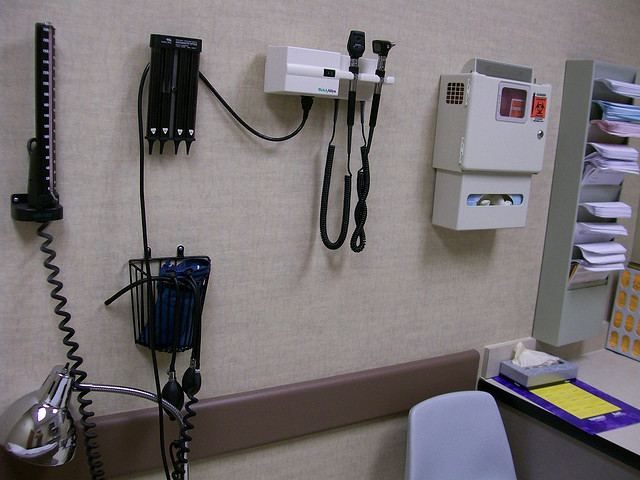
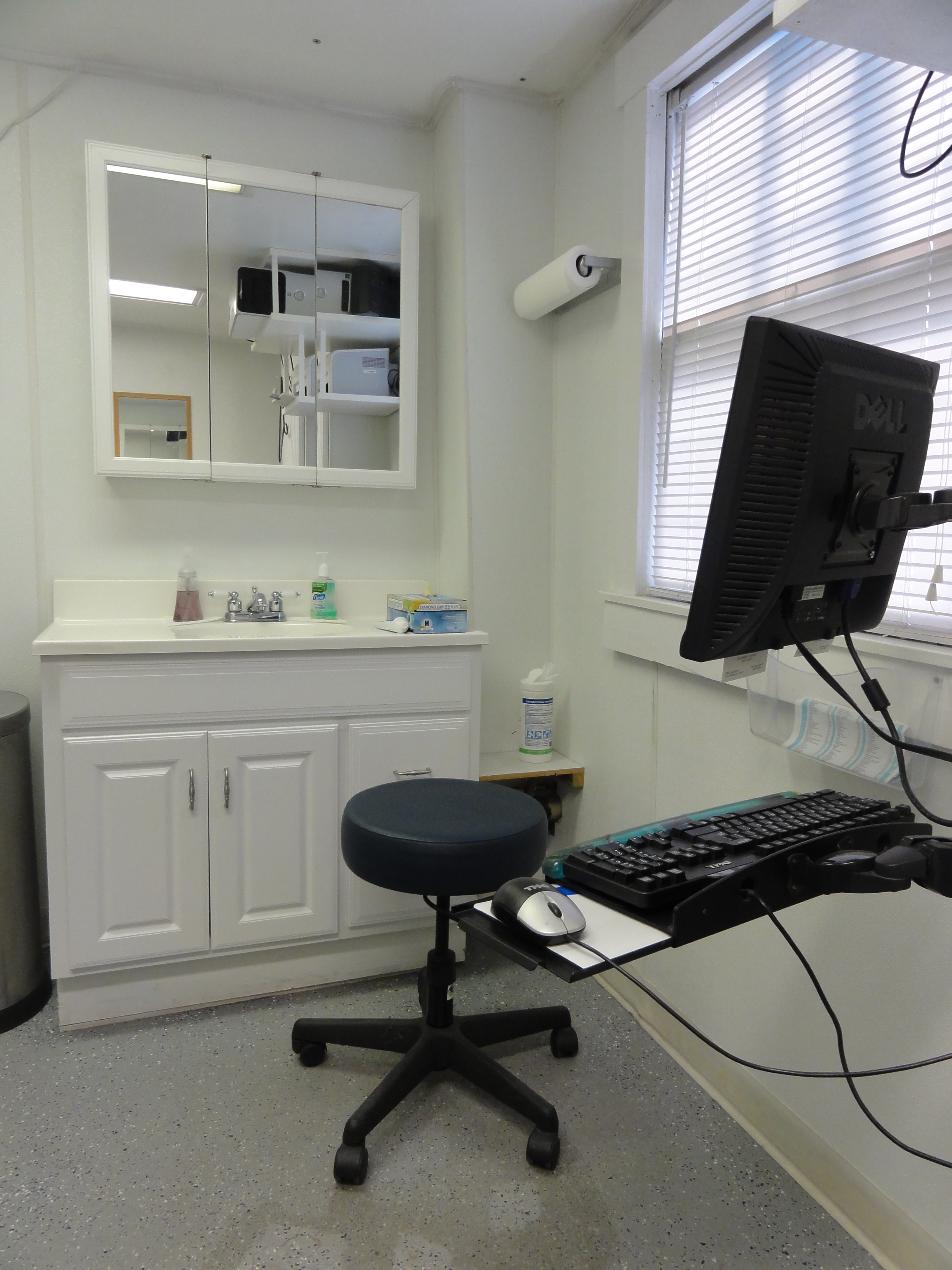
Ever wonder why the pictures of offices are so weird? Me, too.
Somebody put some better free media on wikimedia, please.
As a future specialist, I'm struggling with letting go of primary care. As a pre-med and medical student I got frustrated when my OB/GYN didn't refill my albuterol for mild intermittent asthma. In response, I promised myself that I would not forget basic medicine.

The other day in continuity clinic, I saw a woman with a few medical problems. I wanted to do her age-appropriate USPSTF screening, which is germane to primary care. I had to look up the recommendations because I don't do a lot of screening and immunizations. I care for a single sex population which is largely of reproductive age, and my anticipatory guidance and lifestyle modifications are almost always about pregnancy and sexual behavior.

But I like being a responsible doctor, so I've modified my well woman templates based on age and USPSTF and CDC recommendations. I've built in HEADS screens for adolescents and breast and colon cancer risk scores for older patients. I remember how to read EKGs and do when I order them. I remember how to read chest X-rays and do when I order them. And I know the first few options for medical therapy for the most common problems: community-acquired infections, hypertension, diabetes, obesity, asthma, hypothyroidism, depression, early heart failure, and high cholesterol. I can respond to a heart attack or a stroke.

I'm not pretending I could be a successful family medicine or internal medicine resident. I have to look up the screening recommendations every time. I don't remember or know more than half of the medications they use, I'm sure. I can't ever remember the childhood milestones and immunizations. Don't look to me when someone's in kidney, liver, respiratory, or late heart failure. Find someone else for the endocrinology zebras and for the love of the patient, please have someone else run the code.

But I can look up what the evidence says when I have a well woman exam. So I looked up the tests I was supposed to order. When I went to staff the patient, my generalist attending scrapped most of my plan. "There's a limit to how much primary care we can do," she said.

This made me sad. Most of these women don't have another doctor. If they do, I begin to wonder why that other doctor can't do their pap tests (until things get surgical). I wish women only had to see one doctor unless they had more advanced medical problems. I enjoy continuity of care and building the physician-patient relationship. I find preventative screening a fascinating topic and a very satisfying intervention to execute. I love discussing lifestyle modifications because they knock at the door of virtue.

That said, I'm heading for fellowship and leaving primary care further and further behind. I think that primary care is an excellent sphere for midlevel practitioners, even though I love it.

In the future, there will certainly be a limit to how much primary care I do. If I become an MFM, I will do basically zero primary care and I will rely on specialists to help me manage the medical problems for my high risk patients with heart disease and other problems. (I'll still manage plenty of hypertensive disorders, obesity, diabetes, and thyroid disease myself.) That's a little hard to swallow, but I still dream of extending myself by joining a multidisciplinary practice that can be a hub for a woman's healthcare, so she doesn't have to spread out her time, energy, and medical records.

Wednesday, September 18, 2013

A day in the life of Family Medicine

Whew! Family Medicine is over and I am now 12 weeks into third year. I am so tired! This post is not unified or well written; it's a journal entry and nothing more. My advise: skim or skip.

Most of the mornings started at 8:00am in Family Med. I would go to 6:30 am Mass and then drive to a suburban hospital where there was a family practice group and a family practice residency program. I spent two weeks in the group and two weeks with the residents. A week of lectures and one week with the residents on their inpatient medicine service rounded out the clerkship.

I would eat breakfast in my car, parked in the church parking lot. Sometimes, I would see my mom as she arrived for work at 7:30 (she works at the primary school associated with our parish). I arrived at work at 7:45 and started clinic at 8:00.
I liked working in the residency clinic more than the group practice because it was more education-driven. I was also more like my preceptors: in the group, I worked with a doc who'd been practicing for ten years before I was born. He was so experienced (and maybe a little sloppy) that he hardly collected any history before announcing a diagnosis. He also typed with two fingers, and so was really slow with the EHR. I pitied him--even though I had about twenty minutes of training, I picked up at least as much as he had in the few weeks I was with him!

I was closer to the residents' age and experience level and, although I always treated them with the respect their degree and position commanded, I felt more comfortable imagining myself in their shoes. "Family medicine wouldn't be so bad," I thought, when I worked with them. (When I worked with the older doc, I thought, "this definitely isn't for me.... Advising all these old people to take mustard when they have a cramp even if they have stage III CKD and typing notes until 12:00am...no thanks.")

Morning clinic would wrap up around 12:30 or 1:00, and clinic would resume at 1:30 or 2:00.

During the day I would see between five and ten patients: I would read their chart a little before tapping on the door and introducing myself. I'd ask them what they came in for and question them about their health or problems, and then I'd decide how to examine them and perform the exam. I documented my findings in the EHR and excused myself to "present" the person to my preceptor.

"Mr. So-and-so is a such-and-such-year-old white male with a history of hypertension and diabetes who comes in today complaining of a four-day history of tingling in his feet," I might say. I would describe the pain (or the cough, or the relevant details of his chronic disease) and then the pertinent positives and negatives, before describing my physical exam. "His heart has regular rate and rhythym without murmurs, gallops, or rubs, and his lungs are clear to auscultation bilaterally." Then I was supposed to say my assessment and plan, but frequently I didn't have to do this.

(Parenthetically, it's funny to write all that out, because all that text would become "Pt is a XXyo WM with 4d h/o tingling in bilateral feet....Heart: RRR s MGR, Lungs: CTAB" in the EHR)

The preceptor would ask me questions to which I usually didn't know the answers ("Does he have a family history of heart disease?" "What do you make of his elevated LFTs?"), and we would go see the patient again together. I liked seeing patients myself, making plans for them, and educating them. I really disliked presentations and not knowing enough.

I usually stayed past 5:00pm and got home tired and hungry. My family eats when my dad comes home, which is variable...so that caused some friction until mom told me I should just eat when I get home so that I can go and study. I would get to bed at 10:00 or shortly thereafter following night prayer. Usually, no recreation unless I stole some time to talk with my family, ride bikes, blog, or read.

I enjoyed working the inpatient week because I again got to see patients myself, examine them, and write notes in their charts with my own baby assessment and plan. However, this week I wasn't able to attend Mass, and so I asked our parish priest to give me the Blessed Sacrament before Mass began so that I could go to work early for shift change and rounding.

I was constantly readjusting and struggling to fit in all the things I thought I needed to do: morning and evening prayer, midday prayer, meditation, Mass, formation, work, and family took so much time that studying was almost eclipsed! I saw the result on my NBME, sadly. I would study on Saturdays and on occasionaly weeknights, but it never seemed to be enough. I always felt behind! Family Med contains so many subjects (acute and chronic diseases of every organ system in all ages and both genders! Mwaha!) that I was only confident in about a dozen by the end of the clerkship.

Where is God's will for this time in my life? I feel like I'm working two full-time lives: a medical student who needs to work and study, and a consecrated virgin in formation, who needs to study (different things!) and pray. And both are suffering because of the other! I work but I am tired because I don't get enough sleep and exercise; I study, but only a little bit, so that my work suffers; I study the Catechism (but am ten days behind) and listen to my Faith Foundations lectures (but they go in one ear and out the other b/c I listen to them in the car) and go to formation (where I am so tired they have been letting me go early); and I pray, but am so distracted and tired that I don't perceive God's presence. What needs to change???

My expectations, perhaps? Please pray for me, so that I can see God's will. I finally have a spiritual director here, and hopefully we will meet soon to talk about all this.

On to pediatrics!

Tuesday, August 20, 2013

Oh dear. Family Medicine.

So, on the first day of the family medicine rotation, the clerkship director gave a presentation about family medicine--what it is, why one would go into it, etc. And something seriously bizarre happened.

I have wanted to become an OB/GYN for something like eight years. Family med has always been the second choice, but it was always dismissed because of things like a preponderance of metabolic syndrome (ugh), no surgical components (double ugh) and excessive government oversight (triple ugh).

But as that clerkship director was talking, I began to seriously think family med deserved a more than serious look. I began to really want to be a family doctor. I began to think so seriously that I started making a list of pro's and con's on my orientation packet. And I didn't even call the con's "con's," I just wrote them under a list I labeled "Hm."

Hm
  1. I would miss the OR and surgery. I really like anything that requires manual dexterity.
  2. Every time someone suggests FM as a way to go, they mention rural care and mentally I go "ACK! NO!!" I don't want to do rural care. Sorry, but I want to stay in my city! I'm happy to serve the urban poor, and that's what I want to do, but no rural care until my parents are deceased. That's the law (right now).
  3. The government looooooooves primary care. FM is the answer to ALL Obama's problems. Hence, I don't want to go into a field where I become Big Brother's employee or marionette.
  4. SYNDROME X. Nuff said?
Pro
  1. I love to educate, and that is what a lot of FM is. I love to bring people up to speed by going to meet them where they are and encouraging them. That was in my personal statement.
  2. Better hours than OB/GYN!
  3. FM is actually the answer to MANY of the nation's healthcare spending problems. I don't want to be a governmental employee, but it would be good to actually help with a big problem.
  4. I used to want to be a family doctor but somewhere along the line I learned that the golden age was over and family docs were referral machines (it was a job for the dumbest med students). But I don't think that's true anymore, not after meeting some of the faculty here and elsewhere.
  5. I was complaining after psychiatry that I wish I'd become a therapist instead of an MD, since they seemed to do more for people. FM would be more like the therapist and less like the drug pusher.
  6. It's natural. It's basic. I like that.
  7. It's the most helpful, in terms of morbidity and mortality.
  8. I LOVE the idea that one person has one doctor, or at least one main doctor managing the team. The patient centered medical home model really appeals to me, as does the ACO, multispecialty practice, and group visit.
  9. I like the idea of managing complexity. Although I don't want to manage everyone's unmanageable syndrome X, I do like to use my brain. (IMED, is that you calling?)
  10. I like the idea of being able to everything (ish) for the poor.
  11. It has a lower income.
  12. It's almost all outpatient. One thing I didn't like about psych and a few of the docs I've shadowed is that they have inpatient and outpatient, and spend a lot of time driving.
  13. It has a shorter residency AND (get this) you can do a year-long fellowship in OB and then *poof* I would have spent the same amount of time (four years) getting ready for prenatal care as I would in an OB/GYN residency. I'd miss the surgery (except C-sections) but I would be out from under the thumb of ACOG and not responsible for IUDs, sterilizations, and IVF while still managing what matters most to me anyway (prenatal care, birth, miscarriage, prenatal hospice, NFP, STDs, sex and abstinence ed, and postabortion recovery).
  14. I might be able to do residency more easily in my home city. And that means, I might be rotating where I will eventually be a resident. (Better shape up!)
I still have a lot of questions, but that is a long list (and it surprised me how quickly I was able to write it out, as though I'd been thinking about this for a while). I'm still in the first week of the rotation, which has all been lectures, so I haven't seen a single real patient. Time will tell. Please say a short prayer so that I can see what God wants me to do.