Showing posts with label philosophy. Show all posts

Wednesday, May 20, 2015

When do we Truly Twin?

Many use twinning as an argument that life does not begin at conception/fertilitzation/gamete fusion.

Although what we do know of the inner workings of cells is tantalizing and beautiful, cells are still black boxes. The single-celled human zygote is the blackest (and most interesting) of these boxes. We have known for decades that there is early asymmetry in the zygote that later shows up in the division of the inner cell mass (ICM) and the trophectoderm.


We also know that intracellular components are moving as soon as sperm affects egg (cortical reaction, pronuclear migration events, etc). There is a great deal of mechanical action taking place, by which this tiny organism's body is quickly building infrastructure by which it will direct the rest of its development. Such organized activity promoting the development of a single organism is directed, like all operations of a living body, by a soul. This indicates (for those who don't realize this), that ensoulment occurs "at conception" (in non-scientific language), during fertilization, or at/around sperm-egg fusion.

But what about twinning? Complete twinning cracks a complex, tiny body into two between days 0 and 13 of life. Depending on when the cleavage occurs, the twins share zero, one or more tissues.

Twinning is a natural and normal process. We can tell this because a) it occurs frequently, and b) there is a falling-short of it--conjoined twinning.

What causes twinning? I propose that infusion of two souls occurs at conception/fertilization/sperm-egg fusion. These two organizing principles begin directing development of a single zygotic body. There are too many cooks in the kitchen, leading to an unstable union, perhaps because the processes directed by the two new souls don't place adherent components (e.g. desmosomes) where single souls would. This results in fracturing of the conjoined body (a process disrupted by some defect in the material in the case of conjoined twins).

Technology probably won't allow to see the difference between the intercellular workings of single-soul-driven and multiple-soul-driven zygotes for many years. Nevertheless, we can observe the end effect (what appeared to be a single body breaking in two parts and surviving, forming two complete sets of parts) and work back to the presence of two directing principles working from the outset on their completely totipotent cell.

Wednesday, September 10, 2014

Mitochondrial Transfer: Third Parents? Immoral?

Short answer: no. Long answer requires that we think about cellular anatomy and moral teaching. We will also reply to objections. Tl;dr? Read bold.

Cellular Anatomy

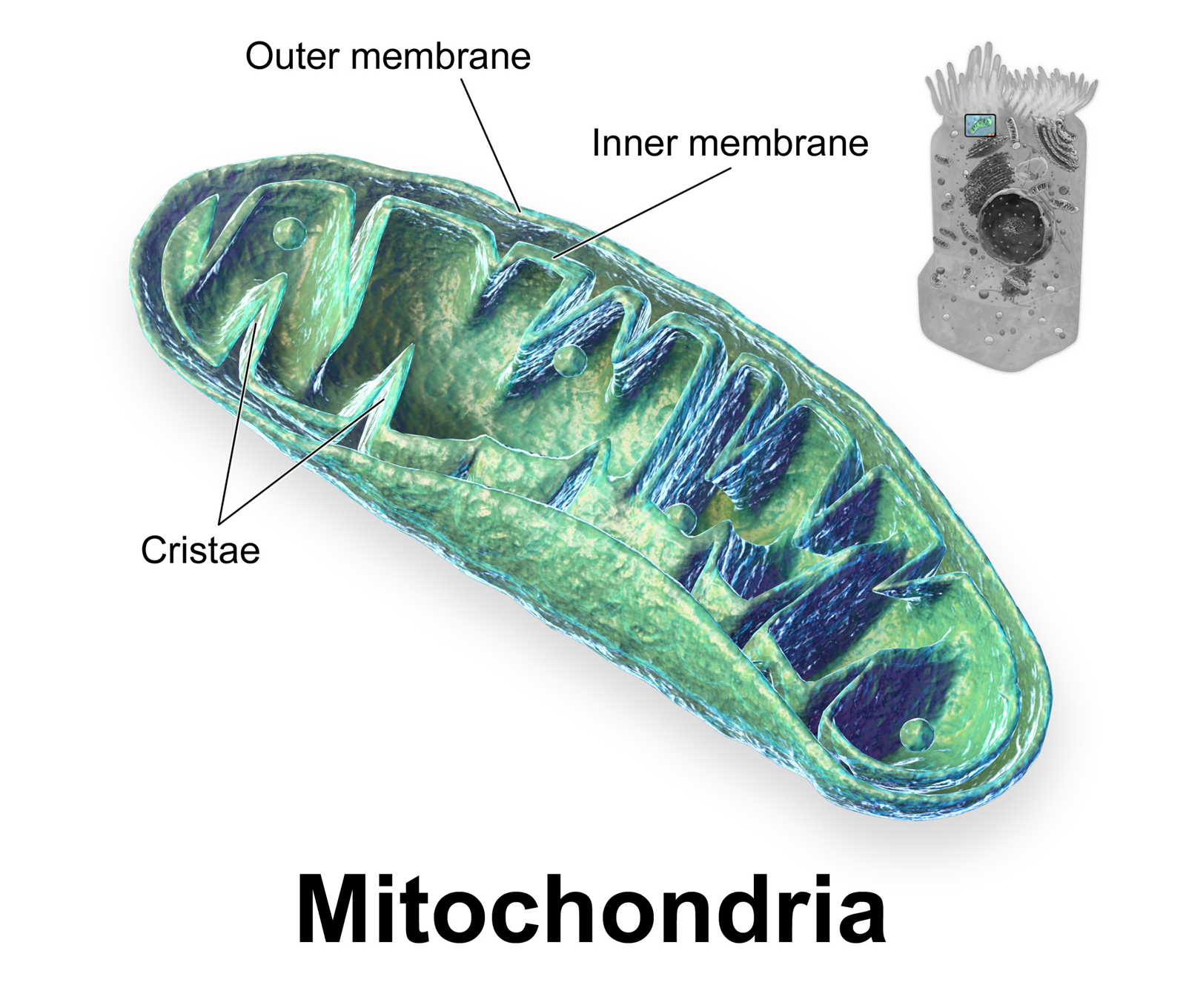
A mitochondrion (plural mitochondria) is a cellular organelle responsible for cellular respiration. Organelles are like the "organs" of cells (although they carry less inherent information).

Mitochondria are unique among organelles in that they carry a little bit of unique DNA encoding several key metabolic proteins not coded in the human genome. This may be because mitochondria were, in the distant evolutionary past, symbiotic organisms. These organisms lived inside other unicellular, then multicellular organisms, and eventually lost their independence. This DNA is human because the mitochondria are now parts of human cells, not independent organisms. However, this DNA is technically called "extragenomic."

Moral Teaching: Organelle Donation

There are no other examples of organelle donation apart from cloning (nuclear transfer to an egg before the egg is used in IVF). Cloning is directly addressed in Donum Vitae
Procedures designed to influence the genetic inheritance of a child, which are not therapeutic, are morally wrong. To try to correct a genetic disorder, such as cystic fibrosis, is morally permissible, whereas to manipulate the genetic structure to produce human beings selected by sex or some other quality is wrong. Attempts to produce a "breed" of humans through cloning, twin fission, or parthenogenesis outside the context of marriage or parenthood is immoral. These manipulations violate the personal dignity of the human being and attack his integrity and identity. 
(Emphasis mine.) From this quote, it might at first seem that the intention of producing a breed is the evil to be avoided, but the last sentence makes it pretty unavoidable: cloning violates human dignity.

But look closely at what Pope St. John Paul II says: "Procedures designed to influence the genetic inheritance of a child, which are not therapeutic, are morally wrong." (Emphasis mine.) This explicitly excludes mitochondrial transfer.

Mention is made of cystic fibrosis, which could be corrected cellularly at the early level by extragenomic gene therapy. The only difference between this and treatment of mitochondrial diseases is that the extragenomic DNA in genetic therapy for CF is carried by bacteria, while the extragenomic DNA in genetic therapy for mitochondrial diseases is carried by human organelles. (Makes mitochondrial transfer look downright natural and convenient, doesn't it?)

But this is not just about cells and molecules. It's about gametes and parenting, and that is why most people get antsy--because mitochondrial donors have been called third biological parents.

Moral Teaching: Parents

What is a parent? I'm not planning to hammer out a definition of "parent" today, especially since Catholic Encyclopedia can't. This is a dialectical argument to show you that parenting has to do with raising children, especially with the reproductive capacity at the beginning of the child's life.

Any definition of "parent" should be wide enough to include the following people:
  • a woman who, with her own egg, conceives a zygote in her own uterus (biological parenthood, simply speaking)
  • a man who, with his own sperm and body, fertilizes a woman who conceives a zygote in her own uterus (biological parenthood, simply speaking; this spectrum includes everything from rape to monogamous marriage)
  • a person who raises a child conceived by other persons as his or her own (technically modified by the word "adoptive" or "foster," as in scripture of St. Joseph)
Notice that biological parenthood, simply speaking, is all it takes for us to call someone a mother or father. However, this is based on reproductive tissue (gametes), not DNA. Gametes may have too many or too few chromosomes; chromosomes may have repeats, deletions, or nonsense mutations; eggs may carry many or fewer mitochondria; mitochondria may carry defective extragenomic DNA.

Key point: contribution to the DNA content of the zygote (which determines congenital disorders) does not matter as much as contribution of reproductive tissue. So what about this person:
  • a person who gives his or her own DNA-containing mitochondria for transplant into to a woman's egg before the woman's egg is used in IVF?
This person is donating cellular parts, not gametes (let alone years of time). I argue that this person belongs on a list of people who donate parts. A list like this:
  • a person who gives his or her own undifferentiated white blood cells to a hematology/oncology patient (bone marrow donor)
  • a person who gives his or her own red blood cells, platelets, or plasma to another person (blood donor)
  • a person who posthumously gives his or her own ocular tissue to another person (cornea donor)
  • a person who, living or posthumously, gives part of his or her own body to another person (organ donor)
In short, the person who gives their mitochondria for transfer is not violating human dignity. He or she saves the life of children conceived with mitochondrial disease, but he or she is an organelle donor, not a parent. 

Ghost Heart (Decellularized)
Src: TED.
Replies to Objections

  1. But no other organ donation includes non-genomic DNA.
    False. Every donation that includes mitochondria includes non-genomic DNA. This is everything but decellularized organs, plasma, platelets, and stool.
  2. Okay, so no other organ donation includes only non-genomic DNA.
    True. But there are other organ donations that are exclusively for the purpose of transferring DNA and hoping to replace the recipient's phenotype with the donor's. The best example is bone marrow transplants.
  3. But mitochondrial transfer still requires IVF.
    Very, very true. Although I hold that mitochondrial transfer per se is morally licit, I cannot condone current methods of mitochondrial transfer which involve IVF.

Saturday, August 30, 2014

Organ Donation: Is Your Soul Gone when Your Brain Dies?

I had some experience while on my trauma/acute care rotation with brain death and organ harvesting. One of my good friends was on the transplant service at the same time. "I think there's a harvest tonight," I said to him one day. A patient on our service, who had come in with severe brain damage after a hallucinogen-associated accident, had been declared brain dead. His family had consented to donation. I saw the organ donation representative with his binder and papers hovering around the room. And the patient's name disappeared from our check-out list (the list we keep of the patients so that we can hand them off to the night team). Sure enough, there was a harvest that night.

It sounds macabre, and it is. Late one evening, I was walking down the long hall of operating rooms to get a snack out of the physician's lounge. I passed by the screen at the front of the OR that displays all ongoing surgeries. Each operating room has a row, and the cases stretch out like long ribbons along the row, with every hour taking about three inches on the screen. Because it was 7:00 or 8:00 in the evening, no elective cases were scheduled. There was a laparoscopic appendectomy posted for the near future: it was about eighteen inches long on the screen. But at the bottom of the screen stretched an enormous band of orange, disappearing to either end of the screen. "HARVEST" was the procedure.

I walked down the hall. Outside the room's door were many styrofoam crates with plastic bags labeled "human organ for transplant" and advisories about temperature and transport. There was a liver box, a kidney box, a heart box, a box for blood.... No shades were drawn over the windows, so I looked in. The body on the table looked pale; I later realized that this was because blood was being taken. And instead of a cot or hospital bed waiting outside the door, as in every surgery, there was a long box on wheels. A tank, from the morgue.

The Catechism, in 2296 (in the section on Respect for the Person in Scientific Research) has this to say about organ donation:
Organ transplants are in conformity with the moral law if the physical and psychological dangers and risks to the donor are proportionate to the good sought for the recipient. Organ donation after death is a noble and meritorious act and is to be encouraged as a expression of generous solidarity. It is not morally acceptable if the donor or his proxy has not given explicit consent. Moreover, it is not morally admissible to bring about the disabling mutilation or death of a human being, even in order to delay the death of other persons.
I had heard the horror stories about people (rather than bodies) being harvested. But med school gave us training to recognize legitimate brain death. This included forceful reminders that that two physicians must agree on the criteria. But is brain death a suitable way to determine that the soul is gone?

Maureen Condic, Ph.D. wrote a helpful essay entitled "Life: Defining the Beginning by the End." Published in 2003 by First Things, the essay discusses the beginning of life by considering death. I was already a Condic fan, because of her phenomenal (and unsung) white paper on the beginning of life, and because I was a Vita Institute participant.

Condic highlights the distinction between cellular (or even organ) life and life of the organism. (Busy people read the bold.)
Brain death occurs when there has been irreversible damage to the brain, resulting in a complete and permanent failure of brain function. Following the death of the brain, the person stops...sensing, moving, breathing...although many of the cells in the brain remain “alive” following loss of brain function. The heart can continue to beat spontaneously for some time following death of the brain (even hearts that have been entirely removed from the body will continue to beat for a surprisingly long period), but eventually the heart ceases to function due to loss of oxygen....

The fact that the cells and organs of the body can be maintained after the death of the individual is a disturbing concept. The feeling that corpses are being kept artificially “alive” as medical zombies for the convenient culture of transplantable organs can be quite discomforting, especially when the body in question is that of a loved one. Nonetheless, it is important to realize that this state of affairs is essentially no different from what occurs naturally following death by any means. On a cellular and molecular level, nothing changes in the instant of death. Immediately following death, most of the cells in the body are still alive, and for a time at least, they continue to function normally. Maintaining heartbeat and artificial respiration simply extends this period of time. Once the “plug is pulled,” and the corpse is left to its own devices, the cells and organs of the body undergo the same slow death by oxygen deprivation they would have experienced had medical science not intervened.

What has been lost at death is not merely the activity of the brain or the heart, but more importantly the ability of the body’s parts (organs and cells) to function together as an integrated whole. Failure of a critical organ results in the breakdown of the body’s overall coordinated activity, despite the continued normal function (or “life”) of other organs. Although cells of the brain are still alive following brain death, they cease to work together in a coordinated manner to function as a brain should. Because the brain is not directing the [diaphragm] to contract, the heart is deprived of oxygen and stops beating. Subsequently, all of the organs that are dependent on the heart for blood flow cease to function as well. The order of events can vary considerably (the heart can cease to function, resulting in death of the brain, for example), but the net effect is the same. Death occurs when the body ceases to act in a coordinated manner to support the continued healthy function of all bodily organs. Cellular life may continue for some time following the loss of integrated bodily function, but once the ability to act in a coordinated manner has been lost, “life” cannot be restored to a corpse”no matter how “alive” the cells composing the body may yet be.
If that sounded interesting to you, I encourage you to read the rest. Condic goes on to talk about how this definition excludes persistent vegetative state (i.e. we can't argue that Terry Schiavo should die from agreeing that brain death = death), and that this definition does not hang on consciousness or cognitive function (i.e. we can't euthanize the unborn, the disabled, or the demented because we agreed that brain death = death). I disagree with a few of Condic's assertions, notably that we cease to think upon brain death. (who, with the light of faith on matters like the communion of saints, would say that the soul, separated, cannot think without the brain?) But the rest of her work is medically excellent as far as I, eight months from M.D., can see. This is also philosophically sound as far as I, a bachelor in philosophy, can see.

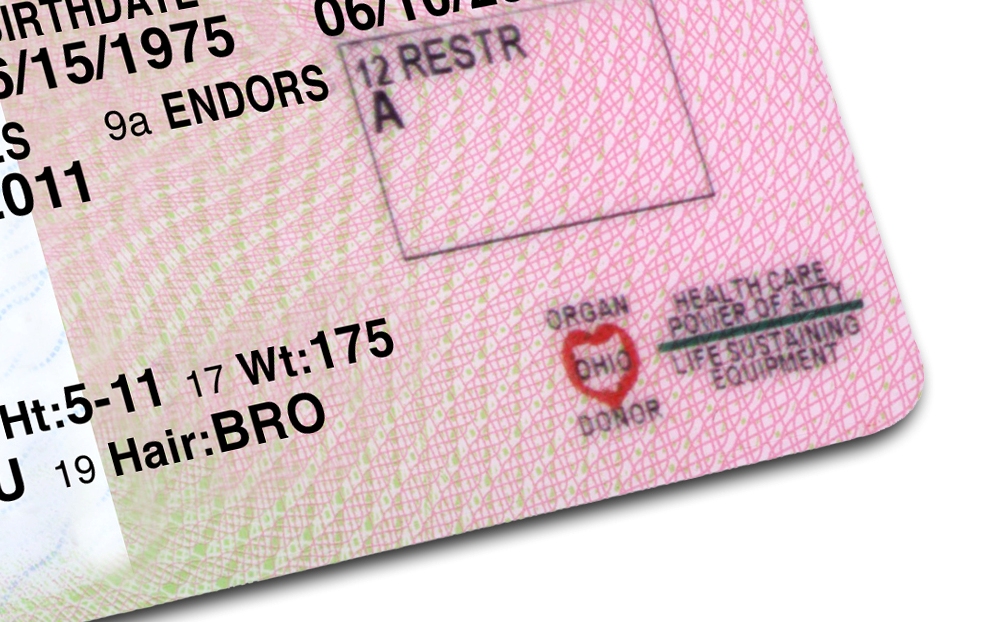
When I initally got my driver's license, I was still undecided about organ donation. I renewed it recently, and I'm now a donor. I encourage you to prayerfully consider donation, too. Besides saving up to 8 lives, you could also bring closure to your family after your death, all in accord with Catholic teaching, sound philosophy, and accurate medicine.

(Spoiler alert: that's not my license at left.)

Wednesday, December 4, 2013

Bizarre, Unsurprising, Pitiable, Absurd: a lecture on Homosexuality

I went to a mandatory lecture about homosexuality. (It wasn't relevant to medicine, although it was supposed to be.) My notes on his lecture have three phases: dutifully recording the bizarre but natural consequences of his ideas, pity for a man who was still clinging to an outdated and dystopian revolution, and shaking my head as he reduced himself to the absurd.

Big Surprises: NOT.
  • The lecturer admitted freely and happily that the LGBT community was vague. (The T was added in the '90's, another T for T-squared added shortly thereafter, then I for intersex, then Q for questioning and another Q for queer....) No one could agree on what the community was really made up of, or who should be in or out, or whether membership was permanent, or whether people who didn't want to be in were in based on criteria that admitted others who wanted to belong. No surprise to me and to anyone who knows what separation from objective truth can mean. Look at the fallout of the Reformation! Of course legitimizing a falling away from man's natural inclination will result in chaos.
  • He discussed the possibility of "polyamorous communities," or "open marriages" (his words). Again: surprise? This is an old reality with a new name. It used to be called cheating, but it's the new normal. I can forsee it happening very soon, since the youth who grew up in the hookup culture (basically a culture of polyamour) will likely live the same habits later in life. The sad thing is, love with many is love with none. When human love isn't exclusive and irrevocable, it's not love.
  • Still on the topic of "open marriages," he said that marriage is "not just for individual beauty...but also for children," meaning that consenting adults should reap not only the enjoyment of sex, but the enjoyment of children, too. But in this, he subtly states that children aren't individuals. He next stated that "open marriages" would involve "lots of complexity that kids have to deal with." Again, no surprise: we have been treating children as less than human for nearly half a century: first, the unborn, then, the born. Now, we just speak about it openly.

Forty Years I endured this Generation. That's Enough.
  • "The whole notion of labels [is] melting before our eyes...beginning to thaw and melt away." When the lecturer said this, I simultaneously pitied him and felt anger. I pitied him because he's so behind: that battle cry rose almost a century ago and now plays as cheap background music in the minds of everyone under (at least) forty. And I was angry, because this attitude has played out its destruction on my generation. The lecturer said, "my goal is to disrupt society" and "deconstruct statutes." But society is already deconstructed. My generation might say to the lecturer's, "We were raised in divorces or among divorces, breathing relativism and drinking perpetual self-absorption and agnosticism about everything except opinions and sensation. What else would you like to deconstruct?"
  • Around this point in the lecture, I wrote in my notes "So Marxist!" And one inch lower on the paper I wrote: "Two minutes later he brought up Marx. [The lecturer] studies [Marx] and says he doesn't believe everything of it." Whatever.
  • And then, because this man happened to be a lapsed Catholic, we got a good dose of pancretism, or the choice of religion based on preference of accidents (the lecturer liked Episcopalianism better for several reasons). Yawn.
  • The lecturer condemned "the puritan U.S. division of sexual and spiritual," and I was happy to hear it, since puritanism is one of the great errors of our time. But (as with his quotes about thinking deeply) this didn't pan out, since his next idea was excitement about prostitution. At this point in the lecture my notes became frustrated question marks. See above for how my generation is already living prostitution. Again: thanks for the errors.
  • "Language is unintelligible," he said, and I can't remember what he said that about. I wanted to snort, "language isn't the only thing that's unintelligible," and not in an ad hominem: nothing is intelligible in relativism. My first question to my peers who want to talk about God is always: do you think we can know anything? (And then, "how?" or "why not?" or "how do you know that?")

Nonsense is Nonsense
  • He did such an elegant job of characterizing his position as nonsense that I felt my job was done. He specifically said that this is a first world problem.
  • "Other" on forms that list "male" and "female" as genders is offensive. I was so close to laughter.
  • In Angels in America, the homosexual patient tells the doctor his diagnosis by the end. He thinks that's a great ending; in a way, so do I. It says outrightly, "we assert our statement over the truth," if you take the physician as the art of medicine personified, a symbol of the objective way the body works.
  • He used the word "tragedy" that we did not accept those who did not identify as male or female. Tragedy is a word I use more carefully.
  • "Gender and sexuality [are] entirely separated for us," he said, speaking for the LGBT community, I guess. "But that doesn't mean anything." ???
  • The lecturer was saying that about 1% of children are intersex, based on some ridiculous data counting boys with hypospadias as intersex. "I personally tend to believe this literature," he said.
  • On the last page of my notes, I have written in large handwriting (which happens when I get angry), "WHY are we talking about the ordination of women??" The lecture had devolved and I felt like I was in a Catholic-bashing fest. He exhibited one of his own paintings, which featured a photo of The Ecstasy of St. Theresa, various pornographic photos, and unconsecrated hosts (covering the genitalia of the naked figures). I was upset, but also felt vindicated. I am proud that the Church is ridiculed in the rejection of the truth: she stands with her Spouse.
  • The lecturer's last advice: find a community that allows your behavior. But that is backwards. We go into communities to become happy, fulfilled, perfected people, not children.

Saturday, August 10, 2013

There is so much unfinished philosophy of the mind.

I wish the Catholic Church was still shaping the world! The Middle Ages were so awesome. If the Catholic Church still informed the world, we would inquire about the ethics of a thing or theory before or very shortly after it was discovered/described/invented. And true philosophy would follow the natural arts and sciences, with theology (well served) flowering afterwards.

In my imaginary Catholic world, a physician treating mentally ill patients could have a pocket copy of the compendium of teachings describing how God works in, through, and for the mentally ill and disabled.

Sadly, this is not the case. Instead, I wander the halls of the psych hospital with question marks buzzing in my brain, wondering whether my patients can cooperate with grace or can receive sacraments. I will now have fun flouncing around in the fields of philosophy. Sorry to anyone who actually likes to proceed in an orderly fashion.

Psychosis and Choosing the Good
By nature, a human being has a body with many organs, and a soul with several faculties by nature. According to Aristotle (complemented by modern medicine) the faculties of the soul
  1. special senses (e.g. taste, touch, proprioception),
  2. the common sense (no, not "common sense," but the common sense, which compiles sensory information into a whole),
  3. the imagination,
  4. the passive and active intellect, and
  5. the will.
None of these are synonymous with the person. In fact, the error that a person is synonymous with their faculties is rampant right now: we see it borne out in abortion, contraception, and euthanasia. If it can't ______ (see, hear, feel, think, be aware, etc), it's not a human person or, at least, it's not worth defending in the same way that a human who can ______.

Like the unborn and the elderly, the mentally ill have absent or impaired faculties. I suggest the common sense, the imagination, or the intellect is most affected in them. But does this mean they are not persons? No! Does this mean they cannot accept grace? No. (Their wills exist and can act independently of their intellects, perhaps like mine does when I make an act of the will to accept the God is Triune, although my intellect can only shrug and say, "well, St. Thomas said some true stuff about it, but I'm stumped.")

I tend to identify with my intellect. This is not a true or good thing, as seen above. I fall into the same error as our culture does--I need to be more humble, accepting that I am body and soul, matter and spirit. Even so, it is a smaller error to identify with one's intellect than to identify with one's body. The "best" error, the one closest to the truth, would be to identify with one's will. Maybe the attraction to identifying with the intellect (or will) is an old remnant of Eve's mistake, wanting to see herself like God (who is his intellect and will).

Body and Soul: We're Embarassingly One
How bodily we are! Scholastic education is awesome, but it makes me tend to think soul and body are basically separate. That's impossible to think in a psychiatric hospital.

Bodily illnesses have cognitive consequences. Liver failure? The poisons in your blood that your liver can't take care of will make you forgetful and disoriented. Brain injury, even so suble that we can't see it microscopically? Pseudobulbar affect causes people to burst into tears or laughter with the slightest provocation (or none at all). Schizophrenia is associated with decreased cortical mass. More obvious examples are Kluver-Bucy syndrome, Pick's disease, and frontotemporal dementia.

And mental illnesses have material remedies! I saw at least three patients with extreme and overt psychosis become connected with reality in a few days after giving them antipsychotic drugs! Pills can take away delusions and hallucinations. (One woman insisted that I call her First Lady Savior; I just saw her earlier this week and she is completely coherent and herself again. Thanks olanzapine.) The walls between form and matter are becoming preeeeeetty thin here.

Anyway, I just wanted to muse on these things, because I can't really start chatting it up about form and matter with my fellow medical students or attendings. (I never realized how awesome it was at TAC to sit down at a lunch table and talk about first principles.) Maybe this will jog some interesting thoughts in people and we can muse more in the comments?

Thursday, March 21, 2013

How do pro-choice doctors think? (Part II)

(Part I) A lecturer mentioned the Mirena IUD as a good therapeutic for lots of gynecological problems, especially dysfunctional uterine bleeding. Over a few emails, I asked him about how the Mirena works and gently probed him about the abortifacient properties of Mirena. "If the Mirena can thin the endometrium in a patient who is still ovulating, couldn't this cause loss of an early embryo?" I asked.

 "Yes, it could," he answered. He beat around the bush, though, so I asked him point-blank: "Is blocking implantation abortifacient?"

Here's his answer. The two ellipses are his own, almost as if he's hemming and hawing in discomfort:
That's an ethical discussion, [mmatins]. I think most patients who are concerned and ask about it think of it in that regard...to me, it's not quite the same as intentionally ending an existing pregnancy, but it gets at the argument of when life begins: is it at conception, at implantation, at birth, etc...
How can someone say "that's an ethical discussion" and mean "that's a discussion I can't have?" Ethics permeates everything we do; it is the science or art of acting well! Ethics is so important to reproductive medicine, and it is precisely there that it is treated like it is irrelevant or relative.

When Obama tried this move I thought "psh, come on." When an OB/GYN tries it, I moan and think "who gave you a license??"

And imprecision we wouldn't put up with elsewhere: "it's not quite the same." Not quite? So how much? Should we put up limits? Should we establish best practice guidelines? Should we pass a law? Should we at least tell patients it's "not quite them same" instead of telling them "no, Mirena doesn't cause abortions"?

The insanity continues, though. I emailed a second professor. This woman is a brilliant maternal-fetal medicine OB/GYN with whom our whole class is in love over her funny (and manageable!) lectures. Here is what I asked her:
In your work you monitor, treat, and even operate on babies during delivery or even longer before they're born. I'm trying to reconcile this concern we have for fetuses with medical and surgical abortions. Sometimes we make sure babies are okay; other times we make sure they regress or are removed. How is this consistent?
She replied:
That is a big question and [there are] so many debatable topics possible there. I think a lot of the answer, from my standpoint, goes into counseling patients about what we know about certain diseases and therapies for intrauterine treatments. There will be many more in the future I'm sure, so right now, sometimes we are limited in fetal therapies. As for elective terminations, the same applies for extensive counseling for the patient. risks and benefits for terminations as well as for fetal procedures are key for patients making these decisions. Not sure if that answers your question. MFM is a very challenging field as there is very seldom a distinct line that helps us decide what therapies work....and very rarely, if ever, is there a predictive fetal test that is 100%! This makes the job of an MFM always challenging, and I am sure the role of the pregnant patient very frustrating and complex.
The advice to counsel patients completely is good (I will always do that) and the words about difficulties should be appreciated as coming from one with experience. But finally, she didn't answer my question. I replied, clarifying my question to
..."is the fetus a patient?" The answer is "no" in elective termination but "yes" in laser ablation for poly/olis (for instance). Why does the answer change?
And she said simply:
So, it seems that in the OB world, in regards to procedures, many decisions are made regarding the viability of the fetus (ie: would it be able to survive outside the uterus) at the time of the procedure.
I asked her whether elective terminations will be threatened by advances in NICU, and haven't heard back yet. But the answer to the question "how do pro-choice doctors think?" seems to be...they don't. When I ask them a question, they skirt it, and refer to vague principles about patient counseling and changing technologies that don't hold water.

I don't read intentions onto this omission (rather, I will hold that they are doing their best with what they have been given and I pray that they live long and never resist grace). At the same time, they just don't put two and two together. Stay tuned. We had the contraceptives lecture today, so this blog will scale the cliffs of insanity again before May.

Saturday, February 16, 2013

We Should Stop Taking the Hippocratic Oath.

No, I'm serious. That title is what I think, not what someone else thinks.

The other day a classmate and I had a long talk about the Hippocratic Oath (read it here). She is a pro-choice relativist, but she will take the Oath because she maintains that paragraphs like
...I will neither give a deadly drug to anybody if asked for it, nor will I make a suggestion to this effect. Similarly I will not give to a woman an abortive remedy. In purity and holiness I will guard my life and my art.

I will not use the knife, not even on sufferers from stone, but will withdraw in favor of such men as are engaged in this work...
are clinical vignettes meant to illustrate general principles like nonmaleficence, and not to bind a doctor never to perform an abortion, give an abortifacient, or aid in suicide. This is understanding the Oath in its history context. (Meanwhile the immediately succeeding paragraphs, which state
...Whatever houses I may visit, I will come for the benefit of the sick, remaining free of all intentional injustice, of all mischief and in particular of sexual relations with both female and male persons, be they free or slaves.

What I may see or hear in the course of the treatment or even outside of the treatment in regard to the life of men, which on no account one must spread abroad, I will keep to myself holding such things shameful to be spoken about...
are literally binding.) She maintained that she understands the Oath and swears by it, while others (presumably like me) think they know what it means and take it ignorantly but pleased, bending it to their agendas. Taking the Oath is an appeasement to both sides.

The only study of the Oath I've had is Leon Kass' work and reading other Hippocratic works (his medicinal treatises). My classmates' position came out of lots of recent scholarship (i.e. 1980s, around Kass' time), and it makes up the body of the official presentation on the Oath to the first years.

My response to her was: why are you so attached to this Oath? Who cares about Hippocrates, or his culture (about which we obviously don't know everything, about which people disagree, and which you rightly point out is so different from ours)? Why shouldn't we just swear what we mean? On graduation day, you can swear what you told me you think the Oath means:
I will do no harm.
(Which isn't in the Oath anyway, it's in the Epidemics and in later European medical humanities. Stop being so Western-culturist.) Maybe you will also add some of the other things you told me:
I will never allow my personal beliefs to get in the way of what a patient wants. I will never indoctrinate anyone. I give them all the information and options and allow them to make a free choice, for the contrary is absolutely abominable (although good is relative).
You can swear that. I will swear this:
To God and all men, I profess that I will fulfill according to my ability and judgment this oath and this covenant:
I will improve or palliate the condition of the sick, treating each as a whole human person for their benefit [because beneficence is primary] according to my ability and judgment. I will do no intentional harm [because non-maleficence is secondary].

I will actually not give a deadly drug to anyone, nor will I make a suggestion to this effect. Similarly I will actually not give to a sexually active woman an abortifacient (including hormonal birth control, IUDs, emergency contraception, or RU-486) or perform an abortion on a pregnant mother. Further I will actually not prescribe any contraceptive.

In purity and holiness I will live and practice. I will not exceed my competence. Wherever I work, I will work for the benefit of the sick, remaining free of all intentional injustice. What I may see or hear about the lives of patients I will keep to myself, unless there is danger to the patient or to others or unless summoned by sufficient legal authority. I will honor my teachers and those with whom I work, and will treat the poor with special charity.

If I fulfill this oath and do not violate it, may it be granted to me to use life and this art unto my salvation and the salvation of others. If I transgress it and swear falsely, may You, O Lord, and my fellow men have mercy on me and forgive me.
I'm obviously not married to the Hippocratic Oath. It's fine, but it really doesn't capture everything. It was perpetuated for so long (through the Middle Ages) in Catholic cultures and their offshoots (including Islamic and Protestant cultures) because it was a very close approximation of Catholic teaching. Perfect? No! Misused after the Reformation in Germany? Yes!

The relativists are bending over to interpret it, the Christian doesn't think the literal interpretation is immaculate either...so who cares about Hippocrates? It's better that we be frank and say what we mean.

Tuesday, February 5, 2013

I love my liberal arts education.

Check out this facebook conversation.
Classmate: Hi, I'm a classmate...and I've been a huge fan of your posts and likes on facebook. [Thanks newadvent.org] I'm a Protestant Christian who's really into theology. This kinda ties into med school I guess. This is a philosophical question and I"m curious about your opinion, what would a catholic say about brain transplants. If two people were to switch brains, would the souls follow. Would they just be people in new bodies now. I'm on the fence concerning physicalism.
Me:...By physicalism, do you mean the position that holds brain equivalent to, or the only container of, the soul? It's important to be clear about terms. : ]
C: I think physicalism refers to the idea that humans are primarily physical beings and the soul is not made of another type of immaterial substance, although they can still freely make decisions because the whole is more than just a sum of it's parts. So people can still make moral choices despite not having soul substance. You don't have to answer. It's a difficult question. I was just curious. Thanks for the reply!
M: I don't think it's as difficult as you think. Watch. Our physical abilities, like our senses, our ability to move, and our imagination, need physical organs to work. For instance: sight needs the eyeball; our ability to move needs muscles, motor neurons, the motor cortex, the pons, and the medulla; and the imagination needs areas like the limbic system. But we also have abilities that come untied from physical things: our intellect for instance, can behold things totally abstract from matter (e.g. "triangle," "justice," and "God.") This non-physical power has no use or need for a physical organ. So, this part of the soul is wholly immaterial. Since the soul is not divisible, the entirety of the soul must also be immaterial, though parts of it employ physical organs. Since the brain is the organ only of a part of the soul (or, more likely, a combination of organs of various parts), transplanting it would not mean body-switching or soul-switching. It would be a pretty dramatic transplant, but the immaterial soul is not moved just because one/some of its organs are. What do you think?
C: I think that was beautiful.... It's wonderful to talk philosophy with another person....
I guarantee you I couldn't have just pulled out that explanation without TAC. And what other education allows me to pull out my external hard drive and click click click to a boiled-down version of St. Thomas' five ways (which I created before Junior midterms)?

Way 1
  • We perceive things in motion (common experience, effect of God) 
  • From Aristotle's definition of motion (actuality of potency as such): nothing moves itself, everything is moved by another
    • [The mobile] is [not in act]
    • [The mover] is [in act]
    • ∴ [The mobile] is not [the mover]
  • Regarding these "anothers": there is either some first mover or we regress (which annihilates the intelligibility of the universe, which we assume)
    • If there is [no first mover] there is [no second mover]
    • If there is [∞ regress] there is [no first mover]
    • If there is [∞ regress] there is [no second mover]
  • There is a first mover. "First mover" is a name of God. Therefore, there is a God.
Way 2
  • We perceive an order in efficient causes now causing
  • Again, the thing caused cannot be identical to the cause
  • Again, there is either a first or an ∞ regress (which would be, again, absurd)
  • There is a first efficient cause now causing. This we call God. Therefore, there is a God.
Way 3
  • We see that there are things now existing that can be and not be.
  • For these things it is impossible to always exist (if not and such a thing exists at all times: it is incapable of not existing; a thing which possesses contraries is able to enact them one by one, right after another, so the contingent thing must have not been before being).
  • If all are contingent, at some time nothing was (absurd)
  • So there is some necessary being.
  • Necessary beings are either caused or exist per se. There cannot be an ∞ regress in causes, so there must be a being whose necessary existence is per se, and this we call God.
Way 4
  • Gradations in things are named from the highest (of trancendentals, e.g. true, good, beautiful, one)
  • Most true = most knowable = most being
  • The highest in the genus is the cause, so the cause of all being/good/etc. we call God. Thus, God is.
Way 5
  • We see unintelligent nature (e.g. all material creatures besides men) acting for an end.
  • This presupposes a good, an intention, an intelligence directing all these to their goods.
  • This intelligence we call God. Thus, God is.

Monday, October 8, 2012

The Crisis of Modernity: The Past two Popes and the Church of the 21st Century

The first speaker of the CMA conference last week was George Weigel; this was probably vital since the conference had stolen its title right from Weigel's 1999 book A Witness to Hope: The Biography of Pope John Paul II.


Still being in student-mode, I took copious notes. Mr. Weigel, alluding to Alisdair MacIntyre, began by saying that our culture possesses the language of morality without theoretical or practical comprehension of what the language expresses. I vehemently agree! Post-Christian healthcare as it insists on human dignity and simultaneously affirms unbridled human autonomy doesn't realize what it's talking about.

To discover how we got into this situation, Weigel next reviews Marx, Bentham, and Hume: Marx, who thought that the good was some glorious society of men, the pinnacle of evolution; Bentham, that the good was the benefit to the greatest number; Hume, that morality could not be derived from reality. Granted, each of these develops into a different dystopia (for Marx, see 1984 or your history book; for Bentham, see Brave New World or the newspapers; for Hume, see both).

But all three had direct political and practical effects: morality, unrelated to reality, became arbitrarily or socially derived. Politics, unrelated to reason, became a business or utility. The purpose of life collapses into social or hedonist utility and the long-asked, bigger questions about beauty, goodness, and being become irrelevant.

Utility (not dignity) became the measure of a man's worth, because to dismiss these questions (as part of a dismissal of higher purpose, need for salvation, etc.) is to dismiss man's nature, designed to appreciate created and uncreated truth, goodness, beauty, and being. A dismissal of such a particular rational nature includes all that comes with it, including dignity, since man's nature alone (among material creatures) was made in the image of God.

This leads to "a pulverization of the fundamental uniqueness of each human person" (Henri de Lubac). Fortunately, the cure is well-known and easy, if long: we must daily confirm the richness of each person, founded on the Incarnation* and defended by true philosophy. Practically speaking:

  1. By applying Christ, our Remedy, we can heal. Therefore, promote the Sacraments and Scripture and transform our lives to be Christ to others.
  2. The culture is not neutral or permissive to passing on the faith. But don't just sit there pouting about it and feeling all righteous. Convert the culture, with a return to virtue ethics!
Long story short: great talk.

Sunday, June 24, 2012

Principlism is a House of Cards

Dr. Daniel Daly
This post is less about an IBPCA lecture as the previous ones have been. In fact, it is actually original content (i.e. a real post) which sprung from the content of one of our lectures.

Dr. Daniel Daly, an assistant professor of theology at St. Anselm College in Manchester, NH, lectured on healthcare ethics (especially benefit/burden analysis), globalization, and resource allocation. As he introduced himself and explained that he was a Catholic and would be using Catholic ethics in his presentation, he threw out a few startling, refreshing statements: “The roots of medical ethics are found in Catholic theological ethics,” he said unapologetically. He added that 15% of hospital beds in this country are Catholic; that number rises to 25% world-wide.

He then began his presentation by reminding us of the predominant system of ethics taught in medical schools today. This system, developed by Thomas Beauchamp and James Childress, was articulated in Principles of Biomedical Ethics (1994). Beauchamp and Childress sought to find basic ethical principles that all could agree upon. They found four and listed them in this order, though they maintained that there was no hierarchy:
  1. [Patient] autonomy
  2. Beneficence
  3. Nonmaleficence
  4. Justice
Obviously, this is a principlist system (built out of principles to be respected), unlike the system that people like Aristotle, Christ, and the teachers of the Church propose (i.e. virtue ethics, built from a goal--the happiness of being a good or holy person).

Principlism has become the favorite of medical schools and I was up to my ears in it last year. Frankly (we are now leaving Dr. Daly), it makes me tired and angry, for several reasons.
  • Principlism is a philosophical house of cards
  • Principlism makes good-hearted ethics professors (who lack understanding of what they're teaching) inconsistent: insofar as they really want to make us good people, are teaching virtue ethics anyway!
  • Principlism is a sign of the destruction of the profession of medicine (a loss of the end...)

Thursday, May 31, 2012

On "Deus Caritas Est"

I am reading the encyclicals of our Holy Father, Pope Benedict XVI, in obedience to a homilist who, at the end of last semester, suggested Deus Caritas Est and Spe Salvi as summer reading.

Obedience has seldom yielded more fruit for me! As I read Deus Caritas Est, an encyclical on Christian love given Christmas day of 2005, I could not believe my eyes. The Holy Father seemed to be saying, paragraph after paragraph, what has been on my mind for the past four years. My copy is copiously highlighted and peppered with notes like “BRILLIANT” and “Was just thinking of this….” I am honored and privileged to say that I have the same thoughts, judgments, and desires as a pope.

I wanted desperately to blog about it, writing a critical essay with lots of intelligent comments. I sat down to do just this, but now that I look again at the encyclical all I can say is a total, emphatic “YES.”

I won’t resay what Pope Benedict XVI says so well. So read it! (It’s only 25 pages long, and it’s glorious.) My copy with notes.

Thursday, February 2, 2012

Physician-Assisted Suicide

Today I attended a Medical Bioethics Club meeting. We watched the first part of Mademoiselle and the Doctor, a documentary made about an Australian man who helps people commit suicide. He states he wants to "help to end their suffering," admitting "it's very difficult to [do this] legally...." I was internally weeping and praying through the entire twenty-minutes. It was rather horrifying, especially to see patients with no depression or terminal illness desire to end their lives. (Parenthetically: I have known women like Lisette Nigot, who do not want to age or whose bodies are deteriorating far before their minds. They are beautiful people and I want them to live!)

However, this post is not about rebutting the documentary or physician-assisted suicide (PAS). That is accomplished very elegantly elsewhere. This post is a report on the attitude of medical students toward PAS. I took notes of my peers' discussion, so everything in quotes is verbatim. I place the quotes in the form of an interview. The quotes are drawn from four second-years interested in bioethics; one is interested in OB/GYN and at least two others in internal medicine.  

What is PAS?
It's "providing them assistance."
In the documentary, Ms. Nigot has no depression, terminal illness, or lack of support group in life. Nevertheless, she desires to end her life. What do you think of this?
"[I just kept thinking] 'I want to scan your brain!' "
"It's not natural." (Ironically, the student with the most liberal viewpoint said this.)
Ms. Nigot said she first thought about putting a bag over her head. What do you think of this?
It's "degrading."
Why?
She hasn't been given the options for how she could die. [?!]
Is PAS different from giving other medicine?
"[G]iving them a clot-buster for their stroke and giving them barbituates for their death...I think that's the same thing."
"[Y]ou want that [the options] to be available...it's a personal decision...it's the same with abortion...you'd want the best for them." You'd have to refer to a pro-PAS doctor.
"[D]eath is a part of life, and as physicians we want to improve their quality of life, so...." This student trailed off, assuming his point was obvious.
Some people think there are things physicians shouldn't do, regardless of people's beliefs. What do you think of this?
"I think every doctor is entitiled to their own opinion and their advice is based on their core beliefs..." but they have to be able to refer patients to someone who can do what the patient wants.
"[Y]ou can't approve or disapprove of suicide, that's an individual's choice..."
"Right."
How should we deal with patient requests for PAS?
The student who had been the most conservative and even agreed when I said "life is valuable" said that we should have "guidelines," like 'the patient have to have a terminal illness, etc.'
The liberal student: "yeah, give someone an inch, and they take a yard."

I did not speak much. I played the role of the TAC tutor, clarifying points (when I said "life is valuable" it was to make the conservative student a little more coherent) and disagreements. The discussion only lasted about forty minutes, and careened off-topic into how little information physicians have about medication toxicities (the second years take a lot more pharmacology than M1s).

But oh my goodness. Can you believe the things they said? Death by bag-over-the-head is degrading because we haven't presented the options?! Death that way is degrading because we are rational animals and it is unfitting to die in a way that dishonors a person with a social, creative, intelligent soul! Forget PAS; we say someone dies a "horrible" or "violent" or "shocking" or "tragic" death whenever this happens in all the various ways it can.

What do you make of the lack of logic on "death is a part of life"? The sameness they see between healing and PAS/abortion/contraception/etc? The remnants of sound thinking ("that's not natural" and the need for "guidelines")?

I have to go study antibiotics (we're learning all of them for an exam in two weeks, and I'm totally overwhelmed), so the post is sadly truncated. As I said: it's just a report. Discuss in the comments!


Note: here are two sources I found for the Church on PAS, but I didn't read them all the way through, so I can't recommend them. (Generally, however, the NCBC is awesome.)
  1. A Bishop writing on AmericanCatholic.org
  2. End of life page of the National Catholic Bioethics Center

Thursday, January 26, 2012

March For Life: a Must-See

The March for Life in Washington, D.C. on Monday, January 23 came and went with complete media blackout, well covered by Joe Heschmeyer. I'm posting to report: there are more young women than ever protesting Roe vs. Wade. Why can't our opposition, who claims to be so pro-women and pro-freedom, acknowledge their voices?

Friday, January 20, 2012

Missionary for a Week?!

painting of Mary and Jesus, Our Lady of Good Counsel
Remember when I was only asked to evangelize for a moment? Well, Our Lord is getting more demanding. My post about the childfree choice sparked days of engagement with others.

Long story short: my post of 1/7/12 was found by Laura Carroll, administrator of La Vie Childfree, a website dedicated to the community of those married couples without children by choice. She wrote an analysis of my post on 1/13/12, and ever since they we've been debating in her comment fields. It has been so hard to fit the debate in between the study times. The debate has taxed my patience and my endurance. So many times I said, "Ugh, it's over. I can't talk to this person any more! See? I've reached a brick wall."

I've bid good-bye to the debate, since I've got an exam on Monday. Now that it's over, I'd like to critique the comments, to show that there are no chinks in the truth.

Thursday, January 19, 2012

Another Take on the Childfree

This is a guest post by another young woman (pictured). This will create quite a stir for those who are CF, but I am proud of her and edified by her thoughts.
Here are my thoughts on contraception and gay marriage (stay with me for a while):

I think that eating has two purposes. There's the fun part about satisfaction and security, but there's also the nutritional part. Food is meant to fuel your body. Bulimic people separate the two purposes: they want the satisfaction of eating, but don't want to have the additional benefit/result of gaining weight or extra energy.

In the same way, to purposefully live "childfree" without a good reason or through contraception is to separate the two purposes of sex: to have and nurture children, and to further the love and bond between the couple. You only want the pleasure, so you throw up the consequences. Just like bulimia, its unhealthy and unnatural.

Plus, in both situations you are really denying yourself, either of the nutritious benefits of the food or children, and/or the acquisition of increased self discipline.

It makes me sad that people would hold back on what God wants to give to them. In being fertile in marriage, they've got the winning lottery ticket. They are just to afraid to go and pick up the prize... Or, in Catholic terms, the church is right down the street, but they aren't ready for the responsibilities of being a Christian, so they don't take the plunge and try for the benefits of grace.

I think if children were more valued, a lot of problems would be solved. Obviously, abortion would be out first. And when abortion leaves, I don't think it would take long for contraception to follow. Then out goes gay marriage, too. Maybe in a generation or so, divorce would fall. Parents would be willing to sacrifice their own personal comfort and feelings for the love of their children. Parents would quit leaving the family, and probably fathers would be more willing to work hard for their families... If only.... (And maybe some of that annoying environmental stuff would die down a little.)

Anyway, I think a childfree life would stink. I think that people who use contraception lack either trust (that God knows whats best), self-control, or confidence (that they can parent), or some combination of all of them.
 Brava, filia Ecclesiae.

Monday, January 9, 2012

Virtuous Pagans

Warning: opinion piece. (I got tired of studying the immune system, realized I hadn't spouted loads of opinions in a long time, and began to type.)

Beneath the tempest of open hedonism, there is a current of stoicism in our culture. For instance, the tiny house movement (of which I am a fan) is often motivated by a desire to better enjoy life. A beautiful example of a tiny house and a typical example of this motive is found in Diana Lorence's Innermost House. Is this a good sign for our culture? Is this a trend among secular people against the insanity of materialism and atheism?

I'm not sure.

Stoicism and hedonism are at root identical: both exalt the pleasures of this world to man's highest end. Granted: stoics often choose nobler earthly pleasures such as peace, self-sufficiency, self control, stewardship, and conversation. But to seek anything for earthly delight is to be a slave to an appetite. True monasticism and poverty seeks God to replace the surrendered goods of earth.

On the other hand, this new stoicism reminds me of the late pagans (the Pre-Socratics, Socrates, Plato, and Aristotle). They wanted to choose the highest goods, not the ones they liked. Aristotle and Plato write that we are eternal beings and that we have something divine in us, so they look to peace, higher virtue, friendship, and contemplation of truth as man's highest end (interesting how close this is to Christianity, no?). This is a swing in the right direction, a huge improvement from the Herodian glory of some of Plutarch's boars, or the decadence that made Rome infamous.

But still, where does the life of a virtuous pagan culminate? Aristotle is left empty-handed and confused at the end of his works. Look at the world from his perspective (nature alone, no grace): men are not eternal, peace is fleeting, virtue is impossible to perfectly obtain, friends die, study is difficult and contemplation constantly interrupted by our body's demands and fatigues....

Now that our culture is leaving the heritage of Christianity behind, it returns to pagan days. Some become Caesars; others become Aristotles; none are satisfied.

Saturday, January 7, 2012

"Happily childfree"

Conservatives and Catholics enjoy rebutting the Overpopulation Myth. I devoured the argument when I was fourteenish from a fifteenish-year old magazine my Dad showed me, so I figure it's pretty historical. After all, everybody knows we could all live in Texas, right?

Texas area= 267339 X (5280)2 = 7,452,732,672,000 sq.ft.
Population of world = 7,000,000,000.
7.45 × 10¹²
1 × 109
= 1064.676096 square feet per person
(Space for my
family of 9
= 9500 square feet; tres nice.)

There's enough room on the planet a fortiori. So isn't this obvious to everybody?

Apparently not. I read a sad set of comments today written by women who may have wanted to conceive but chose not to. Their motivations were twofold: overpopulation, and appreciating freedom and time/closeness with their spouse. One woman summarized her feelings:
[B]ased on the affects [sic] of poverty, and later of an over-populated world[,] I never wanted children...[and my husband] has never wanted children; because of the enviromental [sic] impact as well as the responsibility of how the child's life could turn out. (Face it, we do blame our parents for pretty much everything! ha ha)
...Every now and then, there is a twang. For instance, I'll never know what it's like to feel a baby grow inside me. Or have that special bond I see my siblings have with their kids. On the other hand, we have time to dedicate to each other, and our marriage is deeper than most. We really enjoy the freedom of being able to do what we want, when we want.
Sad to think she won't raise a child because she fears responsibility! Another woman defended herself against objections:
It seems like 99% of parents have some reason to lay on us for why we *must* join their club; from the refusal to acknowledge that we ARE a family already, to allusions that we are doing something unnatural and wrong by not having children, to the "you just couldn't understand since you don't have kids," to the INFURIATING accusation of selfishness. It is truly shocking the number of people who accuse you of being selfish simply because you have chosen to live a life wherein you are following your heart and living the life you envision.
I recognize that a) I am not married, so my only experience of marriage is my family of origin, b) the vocation puts God before spouse and spouse before children, so relationship with the spouse shouldn't expire at the expense of children, and c) people need recreation and relaxation to function. But as I see this, selfishness is exclusive concern for your own interests, and the concern of these couples for their own vision excludes part of their state of life! Vocations are paths of joy with sacrifice.

Admittedly, there are many variables here (some married women's own childhood/psychological difficulties may make them choose rightly not to have children, others' biology or legimate poverty might prevent them from conceiving). But if a couples' three reasons not to conceive are a mythological problem, a fear of personal failure, and desires for intimacy and freedom, I think they are in error.

I long for the conversion of our cachexic Culture of Death to a wholesome, healthy Culture of Life! Better for women, better for men, better for families, better for medicine, better for government....


Edit 1/13/12 9:45pm: I just realized this post was analyzed by Laura Carroll of La Vie Childfree. I commented on her analysis to alert her readers that I am a young woman and open to discussion below with anyone reading this. I placed this clarification on my original post as well.

Update 1/15/12 4:20pm: Laura Carroll and I are continuing to discourse on her site in the comments on her post. Please join us.

Tuesday, December 6, 2011

Decorum

Last week I received some unsolicited advice.
You have to realize that you have a habit of being hyper-sensitive when a discussion doesn't meet your uber high standards of decorum. You have to consider that there can still be a good discussion even if it does not meet your ideal standards.
When I get constructive criticism I try to respond "fiat" and improve in the area highlighted if I see that the critic is right. But I don't think I'll act on this one. Decorum is vital in discussions; nothing gets done without it.

Decorum is a certain organization between people to facilitate a discussion. Sometimes, two people in discussion are so motivated by the truth that they need no help staying focused (like a bowler rolling a perfect strike); more often, some outside help is necessary (like rails on a bowling alley) in the form of protocols. I was taught a timed, structured debate style between two persons: opening statements, rebuttal, closing statements. However, decorum is not limited to this degree of structure. For instance, although discussions at TAC are in a loose seminar style and have a large number of people participating (between fifteen and twenty), policies like the dress code and the use of surnames add enough formality to hold everyone's attention on one topic. The more structured and focused a group, the more it accomplishes.

However, decorum is more than protocol. It includes politeness. Logic does little to convince unless they are put well and proposed gently, at a pace suitable to the opponent or audience. My first true debate was on contraception. (This was my senior year in high school, in ethics class.) I was con and one of my best friends was pro. Unbeknownst to the teacher, the stakes were very high: we were each defending our beliefs, the doctrine of our churches, and the practices of our parents. I remember the experience vividly: my logic overpowered her, and I saw it in her face. At my closing remark, I had the opportunity to triumphantly describe the clear defeat, but I did not. I tried to be tender. (We did not speak for a little while after class, but we are on wonderful terms now and she is a Catholic. Lauda Christi!)

(I can't resist showing this to you as I see it: a Euclidean compound ratio. Disregard this parenthesis if it is unhelpful. Decorum bears to debate a ratio compounded of the ratio logic bears to thought with the ratio politeness bears to counsel. Or, to be Cartesian:
decorum    =      logic ·  politeness
debate           thought    counsel
How I miss geometry! Anatomy was such a tease; my imagination longs for perfect solids and gnomons.)

Without logic, reasoning is poor and the search for truth is harder; without kindness, counsel repels and the struggle for virtue is longer. I prize decorum because I think it is a formal principle for truth and virtue. We must not lose it, especially considering our responsibility in the new evangelization!

Saturday, November 26, 2011

Medical Ethics is ending...

...which means I can look forward to the post-test, the repeat exam that is supposed to show that this class made me "more moral" (a quote from the course director at the beginning of the course).

I am continually mystified by the purpose of this course. In a post-Christian yet pre-Aristotelian society (i.e. we're post Christianity but can't reach the height of the pagans before Christ) we feel the need to do something about ethics, but can't articulate anything with certainty. Some verbatim quotes from the course director exemplify this:
"[Ethics is] the study of the principles of human behavior with respect to moral actions."

"[Beneficence is to] do what is good; help others further their own legitimate interests."

"[Justice is] the duty or obligation to allocate social burdens and benefits."

"I have no answers."
Each of these statements has philosophical (and even logical) problems.

Monday, September 26, 2011

Ah, postmodern political correctness...

Got my ethics paper back. Lots of trivial comments about commas and things; however, there is one comment that was truly remarkable.


This is the humanities department. Has anyone any tolerance for the language of the Philosopher and the thousand plus years that translated him? Ho no! We must only respect the whims of the last fifty years' worth of English!

Ahh.... That's a good one.