Showing posts with label vocation of medicine. Show all posts

Wednesday, November 15, 2017

Quaeritur: Is there an obligation for Catholic medical students to become OB/GYNs?

I was recently asked:
If most OB/GYNs were Catholic already, I would not consider the specialty. I certainly enjoyed my OB rotation, but I also enjoyed other specialiteis just as much. Therefore, why not do a specialty that would allow me to spend more time with my my wife and children? Do you think that a Catholic OB/GYN could help women, marriages, and families in a significantly different way than a standard OB/GYN? Is a Catholic OB/GYN that big of a deal and worth all the extra time, effort, and controversy? Do you think by being a Catholic OB/GYN, I could lead more souls to Heaven? Are these questions too spiritual? Should I be focused more on the medicine, my interest in various specialties, and traditional decision making for most medical students?
"The Dedication" by Edmund Blair Leighton
Img credit: Micione, Wikimedia Commons
These are excellent questions. These are the questions you will be glad you asked yourself when residency makes life tough. I do think that a Catholic OB/GYN is a much better doctor for women and for our country than a standard (contraception-prescribing, napro-not-recommending) OB/GYN. I love to persuade people to become strong, Catholic OB/GYNs. But I would not push you that direction.

Your vocation is the way God made for you to become a saint. Your vocation is that of a husband and father, and this will always come before medicine. Your first responsibility is to the salvation of your soul, followed closely by your wife's and your children's. If you save a hundred souls by being a Catholic OB/GYN but aren't available to your family, what good is that?

Most OB/GYNs aren't Catholic, pro-life, or pro-NFP. It is generous for any Catholic medical student to consider the need for more Catholic OB/GYNs, just like it's generous that young men consider the priesthood even if they end up called to marriage. God is so grateful for your generosity. But the existence of a need does not mean you have to meet it. Your family's needs come first. OB/GYN residency is 75 hours a week, on average, and sometimes you're at work for twelve or twenty days in a row.

This calls for careful discernment and a well-trained spiritual director can help open the doors to God's light.

Thursday, September 15, 2016

The "Safe Harbor" Idea is a Myth

I am going to apply for a fellowship that doesn't involve contraception. Am I running away?

There are several fellowships off generalist practice that could try to circumvent prescription of contraception. One could to MIGS, and only be a women's surgeon (sometimes management of endo could leave you in a tricky spot). One could to gynecologic oncology, and only operate and give chemo on women with cancer (safest bet, but hardest to get). One could do MFM, and only take care of people who are already pregnant (postpartum concerns especially in the heart failure patients becomes tricky). Am I running away by seeking one of these?

I don't think so. I want to do MFM for another reason: my interest in early pregnancy, ectopic rescue, and placentation. I love complex physiology. I love crises and encouraging women through them. I love life and protecting it. I am going into MFM to bolster the research that supports the embryo and the fetus as a person. I'm doing it to be more effective as a pro-life physician.

It bothers me when people assume I'm doing MFM to avoid contraception. At the same time, I can't hide the fact that it's rather convenient that MFM means my scope of practice isn't as restricted.

A few people I've told about this decision are very happy with it and give the response that makes my skin crawl. "Oh, so the contraception think won't be much of an issue. It's like a safe harbor." I hate being called a coward. (It's too close to the truth, anyway.) Besides, I'm not really escaping anything. MFM is soaked with termination and sterilization. What kind of escape is that? In order of most to least protective, it goes Onc > MIGS > MFM. 

I also dislike that Catholics should have to seek a "safe harbor." We should be able to practice in any field. If we have limits, we're like 100% of other physicians, and we are fortunate (?) to live in a country where the things we don't provide can be provided by someone else. I shouldn't have to go hide in internal medicine or surgery (I thought about it!). I should be able to be an OB/GYN. If we all ran away into safe harbors, who would witness to the truth? Who would challenge the paradigm?

Not only the "safe harbor" idea fundamentally flawed, but it's also a myth. There is no safe place to be a physician who trusts his conscience more than he trusts his lawyer and the guidelines of his professional organization. In the coming decades it will be a growing challenge for anyone who wants to do the right thing, whether or not he plans for a safe career.

Monday, June 29, 2015

On the Eve of Residency

On March 15, I was hired as a doctor. Sort of.

Src: theurbanresident.com
March 15 was Match Day. I walked up to a stage (to a mandatory 30 seconds of music that I had to buy; I picked "Son of Man," by Phil Collins) and picked up an A6 manila envelope. I opened it, with all other medical students nationwide, at noon and discovered where I will spend the next four years learning to take care of patients. To my great joy, it was my first choice: my discernment had been correct, and God chose what I'd chosen. I left the Match Day ceremony early (before I even pinned my picture over my new home) and went to Mass with my mother. I spent thirty minutes after Mass in deep happiness in front of the tabernacle, thinking of how good God is and how much He loves us. He had loved me into a program that had everything I wanted, and (so I've already discovered) far more than I knew. I'd signed a contract as a physician. So I was hired as a doctor, sort of.

On May 9, I became a doctor. Sort of.

May 9 was graduation. I walked across another stage in a tam and robes with green chevrons. (As a TACer or maybe just because I like "distinctive dress," I appreciate the meaning of regalia and feel honored and dignified in it.) It was deeply satisfying to accept my diploma and attain the goal I had hoped for, however vaguely, since I was four. I remarked to my father that I enjoyed this graduation more than my TAC graduation, because I did not understand what the last year of TAC was for, but I had understood my medical education. Medical education is an imperfect but powerful experience, and I'd completed it. Sort of.

On June 16, I started my new job as a doctor. Sort of.

June 16 saw the beginning of orientation. I'd moved in the day before, after a day-long drive to my new state, and a week-long retreat in solitude (final preparation for the consecration). I didn't have a stick of furniture, apart from my kneeler. I had to borrow the next month's rent from my parents. During orientation I scrambled in my new city to find Masses, grocery stores, gas stations, post offices, employee health clinics, pharmacies, train stations, and a dozen conference rooms in two hospitals. I ostensibly learned how to operate a new electronic health record, how to meet the expectations of me are on each rotation, how to resucitate patients during codes, how to do obstetrical procedures, and how to triage women who present to the hospital. So I was ready to act like a doctor, sort of.

On July 1, I will actually be a doctor. (Sort of.)

I will be one of the thousands of "interns," first-year physicians who are still learning the ropes of patient care. I will be rounding on antepartum and postpartum, and signing prescriptions. I'll work the night shifts over the holiday and I'll evaluate and manage (and maybe deliver) patients. During the rest of July I will be learning to perform ultrasounds, and in August I'll be working nights as one of the four awake OB/GYNs in the hospital. September, I'll be on labor and delivery during the days; October, I'll be working full-time in the resident clinic (30ish patients per half-day, NBD). November and December will be more time in labor and delivery, and some time in the OR for gynecology. And in 2016, we'll repeat those six months over again. By the end of it, I hope that I will have actually been someone's doctor. (There will be lots and lots of help to get me to that end-point, which is why I tacked on "sort of" again.)

Right now, I'm afraid. I'm excited to see patients and manage them, but that excitement is proportional to my confidence that this will be easy (i.e. that I have knowledge in my head about what to do when I see them). My confidence is quite low, so my excitement is very small. Instead, since I hear all these comments about how July is hard and interns start out slow, I'm very scared!

I'm trying to remember that God loves me, that slowness in the first few months of residency doesn't matter in the grand scheme of becoming a saint. That even if I am embarrassed and am the last resident in the class (which I may be; these people are all SUUUUUPER qualified and have advanced degrees and research and children), if I remain with Jesus throughout each day, it doesn't matter.

But prayers will be appreciated, because on Wednesday I'll be an intern. I am excited to begin this new chapter, but I need God's help to stay peaceful, more than I need my upper-levels' help to be a better intern.

Saturday, June 13, 2015

Dreams for a Catholic hospital

This is not exactly the heyday of Catholic healthcare. Then again, it wasn't exactly popular to set up hospitals in the days of St. Basil, either. So, ignoring the largely ambivalent-at-best atmosphere for Catholic hospitals, I have been dreaming of starting a truly Catholic hospital since college. I've been jotting down ideas for eight years.

The first thing I wanted, oddly enough, were placards with quotes from saints and Scripture on suffering. These would hang opposite each patient bed in every room, accompanied by crucifixes, and routinely changed. The hospital and have semi-private rooms for companionship with others, which is important in illness. (Of course, the hospital would also have private rooms, which are necessary in certain circumstances.)

The hospital would need a dedicated staff of the nurses, but also some employees who would spend time with patients, escorting them at the end of life or accompanying them on the way of the cross. For this purpose, I wasn't sure who I would hire. Volunteers? Nuns? Retired people? I'm still not sure. But I wanted someone to spend time with the sick. I thought about a renewal of Catholic religious sisters. The Sisters of Mercy, the Ursulines.... This kind of project cries out to be done, and it cries out for consecrated people. Who will do it?

I would look for doctors who know the purpose of their art: pro-life, and pro-family. I would look for pharmacists who would treat people as persons.  I would look for chaplains who would celebrate daily Mass in a prominent chapel and visit, visit, visit patients.

In college, I sort of wanted to be the person who would "do it" but I didn't think it would be me, and I didn't seriously want to do all that. I prayed that God would send an instrument, like he sent St. Pio to Italy. (When I heard all the work that Jere Palazzo had to do to try a similar facility in Kentucky, I was sure that this was out of my league.)

Src: thecontributor.com
Now, I am not so sure. I am afraid that one of these "instruments" I prayed for, is me. I may be one of multiple instruments, but I am less and less able to escape the feeling that I should start something crazy, even while healthcare is falling to pieces and religion is intolerable.

Monday, June 1, 2015

Cheap posts while I move

Continuing with the theme of fake posts of old material I'm digging up while I'm moving, here are some notes I took when I talked with a college friend about medicine.
We were talking about souls...then turned to the "reality" (heavy quotation marks) of this world. It has a purpose and it has beauty, to lead us to God. And there is no greater beauty than man, the only "very good" among all the "good." Man's beauty is in his soul, but also in his body. So, medicine! An exciting profession, to deal with the greatest beauty of physical creation.
On a related note, I remember once praying in the beautiful chapel at TAC and watching one of the sacristan a clean the floors. I was a little jealous. I was a librarian, but I wanted to be a sacristan. Then I realized that, since human bodies are temples of the Holy Spirit, I would be a sacristan for the rest of my life.

Friday, February 6, 2015

Reflection on the years of medical school

People say that M1 is the worst year, and it keeps getting better. I think that's simplistic.

M1 was the easiest year. M2 was the most fun. M3 was the most enlightening. M4 has been the most important.

M1 was easy. I knew how to study effectively (thanks, TAC), I didn't party much, and I took out enough loan money to live a simple and comfortable life. I'd already seen all of this material in high school or summer college classes, so I really relaxed that year--lots of time for prayer and (as you can see from the blog history) cooking, blogging, and biking.

M2 was fun. I knew my way around the medical school, I was an even more efficient student, and the material was finally all new and medical. It wasn't much more of a courseload than M1, and I got to present a poster at a CMA conference.

This dressage horse's lip has been cut 
by her bit. Src: Writing of Riding
M3 was...enlightening. It started better than M1 and M2 (since I started on psychiatry, family med, and peds), and it was a real rush to see patients and be in clinical settings. But things changed as I rotated through OB/GYN, medicine, and surgery (the three rotations with residents and hard schedules). I began to learn how workplace drama, gossip, and unresolved personality issues can spoil happiness in a residency. I learned more about my traits and vices that tear down a peaceful life: perfectionism, vanity (about how I appear to others intellectually and morally), lying (about what I know) and envy. All of these survived M1 and M2 because I had enough time and privacy; now they were exposed and wreaking havoc. These all lead to anxiety, which kills love. On top of clerkship angst, I was also very concerned with the approaching future and what God desired for my career. I got a wake-up call about how much stress I was under when I was diagnosed with UC. At the end of M3, I felt broken.

Src: Dressage Academy
But M4 has been the most important. During M4 I've solidified and processed the lessons of M3. During a hurricane, there is no time to think about flood damange and conservation of angular momentum; afterwards, you can clean up the wreakage and improve your meteorology. Glutted with the worry of M3, I finally realized how disgusting it was. I now refuse to live that way. Therefore, M4 has been pride/perfectionism rehab, and the planning phase to prevent residency from becoming another M3.

I've also learned as an M4 what my particular calling is within medicine. This came in large part from the formative process of interviewing, which was a batting box for my refusal to prescribe/abort/sterilize, as well as a time for me to see what really fit. I've also started to do some of the things I really love: research, teach, and study NFP and women's health.

What will residency be like? I know I'll be working around 80 hours a week. I know I'll move services (go from gynecology to obstetrics to oncology to nights...) every month. In those two ways, it will be like M3. But I categorically refuse to rise to the level of anxiety I allowed during M3. I'd prefer to be the lowest resident in the class than to do that again. Since my faculty know me and have four years (instead of six weeks) to assess me, I hope that I can relax and be unafraid of mistakes and ignorance. I hope I can make enough time for prayer and recreation, friends and family, and take care of my health. To my surprise, medical school has prepared me in more than one way to be a doctor: I'm intellectually ready, and I've been morally broken and built up to learn how to live a demanding life with joy.

(Sorry to the horse people for mixing dressage and jumping in my metaphor.)

Sunday, September 8, 2013

My Plans for the Future

For a long time, I've thought about where the best use of my God-given skills and education lies. How can I provide the best care to women, the best example to my peers, and the best remedy to our culture?

I want to be a doctor to the whole person and that includes maintaining education in primary care areas as well as in OB and gynecology. I also think having an in-house NFP teacher, in-house dietician, and in-house psychologist (IPS, anyone?) would be excellent. A multispecialty group practice appeals to me, so that whatever practice I have can be a patient-centered medical home.

Of course, part of the future is offering women's healthcare in accord with Catholic teaching, which is to say to offer the best women's healthcare. Perhaps I would imitate Mystical Rose or Caritas Complete Women's Care or the Vitae Clinic with my own private practice. Maybe I would imitate Tepeyac Family Center/Divine Mercy Care and become an ACO.

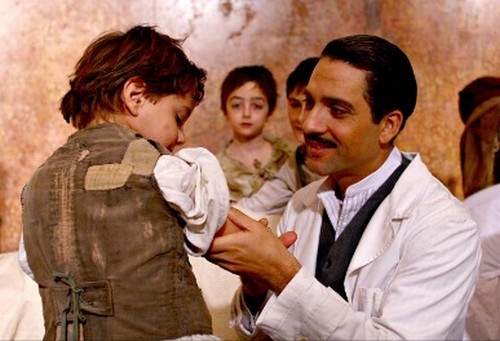
St. Guiseppe Moscati, doctor to the poor
(well, the very romanticized movie version)
Also, I see many groups of women who are frequently forgotten: the uninsured, the illegal immigrants and refugees, religious, the abused, former prostitutes and drug addicts, the incarcerated, and the difficult. I want to find and care for these women, even though I might have trouble keeping the lights on!

Becoming a subspecialist in a maternal-fetal-medicine (MFM) also appeals to me. As an MFM, I could operates on the unborn, work with infertile couples, and take care of very high-risk pregnancies, also appeals to me. I have this dream of showing people how human the unborn are, how like us and how worthy of attention they are. What if we could re-implant babies who implanted in the wrong place? What if we could treat things like Potter's syndrome? (What if we could pull out all the "medical reasons" for abortion?) There are other advantages to this idea, too: my refusal to prescribe contraceptives and refer for abortions might irk fewer colleages if I was in MFM and had fewer occasions to do these things.

♪  MFM  ♪
But as much as I like the MFM dream, a subspecialty (long fellowships, expensive services) take me a little away from the poor. So I always thought I would have to choose: to serve the poor in those impoverished or those unborn. But what if these didn't conflict?

If I started a women's healthcare center and used midlevel professionals (NPs and PAs) and allied health (nurses, MAs, psychologists, social work, and dieticians) to establish a large group of primary care and OB/GYN providers for women, we could serve the poor and offer cutting-edge infertility and prenatal service with excellent gynecology. That's the future I'm working for now. (Now, if you'll excuse me, I need to go study for a shelf exam so that people don't laugh in my face when I say I want to do a surgical subspecialty.)

Sunday, August 25, 2013

Vocation story

I have recently finished writing my vocation story! I was hard and easy at the same time. I felt like I should get it "right," and somehow have the perfect version...but that just resulted in me never typing anything. Finally, one day I just sat down and told it. Deo gratias.

Monday, November 19, 2012

Living with the Poor

At a recent Christian Medical Association meeting, the speaker spoke about how to help the poor who are close to us, which is a very very very important topic to me.

Speaking as a "mainstream" Christian (i.e. non-Catholic or Protestant), he noticed that most Christian doctors don't live in poor neighborhoods. He related results of informal poll he'd done: he'd asked his Christian colleagues why they lived like typical doctors, when Christ lived among the poor and preached poverty. His colleagues told him that they'd been encouraged by pastors to use their gifts and acquire wealth to glorify God.

I almost fell out of my chair when he said that. I cannot imagine a devout Catholic priest saying that to a Catholic physician. To be charitable, I know that many non-Catholic Christians are also shocked at this sentiment (why else could the CMA speaker make us aghast during that meeting?), but the Catholic Church seems particularly immune to it, especially in her saints.

Even the saints who are wealthy, and our contemporaries who are in typically wealthy orders like the Order of Malta or the Order of the Holy Sepulchre, place explicit emphasis on dispensing wealth for the sake of the Church and the poor. (On an unrelated note: I just discovered that there are five knights/dames of the Holy Sepulchre at the parish where I attend daily Mass. They came in all their regalia to a special Mass recently and I was so excited.)

The happy news is, I'm Catholic and there are many non-Catholic Christians who are like me at least in this: they want to imitate the Catholic saints (whether they know it or not) and serve the poor without concern for themselves.

Practical suggestions from that speaker included living among the poor (to find out where to move, visit the Oval Project). Since my third and fourth years will be located in a different and larger city (in fact, my home town), I mapped it out and am looking for places where there are short ovals.

Wednesday, October 17, 2012

Vibrant Catholic Culture in Exam Rooms is Awesome

This post conforms to the blog rules.
Right now, my country is trying to shove my faith out of my work. How dare I bring my vibrant Catholic culture into the exam room? Recently, I was glad I dared to bring my vibrant Catholic culture in to see a patient.

I was working in the office of a Hindu physician, many of whose patients were from south/east Asia. I felt out of place until I saw a patient who was much like me: white, Christian, and Southern. She was applying for federal disability income and had a long story culminating in her current deep poverty. She cried as she said "I'm indigent," but dried her tears as she repeatedly professed faith in God's will for her.

If my preceptor had seen this patient, the patient would not have gotten so far as to mention God's will. Because my preceptor is adept at getting clinical information quickly, she probably would have listened to a few sentences of the patient's spiritual situation, would have nodded and produced a true but not supernatural platitude in a tone of voice implying closure, and asked another question about the patient's disability. Because I I know the truth of God's providence and the ultimate purpose of this life, I could nod with real understanding and begin to pray earnestly for this poor woman.

I love it when cultural competence, a humanities buzzword, actually refers to cultures to which I belong. In other words, I love it when cultural competence is something I already have, instead of something I woefully lack because I am not brown and, alas, something I will probably never acquire because I am not a liberal.

But this experience goes beyond, "I'm so glad I am a Christian and was there for a Christian patient."

Wednesday, October 10, 2012

The Call to Holiness = The Foundation for Catholic Health Care

St. Basil, one of the founders of the
Catholic hospital (a.k.a. one of the
founders of modern hospitals)
This was the title of the talk given by Fr. Joseph Johnson at the CMA conference last week (except he used a real predicate instead of an equals sign).

I completely agreed with his thesis before Fr. Johnson ever stepped behind the podium. Ever since reading How the Catholic Church Built Western Civilization and being floored repeatedly by the chapter on the Church and healthcare, I've agreed with this thesis.

Thomas E. Woods, author of the above, chronicles saints' work to build hospitals and fill them with the sick, especially the poor, the family-less, and the homeless. Importantly, Woods emphasizes that this work stemmed directly from the saints' understanding that their faith demanded it. Becoming holy required God-like deeds which (for a religion proclaiming a God who was Mercy itself and had exhibited that Mercy in countless healings and acts of supreme self-sacrifice) meant works of mercy.

(This makes me want to spiral off into a discussion of love, and how true Love is only had by mirroring Christ and anyone who agrees should readily understand the doctrine that there is not salvation outside the Church...but we'll stay on-topic.)

Medicine, Fr. Johnson said, is elevated from a career to a vocation because healthcare workers earn their daily bread by touching Christ in their patients and being Christ to their patients. Asked what the solution was to the healthcare crisis, Fr. Johnson simply said, "we need saints." We need people who will restore compassion to healthcare and repair the patient-doctor relationship to the Love with which it was inflamed in the first hospitals.

A Catholic doctor wishing to become such a saint seeks more than good bedside manner; he seeks a sincerity that stretches him and makes him more Christ-like.

Isn't it naive, an objector might ask, to approach the culture of death (so many problems!) with only these scant recommendations?

Hardly, Fr. Johnson retorts. The above is a full-bodied prescription for sainthood. Here are its ingredients:
  1. Formation. Nemo dat qui non habet, and action follows contemplation just as it did for the saints Woods discussed. Prayer and study of Scripture and theology fill us and motivate us to love others and teach others. Without prayer and study, all our frenetic activity lacks meaning!
  2. The Sacraments, especially the Eucharist and Confession.
  3. Sacrifice, which allows us to learn to love as He loves.
  4. Adherence. Never excuse yourself from this! This represents a change in the spiritual diet, but be a compliant patient of the Divine Physician. Remember that your patients need a doctor who is Christ-like.
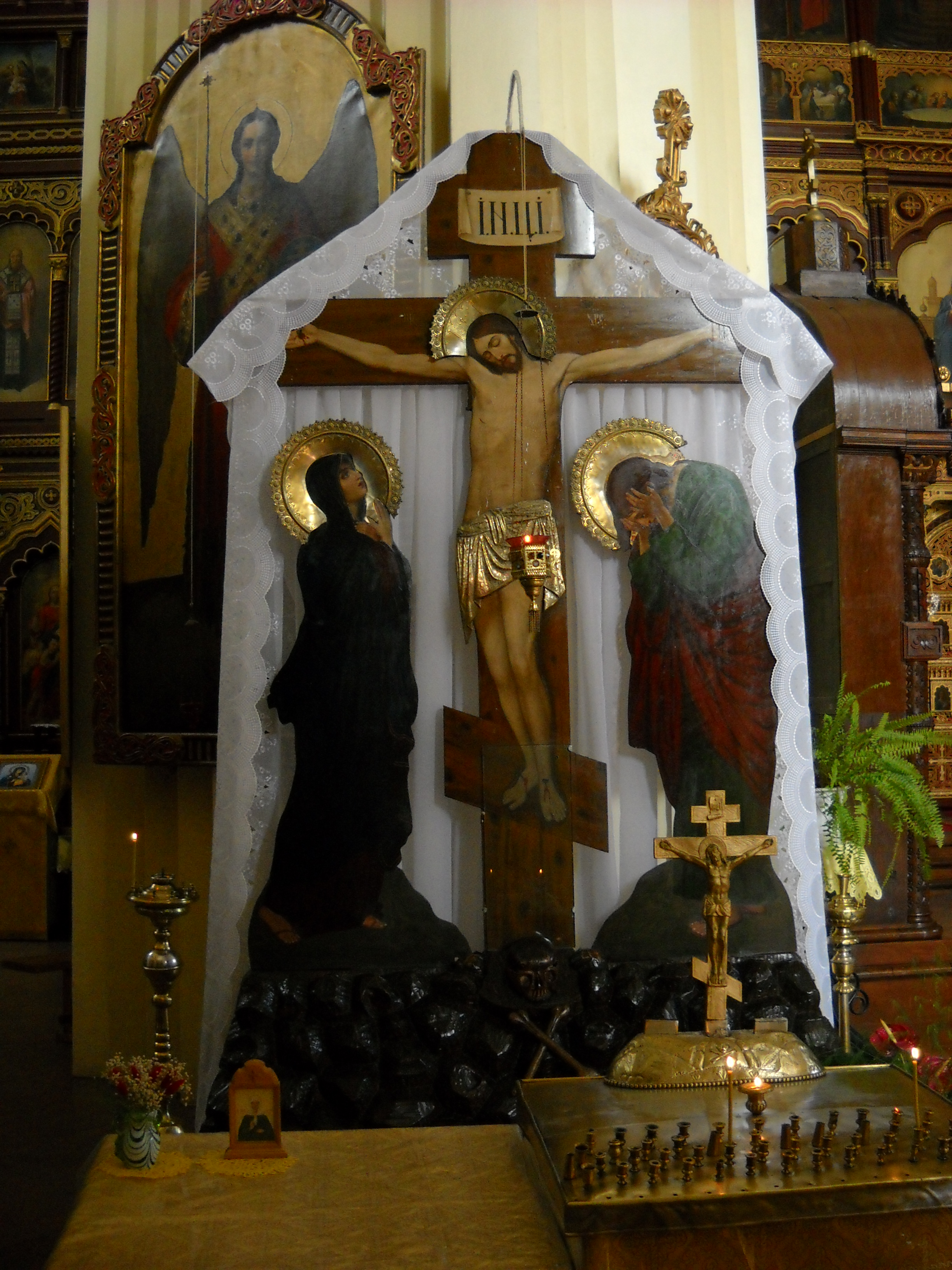
A crucifix in Vilnius. (The triumph of love.)
Simple, but not easy. We need to learn to love better, or we need to learn to allow Christ to love for us. Luckily, medicine presents constant opportunities for the physician to increase in love, Fr. Johnson said. The need of others becomes an opportunity to serve Christ. In fact, some of those early hospitaller saints would call patients "my Lords, the sick and the poor." This reminds me of the additional Divine Praise that Missionaries of Charity say at Benediction: "Blessed be God in his most distressing disguise," meaning that each poor person they serve is God.

To become a saintly doctor, Fr. Johnson concludes, is exciting. It is to realize St. Teresa's poem; it is to become a lover, not a fixer (because Jesus is a lover, not a fixer); and it is to triumph, because we already know that Love has triumphed.


Monday, October 8, 2012

The Crisis of Modernity: The Past two Popes and the Church of the 21st Century

The first speaker of the CMA conference last week was George Weigel; this was probably vital since the conference had stolen its title right from Weigel's 1999 book A Witness to Hope: The Biography of Pope John Paul II.


Still being in student-mode, I took copious notes. Mr. Weigel, alluding to Alisdair MacIntyre, began by saying that our culture possesses the language of morality without theoretical or practical comprehension of what the language expresses. I vehemently agree! Post-Christian healthcare as it insists on human dignity and simultaneously affirms unbridled human autonomy doesn't realize what it's talking about.

To discover how we got into this situation, Weigel next reviews Marx, Bentham, and Hume: Marx, who thought that the good was some glorious society of men, the pinnacle of evolution; Bentham, that the good was the benefit to the greatest number; Hume, that morality could not be derived from reality. Granted, each of these develops into a different dystopia (for Marx, see 1984 or your history book; for Bentham, see Brave New World or the newspapers; for Hume, see both).

But all three had direct political and practical effects: morality, unrelated to reality, became arbitrarily or socially derived. Politics, unrelated to reason, became a business or utility. The purpose of life collapses into social or hedonist utility and the long-asked, bigger questions about beauty, goodness, and being become irrelevant.

Utility (not dignity) became the measure of a man's worth, because to dismiss these questions (as part of a dismissal of higher purpose, need for salvation, etc.) is to dismiss man's nature, designed to appreciate created and uncreated truth, goodness, beauty, and being. A dismissal of such a particular rational nature includes all that comes with it, including dignity, since man's nature alone (among material creatures) was made in the image of God.

This leads to "a pulverization of the fundamental uniqueness of each human person" (Henri de Lubac). Fortunately, the cure is well-known and easy, if long: we must daily confirm the richness of each person, founded on the Incarnation* and defended by true philosophy. Practically speaking:

  1. By applying Christ, our Remedy, we can heal. Therefore, promote the Sacraments and Scripture and transform our lives to be Christ to others.
  2. The culture is not neutral or permissive to passing on the faith. But don't just sit there pouting about it and feeling all righteous. Convert the culture, with a return to virtue ethics!
Long story short: great talk.

Tuesday, September 11, 2012

A Report on the Vital Signs of the Profession of Medicine: We're sick, but we're Fighting it

This post conforms to the blog rules.
I recently sent out a mass email inviting the entire College of Medicine and the entire College of Nursing to an event cohosted by the Bioethics club and Med Students for Life.

(Ooh, I hate sending out mass emails! The trauma of clicking "send" when you know four thousand people will receive the message makes me wince and shiver.)

As you can imagine for an event cohosted by a bioethics club and a pro-life group, the topic is slightly controversial. But this story isn't about the controversy stirred up by the speaker. Ho no! Just the name Med Students for Life generated this response from an unknown physician professor:
To imply, as the name of your organization does, that not all physicians are "for life" is ludicrous. Of course we are. That is why we became physicians--to preserve life. But while I do not personally perform abortions, I do support a woman's right to make decisions regarding her health and what happens to her body. Why not simply call yourselves Medical Students Against Abortions? Or is that not sufficiently charged politically?
Obviously MedSFL has no problem getting enough political charge.

The doctor has a beautiful point, though: doctors preserve life. I was just talking with my probably-pro-choice classmate this morning about how doctors want to make things better. We were speaking about our Humanities selectives and I mentioned that my professor seems like the typical lawyer: he talks fast and a lot, he is opinionated, his vocabulary is sophisticated yet peppered with profanity, and he mentioned in one breath that he had a taste for social work and a taste for blood (meaning the figurative blood of the people he grills in courts). He's a divorce and child welfare lawyer, and acknowledges that half his time is spent tearing families apart. Yikes.

My classmate and I were musing, 'thank goodness we belong to a profession that most people enter to put things back together, to preserve and protect.' So this doctor hits the nail on the head: doctors enter medicine to preserve life.

I'm sorry that this doctor does not feel that the unborn patient falls under our professional jurisdiction, but I don't need to spend space rebutting his position (even though the decision to abort is in over 90% of cases not pertinent to a woman's health and is in 100% not pertinent to her body alone--oh, oops), nor do I need to demonstrate that "against abortion" is not the same as truly "pro-life" (when a consistent ethic of life, i.e. being pro-person and pro-human dignity across all ages, races, abilities, etc is the core any good pro-life group like MedSFL--oops again).

I calmly replied, apologizing for any hurt he felt and gently explaining that our group's name is not designed to degrade doctors, but is meant to encompass a consistent care for unborn patients, pregnant women, and women for whom pregnancy would be dangerous or inconvenient. Calmly as my words seemed, I was a little shaken by the vitriol. Aren't we supposed to be evidence-based people? People eager to hear lectures and read papers, providing that they're scientifically rigorous? Aren't we supposed to let the little things (like student organization names) slide? And would you send something like that in response to an invitation?

Moreover, I was surprised at the age of the argument, that a woman's body is her domain. According to research by Charles Kenny and the Right Brain People (not the political right, the neurological right) showed that women realize that a fetus is alive and has a right to life, but that killing that life is the least of three evils they face when caught in an unplanned pregnancy.

So the email disturbs me on several counts: first, it admits that our profession preserves life while defending the opposite (it's inconsistent); second, it displays a sort of uncharacteristic emotionalism not accepted elsewhere in the profession but routinely accepted on this issue; third, it exhibits outdated perceptions of female patients in a profession allergic to anything outdated and chauvinist. It appears that medicine, not unlike the legal profession, is sick.

Oh, I told myself, at least we're not sick unto death, like the profession of law. Then that the doctor sent a reply to my reply to inform me that "what [I was] saying is that [I] want to impose [my] value system on all patients. But," he asked me, "are you going to force a Jehovah's Witness with a life-threatening GI bleed to accept a blood transfusion? Of course not. You are against abortion. Fine. Then call your organization what it is. Medical Students Against Abortion." I did not reply to this one.

The profession of medicine has a stage IIB (of IV) cancer and we're starting some aggressive chemotherapy. Young doctors and medical students are dragging speakers into their med schools and demanding that others look at the issue and think consistently (drat the decline of liberal education). Check out MedSFLA's fall tour schedule and their 2013 Conference and see what I mean.

This has been your report on the profession of medicine's vital signs. We're sick, but we're fighting it!

Friday, August 31, 2012

Anatomy: a Complete 180

Gross anatomy has completely changed. Last year it was distressing; this year it is invigorating.

Last week I was in the lab again as a peer teacher, and the hours floated by like minutes--an experience I've only had a few times in my life. Three hours into the lab, one of the anatomy teachers said, "say, you can go," and I spontaneously replied, "no, I like it too much."

I'd been walking around the room, helping different groups with whatever they needed, and quizzing them. (What is the blood supply to that muscle? What spinal segments supply the greater occipital nerve? Is it motor or sensory? What is lordosis? What ligament is displaced in a herniated nucleus polposus?) Later, I went into the dry lab and quizzed a group or two on bones. I'd hold up a scapula and ask them where it was a left or a right scapula, and how many muscles attached to it; I'd select vertebrae and ask whether they were cervical, thoracic, or lumbar; I'd grab another and ask which ligaments ran on various surfaces. And later, when the lab began to empty out, I helped the groups that were a little behind (or a little too obsessive) find all the structures they needed. I answered a few questions about what to expect on the test. And I gloriously found a dorsal root ganglion (well, I cleaned off one that they weren't sure about).

Ah, so much fun!!

What's changed?

I've known for some time that I love teaching. I admit that I love the security of being knowledgeable, but I also know I love freely giving that knowledge to others. There's a high that comes with answering questions well, reducing test anxiety, or focusing their studies, or cleaning off a DRG.

I guess it all boils down to: I like comforting people and feeding people (here, metaphorically speaking). In fact, I suppose these are two of the reasons I'm becoming a doctor in the first place.

So, anatomy is different because I'm doing what I was made to do, instead of doing what feels unnatural? I'm still not sure, but I'll let you know in October. I don't serve in the lab until then, because September is the home of...

CARDIOVASCULAR BLOCK.

More soon.

Monday, July 9, 2012

Seeing the Invisible

Dr. D, my preceptor for the IBPCA program, is setting a good example in many ways. One example is her generosity in the groups of patients she sees. There is much brouhaha currently about physicians in private practice seeing Medicare and Medicaid patients. But I have never heard any discussion (from physicians, politicians, or mediamen) about two groups that Dr. D sees: prisoners and institutionalized, mentally retarded adults.

In two days Dr. D saw seven female inmates in between her everyday patients. She also saw two mentally handicapped adults coming from an institution with their caregivers. These patients require more paperwork, take up more waiting room space (for guards and caregivers), and are more medically complex. Moreover, she told me the prison has defrauded her of some thirty-odd thousand dollars, which she is successfully appealing for, bit by bit. Nevertheless, she serves these patients as carefully and attentively as she does her successful, healthy, PPO-insured patients.

I was edified, excited, and inspired by this. I want to do the same! I will add one more invisible group, not usually mentioned: consecrated people, e.g. priests and religious sisters. (I have wanted to be "the nun's doctor" for a long time.) Going forward, I will add inmates and the institutionalized to the convents--I want to be the doctor to the invisible.

Saturday, July 7, 2012

Hands, Mantles, and Vocations

St. Teresa of Avila wrote,
Christ has no body but yours,
No hands, no feet on earth but yours,
Yours are the eyes with which He looks
Compassion on this world,
Yours are the feet with which He walks to do good,
Yours are the hands, with which He blesses all the world.
Yours are the hands, yours are the feet,
Yours are the eyes, you are his body.
Christ has no body now but yours,
No hands, no feet on earth but yours,
Yours are the eyes with which He looks
Compassion on this world,
Christ has no body now on earth but yours.
As I've moved along the journey to being a physician, I've often looked at my hands and marveled at what they have and will do. I am (almost) used to the strange permission persons grant to me with their bodies. As a hospital volunteer, I was allowed to change the diapers of total strangers; as a phlebotomist, people I'd never laid eyes on allowed me to insert needles into their arms; as a medical assistant, patients would tell me about their medical histories; as a premedical student, people allowed me to watch their encounters with their doctors; as a medical student, people allow me to examine them so that I can learn to discover fibrocystic changes in breast tissue and nodules in thyroid glands.

A doctor's knowledge and capability is bestowed on him in a series of thin mantles of study and experience. These mantles are invisible: they impress and are incorporated into our souls. And it is these mantles that I marvel at occasionally when I look at my hands. How God has clothed them with incredible graces, and how much more will come of what He has given already!

I received a remarkable mantle last semester as I learned to perform a physical exam in Clinical Skills class. However, my school teaches the male and female genital exams at the beginning of second year (about three months after the rest of the body). I was disappointed when I learned this, because I expected it would retard my experience in the preceptorship between first and second year. I thought, as a future OB/GYN, that it would be good to receive this mantle as quickly as possible.

God has His own timing. He put the learning off for a few months. However, last week, I received this mantle: I was permitted to perform a pelvic exam for the first time.

This layering of mantles isn't unique to medicine; all of life is like this, as we receive graces and our souls are shaped into the saints God has in mind. However, the changes in a student doctor are particularly demonstrable, and as I receive each permission (like [scrubbing] and [suturing]) I take notice and thank God.

All this language of receiving mantles reminds me of religious habits! My career closely resembles a religious vocation: a religious sister is visibly clothed because of her special relationship with God, I am invisibly clothed becaus of mine to patients; her habit changes as her vocation matures, as does mine; she restores God's image in souls as I do in bodies; she sets aside everything but Jesus by vows, while I set aside everything but patients by profession. Of course, I should probably say that my career is even more analogous to a married woman's: she doesn't always wear her wedding gown (as I don't always wear scrubs or a white coat), but she is invisibly changed by the intangible desires, vows, and actions that called her to marriage and keep her in it.

Medicine, marriage, and consecrated life...becoming a saint and doing God's will is so beautiful!

Monday, June 25, 2012

Dr. John Bruchalski on Becoming a Physician in this Age

Dr. John Bruchalski
"It is always a challenge to be the point of the spear," Dr. John Bruchalski began in a slow, quiet tone. Five medical students and he were seated around a collapsible particle-board table topped with a vase half-full of drooping sunflowers, in the Tepeyac Family Center, the clinic Dr. Bruchalski started.

As much as I want to become a doctor, I am pretty depressed by the state of medicine today. I've known three PAs in my life, and two of them have (independently) told me that "the golden age [of doctoring] is over," and becoming a PA is "the fastest way to get to do what [you] want to do." Doctors are doing more paperwork, dealing with more lawsuits, and being subjected to more government regulations than ever before. They are seeing patients for shorter and shorter times; they are seen in a poorer and poorer light by the public; and their profession is yielding to self-destroying ethical choices.

As I applied to medical school and continued through my first year, I kept asking God: "is this the right profession? Should I be a nurse/practictioner, or a midwife, or a PA, or fertility care specialist, or a counselor, or a psychologist, or...? Am I sure? Are You sure?? Should I pull out and cut my losses?"

I persevered. And for the first time, I felt really excited about that perseverance when Dr. Bruchalski said, "Everything's imploding. [But] be encouraged--it's actually an awesome time to be a doctor. There is hope, not because it's getting better, but because there is love." By this, he meant that there are great and widening opportunities to show love to patients and colleagues. Because of this love, he said, "when healthcare [implodes], we'll still be standing...pro-life and filled with social justice."

"It's a perfect time to be a doctor," he restated, "because you can make a huge difference."

Dr. Bruchalski told us briefly about his conversion; as a resident, he performed, but he's now the founder and director of the Tepeyac Family Center, a pro-life, OB/GYN, integrated healthcare practice with top notch medical expertise that cares for the whole person (according to their website). Next, he counseled us in ways to become a good physician.

Saturday, May 5, 2012

Role Models: Good and Ill

I was relieved that Dr. Bruchalski's talk (see first post on this) didn't devolve into heckling by disagreeing audience members, or a pro-life fan-fest. It was thought-provoking and game-changing, in line with the truly pro-life and medically/ethically rigorous flavor of the Vita Institute and AAPLOG.

Several pro-choice medical students and one pro-choice nursing student stayed to ask questions--good, earnest, and respectful questions.

For example, the nursing student (having more clinical experience than any of the medical students) asked: What about the case of placenta previa in a woman six months along?

Rather than give a pat answer, Dr. Bruchalski first recounted a story of a woman in severe hypotensive crisis (I forget the ins and outs of the case) and said that he and his colleagues "took her straight to termination," but could not save her life. He next observed that, in that case, there were (medically) other things he could have done before abortion which may have saved her life. Finally, Dr. Bruchalski implied in honesty, that pat answers don't belong in the trenches. However, he maintained that there are two patients and his job is to treat both of them and never pit one life against the other.

San Damiano crucifix like mine.
Source: religiousjewelry.com
The pro-choice medical students asked lots of questions--so many that Dr. Bruchalski sort of had to cut them off to finish! Afterwards, they asked to keep in touch with them. One said she was touched by a lot that he had to say; she even called the talk "poignant for me." The other said he was an intellectual, and so much evidence demanded that he reassess the issue.

I hope these future providers can see the truth about women, the unborn, and evidence-based practice!

After the talk I thanked Dr. Bruchalksi. He learned I was from TAC and said he could recognize students from TAC, Steubenville, Christendom, Dallas....

He also noticed that I wear the cross of San Damiano and asked me why I do. I explained that it was an important symbol of poverty, which seems (to me) interwoven with medical practice and real gift of self to Christ in each patient.

As I was speaking, he began fumbling in his pockets. As I finished, he pulled out a small drawstring bag and revealed a relic of St. Francis of Assisi! He handed it gently to me. I kissed it and touched it to my crucifix, now aware that St. Francis was present in a real way (almost standing with us in the lecture hall). Dr. Bruchalski described that he also felt medical practice was a work of wholehearted mercy. I stood there, clasping St. Francis to my heart and having a hard time believing that I was really hearing someone else agree that medicine can be a self-expenditure for others for the sake of Christ. Wow.

Today outside PP, I met another professor who was volunteering. He recognized me and we exchanged a few pleasant words. I left the encounter much less sad than my first brush with a professor across the fence. Over this academic year (partly through experiences like meeting Dr. Bruchalski) I have built up a hope: all is not lost, even in such a dark world. There are saints among us, Christ is near offering Himself radically, and grace is abundant.

Tuesday, May 1, 2012

Summer plans

This is a relief over a confessional in Ardennes, France.
Last time I posted about my summer, God was asking me to relinquish my plans. Just like he did in a year ago, he returned my plans to me after a time for resignation. Both times, they were changed fundamentally: they became His plans, and I stopped depending on them for confidence. Both times, I was reminded of the real source of my hope and sustenance. Ah, constant conversion, how much I need thee.

This summer I will be taking part in the first summer externship for pro-life medical students sponsored by Medical Students for Life of America. Yay! I will go to D.C. for a week and take a crash course in ethical research, then work with a physician for five weeks researching a topic related to beginning- and end-of-life issues and the underserved. I am happy to have something to do and hope that my work is fruitful.

I am spending a little over a week at home to see my siblings, and at the end of the summer I am hoping to attend the informational conference on consecrated virginity lived in the world (brochure). This is a form of consecrated life available to Catholic virgins since the earliest days of the Church, which has seen a new springtime since 1970 when it was renewed for women outside religious orders and codified in Canon 604 of Canon Law. Consecrated virgins in this country often choose to become members of the U.S. Association for Consecrated Virgins, which is gives an annual information conference available for all interested.

Classes begin August 6, so there won't be much time to come down from the Transfiguration of the conference before my second year of medical school begins!

Saturday, March 24, 2012

Challenge Accepted

I plan to be a pro-life, NFP-only OB/GYN and hope to use naprotechnology. I'm very excited about this, but our culture doesn't feel the same way. For example, the overwhelming majority of opinions on an SDN thread about Catholic OB/GYNs are discouraging:
An OB/GYN who doesn't prescribe contraceptives. That's funny.
...sterilization and contraception is part of the career...
 ...I'm pretty sure the law requires a doctor to refer a pt to someone who offers those services. So, even if you wont do ABs [abortions], you have to refer the pt to someone who does....
...you may have difficulty getting enough continuity patients as many patients in a resident OB/GYN clinic are seeking contraception. At my institution, you have to log continuity patients.
...you have the viewpoint of a student with no real experience.
Our Lady of la Salette, a remarkable apparition
because our Lady appeared seated and crying
with her head in her hands before
standing to speak to the visionaries.
This statue is how I feel when I read these quotes!
...you should not join a field in which the scope of practice is such that they will be placed in a position where they are unwilling to provide care (I'm talking about contraception) or refer for care (abortion) frequently. I just can not get over how selfish this is. How many other specialties could you do where yours and your patient's interest not be constantly opposed. Unless you are planning to do some fellowship like gynecologic oncology or reproductive endocrinology, being an OBGYN who will not prescribe contraception or refer for abortion is unconscionable. You will end up blocking your patient's access to the care they desire. Go into some other specialty!
I am a Catholic OB/GYN resident but I don't have a problem with contraception or sterilization. If you do, then OB/GYN will be a difficult residency for you because that is what you are going to be an expert in. I also happen to think Humanae Vitae was a misguided encyclical. I think that at some point in the future the Church's prohibition on contraception will change.