Showing posts with label emergency medicine. Show all posts

Monday, February 15, 2016

Methotrexate

I used to think methotrexate (MTX) was an unacceptable way to treat ectopic pregnancy. Like personal heroes William May and Fr. Tad Pacholcyzk, I saw MTX as a direct attack on fetal cells. MTX was akin to (if not identical to) direct medical abortion.
The question I ask today is: is that true?

Background
MTX inhibits DNA synthesis and has (relatively) selective toxicity to rapidly dividing cells. It appears to select trophoblastic tissue (early placenta) rather than fetal tissue. It is administered for ectopic pregnancies to prevent rupture, which occurs in 0.5% of cases.

MTX can only be given if the mother is hemodynamically stable and if she will be able to follow up with serial hCG measurements. It is considered more strongly if the patient desires future fertility or is a poor surgical candidate. She must have an unruptured ectopic with a gestational sac less than 3.5cm in greatest diameter, there must be no cardiac motion, and the hCG should not exceed 5000-6000 mIU/mL. Further, the following must not be present (these are absolute contraindications):
  1. Breastfeeding
  2. Immunodeficiency
  3. Liver disease (including alcoholism)
  4. Blood dyscrasias (e.g. thrombocytopenia)
  5. Active pulmonary disease
  6. Peptic ulcer disease
  7. Renal dysfunction
Double Effect
The fetus always dies in current ways to treat ectopic pregnancy. Thus, any treatment other than expectant management must employ the principle of double effect. The principle of double effect can only apply if:
  1. The act in question (or the procedure) must be "good" or "neutral" in its moral quality,
  2. The good effect is intended, not the bad,
  3. The good and bad effects must occur simultaneously, thus avoiding a situation in which the bad effect becomes a means for achieving the good effect, and
  4. There should be a proportionate reason, that is, a sufficiently serious reason, to permit the bad effect.
Can the first criterion of the principle of double effect ever apply to methotrexate? The drug is acting directly on a vital organ of the fetus and as such "“a direct and lethal attack on the body of an unborn child" (1). For many years, this has persuaded Catholic theologians that use of methotrexate is illicit, because the "act in question" is not good or neutral.

Christopher Kaczor attempted to defend MTX in 2009, citing some work by Fr. Albert Moraczewski and others (2). He attempts to argue that most administrations of MTX occur after fetal death*, that MTX might be construed as stopping damage to the tube (a secondary effect, at best), that the trophoblast is not a vital organ of the fetus alone (which I find untenable, since its growth is entirely fetus-driven, even though it makes a barrier between mother and child), and that administration of MTX could be considered not "intentional" destruction of the trophoblast (which I find patently false, as that is the sole reason we're giving it).

I don't think Kaczor knocks down the fundamental point: MTX is the destruction of a vital organ of the fetus. I don't think anyone will be able to knock down this point. It's true.

Ectopia and "Diseased"
MTX destroys a vital organ of the innocent human embryo. Strange (and sad) as it may seem, I don't think that poses a problem.
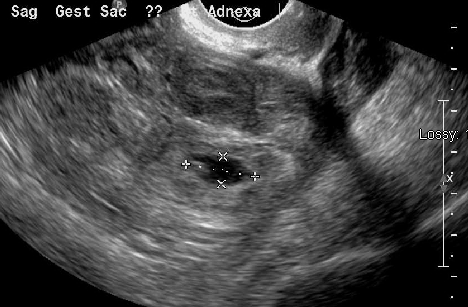
Ablation or resection of vital organs is at times necessary when such organs are diseased. "Diseased" (like "conception") is not a medical term, and it can be difficult for medical professionals to nail down exactly what ethicists had in mind when the word was chosen for moral teaching. I suggest that "diseased" be taken to mean "not according to nature," or not "always or for the most part" (3). 
Trophoblastic tissue, for the most part, implants in the uterine cavity. I suggest that this means it is "diseased." It's not infected or full of cancer, but "diseased" means more than that. In fact, this early placenta is like a tiny failing heart, because it's not implanted in an area designed for it, with the appropriate architecture and blood supply to support it. 

Not all ectopic tissue requires removal. A benign uterine leiomyoma (fibroid) that causes no symptoms should be left alone. But ectopic trophoblast (as in ectopic pregnancy) can pose a danger to the mother. Moreover, ectopic trophoblasts are not the only ectopic tissue that require ablation or removal. Prolactinomas and other endocrinologically active macroadenomas, undescended testes, ectopia lentis**, and arteriovenous malformations are other examples.

Conclusion
Use of methotrexate is legitimate, because the four criteria of the principle of double effect apply. Most importantly, the use of methotrexate itself is morally good (or at least neutral). Although it is removal of a vital organ, it is not a mutilation, as ectopia represents a true disease state when the misplacement threatens human life (in this case, it threatens the fetus with inevitable death, and the mother with possible death or danger).


Notes
* In addition, some will argue that not all products of conception are fetuses, therefore methotrexate is legitimate for "abnormal" pregnancies, such as those without doubling of beta hCG over 48 hours. This argument is shaky. The minimum rise in beta hCG in a normal pregnancy is 35% over 48 hours (99.9% CI) and 4.6% of patients (n=1,249) with an hCG rise of less than that still went on to have a normal pregnancy (4). Even if this were not true, we must be cautious rather than miss one case of viable pregnancy. When we don't know whether the product of conception is a person, we must assume it is in order to protect human life at all stages.

** Ectopia lentis does not always require vitrectomy or lensectomy.

Bibliography
  1. Charles Cavagnaro cited in Anderson MA et al. Ectopic pregnancy and Catholic morality. NCBQ; Spring 2011;667-684. Here.
  2. Kaczor C. The ethics of ectopic pregnancy. Linacre Quarterly; August 2009;265-282. Here.
  3. Aristotle. Physics II:2. Here.
  4. Seeber BE et al. Application of redefined human chorionic gonadotropin curves for the diagnosis of women at risk for ectopic pregnancy. Fertil Steril 2006;86:454–459. Here.

Tuesday, December 15, 2015

Emergency Contraception

Emergency contraception can be considered licit as a form of self-defense after sexual assault. It deserves a long exposition (which I can't give you while I'm on my month of nights*), but here's quick a rundown.

The Ethical and Religious Directives are more specific here than on ectopic pregnancy. Directive 36 states:
If, after appropriate testing, there is no evidence that conception has already occurred already, [the female victim] may be treated with medications that would prevent ovulation, sperm capacitation, or fertilization. It is not permissible, however, to initiate or recommend treatments that have as their purpose or direct effect the removal, destruction or interference with implantation of a fertilized ovum
What does this mean practically? "Appropriate testing" is often taken to mean the Peoria Protocol.** The Peoria Protocol lays out how to tell with moral certainty that a woman has not ovulated and that the primary effect of EC is anti-ovulatory. It involves serum progesterone (<1.5 is pre-ovulatory, okay to give EC) and urine LH (negative is pre-ovulatory, okay to give EC).***

Unfortunately, even if the Peoria protocol can predict the right timing for emergency contraception, it's not clear we have anything to use.
  1. Hormonal IUDs: insertion of a mirena or skyla as EC relies not only on the anti-ovulatory effects of the levonorgestrel, but also on the intrauterine effects, which act after fertilization. Although it may be argued that application of the Peoria Protocol could allow these effects to be avoided, a systemic hormone (to reach the hypothalamus) is more targeted than an IUD, which would also have to be removed if the patient is later sexually active.

  2. Paragard: this relies on post-fertilization effects (which is why it works up to five days after the act of intercourse), and cannot be licitly used.

  3. Plan B: is levonorgestrel, given in one 1.5mg dose or two 0.75mg doses twelve hours apart. Strangely, we can't seem to figure out whether its main effect is primarily anti-ovulatory or post-fertilization. A 2016 review of plan B, done through a Catholic lens as a summary of lots of work by the same authors, found that plan B almost always works through post-ovulatory mechanisms, even when administered before ovulation.

  4. Ella: ulipristal is a selective progesterone receptor modulator. It is given in one 30 mg dose. It antagonizes progesterone at its receptors on the endometrium, which mean it only has post-fertilization effects. This is the same mechanism of action as mifepristone (RU486, which is given in doses of 600mg for elective abortions). Although package inserts deny that it is abortifacient, this indicates that a 30mg dose is not suspected to have post-implantation effects. For a Catholic who understands life to begin at sperm-egg fusion, ulipristal is extremely likely to lead to loss of embryonic life.
  5. Hormonal pills: these may be licit before ovulation (still need the Peoria protocol), used in a Yuzpe-like regimen, so that there's enough estrogen to actually act as an anti-ovulant. More research needed!
  6. Meloxicam: this COX-2 inhibitor can, at doses of 30 mg/day taken for five days during the late follicular phase and the day of the LH surge, prevent functional ovulation in 90% of women with no effect on LH, progesterone, estradiol levels, or cycle length. There are concerns that NSAIDs disrupt implantation. Jury's still out, but this seems the most defensible option at this time. It relies on a hospital's ability to identify the follicular phase/LH surgr (a.k.a. you need the Peoria protocol).


*I wrote the first draft of this post on a month of nights my intern year. By the time I got back to it to revise it, I was on a month of nights during my second year. Wow.

**A complete moral explanation supporting the Peoria protocol can be found in Slosar JP. Catholic health care and emergency contraception. Healthcare Ethics:2000;8,4. (No link available.)

***Notice I didn't give units. Do not use cutoffs in a blog post to determine management of patients requesting EC. You need a working relationship with your hospital lab and you need to be better acquainted with the Protocol's other reference ranges for progesterone before you can use it.

Sunday, April 12, 2015

Stories from the ER: Bedbugs

This post conforms to the blog rules.In college, I devoured books written by medical trainees. I read Singular Intimacies, Complications, and A Not Entirely Benign Procedure (and others) as a college student. Having read these, I think I could've said about medical school what St. Therese said about the convent: I went in with my eyes open, and I was right.

When I read Danielle Ofri's story of a homeless, bug-covered man who came in through Bellevue's emergency department, I thought, "I know med school is an experience, but that's too crazy to happen to anyone but people who write books." Crazy books about crazy NYC hospitals.

Nope.

A disclaimer: this story contains a few nasty things, including bedbugs and elder abuse. There will be no exaggeration. There's a happy ending.

During my ER rotation, a woman was brought in covered in bedbugs. The attending sent me in to see her and I went into the room at my usual busy pace. One of the EMTs, still packing up his stretcher, halted my progress with a few words. "You might want to...." the EMT started, then tried again: "She's sort of...covered."

Then my eyes registered the hundreds of mini-M&M sized insects swarming in and out of her clothes, around her arms and legs and fingers, on her neck, and on her sheets. I stopped short, my shoes almost squeaking on the lineoleum with the abruptness of my deceleration.

The woman herself was moaning.

"What's the story?" I asked the EMT.

"She called about pain. We had to break the door down. Found her in a chair, in feces and urine and--" he gestured to the insects "--those. Vitals were stable in transport."

With that, he left. From a safe distance, I took a history as best as I could. (I was a little disgusted.) The woman lived alone. She was unable to get out of her chair. She didn't eat or drink. Everyone once in a while a neighbor brought a sandwich. The last time he'd come was three days ago. The neighbor doesn't get too close. Nobody cleans her. Nobody cleans her house. She had home health, but they didn't come too close. She had had pain "in her seat" for a while, but didn't talk to anyone about it. She called 911 about it today.

I left the room without doing a physical exam, as the ER nurse was posting a "DECONTAMINATION" sign on the door. I was angry; elder abuse is something I feel very strongly about. I went to my attending and told him the situation.

"Someone's going to get sued," he said, meaning the home health organization.

"I'd like to help decontaminate," I said.

"Be my guest," he replied.

Outside her door, nurses were gowning up as if the patient had Ebola. I joined in: boots, cap, two gowns (the flimsy ones that only cover half of you; one for each half), and mask with face shield. None of us were wanting to take bedbugs home. We were already itchy.

I turned my anger into zeal and worked alongside the nurses, overcoming my disgust and turning myself into Love to this woman. We brought in large trash bags and a dozen packets of moist skin towelettes. Then we took off and threw away the woman's clothing and all the sheet's she'd touched. We wiped bugs and bug carcasses off her body. I cleaned where the nurses didn't. It turned out she had two decubitus ulcers from sitting so long.

It was a terrible day (that patient, plus a death, plus family troubles). That night I told Jesus all about it. "What was Your day like?" I asked, in a slightly complainy tone. And He answered, in my imagination. (This is the happy ending.)

"Someone cleaned Me."

Tuesday, April 7, 2015

Stories from the ER: Motherhood

This post conforms to the blog rules.While working in the ER last semester, I met a woman who surprised me by her reverence for motherhood. Because there was real concern that she might have colon cancer (like classic-history, I-was-actually-scared-for-her concern), a CT scan was being ordered.

But one of the CT scanners was broken, so there was a long line for the other one. Worse, trauma cases kept rolling in that night. This woman had been in the ER for seven hours, and she was still awaiting her scan. She threatened to leave. The attending talked to her and came back. The nurse returned twenty minutes later. "She says she's gonna go," the nurse said. Her (perfectly acceptable) facial expression said, "And I'm resigned about it."

"I'll talk to her," I said. Talking to upset people is one of my favorite things to do, ever since I deescalated a potential emotional explosion in the psych ER waiting room and someone told me I was good at it. My theory is: it can't get any worse, and you can only make it better!

The attending was busy, so he let me. I went in and sat down, preparing for a long haul. My intention was to sit with that woman and talk with her until a radiology tech came to take her to the CT scanner. It was something I was uniquely poised to do, because I didn't have true clinical responsibility and I could be functionally absent for whole hours, if necessary. It would be good for this patient and our ER if she stayed--she'd know more about her colon (cancer?) and the ER wouldn't have her back in two months with inoperable disease. So the attending let me go, and I plopped down at her bedside, hoping to distract her.

It worked beautifully.

After a few minutes of expressing her displeasure about the wait, I got her talking about all kinds of things. TV shows, her day, traffic, weather, her old jobs, her family. Her favorite topic was her grandchildren. Her voice changed from unpleasant to soft and full of fondness. When she started talking about when she first became a mother, something peculiar happened.

Alfred Gilbert: Mother Teaching Child
"Oh," she said, looking at me with something between mischievousness and envy, "when you find your man and have a baby...! There ain't nothing like it, no where in this world. Nothing like giving birth, it's--tch!--can't be described a'tall. Miraculous."

Our roles suddenly reversed. I was no longer in power, pinning her down as one who knew better. She was instantly a queen, telling a little girl about magic.

"Really?" I asked.

"People say it's painful. I say 'ha!' Pain is nothin' compared to what you have. Your baby growin' inside you, then your baby in your hands. Just you wait, you're gonna be a good one. Now," she said, pragmatically, "how long I gotta wait for this CT?"

I grinned enormously. She'd taken me off my guard and my silver-tongued attempts to keep her in bed were suddenly exposed. I have a feeling she knew what I was up to the entire time, and was letting me win.

"I'm being honest," she said. "I still want to go."

"I'll ask," I said. I found out she was third in line and went back to her. "Number three!" I said, like we'd both won the lottery.

"Three?" she said, smiling. "Guess I'll stay, then."

I have no idea what the results of the CT were (it was read after my shift was over), but I got her to stay until she was in the scanner. She stands out in my mind as someone who values motherhood; even if she knew what I was up to, she was serious when she described how marvelous it is. I think of her frequently now and I try to have that esteem for motherhood, too.

Saturday, April 4, 2015

Stories from the ER: Elder Neglect

This post conforms to the blog rules.The ER rotation was four weeks of shifts during interview season, during which I saw the entire spectrum of urgent to extremely-emergent care. I inserted IVs and foleys, I did ultrasounds, I put on splints, and I stitched up lacerations (the highlights of which were a flap closure on a woman's nose and an 11-centimeter arm lac). I also saw patients and attendings work their way through crises, deaths, and long waits for the CT machine. Here are a few of the stories that had the strongest impact on me.

An elderly man with COPD on oxygen came in with vague complaints. He had been to the ER (brought by EMS) several times in the past for similar things. He was cachectic, his lips were terribly chapped, and his saliva was thick and white. As I took his history, it became clear that this was a case of elder neglect: his children didn't visit and he was alone all day. He said he didn't drink much water, because his oxygen tubing wasn't long enough for him to get to the bathroom in time. His teeth were caked in plaque and tartar because of his dehydration. I saw in the medical record that he'd declined home health nursing before, and I knew I had to do something to change his mind.

It was a long history-taking session. I knew my attending would be wondering what took so long, but for once, I decided not to care. This man needed someone to sit down and be quiet, to appreciate his loneliness and change it. At the end of a long monologue of truly tragic complaints, I said. "I'm sorry."

"It's not your fault," he said.

"But it feels terrible to be isolated."

His eyes stayed on me for half a second, because he saw that I'd understood. "Yes," he whispered.

I asked him about his previous decisions on home health. He didn't like that home health nurses made such quick, business-like visits. We talked about more prolonged companions. As I left he squeezed my hand. "Thank you," he said. I smiled, and I went back to my attending and with a very short presentation. "This is an 89-year old white gentleman with COPD who is suffering from a very lonely home situation, and needs a social work consult for an in-home companion." As I moved onto the next patient, social work was arranging something.

I wish we took care of our elderly in our homes. When interviewing out of state, I stayed with one Catholic family who gave me the best example of this I've ever seen. They had emptied their front living room of furniture so that their elderly, demented mother could have a hospital bed and a lift chair there. This woman was nonverbal and could not move by herself, but her daughter kept her at home. The room opened onto the kitchen so that this elderly mother could join in family meals and engage with her grandchildren doing homework at the table, in the very limited way that she could. She could be heard if she moaned, and she could be checked on easily. 

In this case, both spouses were physicians (one a retired, stay-at-home parent), so I know they were competent to do this. But in many situations, competence in caring for an elderly parent is easy to gain from a few weeks of home health visits. It's not competence, but generosity that is frequently lacking. Most don't realize how isolating and miserable life becomes for someone so rich in life experience and so used to social interaction. It takes generosity to place yourself in the position of an elderly person, and further generosity to improve that position by opening your home.

This patient could certainly be cared for in a son or daughter's home, provided that someone was at home for at least half a day. I ask any young professionals or young married couples reading to please remember to care for your parents!