Showing posts with label internal medicine. Show all posts

Sunday, October 30, 2016

A Limit to to Primary Care?

Ever wonder why the pictures of offices are so weird? Me, too.
Somebody put some better free media on wikimedia, please.
As a future specialist, I'm struggling with letting go of primary care. As a pre-med and medical student I got frustrated when my OB/GYN didn't refill my albuterol for mild intermittent asthma. In response, I promised myself that I would not forget basic medicine.

The other day in continuity clinic, I saw a woman with a few medical problems. I wanted to do her age-appropriate USPSTF screening, which is germane to primary care. I had to look up the recommendations because I don't do a lot of screening and immunizations. I care for a single sex population which is largely of reproductive age, and my anticipatory guidance and lifestyle modifications are almost always about pregnancy and sexual behavior.

But I like being a responsible doctor, so I've modified my well woman templates based on age and USPSTF and CDC recommendations. I've built in HEADS screens for adolescents and breast and colon cancer risk scores for older patients. I remember how to read EKGs and do when I order them. I remember how to read chest X-rays and do when I order them. And I know the first few options for medical therapy for the most common problems: community-acquired infections, hypertension, diabetes, obesity, asthma, hypothyroidism, depression, early heart failure, and high cholesterol. I can respond to a heart attack or a stroke.

I'm not pretending I could be a successful family medicine or internal medicine resident. I have to look up the screening recommendations every time. I don't remember or know more than half of the medications they use, I'm sure. I can't ever remember the childhood milestones and immunizations. Don't look to me when someone's in kidney, liver, respiratory, or late heart failure. Find someone else for the endocrinology zebras and for the love of the patient, please have someone else run the code.

But I can look up what the evidence says when I have a well woman exam. So I looked up the tests I was supposed to order. When I went to staff the patient, my generalist attending scrapped most of my plan. "There's a limit to how much primary care we can do," she said.

This made me sad. Most of these women don't have another doctor. If they do, I begin to wonder why that other doctor can't do their pap tests (until things get surgical). I wish women only had to see one doctor unless they had more advanced medical problems. I enjoy continuity of care and building the physician-patient relationship. I find preventative screening a fascinating topic and a very satisfying intervention to execute. I love discussing lifestyle modifications because they knock at the door of virtue.

That said, I'm heading for fellowship and leaving primary care further and further behind. I think that primary care is an excellent sphere for midlevel practitioners, even though I love it.

In the future, there will certainly be a limit to how much primary care I do. If I become an MFM, I will do basically zero primary care and I will rely on specialists to help me manage the medical problems for my high risk patients with heart disease and other problems. (I'll still manage plenty of hypertensive disorders, obesity, diabetes, and thyroid disease myself.) That's a little hard to swallow, but I still dream of extending myself by joining a multidisciplinary practice that can be a hub for a woman's healthcare, so she doesn't have to spread out her time, energy, and medical records.

Wednesday, March 12, 2014

Plot twist!

I have not posted in a long time because at the beginning of this calendar year I became sick and was eventually diagnosed with ulcerative colitis (UC). This post is long, but it contains no gross images! Yay!

On the first day I had symptoms, I formed a little differential. By day three at the latest, this thought had occured to me: "huh; IBD would give me this. UC, to be specific. Could I have UC?" But for several reasons, I thought that was unlikely. The most prominent reason: I was not special enough. Patients were special people! They deserve special treatment, they have these big gifts from God, they're special cooperators with him in redemption.... I was not one of those people. I was just plain me, just one of the patients' helpers.

We had to memorize a chart like this as M2s.
I remember when my mom was diagnosed with a lifelong autoimmune condition, I thought: "Wow. God gave her something big. It's permanent. He's not taking it back, (barring a miracle). He must really want her help with someone's case." But I wasn't that special.

So for a week, I ignored the symptoms thinking that my subclinical IBS (which 60%+ of med students have due to stress and environmental factors) was just getting worse with the crazy schedule and heightened stress of IM. Or maybe it was because I didn't have enough yogurt. But then, things persisted; then, things got worse.

I knew I had to say something to my upper-level to explain why I was ducking into the bathroom and sitting down on the job so much. I didn't want to say anything. I wanted to tough it out and be invincible. But my conscience was pricking me: you're not invincible and it's pride to think and act like you are. Admit your weaknesses. It's humility; it's human; it's the truth; and it will explain why you're randomly in the restroom. But I could never find a good time! I was seldom alone with the upper-level; the other med student was always there.

At last, I had a chance. She and I were in the ER physician's work-room. The room had frequent in-and-out traffic and the walls are glass, but we were alone. In this relative and extremely transient privacy, I wrestled with my conscience.

"But I don't want to tell her!" I whined to myself. "It's just because of that new medication I started a few weeks ago."

"That wouldn't last this long," my better judgment pointed out. "You know that's not a side effect of that med. You're sick, it's the truth. You need to tell her. And this is an opportunity for humility. And somebody is going to pop in here any minute, so you need to act NOW."

I spoke up: "Say, Laura," I said timidly, "I need to tell you something: I'm sick. I just wanted to let you know that I'm not uninterested in what's going on when I leave...I just have to be in and out of the bathroom. A lot."

Well, then she did the inevitable reflex thing that I figured she would do and took a mini-history. ("What's going on? How long? Did you see someone? Do you want some Imodium?") And then she told me, to my great relief, that she knew I wouldn't slack off and that I was free to do whatever I needed to do to get better. "Take some days off," she urged.

"Take 'em while you can," chimed in an attending, because someone (of course) had come into the work-room. At least they hadn't heard exactly what my chief complaint was.

"I think I'll be okay," I said at the time (ha!). "I just wanted to let you know."

Fast forward a few days, and I'm collapsing on a chair as I pass by it while rounding with the other med student and his intern. I wasn't dizzy/lightheaded, but I was just so malaised that I couldn't stand up any more. That got people's attention. Interns have an even stronger reflex to take a history, so I had to tell her even more. It was embarassing; I know everyone is medically curious, but I would have liked to keep things closer to the vest among people I was working with.

And it was frustrating! As much as I wanted to be flat in my bed, I also wanted to be a good med student. And that day (the day I collapsed) we were going to observe a tracheostomy and some other cool stuff. Darn colon! </rant against my own organs>

I became alarmed when the intern said I should go to the residents' clinic and probably to the ER after that. "What?" I thought to myself. "Go to the hospital? For this? Whoa. I guess I could imagine my story in the top paragraph of one of those admitting H&Ps."

I ended up not going to the ER. Instead, I got a work-in appointment with my GP across the street. (We still went to the resident clinic, where two of the seniors took my blood pressure and took another HPI. And then a partner of my GP, with whom I later worked, asked a few questions that seemed sheerly to satisfy his own curiosity. Yeesh people. Shoo!) All this time I was very tearful, because I was very embarrassed.

At the appointment, becoming an inpatient came up again, as did the ER. I asked my GP to keep me as an outpatient, but my story still apparently bought me a CT. My GP wasn't in clinic that afternoon, but she told me to stay on the hospital campus until she phoned me with the results (in case she had to admit me?? The unsaid words were louder than the ones she said). My first CT went well. It really is a fast test, except for the hour you spend drinking the two doses of po contrast. They couldn't find a vein for IV contrast, so I just did po, and that stuff was tasty. (No, honestly. I gulped it, it was so nice. </digression about grape-flavored radiation>)

She called first about the bloodwork. "Labs are all normal," she happily told me. I was less happy.

See, it seems like every time I go to a doctor, they tell me that everything is normal. That's another big reason that I didn't tell anyone about my symptoms. Every time I come in: "Well, it doesn't matter." "Well, you just need more sleep." "Well, your bloodwork was all normal." Remind me that when I'm a doctor I'm not giving up until the patient feels better!!

So, once I heard that the labs were normal, I figured it was inevitable that I would get the "well, looks like nothing" treatment. But I really wanted it to be something! I was terrified that the CT would come back negative. While I waited for her call about the CT read, I attempted to nap in a dark, empty exam room. All the while, I was thinking to myself. "IBS. It's IBS. I'm making all this fuss over something without pathological findings. Labs normal, imaging normal. Don't even think about biopsy. I'm wasting all this money and time and people are all in a fuss; how embarassing. And since it's IBS, it's all my fault. I do have bad eating habits...."

Finally the call came. And as soon as I put the phone to my ear and didn't hear an immediate "everything looks good," I was happy. I immediately recognized the Pause that comes before "bad" news.

This is not me. Source.
[Pause.] "So, mmatins, your CT showed [Pause] a pattern of [Pause] proctocolitis."

I was so overjoyed that it wasn't normal that I didn't hear the last word. "Of what?" I asked. I was so relieved, I could have sung (except that I was exhausted x10^23).

"Proctocolitis," she repeated.

Silently, I said to myself, "Sounds like UC. I bet I have UC."

"So," continued by GP on the phone, "even though the most likely cause is infection in your age group, I still think you should see GI if this pattern... [Pause] recurs."

My brain was saying, quite calmly, "I have UC. How about that." Before that day was out, I said (even aloud) "I want a colonoscopy." But I tractably accepted her plan of a 10-day course of antibiotics and a GI appointment later that month. The antibiotics which made me more nauseous and more malaised than I hope I ever feel again. (Remind me never to prescribe levaquin and flagyl so flippantly again!) And I didn't get better. And so my brain kept saying, "I have UC."

I missed about a week of work. When I came back (not physiologically better but psychologically better for not bottling it up and for being rather far along in the Kubler-Ross due to my constant self-diagnosis), I still hadn't seen GI. And people still wanted mini-HPIs! My upper-level finally ran into me in the hallway and, finding that I was no better and agreeing with my provisional self-diagnosis, texted a GI doc. (I protested; I didn't want to be treated differently from any other person.)

My GP called the next day and, finding I was no better, asked "Can't I just put you in [the hospital]?"

And I said, "At this point, I really wouldn't object."

"We could put you on teaching [the service the residents work]."

"Ah," I said. I'd always thought I'd want to be a patient of residents if I were ever in the hospital (to pay back my debt, you know?), but I didn't think that it would happen during my IM rotation with the residents I just worked with. "Actually, I think I'd prefer if we didn't."

"Okay," my GP said. "Now, I have a med student working with me right now, but you don't know her, right?"

"Actually, we're pretty good friends."

"Oh, all right. I'll just round without her. But this way, you can get in to GI faster."

I'd just come off wards, so my BS-reasons-for-being-in-the-hospital meter was still very accurate. "Do you think I could just get an outpatient appointment?" In the end, my GP also texted the GI doc. Apparently, when a specialist gets two texts in two days, you get a work-in appointment within the week.

As I sat in the GI doc's office, I heard her speaking with the patient in the next room. (This doc is delightfully loud, direct, fast, and very competent.) She was giving her colonoscopy prep instructions. "That's me in twenty minutes," I mused, resting my head against the wall behind me nonchalantly. I'd worked at a pharmacy in college and knew what Golytely was like. "I guess I'll find out how bad it really is," I thought.

Actually, she gave me a new-fangled prep that was super easy, so I have nothing to complain about. I was scoped and found to have abnormal but confusing findings (UC or Crohn's?), and had bloodwork done with showed probable UC. I'm now on meds to get me into remission...and we're (almost) almost there.

Was it hard to adjust to the fact that I have UC? Meh. Not really. I had the possibility on the back burner from the beginning, and I had lots of time to adjust. The view I have of chronic illnesses also helps. Now I get to be a prayer/suffering warrior and care for them!! (What a deal!) And life is not that different; as my GP remarked to me the other day, it's a good time in history to have colitis. (Mesalamine is amazing.) It's not a very inconvenient illness. Stress and other unknown factors might bring on flare-ups (and those might get pretty bad), there are some nasty complications and some extra-intestinal effects (all of those are yikes yikes yikes), and there's an increased risk of cancer (which brings lots and lots of colonoscopies into my future)...but I've got a very moderate case and there are a lot of ways to treat it. In the end, I gained a lot from the flare-up and I'll say more in a future post.

Wednesday, February 12, 2014

Preventable Sepsis case (I TOLD YOU SO.)

This post conforms to the blog rules.If I become an intern and have to read med student's notes, I will read them.
If I become an intern and have to read med student's notes, I will read them.

"Because when I was a med student," I will tell my little protégés, "I had an intern that didn't read my note. I realized one of our patients was septic and I recommended fluid resuscitation in my note. And when he didn't do anything, I assumed it was because it wasn't correct and he was too busy to discuss it. And the next day, the patient was GCS 8 [suuuper unresponsive] and had to have not only fluid resuscitation but also pressors and a transfusion and an RRT [a step down from a code] in front of his daughter and had to go to ICU." The patient later died. Now, how much of that was preventable? I don't know. His death was certainly not due to the missed sepsis; he had widely metastatic disease and was frail. But did he have to die in ICU? Did he have to die unresponsive?

If I become an intern and have to read med student's notes, I will read them.

Sunday, January 19, 2014

Internal Medicine

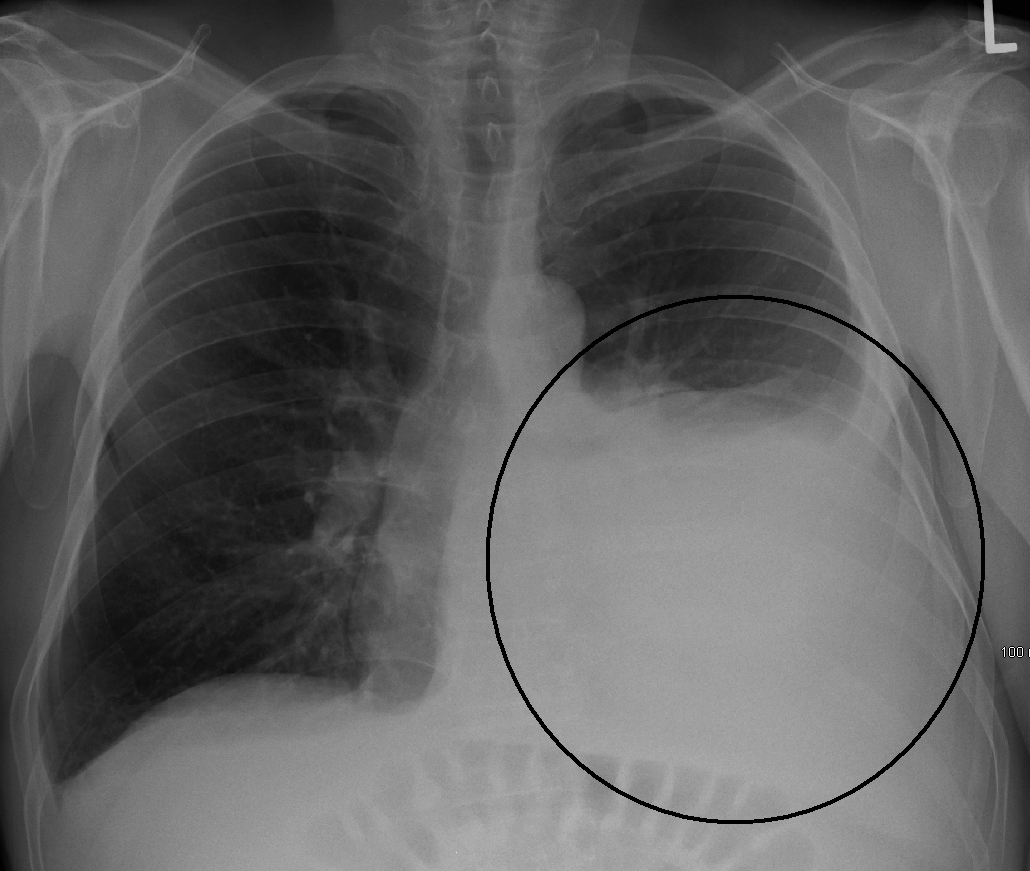
This post conforms to the blog rules.I am one week in to my second month of inpatient medicine, and I am run-down. I have seen a lot of sick people and learned a lot. It has been exciting, emotionally draining, and physically taxing. I wish I could tell you the story of the man with an enormous malignant pleural effusion, the story of the man with a hemoglobin of 1.8, the story of the man whose foot was amputated in the middle of the night, the story of the man with a failing heart, the story of the woman who presented with flu and was found to have leukemia, the stories of the several people found down, the story of the pregnant woman with flu, the story of the man with the three-foot aortic dissection, and the story of the man I thought was having a heart attack but who was really lying to me about his cocaine use....

Daily Mass and meditation have been hard to get to, and that sends me into a tailspin of scrupulosity and humiliation. However, I was able to go Mass almost every day in the past week and formation is still going on. When you read this, please pray for my bishops; they are making some important decisions and need your help!

My schedule now looks like this:

4:50 Rise, MP
5:30 Drive to work
6:00-8:00 See patients and write notes
8:00-12:00 Round with resident or intern
12:00-1:00 Noon Conference with residents (Midday prayer doesn't happen during the week)
1:00-5:00 Lecture, studies, or other learning with resident or interns
7:00 Mass, EP
8:00 Home, mediation
9:00 Bed (NP doesn't happen much right now)

Unless I am on call (working 6:00-9:30), then I exempt myself from Mass and meditation.I am on call every fifth day, and this means that there are some days I work on Sundays and Saturdays. The day after call ("post-call") is also a workday, so if call lands on a Friday, I work Saturday (that happened this past week.) If call lands on a Saturday, I work Saturday and Sunday. The residents call this a "black weekend," but because of the way the call schedule works, it is always followed by a "golden weekend" of both Saturday and Sunday off. Obviously, when call was on Sunday once, I went to an anticipatory Mass.

When I'm on call, my team picks up the new patients coming in to the hospital. This means that I am sent down to the Emergency Room, with nothing but my notebook, pen, and stethoscope, and asked to write an admission note (an H&P or history and physical exam) on the person. This means I need to find out all about them. Why did they come in? If for pain, where/when/how/how bad is it, and what makes it better/worse? Have you had this before? What other problems do you have? Surgeries? Family history? What medicines are you taking? And then, I ask them the "review of systems," basically asking about every other medical symptom I can think of, even if unrelated to their chief concern, so that I have a complete picture and can make an accurate diagnosis. Then, I examine the patient and attempt to make a diagnosis. I meet the intern outside the patient's door or in the physician's work room in the ER, and "present" the patient. "Mr. So-and-so is a 45-year-old white male with a past medical history significant for diabetes and CVA in 2001 who presents with a four-hour history of dizziness...." I consolidate my whole interview and exam with the patient into a one-minute presentation that ideally ends with my assessment and plan. This is all terrifying, but fun.

Two days before the call day, I am "on codes." A "code" or "code blue" is called when a patient goes into cardiac arrest. I carry a special pager on code days that goes off whenever a code blue is called, anywhere in the hospital. When that pager rings, it flashes where in the hospital the code is, and I immediately drop everything and walk/run there. I have been to three total, I think. There are usually plenty of people at a code, so I usually stand in the background. I gave chest compressions once. All three times, the person died. (The survival rate to hospital discharge from a code blue is extremely, extremely bad--don't let the medical dramas fool you.)

What does a medical student do in the hospital? I come early and see the patients assigned to me (usually three, yesterday four). I go into their rooms, (usually) wake them up, and ask them how they're doing. I follow up on their pain, nausea/vomiting, breathing, constipation/diarrhea, urine output, medicines, etc. Then I examine them. It's amazing how natural this is becoming! Then, I update them on any test results that I have seen and they haven't been informed about yet. I always leave big news for the resident or specialist, but if there is something simple I can tell them, I do. I ask them if they understand everything that's been told to them. Often, the answer is "no," and I know enough to help them understand. Then, I ask if I can do anything for them, and if not I leave and find a computer.

I pull up their chart in the EMR and write a progress note, including what I think should be done for the patient that day. Should we continue the IV fluids? Should we give a diuretic? How long have they been on that antibiotic and is that enough? Should he be taking a beta-blocker for that telemetry strip? Should we try an enema? Should he have an ABG? Can we adjust the FiO2? Do we need to consult someone? Can they go home today? If they have multiple problems (and almost everyone does), this takes longer than the actual patient encounter. Juggling lung disease, dizziness, heart failure, and acute kidney injury (for example, as I am with one of my patients right now) is a very tricky business. Managing pain is another huge undertaking. And making sure all the medicines are working for the patient is work as well, especially when they are often on so many! I like to really prune back the list, but sometimes it's impossible. Admission for a single heart attack (with no other medical problems) earns a person about eight drugs, right off the bat.

I submit my notes before 8:00, which is when the interns review my notes and see those same patients. They usually formulate their plan without taking mine into account (my notes are more for my education than the patient's care), but I have had some take some of my text and use it in their notes! Sometimes I round with them, but more often I join the "upper-level," a second-year resident. She has to see all the same patients again, too, because she checks the interns' work (and the attending physician checks hers). This is how doctors train! Daily practicing medicine with less and less supervision.

Rounding with the upper-level, we present the patients outside the door or while walking and then go in and see the patient together. We are supposed to know everything about the person--down to the last lab test result. So, I carry around a single sheet of computer paper per patient, crammed with an organized and traditional shorthand full of medications, symptoms, and results for up to fourteen days. For example, writing numbers in the four "fishbones" at right gives me 22 test results. Because each result has its traditional place (the white blood cell count always goes to the left of the CBC fishbone), I don't have to write down "white blood cell count is" or even "WBC."

Noon conference is mandatory free lunch with lecture. Every day, we learn about something in medicine. I'm sure the upper-levels have heard some repeats, but repetition is the mother of learning. After noon conference, the med students have additional lectures and we also do practice questions or join the interns for some teaching. "Teaching" from a young doctor is different, depending on the doctor. With one of my interns, I trooped up to an ICU and we found a patient on a breathing machine so that he could give me a one-on-one mini lecture (with questions and practice cases all throughout it) on ventilator management. With another intern, we did practice board exam questions. With a third, I was left alone to read and do practice questions on my own.

As you can imagine, I'm learning a lot. This ended up being a respectably-long and mildly interesting post...I dive into IM again tomorrow and have a black weekend the next week, so I probably won't be blogging again soon. Pray for me, and for my bishops!

Friday, January 17, 2014

Can't breathe for the bureaucracy

This post conforms to the blog rules. When I become a resident, I won't delay patient care for the sake of my numbers.
When I become a resident, I won't intubate people without consulting the team.
When I become a resident, I won't forget to consult surgery for a pleurx catheter.
But mostly, when I become a resident, I won't delay patient care for the sake of my numbers.

Because when we do that, people who should have 5+L of fluid drained off of their lungs don't get squat drained for three days, and then they have mental status changes and someone intubates them without telling the team and they get placed in a medically-induced coma and have hypotension and SIADH while their spouse is watching all this heartbroken, slowly adjusting to the fact that he might not get his wife back.... So although the patient was terminal with an occult malignancy, we could at least have palliated during the last few months, instead of ending up on a vent and then withdrawing care because "she would never want this."

When I become a resident, I won't delay patient care for the sake of my numbers.

But when I'm a resident, I hope I still become attached to patients, even though that's painful. (Especially when people delay those patients' care for the sake of their numbers. I think I need some help with forgiveness. Oh look, it's time to pray.)

Saturday, December 28, 2013

Catching up: IM is hard

I am now ending my Christmas break and have finally decompressed enough to blog. (Or, I've finally realized that if I don't specifically carve out time to blog, it won't happen and all I will do is hang out with siblings, clean the kitchen, and do errands.) I am now one sixth of the way through internal medicine: two weeks down, ten to go.

Internal medicine (IM or "I med") is the meat and potatoes of the third year: it represents most of Step 2, and it teaches us basics of adult medicine. Our rotation is made up of one week of palliative care, two month-long rotations with an inpatient team of residents, and two weeks of outpatient care with a practicing physician in the community. Because our Christmas break landed in the middle of one of the month-long rotations, I have one fewer inpatient weeks and one additional outpatient week. (Cue the Alleluia chorus, because inpatient is much more intense and demanding than outpatient; this coincidence will give me more time to study and less time with resident team 1, which is keeping me hopping although I'm learning a ton.)

In one week on this residency team, I saw patients with stroke, sickle cell crisis, cellulitis, heart attack, heart failure, pericardial effusion, leukemia, sepsis, coma, and disseminated cancer. One patient died (I was not present).

The resident quizzes us a lot during the day, so studying is a must. We write notes on the three patients we see, and we see them before 8:00am, which means I'm getting up at 5:00, and that also means I'm usually missing Mass. I'm struggling to work until 5:00pm or 6:00pm, study, pray, and relax. IM is challenging me!

Formation is stressing living as Christ and being the Eucharist for others, though, so I am definitely getting a chance to do that. And St. Faustina says that one Eucharist lasts until the next, so I'm at peace as far as Mass goes. Praying the litany of humility (and just being a third year med student) is also helping me have realistic expectations of what I can and can't do, and how much I should or shouldn't know at this time in my life.

In other news, all during the OB/GYN rotation I either avoided or bumbled through explaining why I wouldn't prescribe contraceptives. Today, at coffee with my high school friends, one of them asked me about it and I explained *~beautifully~* why I thought what I did. Yay! I can have that conversation! (One down, a million to go.)