Showing posts with label residency. Show all posts

Friday, December 15, 2017

Servant and Doctor

As every July intern (and July upper-level) knows, becoming a physician requires a certain authority, almost a certain hubris. While any leadership role requires poise and prudence, the physician is uniquely in charge. Physicians delegate tasks and they're called "orders." Orders are to be followed, or else the physician is to be called and the orders are to be discussed. Healthcare is team-based and multidisciplinary, but there is still a captain of the ship, and his or her orders are the final word.

It is difficult to maintain an attitude of Christian charity and servanthood while executing this role at work. Worse, I get into habits that make it difficult to be an ordinary person in other settings and to be a receptive soul at prayer. I have noticed that I have to intentionally "switch gears" when I am an ordinary parishioner in the Young Adult group, a cantor at Mass, one of the newest and youngest virgins in the Archdiocese or at the convocation. Even more, I have to be humble when I've been in the wrong in a conflict or when I've been a bad friend and have not kept in touch. I would like to integrate the clinical hubris with the virtue of humility (and common sense) but it seems difficult. Perhaps it will become easier when I'm no longer a trainee, when those in my workplace haven't seen me as an intern who knew nothing. Perhaps it will be easier the more comfortable I am with my scope of practice; perhaps I will have to aggrandize less authority and will simply carry it.

But it seems like a long shot to rely on something spontaneously happening to make it easier. I think I'll have to continue to struggle with changing gears for now, and hope that it becomes easier to drive the stick-shift of my soul through all its settings.

Thursday, November 30, 2017

Burnout: There is No Fix

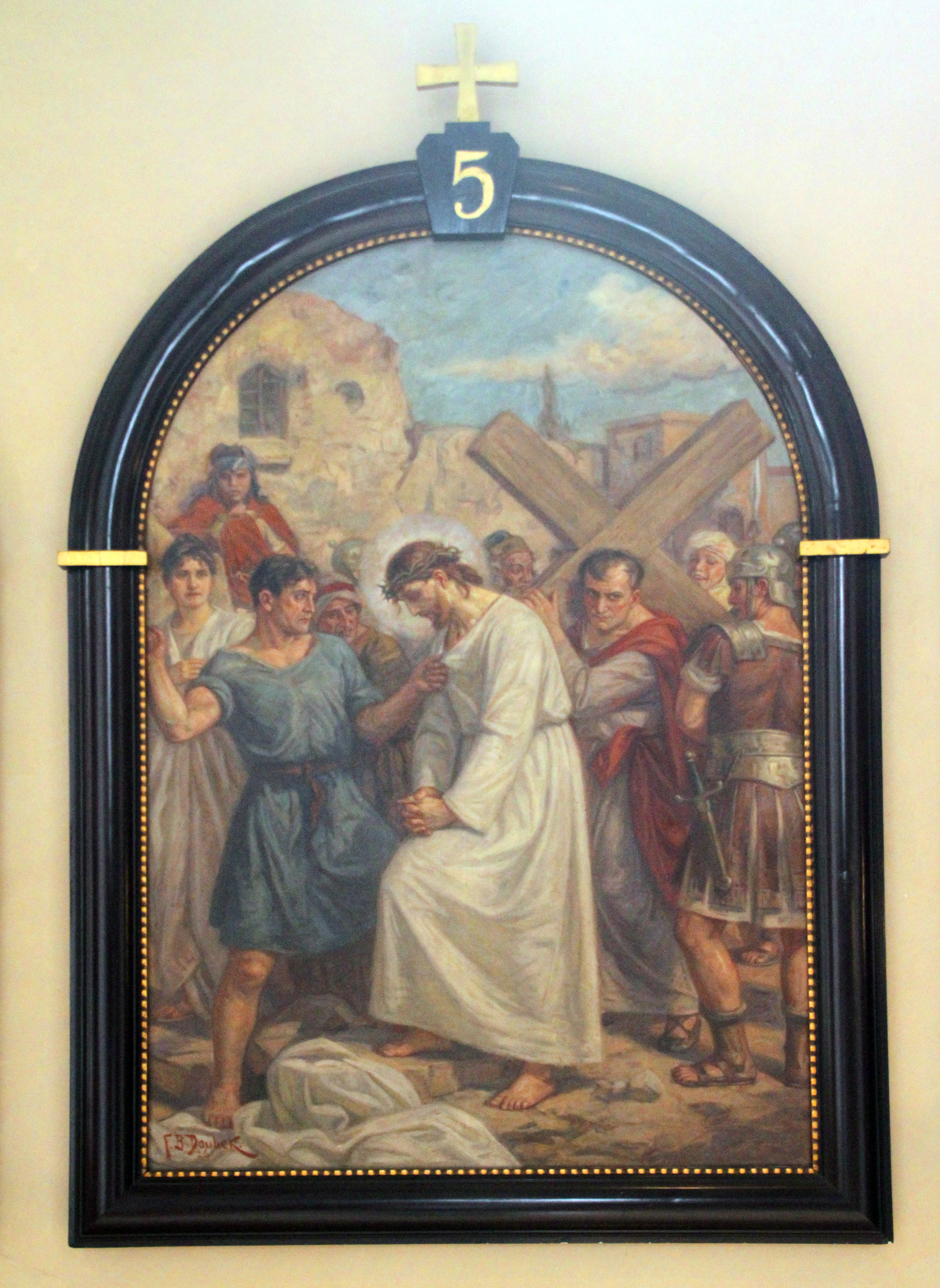
I like the contrast between how resigned Simon
is to this situation, and how resigned Christ is.
I couldn't go to the recent CMA conference, but several friends told me it was great. It focused heavily on burnout, as have the past five or so years. One of my parishioners, a family med resident who attended, reported that the talks were very holy and quoted lots of saints, but finally she didn't feel like there was a real "fix" to burnout.

My experience of the last two CMA conferences I've attended have been similar. Lots of discussion of personal holiness and the sacraments. Lots of discussion of holistic medicine and the importance of relationships and integrity in practice. Lots of discussion of hope, courage, and mercy for times of desolation. Not a lot of easy fixes. And I think that reflects the truth.

There is no easy fix for burnout. There's rest, hobbies, leisure, exercise, healthy eating, meditation, good marriages and friendships, and patience through desolation. None of those are easy. You have to force yourself to make time to rest (and then actually use that time to rest), you have to force yourself to exercise, you have to force yourself to develop relationships, you have to force yourself to pray. There is a lot of violence in pursuing the virtuous life. And, if you believe Augustine (and I do), we never get to the easy part of habitual virtue by ourselves. God's grace makes a way for us to become saints.

There's a small amount of relief whenever you acknowledge an unpleasant truth, be it some personal imperfection or some fact you can't control about the outside world. There is no "fix" for burnout, just the continued pursuit of a virtuous life and patience through desolation.

Sunday, October 15, 2017

Quick Takes as Fellowship Comes Closer

#1

Professionals of all stripes use LinkedIn. Basic science researchers use ResearchGate. Private physicians use Doximity. And, of course, everyone still needs a paper CV or resume. This sets up an obvious problem for the (hopeful) academic physician with a strong community presence. Aware that tl;dr has its own meaning, I affectionately call this resume problem "TLDR." Whenever I have something to put on my CV, it has to go in four places: Text, LinkedIn, Doximity, and ResearchGate. (And I haven't even mentioned the fact that NRMP, the "common app" for residency and fellowship, makes you build yet another CV in its system.)

#2

This month I went to wedding, two conferences, and a strategic planning meeting. One of the conferences overlapped with call, so I flew back through recently-flooded Houston the night before I showed up for a 24-hour shift. I feel like I'm always leaving friends and family behind, never present to them. All in all, I am traveling 4 out of the 5 weekends of this month. (I spent the other weekend TLDRing.)

#3

Hello Internet is a podcast by CGP Grey and Brady Haran. I used to watch a lot of YouTube science, so I knew the creators and listened to a bunch of the podcast while collecting data for a research project. One interesting episode talked about time management across four categories: work, family, health, and friends. Grey made these categories analogous to four lightbulbs, and posed the question of time management in terms of how bright (or dim) each bulb is or should be, given limited wattage for all four. He related personally that his "health" bulb hadn't been on in the early years of starting a successful YouTube channel. As I listened to the podcast, madly collecting data, I felt similar. I, too, am self-employed in a way. I'm in that phase in my career that involves aggressive self-improvement. I'm looking for excellent skills, rare opportunities, good connections, advantageous relationships, and strategic projects. And that "health" bulb is really dim! I'm trying to turn it up a little, but the wattage limit and my chronic ambitious habits are making it really hard.

#4

I'm homesick. When I applied to residency, I had few incentives to stay in my hometown because the public hospital rejected my ethical choices, the good private hospital had residents I didn't want to work with, and I thought the other private hospital was a dead-end career choice. Now I might be able to wedge my way back in, and I'd really like to. I don't like being the stranger at Christmas, that "older sister" who is never present to my siblings' lives. I want to be near my parents and be in the city I know and love. I can't tell how important these feelings are, though. Should I prioritize training in this important stage in my career? Should I go somewhere for the sake of a key mentor or a key set of experiences? And the all-important question: will they take me?

#5

You know the fable of the man who started with a piece of straw and ends up a millionaire? I feel that way sometimes. I started in homeschool and traded up to a good private elementary school. This allowed me to trade up to an academically decent but philosophically terrible private high school. From there, I could have jumped academically higher (and philosophically lower) into college, but instead traded overall "up" to TAC. But TAC is a "straw" in terms of the rest of the world. (All the Thomists may now laugh at TAC being straw.) But I was still able to trade up to get into medical school. From a community program, I traded up again to an academic residency. I wonder whether fellowship will be another trade "up," or whether I've maxed out my potential. 

#6

Can I admit something? It relates to "maxing out potential." There is a barely perceptible but real glass ceiling over me because of my moral choices. I can't go to top places because they don't want someone with my "limits." I am not comfortable putting a list of places I'm blocked from online, because I still have steps left in my training and don't want to close doors. But I have this long-lasting frustration with being inferior. I guess it started at TAC: I felt like I took the moral high road, and my high school classmates who had gone to better colleges were getting into better med schools. Then from my state med school, I felt that again I was getting fewer competitive interviews. In any given city, there's a glass wall between me and the big hospital and the big research projects. It makes me irrationally hungry to go to those places and do that research. There is a lot more funding and networking in those places, and I could do more. Wouldn't it be good if I could do some animals studies to further the possibility of ectopic rescue? Wouldn't it be good if I could study methotrexate more?

#7

I look at the last quick take and part of me thinks: "Networking and funding are fancy words for power and money. Don't look to those things. The Lord doesn't want you to do things independently. He wants you to be His Bride and He will make all the rest possible for you, even if it requires more work and you do not meet with success." There is more purity of heart in this response, I think. Less slavishness to ambition and outward things. More peace. Please pray for me, that I can have this peace and trust in the Lord, rather than anxiety over worldly things that I miss because of adherence to the truth. Please join me in that trust, in whatever opportunity you have in your life.

I will start applying for fellowships in July of 2018. I will start preparing my application around December, when interview season for the entering intern class of 2018 is over. Please pray for me! If there are priests reading, please consider saying a Mass for me.

Friday, December 30, 2016

Control and Being a little Legislator

I have realized that I can't control anything, and I'm trying to live with that.

This is as much a psychological milestone as it is a spiritual one. Human beings can't influence most of what happens to them: we can't change the weather, we can't change history, and we can't change the people around us or their choices. Christians embrace this like they embrace the inevitability of suffering: they see that God has made it a way to go to Him.

It's refreshing to admit I can't control a lot. As a doctor, I can't control who will page or call me and whether it means I get out of bed on call. I can't control who will walk into my clinic or how long they'll need to talk about it. I can't control who will come into triage or the ED and whether they'll need a complicated workup or a surgery that day. At the most extreme: I can't control how placentas and cancers grow and I can't stop babies and women from dying. There's a vulnerability that can be exhausting (another patient? I already need to see twelve. Another ultrasound? Another phone call?). It's hard to maintain generosity and avoid being lazy. Also increasingly since residency is the inability to control my body: I can't just stay up as long as I want--my body turns off after 36 hours on and I miss meetings that I schedule after that.

The doctor-patient coin has two sides. I can't control how my doctor interprets the evidence on re-scoping versus empiric titration. I can't control what she'll find on that colonoscopy, either. I can't control what the meds will do, I can't control whether I develop extraintestinal manifestations, and I can't control whether or when I'll lose my colon or get cancer. (I also can't control the past, which includes a lot of knowledge about UC that I sort of wish I didn't have.)

And there are a scattered other few things. I can't control whether my siblings will stay Catholic, whether my married friends will stay married, whether my archdiocese will close my parish, whether the state will stop payment from CMS to my hospital....

There are some things that I can control a little more, but always weasel out of my grasp. I can't always seem to control the cleanliness of my apartment. Sometimes it looks like six frat boys live there and I can hear my German-standard cleanliness mother (who had us wipe the microwave and oven doors as part of the list of things to do with the dishes) tsking in my mind. Mom, I think I've wiped the oven once and vacuumed three times since moving here.

Then there are the things I wish were in my control and might be in my control, but I don't think my will is disciplined enough. These are all the parts of the life of virtue that I think I could do better on, even though my life now in residency tempts me to excuse all kinds of stuff. I have to learn to live like a saint even while working my current schedule. What if I died in residency? What will be my excuse that I didn't possess my own heart in each moment, form my conscience, and use every opportunity to love God and calmly grow in virtue?

But my old approach to virtue doesn't work now. (Lots of people said this about med school, that they're undergrad method of studying didn't work in med school. I didn't have to make that transition from TAC, but perhaps it'd have been better if I did, because I'd have recognized this need for something new sooner.) I can't legislate little changes any more. 

In med school, I wanted to be able to floss every day, so I made a little law for myself, invented a method for predisposing myself, created positive self pressure (a dental appointment), and unconsciously created negative pressure (shame). And it worked. The same thing worked for a lot of pious practices and projects. Now I can't get myself to floss, even though I applied all the same interventions. The same problem exists for a lot of my pious practices and projects. I don't know why this is, but I have a strong hunch: the core battle of my life, chronic exhaustion, makes it hard to pressure myself to do things. There's not enough energy for sustained enforcement upon myself. 

But the other day I had a realization. Considering the relationship between myself and God, I am never the legislator. God makes the laws and He stands under the reality in which I exert my free will with His help. This helped me realize what doctors of the Church and saints have long known: all that is needed for holiness is to follow one's conscience in each moment. When each opportunity to floss presents itself, I accept His grace and take care of my body. And because God's will is less totalitarian than man's, I might even decide (shocker) that flossing is not indicated in certain situations. (Do you floss after 30 hours at work? I fall into bed.)

Monday, August 15, 2016

Cognitive Disorders

Medical training and life in general is overflowing with cognitive mistakes. I've been meaning to blog about them since fourth year of medical school. Here are ten common cognitive mistakes; look how close to the truth each one is. (This is reprinted from some handout I got some time in med school. If I'm plagiarizing, let me know and I'll take it down.)
  1. All-or-nothing thinking: you see things in black-and white categories. If your performance falls short of perfect, you see yourself as a total failure.
  2. Overgeneralization: you see a single negative event as a never-ending pattern of defeat.
  3. Mental filter: you pick out a single negative detail and dwell on it exclusively so that your vision of all reality becomes darkened, like the drop of ink that discolors the entire beaker of water.
  4. Disqualifying the positive: you reject positive experiences by insisting that they "don't count" for some reason. In this way you can maintain a negative belief that is contradicted by your everyday experiences.
  5. Jumping to conclusions: you make a negative interpretation even though there are no definite facts that convincingly support your conclusion.
    1. Mind reading: you arbitrarily conclude that someone is reacting negatively to you, and you don't bother to check this out.
    2. The fortuneteller error: you can anticipate that things will turn out badly, and you feel convinced that your prediction is an already-established fact.
  6. Magnification (catastrophizing) or minimization (also called "the binocular trick"): you exaggerate the importance of things (such as your goof-up or someone else's achievement), or you inappropriately shrink things until they appear tiny (your own desirable qualities or another person's imperfections).
  7. Emotional reasoning: you assume that your negative emotions necessarily reflect the way things really are.
  8. Should statements: you try to motivate yourself with "should" and "shouldn't," as if you had to be whipped and punished before you could be expected to do anything. "Musts" and "oughts" are also offenders. the emotional consequences are guilt. When you direct "should" statements toward others, you feel anger, frustration, and resentment.
  9. Labeling and mislabeling: this is an extreme form of overgeneralization. Instead of describing your error, you attach a negative label to yourself. "I'm a loser." When someone else's behavior rubs you the wrong way, you attach a negative label to him. "He's a louse." Mislabeling involves describing an event with language that is highly colored and emotional labeled.
  10. Personalization: you see yourself as the cause of some negative external event, for which in fact you were not primarily responsible.

Monday, June 29, 2015

On the Eve of Residency

On March 15, I was hired as a doctor. Sort of.

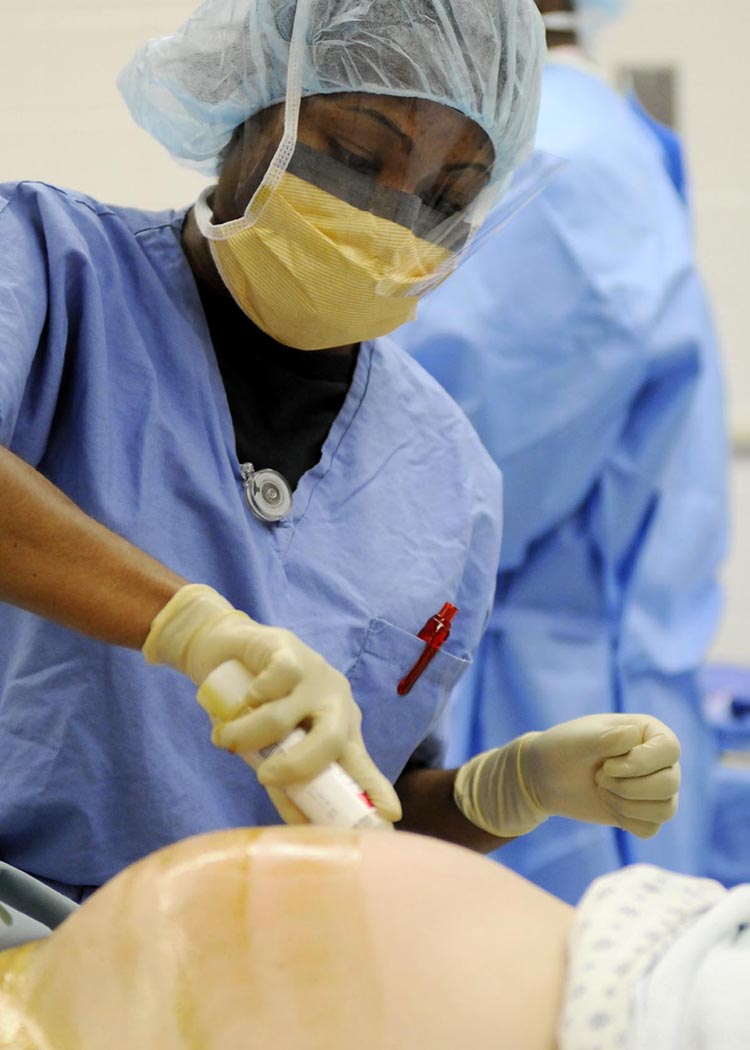
Src: theurbanresident.com
March 15 was Match Day. I walked up to a stage (to a mandatory 30 seconds of music that I had to buy; I picked "Son of Man," by Phil Collins) and picked up an A6 manila envelope. I opened it, with all other medical students nationwide, at noon and discovered where I will spend the next four years learning to take care of patients. To my great joy, it was my first choice: my discernment had been correct, and God chose what I'd chosen. I left the Match Day ceremony early (before I even pinned my picture over my new home) and went to Mass with my mother. I spent thirty minutes after Mass in deep happiness in front of the tabernacle, thinking of how good God is and how much He loves us. He had loved me into a program that had everything I wanted, and (so I've already discovered) far more than I knew. I'd signed a contract as a physician. So I was hired as a doctor, sort of.

On May 9, I became a doctor. Sort of.

May 9 was graduation. I walked across another stage in a tam and robes with green chevrons. (As a TACer or maybe just because I like "distinctive dress," I appreciate the meaning of regalia and feel honored and dignified in it.) It was deeply satisfying to accept my diploma and attain the goal I had hoped for, however vaguely, since I was four. I remarked to my father that I enjoyed this graduation more than my TAC graduation, because I did not understand what the last year of TAC was for, but I had understood my medical education. Medical education is an imperfect but powerful experience, and I'd completed it. Sort of.

On June 16, I started my new job as a doctor. Sort of.

June 16 saw the beginning of orientation. I'd moved in the day before, after a day-long drive to my new state, and a week-long retreat in solitude (final preparation for the consecration). I didn't have a stick of furniture, apart from my kneeler. I had to borrow the next month's rent from my parents. During orientation I scrambled in my new city to find Masses, grocery stores, gas stations, post offices, employee health clinics, pharmacies, train stations, and a dozen conference rooms in two hospitals. I ostensibly learned how to operate a new electronic health record, how to meet the expectations of me are on each rotation, how to resucitate patients during codes, how to do obstetrical procedures, and how to triage women who present to the hospital. So I was ready to act like a doctor, sort of.

On July 1, I will actually be a doctor. (Sort of.)

I will be one of the thousands of "interns," first-year physicians who are still learning the ropes of patient care. I will be rounding on antepartum and postpartum, and signing prescriptions. I'll work the night shifts over the holiday and I'll evaluate and manage (and maybe deliver) patients. During the rest of July I will be learning to perform ultrasounds, and in August I'll be working nights as one of the four awake OB/GYNs in the hospital. September, I'll be on labor and delivery during the days; October, I'll be working full-time in the resident clinic (30ish patients per half-day, NBD). November and December will be more time in labor and delivery, and some time in the OR for gynecology. And in 2016, we'll repeat those six months over again. By the end of it, I hope that I will have actually been someone's doctor. (There will be lots and lots of help to get me to that end-point, which is why I tacked on "sort of" again.)

Right now, I'm afraid. I'm excited to see patients and manage them, but that excitement is proportional to my confidence that this will be easy (i.e. that I have knowledge in my head about what to do when I see them). My confidence is quite low, so my excitement is very small. Instead, since I hear all these comments about how July is hard and interns start out slow, I'm very scared!

I'm trying to remember that God loves me, that slowness in the first few months of residency doesn't matter in the grand scheme of becoming a saint. That even if I am embarrassed and am the last resident in the class (which I may be; these people are all SUUUUUPER qualified and have advanced degrees and research and children), if I remain with Jesus throughout each day, it doesn't matter.

But prayers will be appreciated, because on Wednesday I'll be an intern. I am excited to begin this new chapter, but I need God's help to stay peaceful, more than I need my upper-levels' help to be a better intern.