Let me tell you what it's like to be a Catholic millennial.
I am an older millenial, who remembers the days of dialup, and I'm obviously stuck in the past of the individual blogger. I remember the language of the "new springtime in the Church," the new Advent, language of the 90's and early 2000's. But I didn't realize that during my lifetime, the Church would have to pick up so many pieces we didn't know existed after the sexual revolution and after Vatican II. No matter what you think of the council, you have to acknowledge that we have a nuclear fallout level of cleanup to do. This post catalogs my realization of the size of the work to do, and my thoughts about it.
Some people may have realized that Vatican II would lead to radically irreverent liturgies (think "clown masses"). That is a travesty, but it's largely over. The disappearance of these liturgies was more or less spontaneous: there were outcries, there were reprimands, there was unhealthy silence on the matter, and then the people interested in those types of things left Catholicism behind in favor of openly irregular parishes, non-Catholic charismatic communities, or life without religion. Every time that something like this happened again (beach Mass, dog "receiving communion," etc) the conservative whack-a-mole arose again, but its machinations usually weren't needed. Slowly, parishes and parishioners that favored those things aged. Even now, those ideas and that architecture are being phased out.
A residue of bad architecture, bad catechetical materials, and liturgical carelessness remains. A casualness about parish announcements, extraordinary ministers, and the Real Presence persists. Even priests who would never experiment with the Mass ended up committing subtle and not-so-subtle irreverences and liturgical abuses, probably through poor formation. Mass even without gross ("clown") irreverence is, in most English-speaking Novus Ordo rites, celebrated more like an important human tradition (think Memorial Day salutes to the dead) and less like an act of divine worship (think Crucifixion). It's hard for priests to fight this, although for the good it is becoming easier and they are making it easier for others.
Some unexpected effects of the radically irreverent liturgies include the steep rise in unbelief among those who still call themselves Catholic. This seems stranger to me than those who want the moniker but want contraception or divorce. The Real Presence is an entirely intangible belief that (while difficult) has no real-world perceivable gains by its denial, as might contraception or abortion. Why are we denying it now, all these years after the Enlightenment has taught us that the physically measurable and useful is all that is? Why now, all these years after much of protestant theology has made Christianity out to be symbolic and practical for prosperity? I see it tied to a failure in orthodoxy and orthopraxis. We didn't do it or say it (lex orandi) and we don't believe it (lex credendi). Humans are cultural animals: when we aren't inculcated to the truth, it's much harder to grasp.
Another unexpected effect of radically irreverent liturgy is the fragmentation of conservative liturgical groups. The more decades pass between the origin of the SSPX and the present day, the more difficult it becomes to untangle all the events, souls, and teachings (both praiseworthy and troubling) involved. Add the FSSP and various media outlets (Church Militant, the Remnant) and it's a dizzying cacophony of voices that all want orthodoxy back, but are opposed to each other in various ways for various reasons, whether good or not.
In the aftermath of Vatican II, there was an enormous breakdown in trust in an authority, followed by the unveiling of significant scandal which further compromised current ecclesial authority. This breakdown in trust seeds discontent among allies, a purism that makes it hard to work together. This not only affects Catholic organizations, but others of similar mission, such as pro-life organizations. Certainly, many good ministries and collaborations have arisen, such as the Ruth Institute and Women Speak for Themselves. But so much damage has been wreaked among the most important organizations, such as SSPX and groups of sedevecantists, has been far more deleterious than the perceived benefits from other organizations. In particular, I have perceived a rise in sedevacantism since Francis became pope. I imagine this is like what St. Augustine felt among the Manicheans or Pelagians, or St. Nicholas among Arians. When I meet one who says he is "Catholic," is He like me? It is a very wounded Church we live in.
And I predict that after covid-19, Mass attendance in many parishes will drop even further. Where there is no belief in the Real Presence or the authority of the Church, why will there be Mass attendance when people have seen how little their lives are impacted without a homily on the values they hear about in TED talks or in the online sermons that were already being put out weekly by the nondenom church nearby?
Some parishes which are better catechized or more tightly-knit may not suffer this. But I expect this double blow (the "spirit of Vatican II" and the abuse scandals) has had and will have had far-reaching effects for parish life. It has had and will have effects in ministries like EWTN, Word on Fire, Church Militant, and others. Is had and will have more effects on individuals and their vocations to married life, consecrated life, and holy orders.
We will be picking up the pieces for a long time, and we will discover pieces (like sedevacantism and conservative infighting) that we never expected to have to glue back together.
Showing posts with label vocations. Show all posts
Showing posts with label vocations. Show all posts
Monday, June 22, 2020

Wednesday, November 15, 2017
Quaeritur: Is there an obligation for Catholic medical students to become OB/GYNs?
I was recently asked:
These are excellent questions. These are the questions you will be glad you asked yourself when residency makes life tough. I do think that a Catholic OB/GYN is a much better doctor for women and for our country than a standard (contraception-prescribing, napro-not-recommending) OB/GYN. I love to persuade people to become strong, Catholic OB/GYNs. But I would not push you that direction.
Your vocation is the way God made for you to become a saint. Your vocation is that of a husband and father, and this will always come before medicine. Your first responsibility is to the salvation of your soul, followed closely by your wife's and your children's. If you save a hundred souls by being a Catholic OB/GYN but aren't available to your family, what good is that?
Most OB/GYNs aren't Catholic, pro-life, or pro-NFP. It is generous for any Catholic medical student to consider the need for more Catholic OB/GYNs, just like it's generous that young men consider the priesthood even if they end up called to marriage. God is so grateful for your generosity. But the existence of a need does not mean you have to meet it. Your family's needs come first. OB/GYN residency is 75 hours a week, on average, and sometimes you're at work for twelve or twenty days in a row.
This calls for careful discernment and a well-trained spiritual director can help open the doors to God's light.
If most OB/GYNs were Catholic already, I would not consider the specialty. I certainly enjoyed my OB rotation, but I also enjoyed other specialiteis just as much. Therefore, why not do a specialty that would allow me to spend more time with my my wife and children? Do you think that a Catholic OB/GYN could help women, marriages, and families in a significantly different way than a standard OB/GYN? Is a Catholic OB/GYN that big of a deal and worth all the extra time, effort, and controversy? Do you think by being a Catholic OB/GYN, I could lead more souls to Heaven? Are these questions too spiritual? Should I be focused more on the medicine, my interest in various specialties, and traditional decision making for most medical students?
.jpg) |
| "The Dedication" by Edmund Blair Leighton Img credit: Micione, Wikimedia Commons |
Your vocation is the way God made for you to become a saint. Your vocation is that of a husband and father, and this will always come before medicine. Your first responsibility is to the salvation of your soul, followed closely by your wife's and your children's. If you save a hundred souls by being a Catholic OB/GYN but aren't available to your family, what good is that?
Most OB/GYNs aren't Catholic, pro-life, or pro-NFP. It is generous for any Catholic medical student to consider the need for more Catholic OB/GYNs, just like it's generous that young men consider the priesthood even if they end up called to marriage. God is so grateful for your generosity. But the existence of a need does not mean you have to meet it. Your family's needs come first. OB/GYN residency is 75 hours a week, on average, and sometimes you're at work for twelve or twenty days in a row.
This calls for careful discernment and a well-trained spiritual director can help open the doors to God's light.
Wednesday, September 18, 2013
A day in the life of Family Medicine
Whew! Family Medicine is over and I am now 12 weeks into third year. I am so tired! This post is not unified or well written; it's a journal entry and nothing more. My advise: skim or skip.
Most of the mornings started at 8:00am in Family Med. I would go to 6:30 am Mass and then drive to a suburban hospital where there was a family practice group and a family practice residency program. I spent two weeks in the group and two weeks with the residents. A week of lectures and one week with the residents on their inpatient medicine service rounded out the clerkship.
I would eat breakfast in my car, parked in the church parking lot. Sometimes, I would see my mom as she arrived for work at 7:30 (she works at the primary school associated with our parish). I arrived at work at 7:45 and started clinic at 8:00.
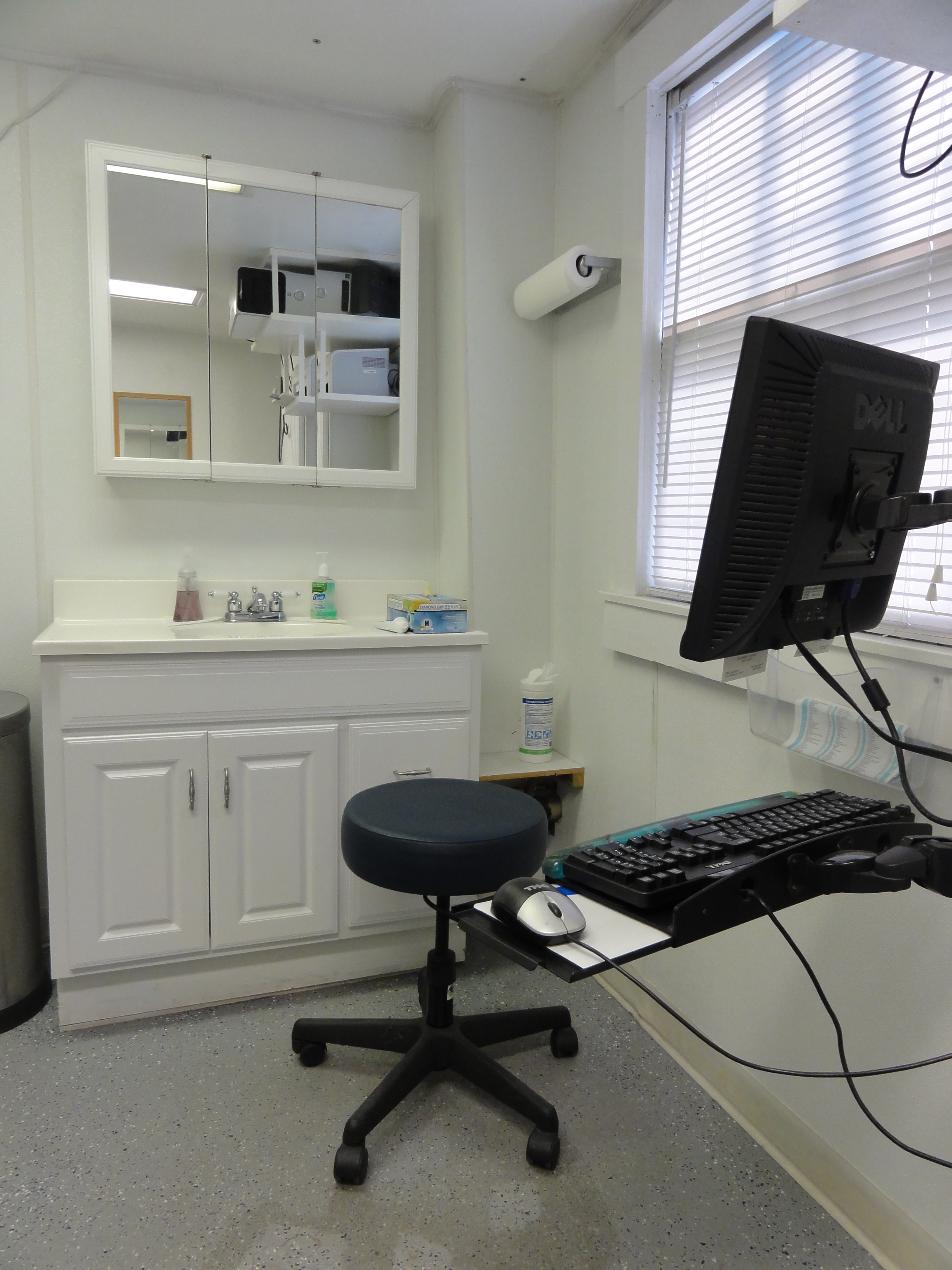 I liked working in the residency clinic more than the group practice because it was more education-driven. I was also more like my preceptors: in the group, I worked with a doc who'd been practicing for ten years before I was born. He was so experienced (and maybe a little sloppy) that he hardly collected any history before announcing a diagnosis. He also typed with two fingers, and so was really slow with the EHR. I pitied him--even though I had about twenty minutes of training, I picked up at least as much as he had in the few weeks I was with him!
I was closer to the residents' age and experience level and, although I always treated them with the respect their degree and position commanded, I felt more comfortable imagining myself in their shoes. "Family medicine wouldn't be so bad," I thought, when I worked with them. (When I worked with the older doc, I thought, "this definitely isn't for me.... Advising all these old people to take mustard when they have a cramp even if they have stage III CKD and typing notes until 12:00am...no thanks.")
Morning clinic would wrap up around 12:30 or 1:00, and clinic would resume at 1:30 or 2:00.
During the day I would see between five and ten patients: I would read their chart a little before tapping on the door and introducing myself. I'd ask them what they came in for and question them about their health or problems, and then I'd decide how to examine them and perform the exam. I documented my findings in the EHR and excused myself to "present" the person to my preceptor.
"Mr. So-and-so is a such-and-such-year-old white male with a history of hypertension and diabetes who comes in today complaining of a four-day history of tingling in his feet," I might say. I would describe the pain (or the cough, or the relevant details of his chronic disease) and then the pertinent positives and negatives, before describing my physical exam. "His heart has regular rate and rhythym without murmurs, gallops, or rubs, and his lungs are clear to auscultation bilaterally." Then I was supposed to say my assessment and plan, but frequently I didn't have to do this.
(Parenthetically, it's funny to write all that out, because all that text would become "Pt is a XXyo WM with 4d h/o tingling in bilateral feet....Heart: RRR s MGR, Lungs: CTAB" in the EHR)
The preceptor would ask me questions to which I usually didn't know the answers ("Does he have a family history of heart disease?" "What do you make of his elevated LFTs?"), and we would go see the patient again together. I liked seeing patients myself, making plans for them, and educating them. I really disliked presentations and not knowing enough.
 I usually stayed past 5:00pm and got home tired and hungry. My family eats when my dad comes home, which is variable...so that caused some friction until mom told me I should just eat when I get home so that I can go and study. I would get to bed at 10:00 or shortly thereafter following night prayer. Usually, no recreation unless I stole some time to talk with my family, ride bikes, blog, or read.
I enjoyed working the inpatient week because I again got to see patients myself, examine them, and write notes in their charts with my own baby assessment and plan. However, this week I wasn't able to attend Mass, and so I asked our parish priest to give me the Blessed Sacrament before Mass began so that I could go to work early for shift change and rounding.
I was constantly readjusting and struggling to fit in all the things I thought I needed to do: morning and evening prayer, midday prayer, meditation, Mass, formation, work, and family took so much time that studying was almost eclipsed! I saw the result on my NBME, sadly. I would study on Saturdays and on occasionaly weeknights, but it never seemed to be enough. I always felt behind! Family Med contains so many subjects (acute and chronic diseases of every organ system in all ages and both genders! Mwaha!) that I was only confident in about a dozen by the end of the clerkship.
Where is God's will for this time in my life? I feel like I'm working two full-time lives: a medical student who needs to work and study, and a consecrated virgin in formation, who needs to study (different things!) and pray. And both are suffering because of the other! I work but I am tired because I don't get enough sleep and exercise; I study, but only a little bit, so that my work suffers; I study the Catechism (but am ten days behind) and listen to my Faith Foundations lectures (but they go in one ear and out the other b/c I listen to them in the car) and go to formation (where I am so tired they have been letting me go early); and I pray, but am so distracted and tired that I don't perceive God's presence. What needs to change???
My expectations, perhaps? Please pray for me, so that I can see God's will. I finally have a spiritual director here, and hopefully we will meet soon to talk about all this.
On to pediatrics!
Most of the mornings started at 8:00am in Family Med. I would go to 6:30 am Mass and then drive to a suburban hospital where there was a family practice group and a family practice residency program. I spent two weeks in the group and two weeks with the residents. A week of lectures and one week with the residents on their inpatient medicine service rounded out the clerkship.
I would eat breakfast in my car, parked in the church parking lot. Sometimes, I would see my mom as she arrived for work at 7:30 (she works at the primary school associated with our parish). I arrived at work at 7:45 and started clinic at 8:00.
 I liked working in the residency clinic more than the group practice because it was more education-driven. I was also more like my preceptors: in the group, I worked with a doc who'd been practicing for ten years before I was born. He was so experienced (and maybe a little sloppy) that he hardly collected any history before announcing a diagnosis. He also typed with two fingers, and so was really slow with the EHR. I pitied him--even though I had about twenty minutes of training, I picked up at least as much as he had in the few weeks I was with him!
I was closer to the residents' age and experience level and, although I always treated them with the respect their degree and position commanded, I felt more comfortable imagining myself in their shoes. "Family medicine wouldn't be so bad," I thought, when I worked with them. (When I worked with the older doc, I thought, "this definitely isn't for me.... Advising all these old people to take mustard when they have a cramp even if they have stage III CKD and typing notes until 12:00am...no thanks.")
Morning clinic would wrap up around 12:30 or 1:00, and clinic would resume at 1:30 or 2:00.
During the day I would see between five and ten patients: I would read their chart a little before tapping on the door and introducing myself. I'd ask them what they came in for and question them about their health or problems, and then I'd decide how to examine them and perform the exam. I documented my findings in the EHR and excused myself to "present" the person to my preceptor.
"Mr. So-and-so is a such-and-such-year-old white male with a history of hypertension and diabetes who comes in today complaining of a four-day history of tingling in his feet," I might say. I would describe the pain (or the cough, or the relevant details of his chronic disease) and then the pertinent positives and negatives, before describing my physical exam. "His heart has regular rate and rhythym without murmurs, gallops, or rubs, and his lungs are clear to auscultation bilaterally." Then I was supposed to say my assessment and plan, but frequently I didn't have to do this.
(Parenthetically, it's funny to write all that out, because all that text would become "Pt is a XXyo WM with 4d h/o tingling in bilateral feet....Heart: RRR s MGR, Lungs: CTAB" in the EHR)
The preceptor would ask me questions to which I usually didn't know the answers ("Does he have a family history of heart disease?" "What do you make of his elevated LFTs?"), and we would go see the patient again together. I liked seeing patients myself, making plans for them, and educating them. I really disliked presentations and not knowing enough.

I enjoyed working the inpatient week because I again got to see patients myself, examine them, and write notes in their charts with my own baby assessment and plan. However, this week I wasn't able to attend Mass, and so I asked our parish priest to give me the Blessed Sacrament before Mass began so that I could go to work early for shift change and rounding.
I was constantly readjusting and struggling to fit in all the things I thought I needed to do: morning and evening prayer, midday prayer, meditation, Mass, formation, work, and family took so much time that studying was almost eclipsed! I saw the result on my NBME, sadly. I would study on Saturdays and on occasionaly weeknights, but it never seemed to be enough. I always felt behind! Family Med contains so many subjects (acute and chronic diseases of every organ system in all ages and both genders! Mwaha!) that I was only confident in about a dozen by the end of the clerkship.
Where is God's will for this time in my life? I feel like I'm working two full-time lives: a medical student who needs to work and study, and a consecrated virgin in formation, who needs to study (different things!) and pray. And both are suffering because of the other! I work but I am tired because I don't get enough sleep and exercise; I study, but only a little bit, so that my work suffers; I study the Catechism (but am ten days behind) and listen to my Faith Foundations lectures (but they go in one ear and out the other b/c I listen to them in the car) and go to formation (where I am so tired they have been letting me go early); and I pray, but am so distracted and tired that I don't perceive God's presence. What needs to change???
My expectations, perhaps? Please pray for me, so that I can see God's will. I finally have a spiritual director here, and hopefully we will meet soon to talk about all this.
On to pediatrics!
Sunday, August 25, 2013
Vocation story
 I have recently finished writing my vocation story! I was hard and easy at the same time. I felt like I should get it "right," and somehow have the perfect version...but that just resulted in me never typing anything. Finally, one day I just sat down and told it. Deo gratias.
Thursday, April 4, 2013
Quick Takes
1
I had my second-to-last test in clinical skills. A group of about 25 second-years came into a room in the simulation center. Two of the three course directors were already there (the course directors are primary care physicians and very earnest about physical diagnosis, professionalism, and accountability...I don't know any better examples for us) and they explained the way the exercise would test our knowledge of history-taking and physical exam skills (taking an "H&P").
We would have a patient come in and pretend that we were doing a full H&P to admit this person to the hospital. Names would be drawn at random from a box and the students whose names were drawn would complete sequential parts of the H&P. This is meant to ensure that we all know the H&P very well (not unlike random selection of students to demonstrate propositions in freshman math at TAC).
Surprise! Our "patient" was the third course director, dressed in overalls and a John Deere hat. That made us laugh! It took away any potential intimidation that we'd feel, doing our exam on a teacher and doctor. It was fun. As a group we were well prepared, although I think I was not as well-prepared as some other people. I have my final test next week.
2
I am in my last block before the second year ends and I spend a few months on STEP 1 before third year. The musculoskeletal/integument (bones, joints, muscles, skin, hair, nails) block has been pretty easy so far. We're all tired and can't wait to only study for one thing (STEP) instead of two (STEP+school).
3
We had a presentation on third year today at lunch with some current third-years. We asked "what exactly is 'rounding'?" and about weekends, calls, and schedules. What did they wish they knew? What would help us shine? The general gist was: be humble. The third-year medical student is the lowest on the totem pole and should acknowledge it and be comfortable with it, using her time to diligently learn, work hard, make other people's lives easier and not harder. She should be professional, not mind the lowly tasks, get used to feeling out of place, be open about her knowledge deficits, and roll with the punches. "We all just have to be humble," one third year said in closing, using the word 'humble' for the first time. "Pride is your biggest enemy third year."
4
The end of the ERHS (endocrine/reproduction/human sexuality) block was the "HS" component, and I am really striving to let everything roll off my back instead of getting depressed about all the sin/mess/wounds/errors/backwardness currently accepted as love/awesome/healthy/normal/progressive, especially touching sexual "orientation," sex "changes," sexual practices (before/during marriage/"marriage"/any relationship with whatever person(s) consent)....
But you know what's interesting? My Catholic faith is strengthened by the fact that we couldn't leave the block without someone talking about the Catholic Church. One lecturer in particular, who was supposed to teach about the specific healthcare needs of the LGBT community, spent most of his time talking about the Church. At one point, I doodled in my notes, "why are we talking about women priests?" We also covered how Pope Francis would be so much better than Pope Benedict, celibacy, chastity, St. Teresa of Avila's transverberation (shudder), exclamatory prayer (double shudder), biblical hermeneutics (his term), repression (moan), and indulgences (yawn). There was more, but I might bore you. The upshot is: you know it's Truth when it is maligned to justify insanity.
5
Interestingly, that talk made me realize how much scandal is given by Christian dis-unity. This lecturer used the fact that people have different bibles (e.g. zero or two or three books of Maccabees) and that there were apocryphal gospels and different interpretations of scripture to justify his rationalization of homosexual lifestyles with Leviticus 20:13. If we were more unified, we could set a clearer example for the world. I didn't realize that the world needs Christian unity as much as the Church does.
6
I've also learned recently (during the Triduum) that to be called or perfected isn't to leave our sins behind, as though you only become a saint or "get" a vocation when you're all perfect so that you'll look good in your halo. No: we are called and redeemed at the same time and out of our muck.
One of the hardest things I'm dealing with is the guilt of hurting others, and that comes to a pinnacle when I think about Good Friday and the Crucifixion, when I hurt the Incarnate Word who was suffering me so that he could have me with Him in heaven forever! This Lent/Holy Week/Easter was very good for me. Thanks be to God! I hope it also was for you.
Friday, March 1, 2013
Another Crazy Friday Night: Who but a Catholic?
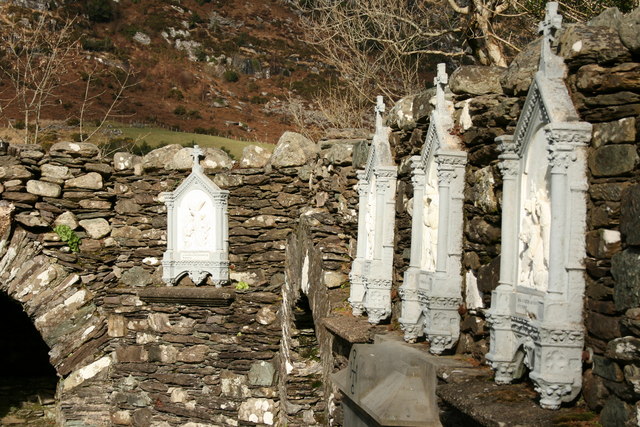
I prayed Evening Prayer and went to Mass at the Newman Center. And then, because it was a Friday in Lent, there was half an hour of Adoration, followed by the Stations of the Cross. Who but a Catholic spends Friday night hoping to be conformed to God from their miseries, or doing reparation to the heart of Jesus?
There was a soup supper after Stations, and one of the Daughters of St. Paul was giving a talk on the Theology of the Body. Who but a Catholic can simultaneously mortify the flesh and drink in a teaching about how sanctifying and beautiful the body is?
I didn't stay long at the soup supper, because I and several of the other girls there had a previous commitment: a meeting of a small group of women seriously discerning consecrated life. There, we spent the next three and a half hours about the love of Christ and how he had worked in each of us carefully, gently, and lovingly. Who but a Catholic can understand this roomful of young women, ardently in love with a man largely considered insipid or mythological?
As we exchanged stories of how Christ had called us to be His own, I was amazed at how beautiful and unique each soul and each story is. "Unique love," mused one girl. "Everyone is made to love Jesus in a way no one has before; if we don't, He'll sort of lack that love." Who but a Catholic can humbly and truthfully that creatures so lowly are so valued by the Omnipotent?
I had hosted the meeting and I closed the door after the last guest left, exhausted and happy. It was almost midnight, and I prayed Night Prayer. And looking back at the day, I thank God for the Church. I never would have realized all these truths by myself; thanks to God, I received them. How gratuitous! Truth Himself imprints the Church with His image, and hands it freely to us, a garment of salvation.
 |
| "Head and members form the same mystical person" (St. Thomas Aquinas). "About Jesus Christ and the Church, I simply know they are just one thing and we shouldn't complicate the matter." (St. Joan of Arc) |
Monday, February 11, 2013
Dark Diagnoses and Extraordinary Forms

A man came into the office, I saw him, and he left with a diagnosis that will either accompany him or hurry him along his walk towards death. And although he feared a diagnosis like that (or at least, his wife did), I truly don't think he expected to get it. His major goal of the day was to figure out what was wrong and fix it, so that he could get back to the way life was before his symptoms were bothering him. But instead, he walked out of the clinic with a dark diagnosis.
His 'dark diagnosis' is one of many that I store in a mental box in a corner of my growing art. Myasthenia gravis, multiple sclerosis, diabetes, some cancers, HIV/AIDS, hepatitis C, congestive heart failure, chronic obstructive pulmonary disease, etc. I am not the master of these diseases, but I am the one who sees the signs of them and shakily opens that slim black case and pulls out the corresponding diagnosis, handing it solemnly to the person as I introduce them to their unwanted companion.
Sorry for getting so very poetic so quickly.

And these dark diagnoses are a kind of death, because I must tell them, "Life is different now. I wish I had different news to tell you, but you can't go back to the way life was before."

I study this dark box often because these diagnoses have many effects and are chronic, debilitating, and common. Many times I had spoken with patients and they had said "and I have COPD" or "I'm diabetic." They already carried their darkness.

But I had never visited with someone, examined him, presented his case my preceptor, and heard that we must open that box. Hearing my presentation (which is made privately outside the patient's room), Dr. H's mouth fell open and he said with raised eyebrows, "You think maybe organ failure?" as if saying, "are you opening that black box?"
And I could have said, "Oh, no! Not that, not for him." I had though his symptoms were from a relatively benign condition. And I liked this patient. We were alike somehow, even though he was a huge man with the build of a sailor, a square jaw, and the bronzed skin and bleached hair of decades of work in the open sky. We had a good rapport. (Maybe because we were both choleric?)
But I instantly knew my preceptor was right: organ failure fit with the patient's story much better than my idea, although my idea was still on my differential. In that instant I swallowed my "No!" and answered aloud evenly and honestly, "I don't know, but..." and I continued with the presentation. I watched as every word I said corroborated Dr. H's diagnosis and the lid of that box opened wider and wider.
We walked into the room and I looked at the patient with different eyes. Now I recognized the signs of that diagnosis in him. Now I saw that he had a dark companion which he did not know about but I did. It was like I could see his future, and I saw that he would become a different man.
(Sadly or happily, this man didn't grasp the impact of that diagnosis. He was relieved to have a pill to start taking to fix the problem so that he could go back to work. Dr. H may have broken the news to him a little too gently for a man so choleric. But I won't go around asserting that I know how to break bad news better than a successful, experienced, and sensitive family doctor. I actually started to see the wisdom of Dr. H's approach: the patient may be more likely to come back for follow-up if he feels his goals were met. And coming back for follow-up is good for chronic and serious diagnoses. The impact of the disease might change based on how the patient fares in two weeks.)
And I can't help it: I have to draw a spiritual parallel because it's not actually a parallel, it's a true instance of what I'm talking about. We all have a dark diagnosis--much, much darker than anything in medicine's little box. The name for people with this chronic, hereditary, debilitating disease (the name for all of us): sinners. Our appetites are not the instrument we knew in Eden: they won't obey us, we can't rely on them.
 And alone with this condition, our future is completely black: we spiral down gradually to eternal death or separation from God, who is all that is loving and good. But God planned mercy, prepared us for it, and executed it beautifully by sending a Physician (or, better), the Cure Himself.
And now we work out the cure in our own souls day by day. Now we have to do special things and change the focus of our lives. And since it is simultaneously a kind of sacrifice, suffering, birth, death, heaven, hell, love, and is altogether of God, it sometimes takes extraordinary forms.
Sunday, May 13, 2012
Submission, Change, and the Church
I recently discovered Fish Eaters, a site with loads of excellent apologetics on hard-core Catholicism. It explains the richness of our millenia-old traditions and is truly marvelous! The site creator, Tracy, states states her position, which is pretty solid. (I'm used to people saying that the the Tridentine rite is superior to the Novus Ordo and pretty much agree.) Moving around the site, I discovered a fun page: Lists Every Catholic Should be Familiar With. (I like lists.)
As I was happily stuffing information into my brain I saw that the list of mysteries of the Rosary had only 15 items. Then I read
In fact, lots of things in the Church make me wince. I used to wonder why there are redundant religious orders (e.g. Dominicans, Salesians, Ursulines—they all teach!). Can't we be systematized and have one monastic order and one apostolic order? Why are there so many vocations? Can't we be saintly in an orderly, limited number of ways?
But that's not how agapic love works. God has an unexpected, organic fecundity and the Church reflects this in the differences between souls and the developing Church: remaining one, she changes by adding and pruning to produce more fruit for our salvation!
(This post is about more than the Rosary, but recently Msgr. Charles Pope proposed adding more mysteries to the Rosary, in a lighthearted but earnest way. The Rosary isn't the Canon of the Mass. It's not Scripture. It's a devotion and, like the vocations blessed by the Church, changes as the Church's needs change.)
So, despite my love of Latin, lists, ritual, order, and incense I need to remember the nature of the Church. But where is the balance between maintaining tradition and allowing for true growth? St. Pio of Pietrelcina has great words to say about this, similar to the recent words of Bishop Fellay, superior of SSPX. First, St. Pio:
Ultimately, both urge us to obedience as a guide: we will walk the correct line between too much change and too much rigidity when we are obedient. The Church, they remind us, is God's—not ours, not the Pope's, not the Councils'. Therefore, let us constantly seek Christ, because He embodies obedience and thus sets us free. Dilige et quod vis fac.
As I was happily stuffing information into my brain I saw that the list of mysteries of the Rosary had only 15 items. Then I read
...His Holiness, Pope John Paul II, recommended adding 5 more Mysteries.... This novelty does not change the true Rosary and is merely presented as an option for Christians. This option, however, is one that totally disrupts the relationship between the Rosary and the Breviary's Psalms.While I disagree with Tracy's thoughts about the five Luminous mysteries, I have a lot of empathy with her: I wince to hear that the Roman Calendar is all messed up, or that the fifteen-decade Rosary fits with the old Office and now everything is all confused. I like things to fit and remain consistent.
In fact, lots of things in the Church make me wince. I used to wonder why there are redundant religious orders (e.g. Dominicans, Salesians, Ursulines—they all teach!). Can't we be systematized and have one monastic order and one apostolic order? Why are there so many vocations? Can't we be saintly in an orderly, limited number of ways?
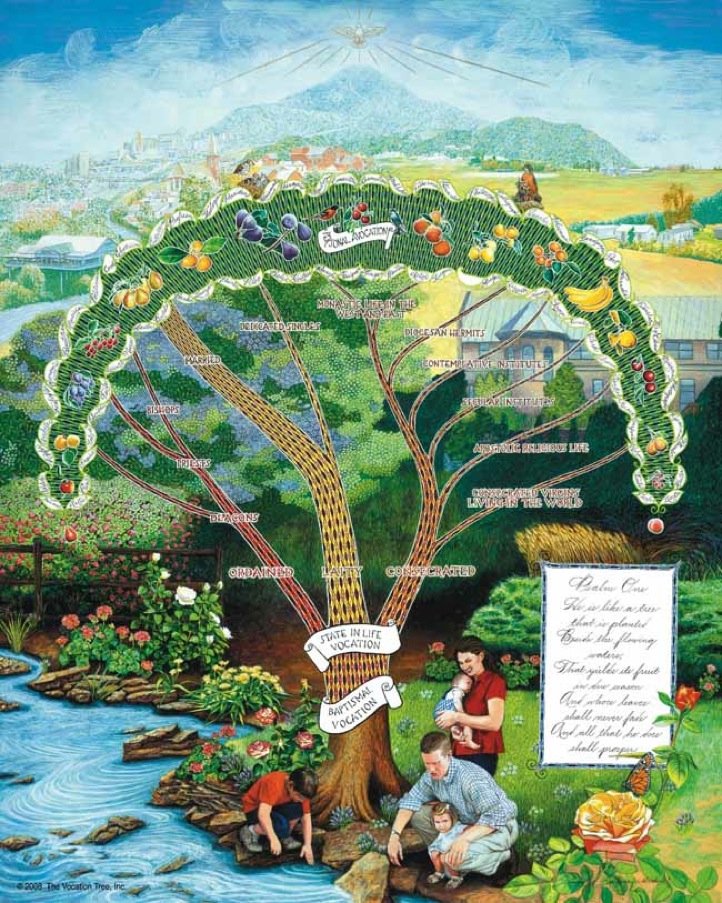 |
| The Vocation Tree: a helpful infographic, but the first time I saw it I definitely winced. |
(This post is about more than the Rosary, but recently Msgr. Charles Pope proposed adding more mysteries to the Rosary, in a lighthearted but earnest way. The Rosary isn't the Canon of the Mass. It's not Scripture. It's a devotion and, like the vocations blessed by the Church, changes as the Church's needs change.)
So, despite my love of Latin, lists, ritual, order, and incense I need to remember the nature of the Church. But where is the balance between maintaining tradition and allowing for true growth? St. Pio of Pietrelcina has great words to say about this, similar to the recent words of Bishop Fellay, superior of SSPX. First, St. Pio:
...A renewed Church is coming, faithful and united, and you must help to usher this in by setting an example of great loyalty and fidelity. Perhaps there are things you do not agree with about this Church. Heaven accepts the fact that you have opinions. But you should discuss these things with Jesus and not use these points to pull your Church down and distance others from obedience. You will be accountable for this, my friends.Next, Bp. Fellay: "today’s Church still has Jesus as its head. You give the impression of being so scandalised that you can no longer accept this is still true..." and "[this] conception of the Church is too human and fatalistic; [it sees] the dangers, the scheming and the difficulties but you no longer see the help offered by grace and the Holy Spirit."
If Jesus is calling you to lead in the Church, then you must lead. If He is calling you to follow in the Church, I suggest you follow or risk displeasing heaven. ...[B]eing in a constant state of disagreement with your Church is causing you unnecessary stress. ... This is God’s one true Church and that has not changed. Be faithful during this time.... [B]e accepting of both your personal crosses and also accepting of the crosses your Church is carrying during this period. Heaven is with you in each personal cross and heaven is working to renew the Church. Be patient and calm while we work together in these matters.
Ultimately, both urge us to obedience as a guide: we will walk the correct line between too much change and too much rigidity when we are obedient. The Church, they remind us, is God's—not ours, not the Pope's, not the Councils'. Therefore, let us constantly seek Christ, because He embodies obedience and thus sets us free. Dilige et quod vis fac.
Monday, May 7, 2012
Caravaggio: the Calling of St. Matthew
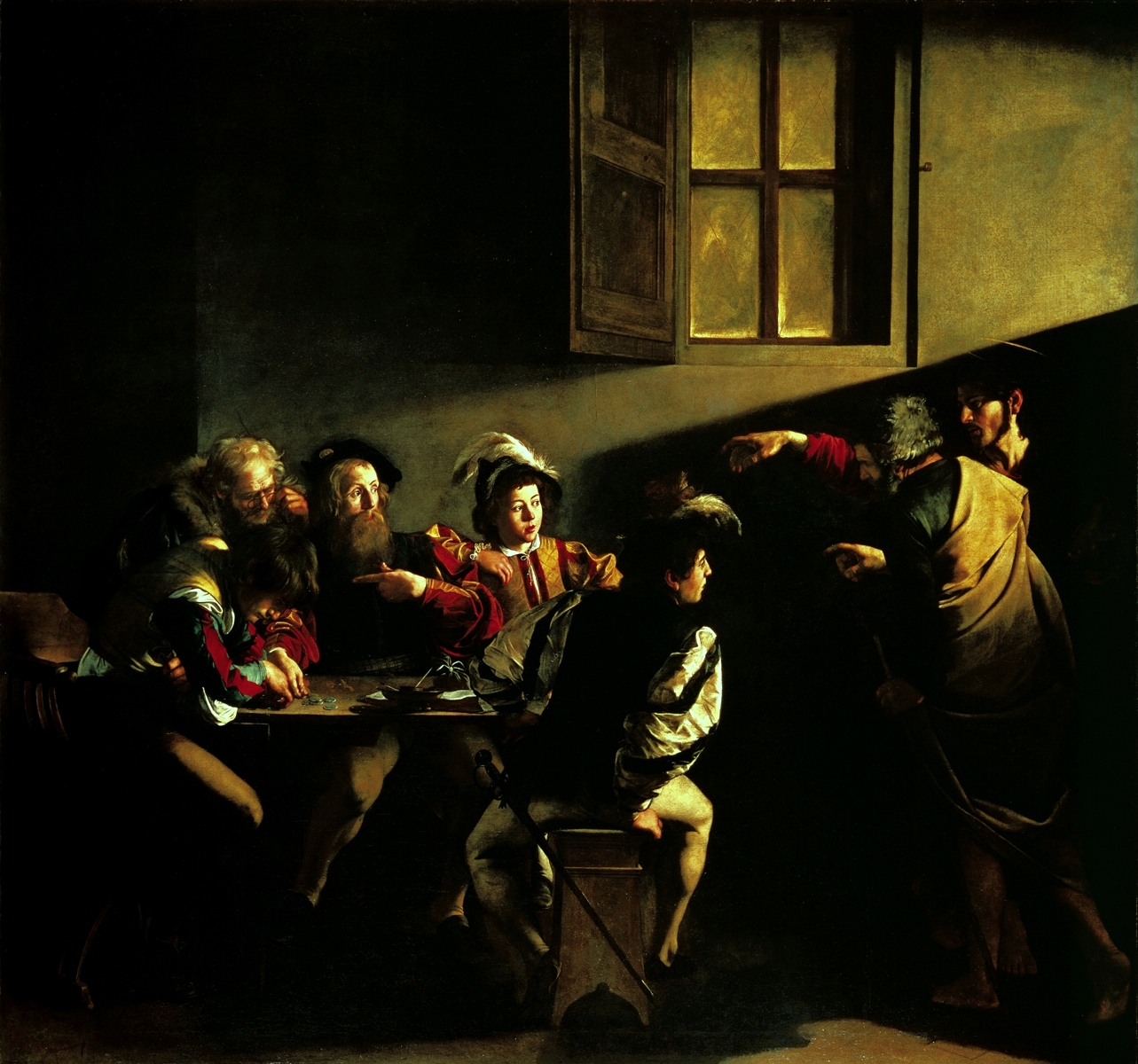
First, look at the principle figures in the scene: Christ, St. Matthew, and St. Peter (recognizable in front of Christ by his traditional gold outer garment over a blue-green inner garment).
Christ reaches toward St. Matthew, selecting him. His eyes are wide, his mouth slightly open, his head forward on his body. This illustrates His eager desire (Luke 22:15) to have each of us belong to Him, which desire is the source of every vocation.
His hand is almost precisely copied from Michelangelo's famous Creation of Adam. Christ's hand is pointing in the same direction as the hand of Michelangelo's God the Father. However, Caravaggio does not copy God the Father's energetic fingers; instead, he traces Adam's limp hand. In these details, Caravaggio represents our Lord as divine and descending to men from Heaven; at the same time, he includes Christ's full humanity--he took on all the (unfallen) weakness of His creatures.

It would be remiss to comment on a Caravaggio without speaking about light. The light (illuminating the figures and a little less than half of the wall) is not coming from the window. Rather, it is coming from behind Christ. It reminds me of our recent Mass readings...
The words that I speak to you I do not speak on my own. The Father who dwells in me is doing his works. (Jn 14:10)Finally, notice St. Peter, who might initially seem awkwardly placed. Isn't he blocking Christ? On the contrary, he is placed to represent an often-overlooked aspect of each vocation. The vocation of every Catholic is approved by the Church: for example, consecrated men and women make their vows or receive consecration with the approval of their ordinary; in another example, the vows exchanged by a married couple are dignified in the Sacrament of Matrimony. In The Calling of St. Matthew St. Peter stands as Christ's vicar, not blocking or replacing Him, but making Christ's desires known as he imitates Christ's gesture.
Sunday, May 6, 2012
Want a really crazy experience? Try Adoration.
Last Friday night I did something that would shock my average peer. I prayed Evening Prayer and went to Mass. Then, since it was a first Friday, there was Eucharistic Adoration and I stayed for half an hour until Benediction (in Latin).
Wait, it gets crazier. I next went to a convent for dinner with three religious sisters and ten (or so) other young women as part of a yearlong series of evenings, each called "Night at the Convent" and focusing on some aspect of religious life. After dinner, we crowded into their little chapel and exposed the Blessed Sacrament, singing (in Latin). Adoramus Te, Domine...
Wait, it gets even crazier. One sister read two passages aloud and offered a brief reflection on resting on the heart of Jesus. Each of us had a tealight (a little "lamp") and during the next half hour of adoration each girl went up at will and placed our candles before our Lord exposed in the humble chapel monstrance. We prayed and sang hymns directly to this Eucharistic King. (Jesus, Jesus, let me tell you how I feel; You have given me your Spirit, I love You so...) All of these are actions so unimaginable to someone without faith in the Real Presence that we must seem mentally defective! O, unfathomable credence in One who is invisible!
Wait! The most countercultural part happened next. We filed out of the chapel and came back to the living room of the convent, softly smiling and joking about seating arrangements as we seated ourselves in an irregular circle. We voluntarily shared our experiences as much or as little as we wanted. (There are some intimacies which are secret, but other graces become richer when shared.) And the entire room shared a culturally-impossible desire for self-gift to this invisible God.
One girl told us that, whenever she prayed, she asked Mary to change something about her and make her more worthy to receive Him. Another girl said that at first she thought one of the hymns (made purely out of chanting Christ's name) was strange; then she imagined Jesus singing her own name to her, over and over, and it suddenly seemed fine. It might even be a direct imitation of Mary. A third girl mused on how wedding-like each Eucharist is: the altar, the priest, the aisle, the union...! Others immediately chimed in with similar thoughts about how wonderful the Eucharist is and how spousal it is, even to someone who doesn't know what their vocation is yet.
The evening concluded at 10:00pm with a last hymn. As I drove home I passed some college students headed to the bars and I thought: want a really crazy experience? Really relaxing, filling, human, divine? Try Adoration.
Wait, it gets crazier. I next went to a convent for dinner with three religious sisters and ten (or so) other young women as part of a yearlong series of evenings, each called "Night at the Convent" and focusing on some aspect of religious life. After dinner, we crowded into their little chapel and exposed the Blessed Sacrament, singing (in Latin). Adoramus Te, Domine...
 |
| Source |
Wait! The most countercultural part happened next. We filed out of the chapel and came back to the living room of the convent, softly smiling and joking about seating arrangements as we seated ourselves in an irregular circle. We voluntarily shared our experiences as much or as little as we wanted. (There are some intimacies which are secret, but other graces become richer when shared.) And the entire room shared a culturally-impossible desire for self-gift to this invisible God.
One girl told us that, whenever she prayed, she asked Mary to change something about her and make her more worthy to receive Him. Another girl said that at first she thought one of the hymns (made purely out of chanting Christ's name) was strange; then she imagined Jesus singing her own name to her, over and over, and it suddenly seemed fine. It might even be a direct imitation of Mary. A third girl mused on how wedding-like each Eucharist is: the altar, the priest, the aisle, the union...! Others immediately chimed in with similar thoughts about how wonderful the Eucharist is and how spousal it is, even to someone who doesn't know what their vocation is yet.
The evening concluded at 10:00pm with a last hymn. As I drove home I passed some college students headed to the bars and I thought: want a really crazy experience? Really relaxing, filling, human, divine? Try Adoration.
Saturday, April 14, 2012
Surrendering means Victory
I've observed before that the readings the Church gives us amazingly correlate with daily life. One could say that this is no surprise: I am trying to become conformed with Christ and this is what Scripture is all about.... But sometimes, I'm amazed. For example: today and yesterday [For reference: readings from April 13, readings from Apr 14; courtesy of USCCB].
A unique problem for the first-year medical student is "what should I do this summer?" This is the only summer she has to put something on her résumé for residency applications. She thinks, "ah, I have to do something cool and shiny, like a preceptorship or research." (A preceptorship is several weeks spent with a physician practicing physical exam skills on that physician's patients, like M3's and M4's do. It's a step up from shadowing and it's nice to hone the physical exam and become less uncomfortable with patients. Research is a necessary part of a résumé for competitive specialties like dermatology or radiology. It's either basic, in a lab; or clinical, in a practice.)
Also on the medical student's mind is money. She is living off of loans, and loans only come during the semester. So how will she eat if she doesn't get a paid internship? So she applies frantically to things. There are plenty of opportunities.
I applied for three research programs and a preceptorship. Yesterday afternoon I found out that I was not accepted into any of these.
And my summer-plan failure was dramatic. I had put effort into two of the research program applications and was reassured that I would, in fact, get into them. For one, I spent half a day commuting to a different town to meet my potential preceptor; for another, I contacted three or four physicians by cell, email, and office only to receive no news, not even a "we're not interested." This made me very confused and disappointed.
The readings were eerily relevant, especially the Gospel:
 I was like St. Peter: when it came to the summer plans, I decided myself that I was going to do something that measured to my own standards. This was a human decision; God's will was not really part of it. (I only ever see that my decisions exclude God in hindsight. I need to get better at discernment!) I said to myself, "I'm going to apply for some research programs," and off I went, without really consulting the Master of my life.
But I was reassured, because the Gospel continued:
This morning, I reflected on why He went to such lengths to prevent me from doing something this summer. I remembered that my summers during college were chaotic times where I stopped praying regularly and got really stressed. Suppose the failure of all my attempts this summer is Christ saying, "this summer, I want you to live your vocation, not regret that you haven't." How kind of Him! He wants to prevent me from grief and lost graces. I went from confused, sad and stressed to confident and victorious.
Today's missal explains my feelings. Today's responsorial psalm:
A unique problem for the first-year medical student is "what should I do this summer?" This is the only summer she has to put something on her résumé for residency applications. She thinks, "ah, I have to do something cool and shiny, like a preceptorship or research." (A preceptorship is several weeks spent with a physician practicing physical exam skills on that physician's patients, like M3's and M4's do. It's a step up from shadowing and it's nice to hone the physical exam and become less uncomfortable with patients. Research is a necessary part of a résumé for competitive specialties like dermatology or radiology. It's either basic, in a lab; or clinical, in a practice.)
Also on the medical student's mind is money. She is living off of loans, and loans only come during the semester. So how will she eat if she doesn't get a paid internship? So she applies frantically to things. There are plenty of opportunities.
I applied for three research programs and a preceptorship. Yesterday afternoon I found out that I was not accepted into any of these.
And my summer-plan failure was dramatic. I had put effort into two of the research program applications and was reassured that I would, in fact, get into them. For one, I spent half a day commuting to a different town to meet my potential preceptor; for another, I contacted three or four physicians by cell, email, and office only to receive no news, not even a "we're not interested." This made me very confused and disappointed.
The readings were eerily relevant, especially the Gospel:
Simon Peter said to them, "I am going fishing." ...So they went out and got into the boat, but that night they caught nothing. When it was already dawn, Jesus was standing on the shore; but the disciples did not realize that it was Jesus. Jesus said to them, "Children, have you caught anything to eat?" They answered him, "No."
But I was reassured, because the Gospel continued:
So he said to them, "Cast the net over the right side of the boat and you will find something." So they cast it, and were not able to pull it in because of the number of fish. ... Jesus said to them, "Bring some of the fish you just caught." So Simon Peter went over and dragged the net ashore full of one hundred fifty-three large fish. Even though there were so many, the net was not torn. Jesus said to them, "Come, have breakfast." And none of the disciples dared to ask him, "Who are you?" because they realized it was the Lord. Jesus came over and took the bread and gave it to them, and in like manner the fish.So, not to worry. When the Lord sees fit, He will instruct me to my benefit and, if I hear and obey, I will find something (153 somethings, to be exact).
This morning, I reflected on why He went to such lengths to prevent me from doing something this summer. I remembered that my summers during college were chaotic times where I stopped praying regularly and got really stressed. Suppose the failure of all my attempts this summer is Christ saying, "this summer, I want you to live your vocation, not regret that you haven't." How kind of Him! He wants to prevent me from grief and lost graces. I went from confused, sad and stressed to confident and victorious.
Today's missal explains my feelings. Today's responsorial psalm:
Give thanks to the LORD, for he is good,The feeling of victory comes with becoming just. I was just because I surrendered my summer to Him (as I might have done at the outset), admitting my proper place and His. Finally, the feeling of security comes with being safe from my opponents (the rejection from the opportunities, my mental image of an empty-looking résumé, my financial worries, my drive to do something big and flashy). One who belongs to Christ cannot be punished, like Ss. Peter and John are undefeatable in today's first reading:
for his mercy endures forever.
My strength and my courage is the LORD,
and he has been my savior.
The joyful shout of victory
in the tents of the just.
After threatening them further,May we each have the strength to accept the victory we are offered! If you read this, please pray for my test on Monday, the biggest test of the four I have left before May 18 signals the beginning of this marvelous, mysterious summer.
they released them,
finding no way to punish them....
Friday, January 13, 2012
Veils
I just read a great post at Catholic Sistas about veiling. At TAC, perhaps 20% of female students veil. I began to wear one myself as a sophomore, but during the summer and Christmas holidays I got so many looks and felt so pressured by my parents that I stopped veiling at Mass. Only after Mass would I go to the day chapel, veil, and make my thanksgiving.
Over the summer, I lost my veil at one of the last daily Masses I attended before moving out. I have lost things before and benefited from discontinuing them for a time (I feel as though Our Lady almost took my Little Office book away when it was stressing me out). So, I reluctantly but peacefully stopped veiling.
I wish more parishes and women would take up this custom! It is an antidote to feminism—a mark of a woman's sacredness and likeness to Christ. (Sacred objects are covered, like chalices, tabernacles, altars, and priests. Sacred topics are the same way, and even people of civil importance are formally gowned.) My veil began as a mark of specialness, then humility, then a tool to create privacy in my soul during Mass. Finally, it became a sign of sweet submission, and exclusive belonging to Christ. For this reason, I look forward to taking it up if I am confirmed in my vocation to consecrated life.
For more on veiling, check out a comprehensive review of the custom by Fish Eaters. Then, enter this raffle to win a free veil.
Over the summer, I lost my veil at one of the last daily Masses I attended before moving out. I have lost things before and benefited from discontinuing them for a time (I feel as though Our Lady almost took my Little Office book away when it was stressing me out). So, I reluctantly but peacefully stopped veiling.

I wish more parishes and women would take up this custom! It is an antidote to feminism—a mark of a woman's sacredness and likeness to Christ. (Sacred objects are covered, like chalices, tabernacles, altars, and priests. Sacred topics are the same way, and even people of civil importance are formally gowned.) My veil began as a mark of specialness, then humility, then a tool to create privacy in my soul during Mass. Finally, it became a sign of sweet submission, and exclusive belonging to Christ. For this reason, I look forward to taking it up if I am confirmed in my vocation to consecrated life.
For more on veiling, check out a comprehensive review of the custom by Fish Eaters. Then, enter this raffle to win a free veil.
 |
| We veil Our Lord, we veil the altar servers, and we veil women (I see at least two). What an honor! Truly, women are treated as a glory. (1 Corinthians 11.) |
Saturday, January 7, 2012
"Happily childfree"
Conservatives and Catholics enjoy rebutting the Overpopulation Myth. I devoured the argument when I was fourteenish from a fifteenish-year old magazine my Dad showed me, so I figure it's pretty historical. After all, everybody knows we could all live in Texas, right?
There's enough room on the planet a fortiori. So isn't this obvious to everybody?
Apparently not. I read a sad set of comments today written by women who may have wanted to conceive but chose not to. Their motivations were twofold: overpopulation, and appreciating freedom and time/closeness with their spouse. One woman summarized her feelings:
 Admittedly, there are many variables here (some married women's own childhood/psychological difficulties may make them choose rightly not to have children, others' biology or legimate poverty might prevent them from conceiving). But if a couples' three reasons not to conceive are a mythological problem, a fear of personal failure, and desires for intimacy and freedom, I think they are in error.
I long for the conversion of our cachexic Culture of Death to a wholesome, healthy Culture of Life! Better for women, better for men, better for families, better for medicine, better for government....
Edit 1/13/12 9:45pm: I just realized this post was analyzed by Laura Carroll of La Vie Childfree. I commented on her analysis to alert her readers that I am a young woman and open to discussion below with anyone reading this. I placed this clarification on my original post as well.
Update 1/15/12 4:20pm: Laura Carroll and I are continuing to discourse on her site in the comments on her post. Please join us.
| Texas area= 267339 X (5280)2 = 7,452,732,672,000 sq.ft. | |
| Population of world = 7,000,000,000. | |
7.45 × 10¹²
1 × 10⁹ | = 1064.676096 square feet per person |
(Space for my
family of 9 | = 9500 square feet; tres nice.) |
There's enough room on the planet a fortiori. So isn't this obvious to everybody?
Apparently not. I read a sad set of comments today written by women who may have wanted to conceive but chose not to. Their motivations were twofold: overpopulation, and appreciating freedom and time/closeness with their spouse. One woman summarized her feelings:
[B]ased on the affects [sic] of poverty, and later of an over-populated world[,] I never wanted children...[and my husband] has never wanted children; because of the enviromental [sic] impact as well as the responsibility of how the child's life could turn out. (Face it, we do blame our parents for pretty much everything! ha ha)
...Every now and then, there is a twang. For instance, I'll never know what it's like to feel a baby grow inside me. Or have that special bond I see my siblings have with their kids. On the other hand, we have time to dedicate to each other, and our marriage is deeper than most. We really enjoy the freedom of being able to do what we want, when we want.Sad to think she won't raise a child because she fears responsibility! Another woman defended herself against objections:
It seems like 99% of parents have some reason to lay on us for why we *must* join their club; from the refusal to acknowledge that we ARE a family already, to allusions that we are doing something unnatural and wrong by not having children, to the "you just couldn't understand since you don't have kids," to the INFURIATING accusation of selfishness. It is truly shocking the number of people who accuse you of being selfish simply because you have chosen to live a life wherein you are following your heart and living the life you envision.I recognize that a) I am not married, so my only experience of marriage is my family of origin, b) the vocation puts God before spouse and spouse before children, so relationship with the spouse shouldn't expire at the expense of children, and c) people need recreation and relaxation to function. But as I see this, selfishness is exclusive concern for your own interests, and the concern of these couples for their own vision excludes part of their state of life! Vocations are paths of joy with sacrifice.
Admittedly, there are many variables here (some married women's own childhood/psychological difficulties may make them choose rightly not to have children, others' biology or legimate poverty might prevent them from conceiving). But if a couples' three reasons not to conceive are a mythological problem, a fear of personal failure, and desires for intimacy and freedom, I think they are in error.I long for the conversion of our cachexic Culture of Death to a wholesome, healthy Culture of Life! Better for women, better for men, better for families, better for medicine, better for government....
Edit 1/13/12 9:45pm: I just realized this post was analyzed by Laura Carroll of La Vie Childfree. I commented on her analysis to alert her readers that I am a young woman and open to discussion below with anyone reading this. I placed this clarification on my original post as well.
Update 1/15/12 4:20pm: Laura Carroll and I are continuing to discourse on her site in the comments on her post. Please join us.
Subscribe to:
Posts (Atom)