I have all these ideas for post and not one of them is going to
happen! I wish I could elaborate them all into fully-fledged posts, but I
can't because 1) I don't have time, 2) when I do sit down to it, I
can't slow down mentally, and 3) I'm thinking in short abbreviations and
in the fragments of sentences we use in progress notes, so I can't
write well.
We will now publish about six posts which, while half-baked, have GOT to get out of the "pending" box. Here's number one.
I had
completely given up on hearing about my STEP score, and was awash with
the busy-ness of third year when I got an email from our class president
one Tuesday night. It was in the tone of a very intense pep-talk, and I
was confused until there were enough sentences like “this is an
important score for all of us,” and “it’s a big day tomorrow” so that I
figured STEP scores must be coming out tomorrow. Then I promptly forgot this and worked most of the day on Wednesday without being able to check the number.
At 1:00pm, all of my classmates who are on this
rotation were together and relatively idle after lunch. Everyone else
had checked their scores, so I picked up my phone to check my email and
find out mine.
Well, I got as far as checking my email. My phone
loaded the (six) new messages and then I had to admit a patient. (That
was one of the four Wednesdays we have a shift from 1pm to 11pm in
admissions after a morning working at the hospital.) I came
back from the admission and stood in the corner by a cubicle with my
phone to check the score report.
I jumped through a few hoops (had to find the ID to
get myself into the website, guess my password, etc) and then opened the
PDF of my score report on my phone. I looked at the number and felt
diaphoretic. It was a very, very good score.
Around me, the admissions office buzzed and whirled. I
felt sweaty and weak and shocked! God had given me an extraordinary
gift. A score like that meant that I will almost certainly get a good
residency, and it is even likely that I’d get one of my first choices.
Wow! I was shooting for average and scored really well!
I didn’t tell any of my fellow students my score. I
hesitated even to post about it here because I know some of my
classmates know about this blog. I’m hoping, though, that third year is
swallowing everyone’s time and that no one will see this.
I heard my peers talking amongst themselves about
their scores. I was amazed that some people who seem to study more than I
do got lower scores than I did. I must have just guessed correctly on
all the questions I guessed. Then my classmates started talking in
hushed
tones about people who’d scored ten points below me. Finally, they
mentioned that one of the men in our class had scored ridiculously
high--they mentioned the number, which was one point below my score. I
stayed silent. It would have been completely inappropriate to share my
score, and I would have been really uncomfortable if anyone asked. I
just stuck to repeating that OB/GYN needs an “average” score, that I was
aiming for a 223, and that I was pleased with my score.
Isn’t this video terrible? Our coordinator emailed it out as
motivation, but it was so de-motivational (and low-budget) that I stopped
watching before the half-way mark.
Don’t click on it and give it any views.
Views are like currency on YouTube and I don’t want to encourage this kind of
nonsense. I don’t even know why I bother linking it. (Research instinct?)
The fact is, no career is worth Step 1. Step 1 is terrible. The
day of the exam, my stress manifested in vagal symptoms (even if med school
puts me through awful test, at least it made me able to describe my test
anxiety prettily) and I had no appetite. Eating was completely
undesirable. I packed relatively tasty and fun food, but I felt like eating none
of it. I was demoralized, especially after the first block; I was
completely exhausted, especially by the end.
But it would have been incalculably worse if not for the
true Faith.
Earlier that week, I’d emailed several groups of women
religious and asked them to pray for me. I’d started a novena to St. Joseph of
Cupertino: I purposefully chose an almost disproportionately short one,
knowing my pharisaical temptation and tendency to be superstitious about my prayers determining the future.
Earlier in the morning, before I went to the test center, I
went to daily Mass (as I had been during the end-game week) at the parish where
I grew up. I asked the priest to bless me afterwards, and I knelt down to
receive his (very Irish) blessing. He later told me he’d been praying for me.
And all through that day, I repeatedly entrusted myself to
Jesus. “Jesus, whatever You want,” “Jesus, I trust in You,” “Jesus, You’re in
charge,” “Jesus, do whatever You want by whatever score I get,” “Jesus, I’ll do
my best, but the rest is all in your hands.”
And because of these things, at the end of the day and even
during the test, I was at peace even though I was extremely stressed and felt terrible.
“That’s pretty special ‘peace’,” you might object, “that admits of such awful
emotions.” I answer that it really is a special peace precisely because
it coexists with those emotions: it withstands them.
I contrast my Step 1 experience with my MCAT experience. My
faith was much weaker three years ago, and the test was something I was
doing for Jesus. I was demoralized by the questions and disappointed by my
score. I couldn’t believe I’d done so badly, I felt terrible. My peace was
gone, washed away by emotions. That was a peace that wasn’t founded on trust in
Our Lord. It’s fundamentally weak. In contrast, the peace I am growing in now
can coexist with terrible emotions because its source is outside me.
[picture of houses on sand/rock parable]
Back to the de-motivational video: no career is worth all
those awful experiences. The price is too high; no mortal satisfaction
(e.g. prestige, money, fulfilling
feelings in medical practice) is worth it. It’s like an endothermic reaction:
the activation energy is too high and the products are too cheap. Why become a
doctor when you can be a PA, NP, nurse, occupational/physical therapist, EMT,
MA, psychologist, midwife, volunteer, or nurse’s aid and get the same
fulfilling feelings? Why become a doctor when you can be a lawyer, engineer,
investor, innovator, or manager and get the same money and prestige?
In "Doctors' Diaries," PBS followed a group of medical students to midlife and Dr. Jay Bonnar, who became a psychiatrist and was asked at the end of everything:
Q: You could have become a therapist without becoming an M.D. It might have been a lot less expensive and anxiety-provoking. If you had the chance to do it over, would you go to med school again?
Jay: You asked the question I said I wished I wouldn't be asked. I don't know whether I would do it again, but I can't do it again, so it's really kind of irrelevant. It is as it is. One can't live one's life over. I am here now, and it's a better place than where I have been, and I'm glad I don't have to do it again.
That quote always made me sad because I worried that he was right, and being a doctor wasn't worth med school. Now I realize, he's probably right. Being a doctor isn't worth all that suffering.
What is worth all that suffering is holiness, or
doing the will of God. Medicine is my vocation—the fulfillment of my soul and
the way God made me to love and save myself and others. And that is
worth anything, as all the saints attest.
So, I hinted in the last post that some crazy things happened to me during my Step 1 prep. Not only did I have to plan for an abbreviated prep time (most students at my school take Step 1 in the first week of June, but because I was going to be in Kansas helping at the first session of the Catholic Spiritual Mentorship Program, I had to to take it early), cancel days for three siblings’ graduations, and block out time for daily Mass and prayer (what, three hours of free time not counting meals and exercise??), but unexpected bizarre things happened in a time traditionally kept sacrosanct for study prep.
Thing 1: Scheduling Snafus
I scheduled my test (in January) on May 25 so that I could make the mentorship program. In April, I reassessed whether I should do this, and the test prep lady advised me to hold off on decision-making and extend the test date to June 11 (after the program). When I realized that I did indeed want to take Step 1 before the program (I am so so so so so glad I did, I would have certainly done very poorly if I hadn’t), I rescheduled and went online to get my May 25th date back.
I realized that the appointment I wanted (8am to 5pm on May 25 in my hometown) was gone. There was a 10am to 6:30pm on May 25, but I really didn’t want that, since I’m a morning person and didn’t want to waste two or three of my best hours. I hesitated to take the slot, and during my two minutes of hesitation the spot was taken by someone else who was also online and looking at slots. That was the last May 25th slot in the state. I ended up with a May 24th slot for 10am to 6:30pm. (Happily, I got to Prometric that day at 8:45, being a morning person, and they let me start early, so at least I was still awake at the end of the test.)
Thing 2: Carpal Tunnel
It's possible.
My study strategy is to rewrite what I’m reading and reorganize it, which is a form of the teach-back method. However, rewriting a 600-page review book in my small (like, 8-point) handwriting on marginless computer paper, combined with taking practice questions on a computer that applies pressure to your right volar wrist can give you carpal tunnel syndrome. Believe it or not, I actually induced my own carpal tunnel syndrome by overuse of my wrist studying. I remember thinking at least twice, “huh, my wrist sort of hurts. Hope I don’t give myself carpal tunnel syndrome. That’s probably not even possible.”
I didn’t believe it was carpal tunnel at first, and thought, “it’s just some kind of cramp or overuse fatiguey thing,” until I actually had paresthesias on the palmar surfaces of my second and third digits…then I realized I’d truly lesioned my own median nerve. Sad face! Sadly, this happened right before microbiology (lots of details) and biochemistry (lots of details + not my best subject). But happily, I was able to transition to speaking the material aloud (another form of teach-back), which hopefully worked just as well. I rested my wrist for a few days, and then went back to using it. It still doesn’t like me much, especially since during the program I’m in charge of several laptop duties, including real-time typing of audience responses on a projected screen.
Thing 3: End Game Unexpectedness
So, the last week before Step 1 is taken (called the “end-game” by our dean of students) is a very important time for solidfying an excellent score. In the last five days, material can slip out or things can be can be pressed in, and shaken down. In the last five days, the short term memory can be maximally filled with the silly details like gram stains. And in the last five days, a person can lose confidence and freak out.
It’s very important not to take a practice test within that last week. I did (oops) because that’s what my schedule told me to do, and technically I took them on a Saturday of the week before my Thursday test. I actually took two (NBME 13 and NBME 15) on that Saturday, totalling 400 questions in eight hours.
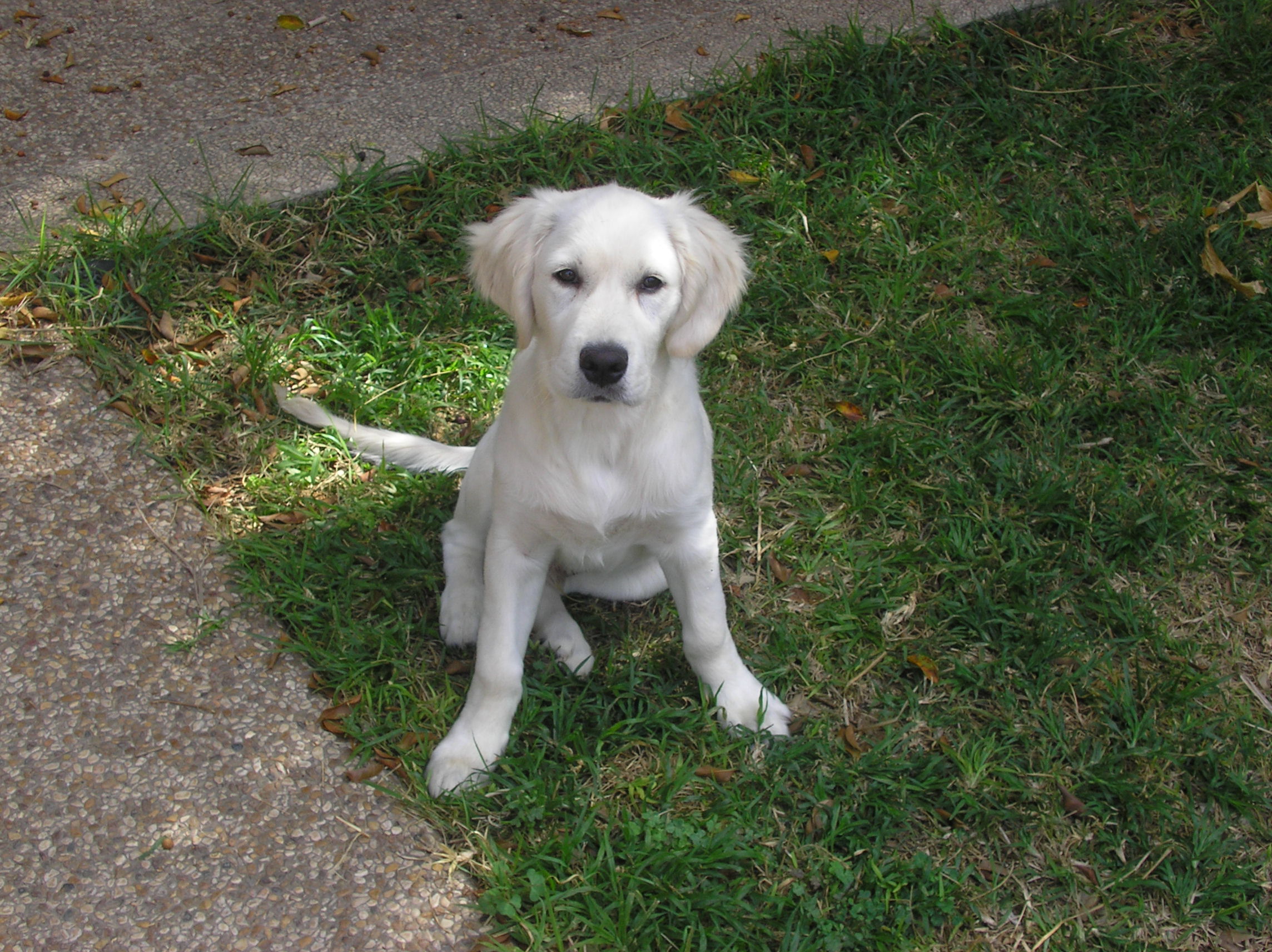
It’s very important to not make any changes to the study routine within that last week. I did (oops) because I moved home by accident: I had planned to drive to my parents’ house to meet them and drive to my brother’s graduation. But at the last minute their pet-sitter canceled and I found myself house-, dog-, and younger-sister-sitting. Without my desk, I studied at the kitchen table without much issue, except for the one-year-old not-yet-fixed male Golden wanting to be petted, played with, or walked.
It’s very important to have a quiet place to study throughout Step 1 prep, but especially within that last week. I didn’t (oops) because I moved home and didn’t know where quiet places could be found. I didn’t belong to a university in that city, so I had no parking at the colleges with actually quiet libraries. I tried my high school library, which welcomed me warmly but was a little chatty (all girls’ Catholic schools are chatty, big surprise) and then I was interrupted by a tornado-warning-induced early dismissal from school. I tried the public library, which was an even bigger mistake, since it’s a central hub for anyone who needs the (incredibly slow) internet and since it becomes about as quiet as a playground when the three or more surrounding elementary schools get out.
It’s very important to keep whatever you’ve been doing to exerce in that last week. I didn’t (oops) because I packed for a graduation and a few extended family dinners. Modest running shorts are not traditionally worn to either graduations or family dinners. Sans shorts, I was sans running (except for walking the energizer bunny—I mean, the dog).
I took Step 1 on May 24. It is now May 30. This means that Step 1 is now over.
I can now emerge from my study cave and tell you about it.
Physicians in the United States are licensed by the National Board of Medical Examiners (NBME). The licensing exam (United States Medical Licensing Exam or USMLE) is divided into three steps, creatively called “Step 1,” “Step 2,” and “Step 3.”
Step 1 tests basic sciences (not physics, biology, and chemistry as does the MCAT, but pathology, histopathology, physiology, anatomy, pharmacology, biostatistics, professionalism, and biochemistry). It is typically taken after the academic years and before the clinical years (a.k.a. right after second year is over, as soon as one can study enough for the exam). Step 1 consists of seven blocks of 46 multiple-choice questions (each of which have 3+ answer choices, some with more than seven, but most with five) taken over an eight hour day, which allows about thirty minutes for lunch, fifteen minutes for the testing software tutorial, and fifteen minutes for other breaks.
Medical students prepare for Step 1 by taking thousands of practice questions and reading/re-reading/underlining/highlighting test prep books. The preeminent practice question bank is the USMLE World Question Bank (abbreviated either U-World or Q bank) and the preeminent comprehensive review book is First Aid for the USMLE Step 1 (called simply “First Aid” or typed FA). I remember that when I heard about “First Aid” as a first-year I became confused: “is that all we learn in the first two years of med school? Just first aid??”
I and all the other M2s at my school scheduled Step 1 in January or February. It can be taken at any of hundreds of Prometric centers across the country, on any date the center is open for day-long tests (most days). That’s so much easier than scheduling the MCAT, which is only offered on certain days in large cities! (I took the MCAT on April 10, 2006 while on an extended Easter holiday from TAC, by the way, but that’s not super relevant.)
I started studying in January. I went through FA one section per week. Each section was one discipline (e.g. cardiology or microbiology or endocrinology). This means that, in addition to coursework and preparing for class exams, I was reading six to ten pages of cardiology or pharmacology (etc) per night. I also did 25 practice questions per day.
I’d done about 75% of Q-bank and had almost finished a first pass through FA when, on April 1, the M2s took a short (four-hour) test made by NBME called the Comprehensive Basic Science Exam, meant to be a simulated Step 1. Our score sorted us into risk groups (would pass easily (largest category), would pass comfortably, would pass, may not pass) which determined how stringently the school would watch our preparation. I was blessed: I would apparently pass easily. I think this was because I’d been studying since January.
Each of us met with the school’s test-taking advisor before the last day of classes to make out a schedule of review. Here’s where my story gets a little crazy.
Most med students clear out two months after their classes end so that they can belong to studying for Step 1. I…didn’t. A large family meant that I had three siblings’ graduations to go to (just within the nuclear family). A Catholic family meant that I had a Confirmation and rehearsal to go to (my confirmant, not just a friend). And discerning a vocation meant that I had a week-long program on prayer to go to (at the advice of my spiritual director).
I told all this to the test prep lady, and she sort of blinked.
“That’s okay,” she said, flipping the schedule over in her hands, considering all the penciled-in commitments. “We can work with this,” she said, reassuring herself as much as me. Because my score was decent and my goal was middle-of-the-road average (I don’t need much to get into OB/GYN, all though I’d love the score to go as high as it can), she thought it was possible to do everything I’d set out to do. We worked out a schedule where I reviewed not one discipline per week, but one per day, with two days for the really hard or voluminous subjects (e.g. endocrinology (hard for me), microbiology (voluminous), and biochemistry (both)).
On the day classes ended (the day of our last exam of the preclinical years) I rushed to finish my first pass through FA as my roommate and her boyfriend relaxed in front of the TV with a nice dinner. I finished 90% of Q-bank before resetting it to begin another phase.
My horarium for the following five weeks:
6:00am: wake up, then thirty minutes of meditation and Morning Prayer, breakfast, and (sometimes) exercise
8:00am-12:00pm: study
12:00pm-1:00pm: lunch
1:00pm-5:00pm: study
5:10pm: Evening Prayer at the Newman Center
5:30pm: Mass, then come home for dinner (or bring dinner to Newman Center and eat there)
7:00pm-9:00pm: study
9:00pm-9:30pm: recreation! (And read the CCC and the next day’s Mass readings)
10:00pm: bed
Each day I completed 100 practice questions: most of them were on the day’s topic (e.g. endocrinology), and the rest made up one 46-question block (a one-hour practice test) of all the previously-studied subjects. In total, I did 8000+ practice questions including four additional four-hour simulations, and I went through First Aid three times, with a few extras (first pass, black ink; second first pass just for bugs and drugs, blue ink; second first pass for Q-bank question answers: pencil; true second pass, green ink and highlighter; third pass, red ink).
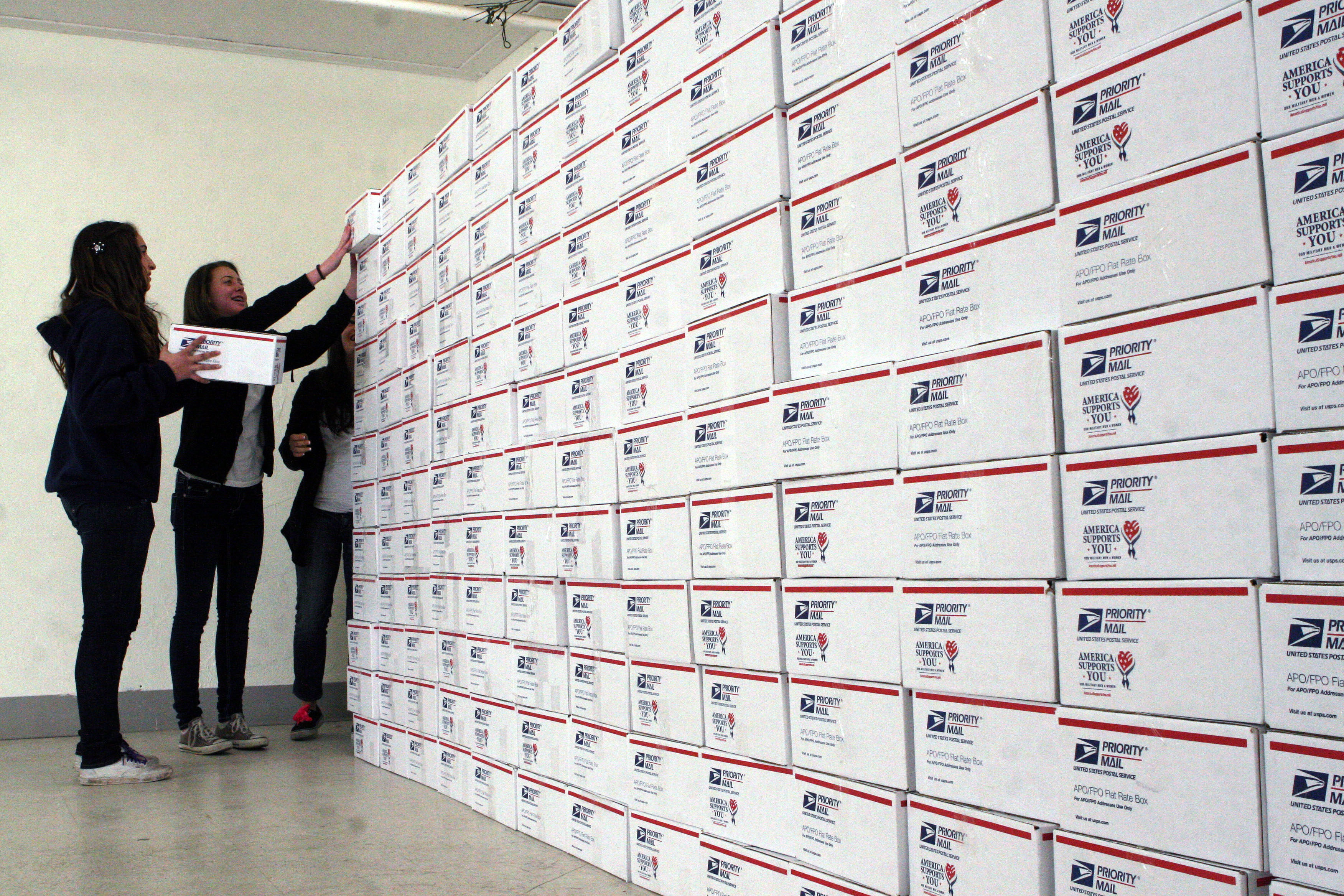
Packages of grace for medical students nationwide.
It was exhilarating at first and exhausting very soon. My spiritual director told me, before I started, that I would have to remember that it was only for a time. Like a course of antibiotics, she told me, it is something you have to do and have to finish, but it will not last forever. She also told me to ask God for the grace of each day. Imagine, she said, that there is a package of grace that He has ready to give you each day, which is sufficient for all your needs. You should ask for it, she went on, first thing in the morning or as soon as you remember. (As I got closer to the test, I started to use my imagination about these boxes: small sweet surprises to let me know He was thinking of me, or big survival kits for surviving the daily safari, or wrapped-up bathtubs pre-filled with warm, bubbly, fragrant water….)
So all I have to say is, thank God for spiritual direction. I think I would be insane if not for that.
And thank God for meditation. I look through my journal for the past month and I’m amazed at the sinusoidal oscillation between consolation and desolation. Exhausted, I was given reassurance; anxious, I would be calmed by perspective. Sometimes, to be honest, I was too wound-up or distracted to listen well. But even the time taken apart to be quiet and away from books was good for me.
I’m not sure other M2s take away time for prayer, Mass, and reading the Catechism during their study for Step. It was a really great idea for me. Without it, Step is a ritual hazing instead of a redemptive cross. And I think I’d come out jaded and resentful instead of simply exhausted.
There’s more detail to my story (like how I went to travel to one graduation only to find out that my parents needed a dog-sitter, or like how I couldn’t find a quiet place to study in the critical end-game stage, or like how I gave myself carpal tunnel syndrome by rewriting almost the entire FA in eight-point print, or like how my index finger was so flattened by the pencil that Prometric couldn’t pick up a fingerprint from it and had to use my non-dominant hand). Maybe I’ll tell some of these stories in a future post.
Last Monday I received the scores of my CBSE (Comprehensive Basic Science Exam) a diagnostic test for the upcoming STEP 1. Now that I have them, I go through a ritual of meeting with the test-prep advisor at my school and formulating a STEP 1 Study Plan for the weeks between me and the STEP.
(I actually don't know when I'm taking the STEP, due to a potential week-long program on prayer which I might attend out of state. Because I'm not sure whether that should happen before or after STEP, I'm waiting to schedule the test until after the meeting with the test-prep advisor. If I knew the date, there would probably be some sort of count-down widget on the blog.)
Anyway: this post is really not a post. It's a disclaimer: I may not post at all until after third year begins, which is in mid-June. Pray for me, my classmates, and all medical students taking licensing exams this spring! As we prepare for a profession presenting so many occasions of grace and sin, we need prayers to choose good and avoid evil.
Sunday, February 17, 2013
Several people recently have pointed out that these posts don't really reflect my daily schedule. This is true; I lean heavily toward clinical experience. So here's an update
6:00am: wake up, chart, meditation, and Morning Prayer
7:00am: cook breakfast and eat
As soon as possible thereafter (e.g. 7:30): begin studying by watching lectures or doing STEP questions. I attend lecture only when there's a mandatory activity at school in the afternoon, when there is a CMA meeting, or when there's a reproductive sciences lecture. STEP-wise, each day I must read through a certain number of pages of the review book, do at least 25 practice questions (and review the right/wrong answers with the review book), and review one microorganism and one drug (and make a flashcard for each).
11:00am: exercise, if I'm not at school
12:00pm: Midday prayer and lunch. Studying often goes through lunch, but I also take breaks by reading the news (i.e. New Advent) on my phone while eating.
1:00pm: Studying starts again, and goes until 4:45pm, when I leave for...
5:10pm: Evening Prayer at St. Mary's, followed by Mass
7:00pm: home for dinner, followed by (guess what!) more studying.
9:00pm: take a break for reading the day's Catechism, the readings for the next day, and other spiritual reading.
9:30pm: back to studying, until
9:50pm: Night Prayer, and
10:00pm (that's the goal, anyway): bed.
I feel worn out by this regimen. I can't wait for STEP to be over, or at least for classes to be over, that way I'm not double-booked. I normally have about ten hours of traditional lecture per week, and one afternoon in the SIM center per week being evaluated with standardized patients. Nights at the Convent and other events related to consecrated life happen about four times per month, and CMA meets once a month for Mass and once a month at lunch. Somehow, even though I've bowed out of 1flesh writing and leadership, CMA's presidency and MedSFL's major responsibilities, I still feel spent.
Today I renew my total Consecration to Jesus through Mary! Says Pope Pius XII,
Consecration to the Mother of God is a total gift of self, for the whole of life and for all eternity; and a gift which is not a mere formality or sentimentality, but effectual, comprising the full intensity of the Christian life - Marian life. [This consecration] tends essentially to union with Jesus, under the guidance of Mary.
Today is also marked by the formal beginning of my preparation for Step 1 of the United States Medical Licensing Exam (USMLE). We now interrupt this announcement for a brief rant.
Medical testing is expensive. The USMLE has three "Steps." I will take Step 1 this June, I will take Step 2 after third year, and Step 3 in residency. And these are some pretty pricy steps to take. I am about to pay $560.00 to take Step 1, which is seven hours (excluding breaks) of multiple choice questions. Step 2 has a multiple-choice component (eight hours) called "Clinical Knowledge" (CK) and a clinical component (eight hours of seeing standardized patients) called "Clinical Skills" (CS). Step 2 CK costs another $560, and Step 2 CS costs $1200 and can only be taken in five locations nationwide.
I thought the MCAT was a big test, but looking back, the MCAT cost $270 and was only five hours long (excluding breaks). However, there will be no inorganic chemistry, plant biology, or irrelevant physics on the USMLE. So I am happy. End of rant.
Traditionally, Christmas break of the second year is the time to begin studying for Step 1. I am especially fond of doing things traditionally, plus we have a practice Step 1 next Thursday; therefore, today I will begin earnestly reviewing and practicing for the USMLE. Since the formal beginning of the preparation for Step 1 and the feast of the Immaculate Conception coincide, I am going to do something rather special.
I here consecrate all my studying for this largest test of my life to my Mother, Mary.
By this consecration I promise to become dependent on Mary in all my studies: to offer all my effort and time to God through Mary, and to seek every gift from God through Mary.
And I do this with the greatest confidence. Since she is my mother, she knows my needs better than I; and since she is Queen of Heaven, she has immediate access to the infinite treasury of graces in the Kingdom of her Divine Son.
I beseech her, with St. Joseph, my guardian angel and my patron saints, and all the host of heaven to intercede for me in this endeavor and in my perseverance in the imitation of our Lord Jesus unto my death. Amen.†
An exciting period of my life has begun! Happy feast day to everyone!
† I took some of the text from my little consecration of USMLE prep from here.