Showing posts with label involuntary poverty. Show all posts

Thursday, October 15, 2015

Racism or Love?

This post conforms to the blog rules.To my surprise, one of the things I'm adjusting to in my new city is the tension of race. Perhaps it's because the population is less diverse (where I came from most recently, the population was about 40% white, 25% black, 25% Hispanic, and 10% Asian, while my new hospital is about 40% white, 60% black). Maybe the events surrounding Ferguson have made racial tension more dramatic everywhere. But I think it's probably because I'm more immersed than ever before (eighty hours a week with a 60% black population), and I've realized that being black in America is not just a color; it's a well-developed and different culture.

I've spent much of the past month thinking, talking, and working through my reaction to this culture. In so doing, I've realized I've held most of the predominant mentalities on the question. Let me take you on the tour.

Mentality 1: Classism
Src: Joe Pappillon
I was raised in the geographic south. My parents are upper middle-class white homeowners and I was raised in a neighborhood of the same demographic. Our neighborhood was across the street from a large swath of low-income apartments which were primarily occupied by black people. In the name of safety, I was raised to see that neighborhood and those people with an unfortunate lens of distrust, pity, and even occasional pitilessness (because "they're doing it to themselves"). The expressions "trashy" and "work ethic" floated around our house when race came up.

Mentality 2: Positive Discrimination


Src: Slate on Fisher v. Texas
As a kid, I played T-ball. There was one black girl on the team and I recall a perfect memory from left field, as it dawned on me that my ancestors were on the cruel side of history, and hers were the victims. I wanted to do something to make it up to her. Childlike, I imagined bringing her an armful of presents, before I realized that she wouldn't understand or really benefit from them. Ever since, I've thought the desire to atone for the past in the complicated present is childish. Then I realized how many black people think it's a great idea. (This only makes sense. I'm sure my T-ball teammate would have loved an armful of presents.) It seems like a good idea for some issues in some communities, and an unnecessary crutch in others.

Mentality 3: Color-blindness
At my upper-class, white all-girl high school, I received a nauseating overload of privilege-awareness, minority-empowerment, and bias-shedding. (My teachers were young and teaching the hip doctrine of cultural acceptance, or they were old and had unresolved guilt from the era of segregation.) In our white, upper-class bubble with little to no involvement with the cultures we were supposed to tolerate and nurture, all this had the opposite of the intended effect: I ached for the day when people would please stop talking about race. Freeman said it, and he's black, so isn't it true? (No: watch how easy it was for me to snap right out of it into something dangerous).

Mentality 4: Overt Racism
Then I started residency and realized how well-developed and different black culture really is. I was repulsed by one particularly bad experience during a clinic month: a childish, obese woman and two badly behaved, screen-dependent toddlers made me extremely angry. I felt like I needed the "control of the classroom" that my teaching friends talk so much about! There had been so many patients who were kind and well-behaved of various races, but an unfortunate run of those who were not, all of a single race. And here I met the most frightening mentality I'd ever had: true racism. I was an inch away from attributing my frustration to the wrong thing (race), an inch away from thinking, "All these people are so juvenile and disgusting."

I caught myself, terrified that such a thought could cross my mind.

Gone was my idea that racism doesn't exist: as long as people will enjoy spending time with people who look like them, we'll have different cultures that cluster around different races. And as long as we have different cultures, we'll have the potential to attribute our frustration with individuals to race. But the problems in that exam room was so deeply rooted that I couldn't go to the idea that I or others could somehow "make up" for the complex series of events (since the 1600s) that led us to today. And I couldn't accept the childhood classism: I saw it for what it was in that exam room, just a soft racism. I went home confused that day.

Mentality 5: Love
A week later, I was working in a community clinic and met a black woman who humbled me. At my age, she had four children under six and was pregnant again. She had just left the father of her children because she'd discovered he'd exposed himself and her to HIV, and that he'd had another wife and fathered three other children while he was fathering hers. But she was firm in her plans to raise her children well. Her two year old was with her and very well-behaved. Sitting across from her, I was impressed at how generous she could be in spite of all that had happened to her. And now I knew what to do with my confusion about race.

Her culture, I thought, is broken--it makes for some broken families and selfish, addicted people. So is my culture. Why can't I be mature enough to look at each person as they are without a) dissociating them from their color and culture but also without b) attributing all the negatives attached to that culture to them? Why can't I be prudent enough to combat objectively problematic elements of black culture while also calming down about others?

A classist will whisper "That woman's probably a welfare mom." Positive discriminators say, "We need to pour more funds into the programs that assist STD prevention." The color-blind protest, "I don't see how marital turmoil is relevant to the question of race," and a racist would say something not worth printing. None of those contain the full truth. The right answer is the simplest: love each person without ignoring the problems and the beauty in them and their world.

I'll end with an observation about the beauty of black culture. I'd never heard or seen an ice cream truck until I moved out of my white neighborhood and into the inner city. The first time I heard the truck go by, I was so shocked that I stood up and went to a window. Why hadn't I seen one before? There was more isolation and fewer children where I grew up. (We were one of four families on the whole street, the other three of which had six children combined). We never played with our neighbors and our extended family are all out of state. Last year, among the low-income apartments that I used to distrust, I saw parents (yes, mothers with fathers!) walking children in strollers and whole extended families partying on patios.

It still takes me effort to avoid falling into classism and color-blindness. It's worth the work, though: not only is it the right thing to do, but it's much more satisfying and fruitful to love.

St. Agnes. Credit: Mike Boening

Thursday, August 7, 2014

Mini Post: Living downtown is awesome

I haven't been able to sit down and blog for so long! I have a bunch of ideas for posts all piled up on my phone's "To Do" list, but so little time to sit and execute them. I'm on a subspecialty away right now and (aside from the fact that I missed an emergency surgery last night), I'm doing what I need to do with pretty liberal free time.

Therefore, we will now have a moment to spit out all the blog post ideas in miniature.

I've moved several times since I started med school. Suburb 1 (my first location) was very quiet. The only remarkable thing I ever experienced among my neighbors or in my apartment complex was the messy morning relationship fight I accidentally witnessed across the street while on my balcony one morning for breakfast. (It was a lot like the movies: the guy slams out the door with a suitcase, the girl comes out after him very distressed, pleading loudly....) Suburb 2 was even quieter. Now I live downtown in one of the country's largest cities. And I'm living with a different population, since I'm living in a lower socioeconomic area. I see homeless people daily, I see broke people daily, I see mentally ill people frequently, I see people with much narrower prospects than mine all around me.

But I love it. I feel like I'm appropriately living the way an alter ecclesia should live: poor and with the poor.

And sometimes it's pretty funny. While biking home one day, I stopped at a light and smiled at the man sitting at the nearby bus stop. "Wher' yo' husband at?" he asked, without any other greeting.

"I'm married to Jesus," I answered.

"Oh," he replied, not knowing what else to say. "That's coo'."

"I thought so," I answered. The light turned green and I moved on. That was already the second time someone had asked me where my husband was.

Another time, I was finishing a conversation with a homeless man after Mass at the cathedral. I introduced myself and he said, "All ri', mmatins, my holla' sista."

I love to be with the people in my neighborhood. Just being in the same place, shopping at the same stores, using the same laundry machines, putting up with the same pigeons, and walking the same streets is teaching me about how hard these people work and how much love we all need. It's humbling and exciting. (That may or may not be where I'm living; I didn't even check before I used the picture; thanks to Kim Briggs)

Friday, July 5, 2013

Thoughts on Psychiatry

This post conforms to the blog rules.Phew! There has not been much time to blog lately. Two weeks ago, my first rotation started. Since then, my schedule has approximately been:

6:00am: wake up, drive to Mass
6:30am: Mass, Morning Prayer, and drive to the hospital
8:00am: see patients with my attending and one other student
12:00ish: lunch, Midday Prayer, and sometimes commuting to another place.
Afternoons were very variable: since I just finished two weeks on the alcohol and drug dependence unit, I often got out before 3:00. But on Wednesdays, I worked until 11:00pm in Admitting (and I would go to an evening Mass the following day so that I could get some extra sleep). Three afternoons, we had lecture, so I got out at 4:00 or 5:00. Since I am living at home now, I
Some time during the day: 30 minutes of Meditation
9:50pm ish: Night Prayer
10:00pm to 12:30am: bed

There have been about a hundred stories I wanted to retell here. I had no idea that opportunities for "medical matinses" would come so thick and fast in the third year. In almost every patient I see a huge, magnificent, intricate tale that deserves treatment by Homer or Hugo! I'm very grateful to be living at home because people are willing to listen to me, and that has replaced some of the function of this blog (good thing, too, because talking with someone has a much smaller activation energy or barrier cost than writing a blog post, in terms of time).

But I've also struggled with this rotation. I have had a sheltered life, and to see so many dysfunctional families, so much drug and substance abuse, so much poverty and desperation, and so much mental illness all in two weeks was a little overwhelming. There was a woman around my age seeing and screaming at her hallucinations, while I was trying to talk to her. There was a young man who can't accept his diagnosis because it doesn't fit into the reality created by his psychosis, so he can't see that he needs medicine. There was a little girl with new-onset intrusive thoughts, who cried in my arms because she was so afraid of her own thoughts and scared of all the other (even worse) pathology on the pediatric unit. And then there were all the addicts, with pasts full of loss and with futures of fragile sobriety (and I could never tell when they were lying to my face). Will the ones I got close to be safe on the outside?

I was struck by how human everyone is (and I've talked about that before). For instance, I spoke with at least two men who came in with homicidal ideations. In both of the conversations that I am thinking of, I was not afraid, but only filled with compassion and love.

I'm also in the process of pursuing my vocation, which means I'm in formation one night a week and trying to use Sundays for formation, too. I'm navigating the city and trying to attend daily Mass and Adoration in the midst of a crazy schedule. I am living more and more of the particulars of my future life, and it's hard and wonderful. I might post my vocation story here...we'll see.

Monday, November 19, 2012

Living with the Poor

At a recent Christian Medical Association meeting, the speaker spoke about how to help the poor who are close to us, which is a very very very important topic to me.

Speaking as a "mainstream" Christian (i.e. non-Catholic or Protestant), he noticed that most Christian doctors don't live in poor neighborhoods. He related results of informal poll he'd done: he'd asked his Christian colleagues why they lived like typical doctors, when Christ lived among the poor and preached poverty. His colleagues told him that they'd been encouraged by pastors to use their gifts and acquire wealth to glorify God.

I almost fell out of my chair when he said that. I cannot imagine a devout Catholic priest saying that to a Catholic physician. To be charitable, I know that many non-Catholic Christians are also shocked at this sentiment (why else could the CMA speaker make us aghast during that meeting?), but the Catholic Church seems particularly immune to it, especially in her saints.

Even the saints who are wealthy, and our contemporaries who are in typically wealthy orders like the Order of Malta or the Order of the Holy Sepulchre, place explicit emphasis on dispensing wealth for the sake of the Church and the poor. (On an unrelated note: I just discovered that there are five knights/dames of the Holy Sepulchre at the parish where I attend daily Mass. They came in all their regalia to a special Mass recently and I was so excited.)

The happy news is, I'm Catholic and there are many non-Catholic Christians who are like me at least in this: they want to imitate the Catholic saints (whether they know it or not) and serve the poor without concern for themselves.

Practical suggestions from that speaker included living among the poor (to find out where to move, visit the Oval Project). Since my third and fourth years will be located in a different and larger city (in fact, my home town), I mapped it out and am looking for places where there are short ovals.

Wednesday, July 11, 2012

Affordable Care

Obamacare was passed and deemed constitutional as a tax. I do not feel like political commentary today, however, and I just want to talk about healthcare and patients. This post is a lot of lists.

We have a problem in the first world. The problem is: healthcare has gotten very expensive. What would make care affordable? I posit that this is impossible without a change in mindset. The first world must re-learn a few things (I placed negative principles next to the positive counterparts and bolded what I though were the two:
  1. Death and suffering are not the greatest evils (not even close).
    Rather, holiness is the greatest good.
  2. Simplicity is a great means to the greatest good via the second greatest commandment.
    This means acquisition of wealth is not the greatest good, or the greatest means.
This is, simply stated, justice and righteousness. I'm asking for a lot, and it's not going to happen in every soul in the next twenty years. However, the more we realize these truths, the better off we will be. Just to give some examples of the potential effects:
  1. Physicians' (and other providers') motives shift from moneymaking to taking care of patients.
  2. Legal professionals' motives make the same shift (albeit to protection of justice) and medical malpractice insurance goes down, lowering fees for service.
  3. Patients are less afraid of death and place an appropriately higher value on conservative (cheaper) treatment.
  4. Anyone affected protects the sanctity of life (abortion is chosen as an alternative to a kind of death, or suffering).
  5. Perspective reigns and people across borders are truly equalized: the phrase "first-world problem" is an embarassing testament to our lack of perspective. Although some medical problems are objectively distressing, some that are currently treated ($) could be tolerated if a mindset change occured.
Practical suggestions are almost futile without this large-scale change of heart, but here are a few:
  1. Payment in kind to healthcare providers
  2. Increase in charitable involvment in healthcare
  3. Subsidiarity in healthcare insurance
  4. Movement toward the master-apprentice model of medical education to decrease physician loans
The first steps to affect the change of heart in the medical professionals are probably:
  1. Improve ethics training in medical education (improves physician's choices of medical procedures)
  2. Improve bedside manner (improves patients' self-value and ability to make good choices for their health)
  3. Protect the traditional family (health outcomes are vastly better when families are intact) including elder care as the population ages
I feel like God's calling me to a crusade....

Friday, June 15, 2012

Maternity Homes: Reverse Morbidity with Hope

This is the presentation I gave at the Research Summit of the International Institute for Bioethics and Patient Care Advancement, modified slightly for this venue.


I am currently involved in the preliminary efforts to open a maternity home in my community and I would like to explain that I am taking that particular step because maternity homes are among the best remedies to the profound needs of special pockets of the female patient population—namely, racial minorities, adolescents, and the urban poor. (For the sake of brevity, I will only speak about a smaller group made up of adolescent women who are impoverished and among the country's larger racial minorities: non-Hispanic black and Hispanic.)

First, some numbers from 2009, the most recent year that the CDC provides birth and pregnancy rates. Of every 1000 women between ages 15 and 19 in this country, 39 give birth to a child. This number is not evenly distributed among the various racial groups in the US. Of 1000 Hispanic teens, 70 give birth; of blacks, 59 do; of whites, only 25.

Birth rates are not the same as pregnancy rates, since some pregnancies end in abortion or miscarriage. Pregnancy rates are not available for 2009, but if rates have remained relatively stable since 2005 (the latest year the CDC provides), then we can estimate even more distressing statistics: the differences between racial groups are even more pronounced, and the abortion ratios are probably also skewed, as high as 50% among black adolescents compared to maximums of 43% in whites and 36.5% among Hispanics.


Friday, April 20, 2012

Medical Ethics club on Abortion

A pro-life friend and I went to the bioethics club meeting on abortion earlier this week. There were eight students there, including the two of us. I had to leave early (halfway through the meeting) because I had to commute to another class, but my friend took notes for me. Everything in quotation marks is a direct quote.


First, the part I attended.
We began with a video from Al Jazeera (click right) about illegal abortions in Guatemala. The gist of the segment we watched was:
  1. Women are suffering the effects of illegal, unsafe abortions.
  2. Poverty is rampant, the fertility rate is unsustainable, healthcare is poor.
  3. Conclusion: abortions should become legal.
The meeting never discussed the beginning of life. We never mentioned conception or tissue or personhood. All we talked about was availability of contraception and abortion. My peers (excluding my friend, who almost exclusively sat and silently took notes) uniformly believed that abortion was a right. There seemed to be flexible differences between them about how abortion should be used (e.g. as birth control?). Even so, they were very ready to agree with one another.

The bulk of the conversation I heard was about the poor, who needed abortions because they could not afford the $10/month birth control. My peers admitted that some of these "poor" prioritize their money badly, sometimes buying cigarettes or cable before buying condoms. I piped up to ask how much birth control cost if a person was on Medicaid. I was told it was free, but that some of "these people" had just enough money so that they didn't qualify for Medicaid, and that this was really sad. They complained about the inconvenience posed to the poor in an abortion: taking off work, driving multiple times to the clinic, and saving up money for an abortion (which takes time, during which the pregnancy is progressing and the abortion, getting more expensive).

I had initially sat next to my friend, with a space between me and the next person. Trying to be friendly, I bumped over a seat, but this gesture was unappreciated. The girl who I was now next to did not face me or look at me, addressing her comments to the others in the room. I as if I irked her. Only after my friend debriefed me on the rest of the meeting do I see why...

Now for the part after I left.
I tried to leave congenially, explaining and smiling as I picked up my bag. No smiles back, which surprised me. I am normally the only first-year who even comes to bioethics club meetings and I get lots of smiles. I was also being very sneaky during the meeting and saying things that were rather neutralish and even ambiguous. However, I didn't camouflage very well that morning. (I was dressed like I usually am: in a skirt, with my crucifix very visible against a white shirt. The TAC dresscode is a hard set of habits to break, and I eventually stopped fighting them because the female Muslim students don't get flack for dressing modestly and I want to dressing worthily of my King at Mass every day.)

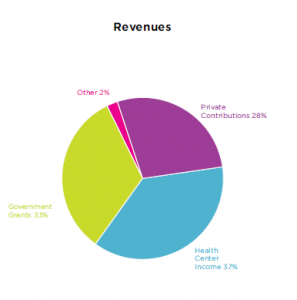
Source: PPFA via whyprolife.com
The next day, my friend explained that the rest of the meeting included a discussion of Planned Parenthood. "Oh...I'm pregnant," quipped one, "well, got to go to Planned Parenthood." Others approved this with "good," and "that's great." (PP), opined my peers, is about patient education and prenatal care; most PPs don't do abortions. Do they know that 38% of PP's revenue is from abortions? And do they know that 37% of PP's revenue is from clinic incomes? What does this mean?

They also discussed the Komen events, which they dismissed as politics.

In our state, they said, the waiting period and mandatory ultrasound aren't useful--most women don't change their minds. Moreover, most women aren't traumatized by the event, just those who are already "sick."

They went into more detail about the hassle posed to abortion-minded women. Besides having to take off work and drive to the clinic, they are also harassed by protesters and their families (my friend wrote D**n protesters yelling at you, go to H*ll). The government makes them jump through hoops. But it's fine once they're inside, and they're "free" three hours later.

My friend asked whether the father of the baby was responsible for the decision. This was dismissed as off-topic. He should have to pay child support, but only the woman has a say in an abortion because it's her body.

Other chilling quotes included "the more [abortions], the merrier," and that pro-choicers are "always on the side of the woman's rights [and] morality."

But that was not all. Two more quotes my friend recorded showed me why I received such a cold shoulder and a stiff good-bye.

"...it's illegal because of the Catholics."

"...it's those evil people..."

The quotes were said separately (he didn't mention whether they were from the same person), but the message is clear. And (truth be told) when he gave me these, I didn't believe him at first, because they are so clearly the end result of relativism that I have read about for so long: the truth is called a lie because it refuses to accept lies as truth.

Well, So much the better that the credit for opposing abortion go to the right persons. And so much the better for a time of persecution; the Church always flowers during these. One more quote:
"Blessed are you when they insult you and persecute you and 
utter every kind of evil against you because of me." (Mt 5:11)


Forward this around! Everyone needs to know that the persecution has begun and our hope is now clearly only in Christ and his faithful Bride.

Sunday, March 4, 2012

My breviary, a symbol of the Faith

Hurray, another cop-out post filled with a humanities assignment! We were each asked to choose an object we would keep in our future office which would stand as a symbol of our spiritual life.

I chose the Divine Office, which all priests, all consecrated people, and some laypeople (like me) pray each day.

My breviary (on top of an old medical text) with our Lady.
The Office reflects the spiritual life very well. It is both regular (prayed according to rules) and personalized (because the psalms the Church chooses often seem hand-picked for my circumstances). Its times and seasons reflect the winding road of human life: it is partly sung and partly recited; it has seasons of fasting and seasons of feasting; it has times for standing and times for sitting. Also like the spiritual life, it is both communal and private—the Office is said by the Church as a whole and in each soul who prays it.

But this particular copy has separate significance and symbolism. In many ways, it symbolizes my Faith. It used to belong to my mother, and she gave it to me, just as my parents gave me the Faith. It has weight, reminding me that my Faith is a charge laid on me, but a light burden and even pleasant and comforting. It is red, a color of complete love; this reflects the love of a beloved wife, or the love of a martyr. This is the love which I have for Christ and which draws me to prayer.

Saturday, January 14, 2012

Simplicity Innovations

Why can't we live more simply? Our time here isn't about earthly life! It's about God. I want to become completely transparent and effaced as Christ takes my life for His own. He must increase, I must decrease. There are two parts to this: spiritual (invisible, most of the iceberg) and material (visible, the tip of the iceberg). Materially, I want to take up as little time and space as possible to lead my little life.

Note: I enjoy comforts like tea and thick socks, and I know time can't all be spent in work and contemplation (some recreation is necessary). At the same time, however, I realize there are many ways that I can decrease. Here are some innovations I've found that might help me:

green conesinkpositivefolding showerdrawers under stairs •  in-wall bookcases (2) and cabinetsno-till gardeninggardens in stackersdouble-stacked drawers • secretary desks and murphy beds, especially from this company • in-room closet (this video at 2:53) • laundry chutes • solar shingles • solatubewaterboxx • clotheslines • no-knead bread 

tiny house, tinyhouse, little house, simple living, green living, Tumbleweed, Zinn
The Zinn: this house is 16' by 7'.
And finally, tiny houses. (I actually don't know what the cutoff is for "tiny," but the ones I see are between 80 and 900 square feet.) My current future tiny house is the Enesti, by Tumbleweed Tiny Houses. It's actually a little larger than my dream (the Zinn), but if I want a chapel, there are rules about it being accessible to the Church militant, so it might be more hospitable to have a larger home. (Plus, living alone is hard.)