In the past two months, I've been on Labor and Delivery, and on the clinic service. During this time, I clocked my personal best and worst weeks in terms of duty hours. I logged 92 hours on week on L&D (when I worked two weekends on either side of a busy week), and I logged 30 hours on a (very average) clinic week.
I got a lot done during that month of 30 hour work weeks: doctor visits, dental appointments, making curtains, a car wash, moving forward on research projects (18 patients recruited for my survey study, phone calls towards one patent, drawings for a manufacturer on another, and signing on to another device study at my hospital), and moving forward on fun projects (contacted an illustrator on two children's books [was turned down but hey at least I contacted someone], and went live for beta testing on another [sorry I can't link or it'd compromise anonymity]). I also furthered some of the NFP projects, completing fundraising on a video project for NFP-only interviewees (now that's gonna compromise anonymity when the video comes out...so I'll probably have to delete that later), completing a final version of new-evangelization-style NFP handouts for patients in our metroplex (and getting half of the funds for that!), and half-finalizing the manuscript of the pocket-Napro book that myself and another NFP-only resident are working on.
I have learned to do a discharge summary in ten minutes. I have learned to do dishes once every two weeks without inviting every bug in the metroplex. I have started walking to work more (because I hate scraping cars).
I'm still chronically exhausted. A major spiritual battle right now is how to deal with fatigue; it's actually the core battle of my life. At the same time, I am tempted to think I do not pray, sacrifice, or love God enough. But the reality is, that my prayer (outside the starvation rations of just MP, EP, and meditation) is the prayer on the Cross: complete obedience and self abnegation. And my penance is the penance of Christ's ministry: who needs flagellation when all personal time is lost in a 90 hour work week?
P.S. There are two additions that need to be made to OB/GYN Ethics 101: methotrexate for ectopics, and emergency contraception. I'm also working on elevator speeches and details on the post-fertilization effects of IUDs. Thank you for being patient! The next five months will be very, very hard for me and I have posts scheduled through that time, but new material will be slow to come out.
Showing posts with label my schedule. Show all posts
Showing posts with label my schedule. Show all posts
Friday, October 30, 2015

Sunday, January 19, 2014
Internal Medicine
 I am one week in to my second month of inpatient medicine, and I am run-down. I have seen a lot of sick people and learned a lot. It has been exciting, emotionally draining, and physically taxing. I wish I could tell you the story of the man with an enormous malignant pleural effusion, the story of the man with a hemoglobin of 1.8, the story of the man whose foot was amputated in the middle of the night, the story of the man with a failing heart, the story of the woman who presented with flu and was found to have leukemia, the stories of the several people found down, the story of the pregnant woman with flu, the story of the man with the three-foot aortic dissection, and the story of the man I thought was having a heart attack but who was really lying to me about his cocaine use....
 Daily Mass and meditation have been hard to get to, and that sends me into a tailspin of scrupulosity and humiliation. However, I was able to go Mass almost every day in the past week and formation is still going on. When you read this, please pray for my bishops; they are making some important decisions and need your help!
My schedule now looks like this:
4:50 Rise, MP
5:30 Drive to work
6:00-8:00 See patients and write notes
8:00-12:00 Round with resident or intern
12:00-1:00 Noon Conference with residents (Midday prayer doesn't happen during the week)
1:00-5:00 Lecture, studies, or other learning with resident or interns
7:00 Mass, EP
8:00 Home, mediation
9:00 Bed (NP doesn't happen much right now)
Unless I am on call (working 6:00-9:30), then I exempt myself from Mass and meditation.I am on call every fifth day, and this means that there are some days I work on Sundays and Saturdays. The day after call ("post-call") is also a workday, so if call lands on a Friday, I work Saturday (that happened this past week.) If call lands on a Saturday, I work Saturday and Sunday. The residents call this a "black weekend," but because of the way the call schedule works, it is always followed by a "golden weekend" of both Saturday and Sunday off. Obviously, when call was on Sunday once, I went to an anticipatory Mass.
_2007-03-03.jpg)
Two days before the call day, I am "on codes." A "code" or "code blue" is called when a patient goes into cardiac arrest. I carry a special pager on code days that goes off whenever a code blue is called, anywhere in the hospital. When that pager rings, it flashes where in the hospital the code is, and I immediately drop everything and walk/run there. I have been to three total, I think. There are usually plenty of people at a code, so I usually stand in the background. I gave chest compressions once. All three times, the person died. (The survival rate to hospital discharge from a code blue is extremely, extremely bad--don't let the medical dramas fool you.)
What does a medical student do in the hospital? I come early and see the patients assigned to me (usually three, yesterday four). I go into their rooms, (usually) wake them up, and ask them how they're doing. I follow up on their pain, nausea/vomiting, breathing, constipation/diarrhea, urine output, medicines, etc. Then I examine them. It's amazing how natural this is becoming! Then, I update them on any test results that I have seen and they haven't been informed about yet. I always leave big news for the resident or specialist, but if there is something simple I can tell them, I do. I ask them if they understand everything that's been told to them. Often, the answer is "no," and I know enough to help them understand. Then, I ask if I can do anything for them, and if not I leave and find a computer.
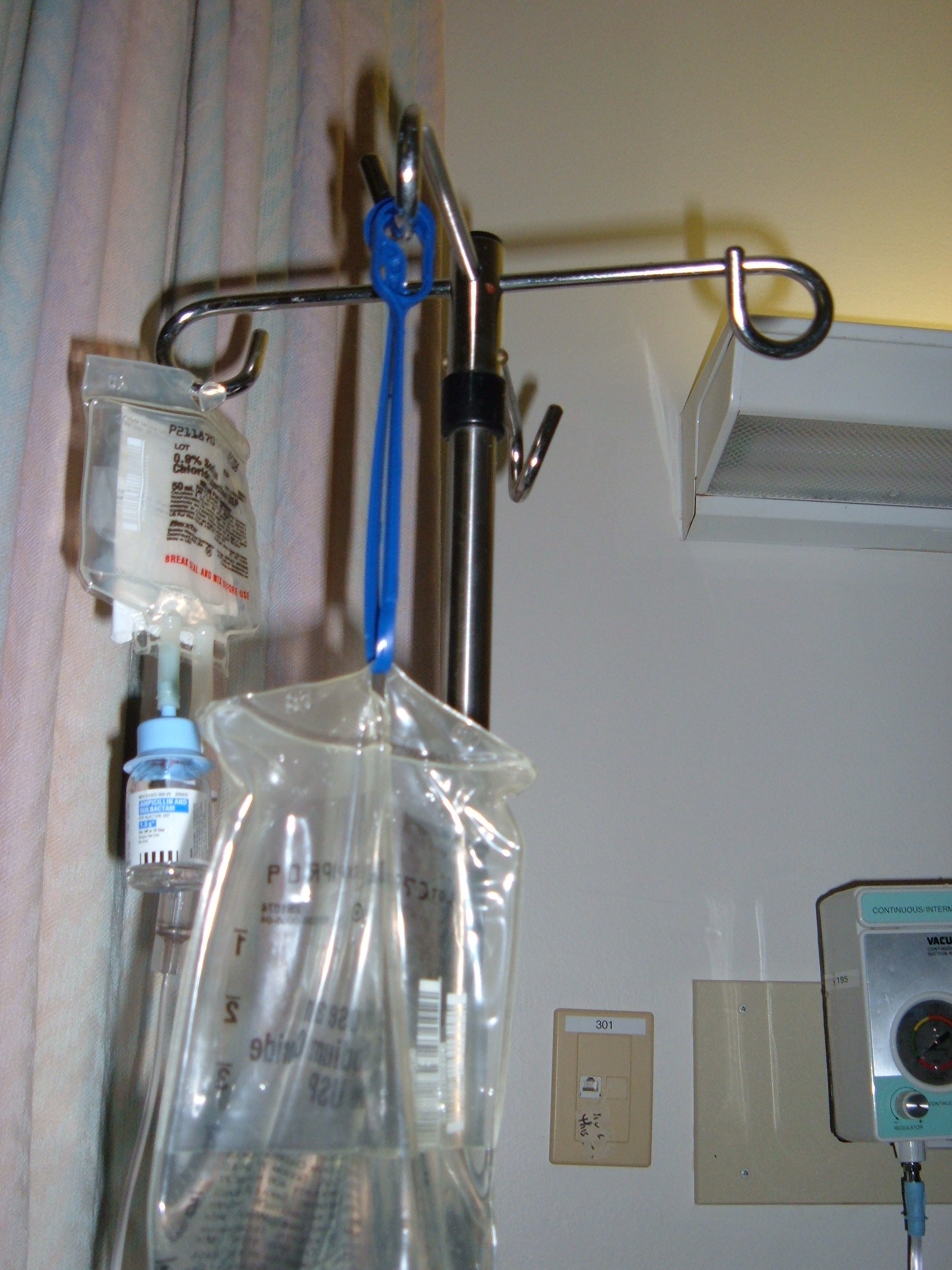
I submit my notes before 8:00, which is when the interns review my notes and see those same patients. They usually formulate their plan without taking mine into account (my notes are more for my education than the patient's care), but I have had some take some of my text and use it in their notes! Sometimes I round with them, but more often I join the "upper-level," a second-year resident. She has to see all the same patients again, too, because she checks the interns' work (and the attending physician checks hers). This is how doctors train! Daily practicing medicine with less and less supervision.
Noon conference is mandatory free lunch with lecture. Every day, we learn about something in medicine. I'm sure the upper-levels have heard some repeats, but repetition is the mother of learning. After noon conference, the med students have additional lectures and we also do practice questions or join the interns for some teaching. "Teaching" from a young doctor is different, depending on the doctor. With one of my interns, I trooped up to an ICU and we found a patient on a breathing machine so that he could give me a one-on-one mini lecture (with questions and practice cases all throughout it) on ventilator management. With another intern, we did practice board exam questions. With a third, I was left alone to read and do practice questions on my own.
As you can imagine, I'm learning a lot. This ended up being a respectably-long and mildly interesting post...I dive into IM again tomorrow and have a black weekend the next week, so I probably won't be blogging again soon. Pray for me, and for my bishops!
Sunday, February 17, 2013
Several people recently have pointed out that these posts don't really reflect my daily schedule. This is true; I lean heavily toward clinical experience. So here's an update
6:00am: wake up, chart, meditation, and Morning Prayer
7:00am: cook breakfast and eat
As soon as possible thereafter (e.g. 7:30): begin studying by watching lectures or doing STEP questions. I attend lecture only when there's a mandatory activity at school in the afternoon, when there is a CMA meeting, or when there's a reproductive sciences lecture. STEP-wise, each day I must read through a certain number of pages of the review book, do at least 25 practice questions (and review the right/wrong answers with the review book), and review one microorganism and one drug (and make a flashcard for each).
11:00am: exercise, if I'm not at school
12:00pm: Midday prayer and lunch. Studying often goes through lunch, but I also take breaks by reading the news (i.e. New Advent) on my phone while eating.
1:00pm: Studying starts again, and goes until 4:45pm, when I leave for...
5:10pm: Evening Prayer at St. Mary's, followed by Mass
7:00pm: home for dinner, followed by (guess what!) more studying.
9:00pm: take a break for reading the day's Catechism, the readings for the next day, and other spiritual reading.
9:30pm: back to studying, until
9:50pm: Night Prayer, and
10:00pm (that's the goal, anyway): bed.
I feel worn out by this regimen. I can't wait for STEP to be over, or at least for classes to be over, that way I'm not double-booked. I normally have about ten hours of traditional lecture per week, and one afternoon in the SIM center per week being evaluated with standardized patients. Nights at the Convent and other events related to consecrated life happen about four times per month, and CMA meets once a month for Mass and once a month at lunch. Somehow, even though I've bowed out of 1flesh writing and leadership, CMA's presidency and MedSFL's major responsibilities, I still feel spent.
Saturday, January 12, 2013
Third year is coming!
Third year consists of six rotations:
 They can be taken in 32 different orders, and today I ranked my preferences for which orders I most prefer. The order I finally get is chosen by lottery at the end of this month.
Our dean of student affairs told us that there's not really a difference in the orders, as far as impressing attendings goes. He said to choose an order based on significant events or personal preference (i.e. weddings, desires to get surgery over with, or wishes to do something easy first).
But I know that there is one variable at the teaching hospital that doesn't exist at the university campus: residents. Residents, who need to delivery so many babies per year. Residents, who are worried about their numbers early in the fall, but who worry less during winter and spring. Residents, who go on Christmas vacation.
So, I preffered orders (which are for some reason called "streams") that placed OB/GYN during or immediately after the Christmas/New Year's season, so that I can do a lot. And that is all I can do. As I finished, I thought how glad I was that God would finally choose the best one. It is in His hands now. I'm so excited to see what He will do!
- Internal Medicine (a.k.a. IMED)
- Surgery
- OB/GYN, which is always coupled with...
- Pediatrics (a.k.a. Peds)
- Family Medicine, which is always coupled with...
- Psychiatry (a.k.a. Psych)
They can be taken in 32 different orders, and today I ranked my preferences for which orders I most prefer. The order I finally get is chosen by lottery at the end of this month.Our dean of student affairs told us that there's not really a difference in the orders, as far as impressing attendings goes. He said to choose an order based on significant events or personal preference (i.e. weddings, desires to get surgery over with, or wishes to do something easy first).
But I know that there is one variable at the teaching hospital that doesn't exist at the university campus: residents. Residents, who need to delivery so many babies per year. Residents, who are worried about their numbers early in the fall, but who worry less during winter and spring. Residents, who go on Christmas vacation.
So, I preffered orders (which are for some reason called "streams") that placed OB/GYN during or immediately after the Christmas/New Year's season, so that I can do a lot. And that is all I can do. As I finished, I thought how glad I was that God would finally choose the best one. It is in His hands now. I'm so excited to see what He will do!
Tuesday, August 7, 2012
Summer schedule and Second Year
Uninteresting post ahead. (Update for the sake of record-keeping.)
During the IBPCA preceptorship I went to morning Mass at a parish other than the one I attended all last year, because thought this would be better for my studies (if not for my gasoline bill).
Summer: (except for Wednesdays, which were surgery days)
6:00am: wake up, drive to new parish and make morning meditation before
7:00am: Mass!
7:40am: Morning Prayer with the parish (I was a little not-enthused about this...they pray so s.l.o.w.l.y and I sometimes skipped it to pray by myself later; in retrospect, I don't like that fact.)
8:15am: arrive at clinic, review charts
9:00am: Dr. D arrives. See lots of patients and learn lots of stuff.
1:30pm: grab a quick lunch. (I missed Midday Prayer almost all summer. And I really missed it.)
6:00pm: finish seeing patients
6:15pm: arrive home for Evening Prayer; research the things Dr. D told me to look up; attempt to win culture wars (online, by planning extracurricular events of this academic year, etc)
10:00pm: Compline and bed!
Second year: (except for Wednesdays, which are preceptorship days)
6:00am: ditto, with Morning Prayer
7:00am: miraculous ditto
7:40am: go back home (if class begins at 9:00) for carpool, or go directly to class (if it begins at 8:00)
12:00am: Midday prayer, lunch
3:00pm: home, and study for four or five hours. (This is the block I purchased by changing Masses, and I really love it.)
9:30pm: stop studying and do something spiritual: work on the icon, meditate on Scripture, etc.
10:00pm: Compline and bed.
During the IBPCA preceptorship I went to morning Mass at a parish other than the one I attended all last year, because thought this would be better for my studies (if not for my gasoline bill).
Summer: (except for Wednesdays, which were surgery days)
6:00am: wake up, drive to new parish and make morning meditation before
7:00am: Mass!
7:40am: Morning Prayer with the parish (I was a little not-enthused about this...they pray so s.l.o.w.l.y and I sometimes skipped it to pray by myself later; in retrospect, I don't like that fact.)
8:15am: arrive at clinic, review charts
9:00am: Dr. D arrives. See lots of patients and learn lots of stuff.
1:30pm: grab a quick lunch. (I missed Midday Prayer almost all summer. And I really missed it.)
6:00pm: finish seeing patients
6:15pm: arrive home for Evening Prayer; research the things Dr. D told me to look up; attempt to win culture wars (online, by planning extracurricular events of this academic year, etc)
10:00pm: Compline and bed!
Second year: (except for Wednesdays, which are preceptorship days)
6:00am: ditto, with Morning Prayer
7:00am: miraculous ditto
7:40am: go back home (if class begins at 9:00) for carpool, or go directly to class (if it begins at 8:00)
12:00am: Midday prayer, lunch
3:00pm: home, and study for four or five hours. (This is the block I purchased by changing Masses, and I really love it.)
9:30pm: stop studying and do something spiritual: work on the icon, meditate on Scripture, etc.
10:00pm: Compline and bed.
Thursday, June 14, 2012
International Institute for Bioethics and Patient Care Advancement (whew)
Edit 7/19/12: Please note that some of the content I had posted about the IBPCA preceptorship has been removed because of the terms the lecturers had with the Institute (about publication of their research, etc).
Tuesday, May 1, 2012
Summer plans
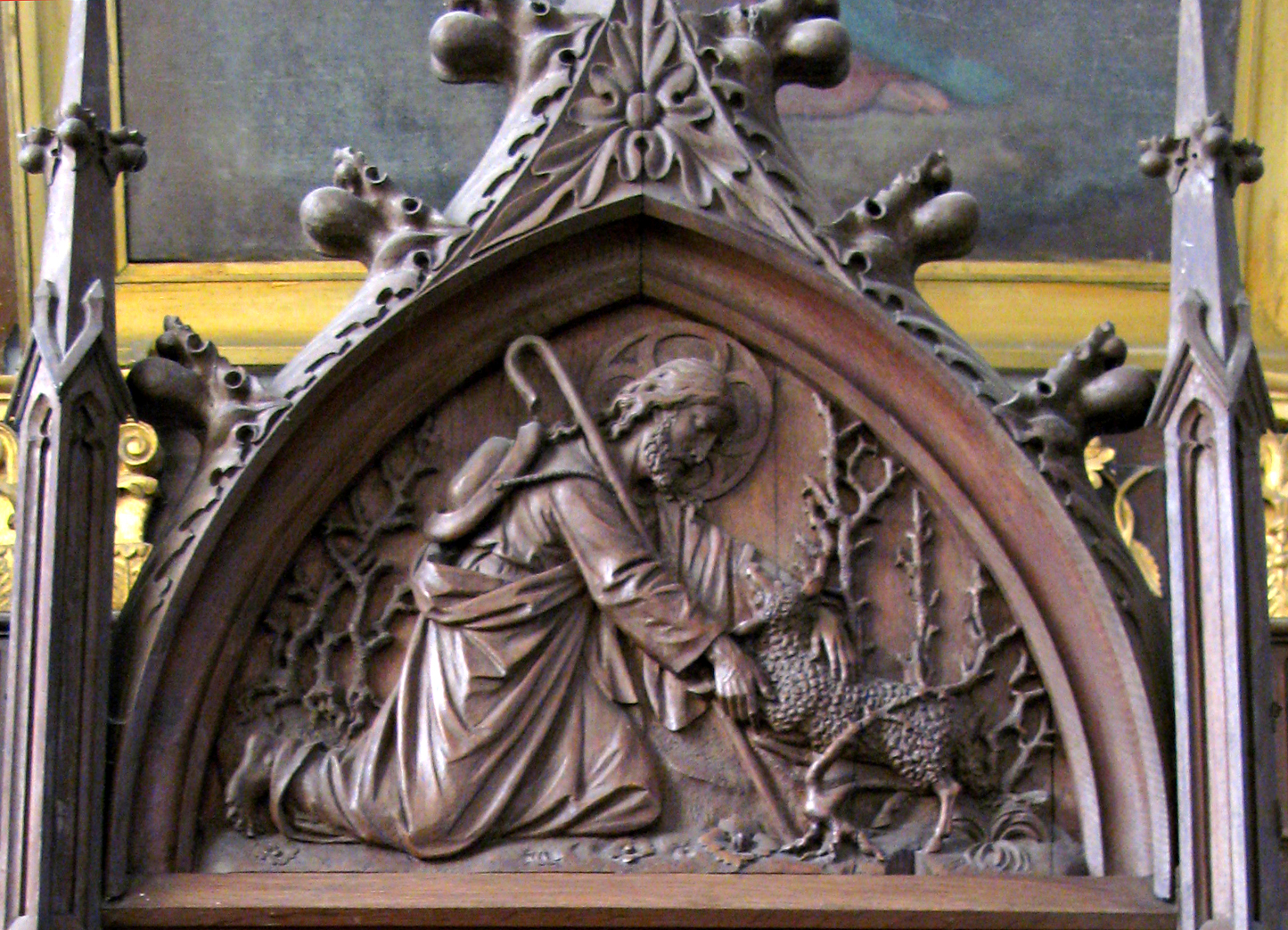 |
| This is a relief over a confessional in Ardennes, France. |
This summer I will be taking part in the first summer externship for pro-life medical students sponsored by Medical Students for Life of America. Yay! I will go to D.C. for a week and take a crash course in ethical research, then work with a physician for five weeks researching a topic related to beginning- and end-of-life issues and the underserved. I am happy to have something to do and hope that my work is fruitful.
 I am spending a little over a week at home to see my siblings, and at the end of the summer I am hoping to attend the informational conference on consecrated virginity lived in the world (brochure). This is a form of consecrated life available to Catholic virgins since the earliest days of the Church, which has seen a new springtime since 1970 when it was renewed for women outside religious orders and codified in Canon 604 of Canon Law. Consecrated virgins in this country often choose to become members of the U.S. Association for Consecrated Virgins, which is gives an annual information conference available for all interested.
Classes begin August 6, so there won't be much time to come down from the Transfiguration of the conference before my second year of medical school begins!
Friday, March 23, 2012
"Intro to Disease" schedule
Typing these posts feels so weird! However, I put them up because I want to keep a memory of what it was like to be a medical student; in addition, as a pre-med I always wondered "what do med students do all day?" My typical existence goes like this:
6:30a - wake up, exercise (my version of exercise = a walk + some leg lifts)
7:15a - meditation on the day's readings
7:40a - Morning Prayer
8:00a - eat, dress, pack lunch
8:30a - commute (less lousy now that I'm listening to the audiobook of How the Catholic Church Built Western Civilization. If you haven't read it and think you think you already know what it says, you're wrong and you need to read it! I'm sure you're as Catholic as can be, but you've been schooled by our culture and it's colonized your thinking. Read this!
9:00a - class (remember when I was going to try not going to class? Yeah...I go almost all the time still. Old habits (high school, TAC) die really hard. However, that experiment did succeed in removing most of the personally-imposed stigma of watch lectures later.)
12:00p - Midday Prayer, then lunch
1:00p - more class! Sometimes, neuroscience lab (way better than anatomy lab; interesting, and no lack of wonder for the organ. The brain is a conspicuous exception to our culture's failure to reverence the body.)
4:45p - head to the church, after studying
5:10p - Evening Prayer in community, with the religious sisters and other students before Mass. This has been a blessing! It's nice to learn new hymns, sing in chorus, have my patience stretched by others, and recite loudly and slowly (which I usually can't do in the apartment or at school).
5:00p - Mass (!)
6:30p - arrive home
7:15p - study
9:00p - "holy hour," not in the real sense of Adoration, but spent reading Introduction to the Devout Life or some other book.
10:00p - Night Prayer, then sleep
6:30a - wake up, exercise (my version of exercise = a walk + some leg lifts)
7:15a - meditation on the day's readings
7:40a - Morning Prayer
8:00a - eat, dress, pack lunch
 | ||
| Studying with my diptych and my binder of spinal cord slides. (That's sacral or lumbar cord; you can tell because of the enlarged ventral horns.) |
9:00a - class (remember when I was going to try not going to class? Yeah...I go almost all the time still. Old habits (high school, TAC) die really hard. However, that experiment did succeed in removing most of the personally-imposed stigma of watch lectures later.)
12:00p - Midday Prayer, then lunch
1:00p - more class! Sometimes, neuroscience lab (way better than anatomy lab; interesting, and no lack of wonder for the organ. The brain is a conspicuous exception to our culture's failure to reverence the body.)
4:45p - head to the church, after studying
5:10p - Evening Prayer in community, with the religious sisters and other students before Mass. This has been a blessing! It's nice to learn new hymns, sing in chorus, have my patience stretched by others, and recite loudly and slowly (which I usually can't do in the apartment or at school).
5:00p - Mass (!)
6:30p - arrive home
7:15p - study
9:00p - "holy hour," not in the real sense of Adoration, but spent reading Introduction to the Devout Life or some other book.
10:00p - Night Prayer, then sleep
Tuesday, February 21, 2012
Loooooong hiatus

- HHS mandate. Ex.haust.ing. I was checking news and reading stuff and talking with people eight times a day, HOPING that the administration wouldn't do what it has, in fact done. I'm still in shock, I can't believe this happened, and I don't know what this means for my future. (Same can be said of Obamacare.)
- The CMA is slowly taking off. It's hard: there are people who are just returning to the sacraments, and there are others who I don't get along with well.
- Exam 2 for Introduction to Disease = baseball bat to the face. BUT, like I said, there's been so much else going on that I haven't really noticed.
- Made octopus soup! Week after that, parasitology block began. Learned about GI worms. Looked at frozen seafood bag, which read "product of China." I'm not quite hypochondriac about this, but I am now looking at my Lenten supplies with serious doubt.
- Retreat. The same week that I had my exam and the week before I went out of town for three days, I went on a Busy Person Retreat. It was such a grace. I didn't think having a non-habit-wearing Ursuline nun as a spiritual director for four days of directed prayer could be helpful. Boy, was I wrong!
- I applied for a research program this summer to work with the designer of the Worth the Wait sex education program. I think good, preventative, wholesome education is SO important. Please pray God's will be done and if at all possible, that I be accepted. I'm (kind of) putting all my eggs in this basket (oops).
- I applied for the National Student Research Program at UTMB. (Why all this research? I've never done bench research because it doesn't sound engaging, but I like clinical research and public health, as long as the research is meaningful, not forgetful of the patient, and doesn't stifle compassion.)
*Did you know the eyes of hurricanes can be polygonal?? Check out the pentagon in the upper right part of this picture.
Monday, January 23, 2012
Curriculum
What's medical school actually like? Is it like college? High school? Work? How do you learn to be a doctor?I used to wonder this a lot in college. So, if you're not a medical student and you're like I was, you're curious about how this works!
90% of my time is spent with classes that are a lot like typical undergrad courses (not TAC classes!). The first year here is divided like this:
- Core Principles of Medicine (two "blocks," where "block" simply means half of a semester)
- anatomy
- physiology
- histology
- "molecular medicine" (biochemistry, except relevant)
- genetics
- Introduction to Disease
- pathology
- microbiology (immunology, bacteriology, virology, parasitology, mycology)
- pediatrics
- Neuroscience

Next year this will change slightly, so stay tuned!
Thursday, January 12, 2012
Class Attendance
 We just had the most interesting Professionalism class I've ever attended. Technically, the topic was "Physician Impairment," and that yielded forty minutes of tolerable dryness.
 But after that the professor transitioned to making medical school more liveable. She is on the curriculum committee and opened the floor to suggestions by proposing one of her own: lower the number of in-class hours to ten per week. (Apparently this is underway.)
People began to murmur. I heard things like "that's impossible," "we'd still have too much stuff to memorize." I piped up (as I often do) and said that if it was impossible to lower the amount of material, lowering the number of in-class hours would be a good compromise.
Thus began the liveliest Professionalism discussion I've ever seen! Without any of the usual pauses, comments flew.
"But some lecturers give us sixty slides of information...without going to lecture how are you going to know what's important?"
"It would help to make classes that are officially 'not mandatory' truly not mandatory: no punitive, graded pop quizzes, no stigma, no scolding."
"Some people learn better watching the lecture later."
"There are only so many hours a day; watching the lecture at double speed, skipping parts you know...works better."
What is your reaction as you read these quotes? And what do you expect I thought?
Are you ready for a shocker?
I felt relief! Just yesterday, I came to a difficult decision after a long and uncomfortable deliberation. Yesterday, I decided that I will try skipping some classes.
Here are the points I weighed as I considered this experiment:
No brownie points from the profs. This has always been a big door-opener for me.
| Pros (reasons to skip class) | Cons (reasons not to skip class) |
| I could watch lectures more quickly | I'd be behind my classmates; they heard the lecture at 9:00 and I'd be hearing it at 18:00... |
| Self-study is fun! I like to look up extra stuff and go beyond the requirements; right now there's no time to do so, and that makes me sad... Plus, boring lectures and wasted time draws off enthusiasm. | Unable to ask questions of the prof; would have to send an email later in the day. |
| I am disciplined and can demand results from myself. Other classmates still going to class tell me they know they couldn't keep themselves on a schedule. | |
| Better ability to prep for standardized exams. A med student needs to move up the rungs quickly from basic concepts to review to practice questions/clinical vignettes. Going to lecture retards my climb. | |
| Better grasp of material; I can stop a recorded lecture and look something up! Asking questions during lecture is annoying and cuts the professor's time (the COM strictly monitors its professors lecture lengths). | |
| Commuting. Let's have it out: I dislike driving and gas is expensive (especially considering I'm living on loans, so the price of everything is several times its sticker price after repayment.) | |
| The classmates who still go to class.... Let's say there's been a self-selection; the higher-driven people whose company I enjoy are no longer there every day. |
In the end, it's about time. Time consumed in slow, repetitive, or unnecessary lectures and all that comes with them: commuting, changing tasks and places, reheating food.... I can move faster alone, at home or at a library.
I felt this last semester, too, but reasoned a good student goes to class. (I have never been in an environment where skipping class was good. During summer school, away from TAC, it was tolerated, but still an embarrassment.) Now, I want time to become a good physician, not just what's good for the test. To learn well, I need more time than I currently have. I've been feeling a little oppressed, spread thin, and time-crunched lately. I'm up-to-date on all my prereading and lectures, but I'm behind on ascending to competency with the concepts and I've missed my one hour of free time for almost two weeks
I doubt you are happy to read this (parents, siblings, friends, strangers). I am the shiny, good-girl student! I used to think it was embarrassing, all those statistics at other COMs about 20% class attendance. What am I doing, skipping class?
I am trying to learn well, go at my pace, know beyond the bare-minimum, and preserve my mental health and balanced life. I am experimenting with my attendance strategy, just like I experimented with my notetaking and memorizing strategies last semester. I will go to all mandatory classes and I will attend classes covering material I judge difficult after my first pass. Other than that, I am going to watch recorded lectures and see if this is better. (Note experimental language.)
Sunday, January 1, 2012
Schedule, phase II
The second semester of Year 1 is called "Phase II Year 1" at my medical school. Phase II is system-based and focused on disease and medicine (not on the healthy body), and has more early morning classes. My new horarium looks like this:
5:45 - wake up, exercise
6:15 - Morning Prayer, meditation
7:00 - breakfast, commute to school!
8:00 - class
12:00 - Midday Prayer, then lunch+study
1:00 - more class and studying
4:30 - commute to Church
5:10 - Evening Prayer
5:30 - Mass
6:30 - dinner, recreation
9:30 - Night Prayer, bed
After my first week of this, I realize I don't have as much study time as I need. I'll keep working on it; perhaps I just need to learn to switch tasks faster, or perhaps I need to make a larger change.
5:45 - wake up, exercise
6:15 - Morning Prayer, meditation
7:00 - breakfast, commute to school!
8:00 - class
12:00 - Midday Prayer, then lunch+study
1:00 - more class and studying
4:30 - commute to Church
5:10 - Evening Prayer
5:30 - Mass
6:30 - dinner, recreation
9:30 - Night Prayer, bed
After my first week of this, I realize I don't have as much study time as I need. I'll keep working on it; perhaps I just need to learn to switch tasks faster, or perhaps I need to make a larger change.
Monday, September 26, 2011
Schedule nowadays
Some adjustments: praying the rosary along with a podcast in the car is too dangerous! I'm praying it slowly to myself now, in lots of installments throughout the day.
7:00 - wake up, pray
7:20 - walk with notecards on iPhone
7:50 - get ready
8:00 - breakfast
8:30 - leave for school
9:00 - class
12:00 - Midday Prayer, lunch, study (occasional interest group meeting: I only want to be part of OB/GYN and bioethics, but I'll dip into family med)
1:00 - class and studying afterwards
5:30 - Mass, sometimes confession beforehand, read from the Church fathers on virginity
6:15 - go home and study
10:30 - Evening Prayer, dishes, bed
Late-night reviews in the Gross Lab sort of mess this up, but c'est la vie. Also, I'm beginning to meet with a group of peers on Mondays to pray for the upcoming week. They are Protestant, but "test everything; retain what is good."
7:00 - wake up, pray
7:20 - walk with notecards on iPhone
7:50 - get ready
8:00 - breakfast
8:30 - leave for school
9:00 - class
12:00 - Midday Prayer, lunch, study (occasional interest group meeting: I only want to be part of OB/GYN and bioethics, but I'll dip into family med)
1:00 - class and studying afterwards
5:30 - Mass, sometimes confession beforehand, read from the Church fathers on virginity
6:15 - go home and study
10:30 - Evening Prayer, dishes, bed
Late-night reviews in the Gross Lab sort of mess this up, but c'est la vie. Also, I'm beginning to meet with a group of peers on Mondays to pray for the upcoming week. They are Protestant, but "test everything; retain what is good."
Thursday, September 1, 2011
Daily Schedule 2
My day has changed a little bit, since I'm part of some study group and my roomie has moved in.
7:00ish - wake up, pray. Only sometimes walk to mail kiosk, get mail.
8:00 - breakfast
8:30 - leave for school
9:00 - class
12:00 lunch/interest group meetings
1:00 - more class
3:00 - more class or lab (some days) or group meeting
5:30 - Mass, only sometimes
6:30 - go to group meeting (or to anatomy lab)
9:00 - go home, study
11:00 - Evening prayer and bed
Ew. I liked the first schedule better. (Guess who's going to quit some groups?) I want daily Mass, and I want more prayer. Meetings and stuff take the best parts of my day and keep me in the tunnel of a very worldly day. Here's my goal for the next two weeks:
6:45 - wake up, pray
7:00 - walk with notecards on iPhone (get mail)
7:30 - get ready
8:00 - breakfast
8:20 - leave for school (traffic is up since the undergrads started school last weekend), Rosary in car
9:00 - class
12:00 - Midday Prayer, lunch, study (occasional interest group meeting: I only want to be part of OB/GYN and psychiatry, but maybe I'll dip into internal med and family med)
1:00 - class and studying afterwards
5:30 - Mass, sometimes confession beforehand, read from the Church fathers on virginity
6:15 - go home and study
10:30 - Evening Prayer, dishes, bed
7:00ish - wake up, pray. Only sometimes walk to mail kiosk, get mail.
8:00 - breakfast
8:30 - leave for school
9:00 - class
12:00 lunch/interest group meetings
1:00 - more class
3:00 - more class or lab (some days) or group meeting
5:30 - Mass, only sometimes
6:30 - go to group meeting (or to anatomy lab)
9:00 - go home, study
11:00 - Evening prayer and bed
Ew. I liked the first schedule better. (Guess who's going to quit some groups?) I want daily Mass, and I want more prayer. Meetings and stuff take the best parts of my day and keep me in the tunnel of a very worldly day. Here's my goal for the next two weeks:
6:45 - wake up, pray
7:00 - walk with notecards on iPhone (get mail)
7:30 - get ready
8:00 - breakfast
8:20 - leave for school (traffic is up since the undergrads started school last weekend), Rosary in car
9:00 - class
12:00 - Midday Prayer, lunch, study (occasional interest group meeting: I only want to be part of OB/GYN and psychiatry, but maybe I'll dip into internal med and family med)
1:00 - class and studying afterwards
5:30 - Mass, sometimes confession beforehand, read from the Church fathers on virginity
6:15 - go home and study
10:30 - Evening Prayer, dishes, bed
Friday, August 26, 2011
Med Student Life and Premed Questions, pt 1
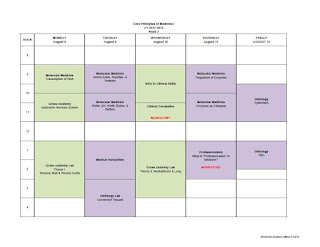
First and second year. One of the things I really wanted to know as a premed was what med students' schedules look like. I have attached my schedule for this week and next week as pictures. We have a block curriculum and have tests every two or three weeks. Click to enlarge.


Premeds: ask the first- and second-years (not the people who present the curriculum) what the curriculum is like: how often do you have tests? do you learn by system, by region, by clinical presentation...? when do you get clinical skills? do you have problem-based learning or clinical correlations? are you required to shadow or volunteer? when do you see standardized patients or use the simulation center? are the students competitive?


Premeds: ask the first- and second-years (not the people who present the curriculum) what the curriculum is like: how often do you have tests? do you learn by system, by region, by clinical presentation...? when do you get clinical skills? do you have problem-based learning or clinical correlations? are you required to shadow or volunteer? when do you see standardized patients or use the simulation center? are the students competitive?
Tuesday, August 9, 2011
Daily schedule
Quickie post:
Right now, my daily schedule looks like this:
6:45ish - wake up, take walk with anatomy or histology flash cards. Walk to mail kiosk, get mail.
7:20 - shower/get ready
7:40 - pray
8:00 - breakfast
8:15 - leave for school
9:00 - class
12:00 lunch/study
1:00 - more class
3:00 - more class or lab (some days), study (other days)
5:00 - stop studying, travel to St. Mary's Church
5:30 - Mass
6:30 - go home (or to anatomy lab), study
10:30 - do dishes, pack bag for tomorrrow, Vespers, and bed
And right now (I've gotta say) I'm loving every minute!! It is SO AWESOME to be studying what I love to study ALL THE TIME!! No more intervening stupid classes, it's all what I want to do. I am pretty much gleeful all day--gleefully serious, but gleeful. My only source of negativity is the possibility of failure. But I trust in Christ, who made heaven and earth. And really? Medicine doesn't make saints; union with Christ makes saints.
Right now, my daily schedule looks like this:
6:45ish - wake up, take walk with anatomy or histology flash cards. Walk to mail kiosk, get mail.
7:20 - shower/get ready
7:40 - pray
8:00 - breakfast
8:15 - leave for school
9:00 - class
12:00 lunch/study
1:00 - more class
3:00 - more class or lab (some days), study (other days)
5:00 - stop studying, travel to St. Mary's Church
5:30 - Mass
6:30 - go home (or to anatomy lab), study
10:30 - do dishes, pack bag for tomorrrow, Vespers, and bed
And right now (I've gotta say) I'm loving every minute!! It is SO AWESOME to be studying what I love to study ALL THE TIME!! No more intervening stupid classes, it's all what I want to do. I am pretty much gleeful all day--gleefully serious, but gleeful. My only source of negativity is the possibility of failure. But I trust in Christ, who made heaven and earth. And really? Medicine doesn't make saints; union with Christ makes saints.
Subscribe to:
Posts (Atom)