Showing posts with label away 1. Show all posts

Saturday, October 11, 2014

The Truth Turned Someone Away from an IUD

This post conforms to the blog rules.Because of my conversation with a patient, she chose not to have a hormonal IUD implanted, a form of long-acting contraception that can end a zygote's life. All I had to do was tell her how it worked.

I was on an audition rotation in a pretty pro-birth control clinic. A young patient with extremely severe menorrhagia was failing oral management (i.e. NSAIDs and high-dose birth control pills weren't helping). Her compliance with daily pills was in question and at the last visit my attending, Dr. L, had discussed mirena with her. I would have been comfortable giving her a mirena, except that she was sexually active. And I know that the mirena can cause damage to a zygote ("fertilized egg" to some, but a person nonetheless). So I told her that the attending would be speaking with her about that prescription, but that there were nonhormonal options, too (lysteda or amicar). I counseled her about the nonhormonal options and about mirena and nexplanon. She couldn't decide what she wanted to do.

"What would you do?" she asked. My heart sang.

"HA! She ASKED," I thought victoriously. "I told myself that I wouldn't make my own recommendations in opposition to the attending unless explicitly asked. AND SHE ASKED!"

"Actually," I said aloud to the patient, "I don't recommend mirena." I explained how it affects the endometrium and can cause loss of the cells that forms after sperm and egg fuse. "And when that embryo is lost, that's an early miscarriage. And I don't want that--"

"I don't want that either," broke in the patient.

"--so I won't in conscience recommend mirena to my patients. But Dr. L does prescribe it, so..."

"No," the patient said. "I guess I'll try the other things."

I left the room promising to bring back a pamphlets on those meds. I returned to the charting room and faced the pamphlet rack. As I pulled out a lysteda brochure, Dr. L said, "Tell me about your lady."

I presented her. "This is your 14-year-old African American patient with a two year history of disabling dysmenorrhea. She hasn't had relief with ibuprofen, orthocyclen, or ogestrel; we talked about mirena and nexplanon but she's interested in something non-hormonal. I counseled on lysteda and she wants more information. Physical exam is benign, she's had guardasil, and HEADS survey is unchanged since last visit; same male partner, 100% condom use. No tobacco, alcohol, or drugs."

My attending was pleased with my presentation, but not pleased that the patient didn't want a mirena. Dr. L joined me at the pamphlet rack and began to pull out brochures for nuvaring, nexplanon, and skyla. She stuffed the sheaf into my hands and sent me back into the patient's room.

(Skyla, btw, has the a disturbingly and tragically accurate advertising campaign, featuring sexually-active women explicitly prioritizing activities over children. How can people ignore the identical mindset behind contraception and abortion?)

I showed the patient the whole stack, but emphasized that everything that has hormones works like mirena. I gave her the pamphlet she wanted, and went back to my attending. "She's still going with lysteda," I said.

Then my attending went in with me. I was a little afraid that she might dissuade the patient from her decision. But this attending actually walks the walk when she supports "patient autonomy," so my patient was allowed a limited trial of lysteda. I have no idea what happened after that, but at least for now, that patient is aware of what hormonal contraceptives can do.

Wednesday, September 24, 2014

The Things I Never Wanted to Do

I mentioned that I rarely discussed my choices about contraception, abortion, and sterilization during medical school. I never told my OB/GYN clerkship director, attendings, or residents anything. I think that made it easier to make friends, but it got me into trouble at least twice. I'm telling these stories for future Catholic med students, even those who aren't becoming OB/GYNs. With more forethought than I had, you can save yourself from some dangerous situations.

Cesarean Tubal Ligation

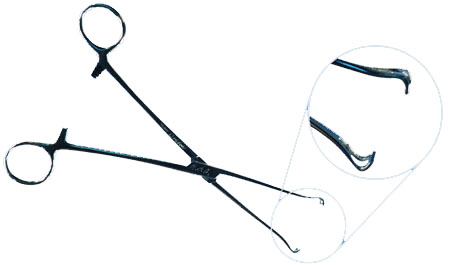
A babcock. Notice that it is made to hold a
tubular organ without crushing the tissue.
On my L&D rotation, I scrubbed in on any C-section that happened. The first time that a woman had chosen to have a bilateral tubal ligation (BTL) after the birth of her baby, I did nothing and nothing happened. The second time, the attending held out the handle of a babcock clamp, which encircles the tube, and told me to hold it. Reflexively, I did; after all, as a med student, you hold any retractor you're told to and wish you had reached for it automatically before you needed to be told. The babcock does not have anything to do with the actual tying of the tubes, but I was definitely participating in a sterilization.

Miserable, I held the babcock in space, wondering what I should do. Should I speak up? I didn't feel empowered and didn't want to be disliked. Was this remote and unwilling enough for me to be quiet and save face? Would speaking up be making a selfish scene? Remember, the patient is awake for a cesarean section; it's sort of too late to discuss ethics, especially when this patient has chosen to do the objectionable thing. But this is grave matter! And I know it to be grave matter! And I am doing it anyway!!
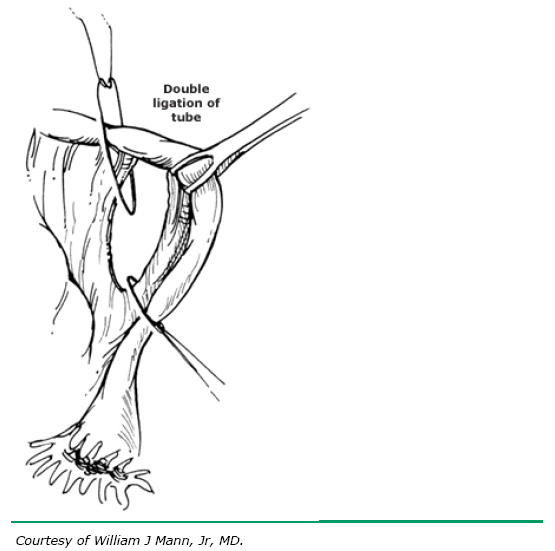
The babcock is at 2 o'clock in this picture.
The other two things are strings being
tied around the tube. The strings are clipped
and the tube between them is removed.
CCC 1857: For a sin  to be mortal, three conditions must together be met: "Mortal sin is sin whose object is grave matter and which is also committed with full knowledge and deliberate consent."
It was over before my analysis was over. So I said nothing. I still didn't cut the sutures. I went to confession before receiving communion. The conclusion of the priest was that this was remote and not "deliberate consent" enough to constitute mortal sin, but I was very, very determined not to let this happen again. It was careless not to say anything to the attending. I did better in the past, when I spoke up discreetly before a mirena insertion. But this wasn't the worst thing that happened.

Birth Control on an Away Rotation

Fourth-year med students occasionally spend weeks at a time at other med schools or residency programs. These "aways" are often done to make a positive impression on the residency program there and are called "auditions" in that case.

I was doing an audition rotation at a school and got waaay too close to prescribing contraceptives. I didn't realize that the clinic would be so pro-birth control, but I found more than 75% of the patients taking some form of hormonal birth control, and a strong culture supporting "safe sex" with 100% condom usage. I was at a loss.

I was on a month-long rotation trying to get people to like me. Med students are always sent into the room first; if I go in first and share all my contraception-why-not knowledge and then the attending goes in, the patient will ask one of two things: "So, is that med student just crazy?" or "Have you been lying to me, doc?" Worse, the patient will decide not to use contraceptives (yay), the attending will ask why (uh-oh), and the patient will explain that "the med student said...," and the attending will (annoyed) have to re-explain all the falsehoods and (red alert) rebuke the med student.

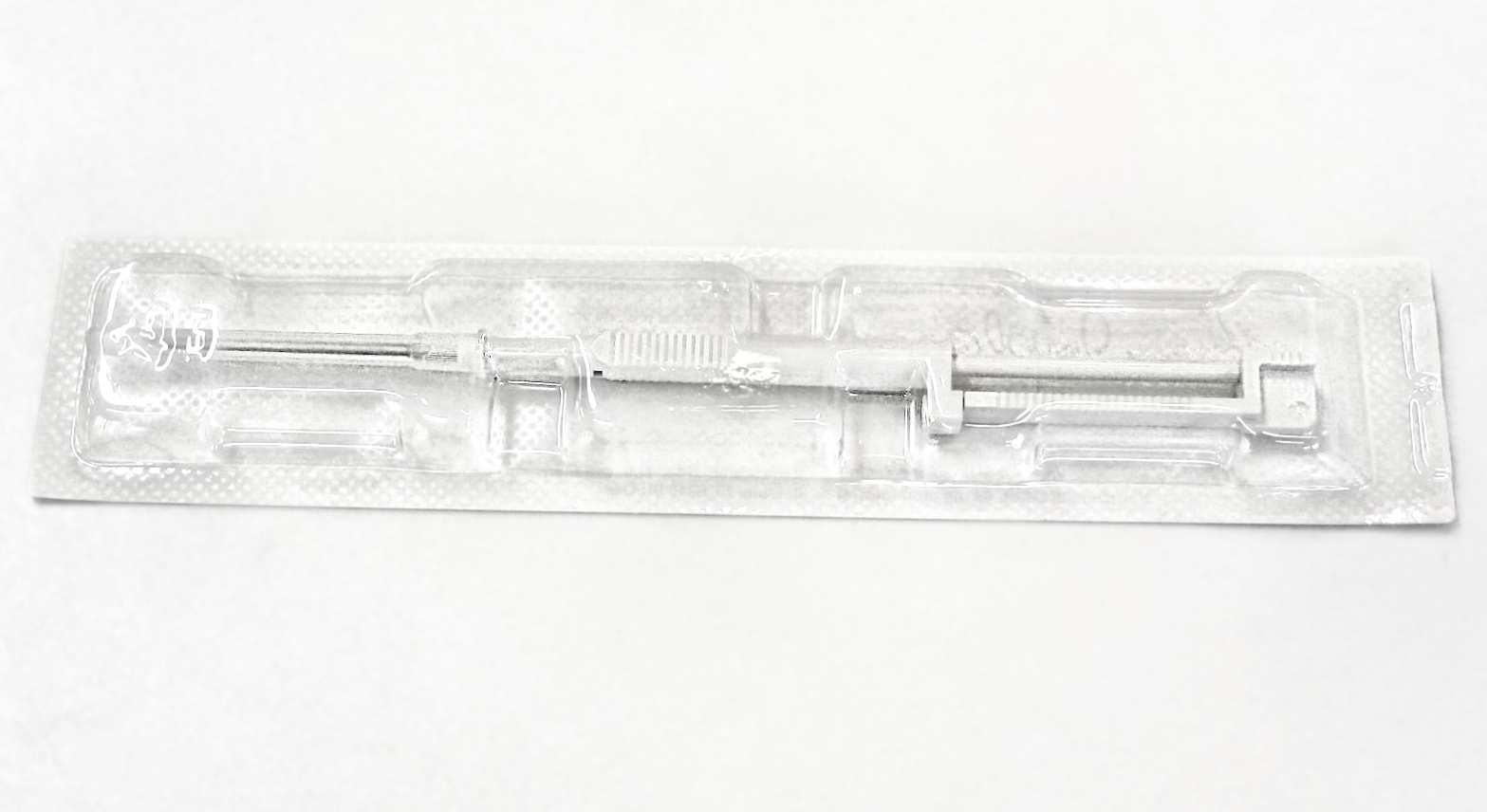
(Nexplanon)
You might argue that this course of action might have been good: it might have created a chance for me to bravely say, "Well, Dr. X, I was actually reading a paper that says (insert pro-family stuff here)...." But I expect those things would fall on deaf ears of the highly experienced, academic, and culturally blinded physicians I was working with. Worse still, I would have confused patients, possibly discredited the arguments against contraception, and possibly eroded their relationship with their physician.

So I clammed up and tried to say true things and not recommend contraception. I tried not to be excited when people were sexually active and using condoms and birth control. I tried to encourage people to think about whether they wanted to be pregnant and let that inform their decision to have sex. I was about the only one in the clinic to continuously tell teens that the most effective way to avoid pregnancy was to avoid sex. 

But I began to echo my attendings' speeches and advice about birth control as I counseled women about "the options," which was a requirement.  I was at fault for not knowing enough numbers to give to patients myself, though. I seemed to morph into someone who was pro-birth control: it decreases the risk of ovarian cancer and uterine cancer, I'd say, and the only side effect is possible irregular periods. When people asked me about future fertility, I said that "our professional organization [ACOG] instructs us that future fertility is not affected." (That was the most painful thing.) Working twelve-hour days in this place for four weeks wore down my defenses.

The ultimate result was the day I was almost running the adolescent medicine clinic and writing notes and plans (only missing the formality of writing the script and signing it) that included birth control of all flavors. After that, I found myself crying in a confessional again. This time, although the priest never said "that was a mortal sin," he did extract a firm purpose of amendment and my intention to say the penance. And he did tell me that I, like pharmacists, lawyers, and some others, stand in danger of losing my soul in my profession. It sounds harsh, but as I knelt in the confessional I felt and knew that he was very, terrifyingly correct.

So, Catholic medical student: discreetly inform your intern/upper-level/attending/preceptor/whoever. If it's too late, you are allowed to say something like, "Oh, I prefer to just observe; I'm happy to explain afterwards." And if you get into a sticky long- but short-term situation like my away, you need to do a little research (I'm hoping to put something up here with quick facts on contraceptives, etc) and be unafraid. Don't break up doctor-patient relationships, but do offer an alternative. I'll share a positive story in the a next post (because I have one).

Sunday, September 21, 2014

I Can't Hide Forever

Me during most of med school.
Credit: CavinLicense
I laid low during medical school. I mean, I started a pro-life med student group, got Maureen Condic to come talk to on our campus, and prayed outside Planned Parenthood in my white coat, but I didn't have a lot of frank discussions with my peers, residents, or attendings about abortion, contraception, and primary sterilization. I stayed in the cocoon of "I don't have to do any of those things, so I don't have to explain why I'm not doing any of those things." (By contrast, one of my friends at another med school started a high-powered NFP group and is always ready to talk about it with poise.)

But I'm beginning to realize that as my responsibilities increase, my ability to hide decreases. A few circumstances have recently brought home how soon my cover is about to be totally blown. Worse yet: I'm about to be required to blow it myself.

Chairman's Letter
When you apply for residency programs through ERAS, you need letters of recommendation; minimum 3, maximum 4. Some programs require a "chairman's letter," that is, a letter from the department head of your chosen specialty. For this reason, I took an elective in the chair's specialty (urogyn) and spent several afternoons in his clinic, trying to show off my clinical skills and seem like an awesome person. I tried NOT to bring up anything related to contraception (should have been easy in urogyn, right??), but the Chair is apparently smarter than that.

Myeughh...why are you so perceptive and direct?
Credit: Niklas. License same.
The first thing he noticed was my cross. I wear the cross of San Damiano every day to remind me to be as humble and pure and excited as St. Francis was to rebuild the church. He asked about it, and he thus learned that I am Catholic. Immediately, he asked me about contraception and abortion. So I explained. 

Later, I arranged a meeting with him to ask for a letter. I forwarded the resume I was going to send to residency programs, which included my pro-life work, degree from TAC, and the Notre Dame Vita Institute. These meetings are one degree above formalities: at them, the letter-writer will inform the letter-seeker that yes, he/she can write a good letter. The writer may ask about career plans and other resume items, or things not on the resume.

He sat me down and said he'd be glad to write me a letter, but he needed to know more about how I would act in a few situations. And then the meeting became like an oral board exam: he pitched two scenarios and asked me what I would do. I knew my letter was hanging on this. Would I help in a C-section followed by a tubal if I was the resident on call for the night, and no one else was there? (Yes to the C-section, no to the tubal; not a great hardship for the attending, I think, if the attending is already scrubbed.) Would I refer to a partner MFM if I, as an MFM, was sent a patient who wanted an abortion? (I would recuse the referral and refer to the front desk.) This caught me slightly off-guard and made me realize that time is coming.

Running the Adolescent Clinic

On one of my rotations (adolescent medicine), I was frequently exposed to sexually active patients requesting hormones, for contraception or otherwise. This made me deeply unhappy and I was not at peace in that clinic, but I deferred management to the attending for the most part, which was easy as the student. I couldn't put in orders without a cosign, so everyone put in their own orders. I would talk around the prescription of oral contraceptives ("She's currently on ortho-cyclen.... She says she needs refills today"). 

One particular attending, an older gentleman, couldn't use the EMR. The residents and fellows usually put in orders for him, but one day there was no resident and no fellow in clinic. As the fellow sent me to clinic from morning rounds, she said, "you're just going to have to put in orders. I'll co-sign them later. Sorry for the trouble; you can figure it out, though."

I was in dread. Happily, a pediatrics resident showed up, so she put in all the orders. There was only one scare: I was the last one to leave clinic (woo-hoo for being a "good" med student), and the nurse ran up to me and said "Someone's order wasn't put in for her depo. Can you put it in?" Luckily I was able to text the fellow. But it's clear that my window of safety is closing.

Preparing for Interviews

I have been repeatedly advised to disclose my "beliefs" to program directors on the interview trail. This makes total sense to me: a residency program is a cross between a large and very consuming practice, a family, and a class. The perspective of a typical OB/GYN resident toward an intern who suddenly announces (after match or just before July 1) that she doesn't do x, y, or z is that the intern is deceptive, lazy, and manipulative. That sort of intern isn't well-liked, and she probably isn't going to get what she wants.

If, instead, the whole package (smiling, interesting, professional applicant with solid CV, grades, and letters, plus some relevant personal beliefs that will require extra work) is sold at once, the bait-and-switch and resulting resentment is all avoided. I might even hope to make the other residents curious about why I've chosen to do what I do.

So the time of hiding is over, and I must know show myself as I am. It'll be hard for me, because I have a strong desire to please, and the "limitations" that I insist on are not pleasing. I need to focus on how true, good, and beautiful my choices are; I need to be unafraid of being misunderstood; I need to be confident that God has a plan (hopefully a residency) for me where I can do His will safely.

Now it's time for courage, which is why I'm so glad that the CMA conference this year is on Courage in Medicine. I'm bending my schedule over backwards to go to it (carving out part of my sub-internship and making a 20-hour drive to my next away rotation), but I want the help. Please help me with your prayers as well.