Showing posts with label clerkship diaries. Show all posts

Sunday, May 3, 2015

Stacy's Story

This post conforms to the blog rules.A patient I met and, in the wash of clerkships, left behind, left an incredible impression on me even though I barely knew her. Almost every detail about this person is altered to protect her.

"Stacy" was a middle-aged woman who became pregnant under extremely bad circumstances. Her family started to notice that she was acting strange. To their alarm, she began to tell them she saw and heard things they could not see or hear: she was hallucinating. The duress of her pregnancy had affected her so severely that she had become disconnected with reality. She went to the emergency room after suffering a psychogenic seizure, and I rounded on her her shortly thereafter.

As I flipped through her chart before going to see her, I asked the nurse what was going on.

"It's crazy," the nurse said, speaking of the situation. She gave me more and more details as I went through the records, underlining hCG values and the ER course. "And her family doesn't want to keep it," the nurse finished.

I froze. Doesn't want to keep it. They wanted an abortion.

"What does she want?" I asked.

The nurse shrugged. "She can't say, most of the time. She has these good times when she makes sense, but sometimes she babbles and acts bizarre. Sometimes she doesn't know she's pregnant when you ask her."

I continued reviewing records mechanically, and went to see the patient, wondering what I could do. The first time I spoke with Stacy was during one of her lucid times. After introducing myself and seating us in a private and comfortable place, I told her I wanted to talk with her briefly and then gently asked her, "What brought you here?"

She gazed at me innocently, almost emptily, with warm brown eyes. "I'm pregnant," she said simply.

"That's right," I said.

"I'm eight weeks," she added.

"Exactly," I said with a smile. "Do you know what that means?"

She shook her head.

"It means your baby's heart is beating," I said, "and he has all his fingers and toes."

"Oh," she said, her voice inflecting for the first time, a little flicker of a healthy mind. "Maybe I'll keep it."

Those were her exact words, and I cannot forget them. The interview went on, and I wrote my progress note and left. At rounds a few minutes later, the story became even more nightmarish as I discovered that my attending and my fellow students were all hoping that she could get an abortion. Perversely, we carefully looked up what psychiatric drugs she should most safely take in pregnancy and consulted a psychiatrist with experience in that. Even as we hoped that Stacy's embryo would be eradicated, we protected that embryo from possible adverse effects of the medicines we prescribed.


The week churned on and I moved away from Stacy's floor while other students worked on her care. I heard new of her remotely when students would talk about her, and the reports were not good: she had fewer lucid times and finally none at all despite changing her medicines. Meanwhile, her family was trying to arrange for an abortion. I stormed heaven and asked friends and family to do the same.

Stacy's case became very complex and the hospital system ethics committee met over a weekend, weeks after her admission, to decide whether she could have an abortion. Her case was described in detail at our rotation's grand rounds, where another student presented and the general feeling among my peers and professors was annoyance that the "stupid" hospital was keeping this woman from her healthcare. I felt dizzy sitting with them, as if I were in a horror movie or some barbaric country.

After that rotation ended, I texted Stacy's attending and asked about Stacy. It was then that I discovered that the first ethics committee did not approve her abortion, but she ended up having one somewhere else.

I have so many sad thoughts about this case, including things like, should I have insisted on seeing Stacy beyond my time on her ward? It wouldn't have been impossible. Should I have talked with her more about her baby? I didn't want to be coercive but I might have saved a life. Should I have at least documented her desire to keep the pregnancy? I'm sure it might have meant something to the ethics committee if it didn't to her attending and my peers. I was afraid to write it, because I worried that her flip-flopping between options would be seen as a sign of worsening psychosis (which wouldn't be good for the baby's survival or for her), and because I didn't want to be accused of disturbing her "decision."

What a hard case! Please pray for "Stacy" and her family, and her little child. She is apparently back to her normal self and out of her psychosis, but she is not finished dealing with what happened to her this year.


This post was a draft for over a year. I marked it as a "perpetual draft," one of a set of posts that will never be released to protect my career and to protect vulnerable patients. But I decided to release it after I matched, and since it has been such a long time since this occurred.

This post was a draft because I experienced a bit of resistance in my psychiatry clerkship from a pro-choice fourth year (who couldn't believe someone wouldn't do this patient's abortion) and from professors (who called me into an impromptu meeting when I asked too many questions about homosexuality and gender identity disorder). Now, I'm putting it out.

Thursday, March 12, 2015

More on Guessing and Pride

As a follow-up to the last post, I made a flowchart of all the little worries and calculations that can go on in a med student's head whenever someone asks a question. The more pride, the more anxiety, timidity, pompousness, envy, and regret. Right-click>open in new tab/window for full size.


Wednesday, September 24, 2014

The Things I Never Wanted to Do

I mentioned that I rarely discussed my choices about contraception, abortion, and sterilization during medical school. I never told my OB/GYN clerkship director, attendings, or residents anything. I think that made it easier to make friends, but it got me into trouble at least twice. I'm telling these stories for future Catholic med students, even those who aren't becoming OB/GYNs. With more forethought than I had, you can save yourself from some dangerous situations.

Cesarean Tubal Ligation

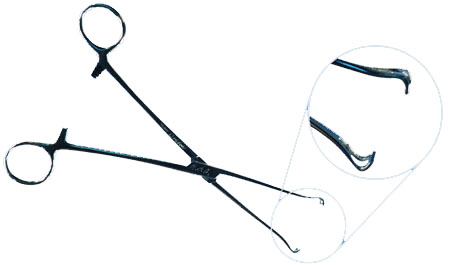
A babcock. Notice that it is made to hold a
tubular organ without crushing the tissue.
On my L&D rotation, I scrubbed in on any C-section that happened. The first time that a woman had chosen to have a bilateral tubal ligation (BTL) after the birth of her baby, I did nothing and nothing happened. The second time, the attending held out the handle of a babcock clamp, which encircles the tube, and told me to hold it. Reflexively, I did; after all, as a med student, you hold any retractor you're told to and wish you had reached for it automatically before you needed to be told. The babcock does not have anything to do with the actual tying of the tubes, but I was definitely participating in a sterilization.

Miserable, I held the babcock in space, wondering what I should do. Should I speak up? I didn't feel empowered and didn't want to be disliked. Was this remote and unwilling enough for me to be quiet and save face? Would speaking up be making a selfish scene? Remember, the patient is awake for a cesarean section; it's sort of too late to discuss ethics, especially when this patient has chosen to do the objectionable thing. But this is grave matter! And I know it to be grave matter! And I am doing it anyway!!
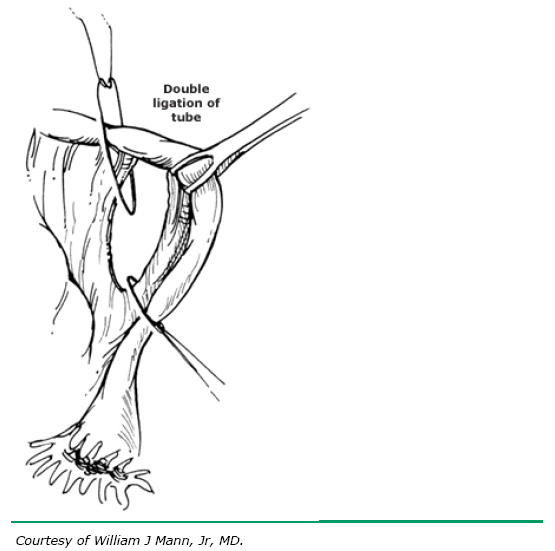
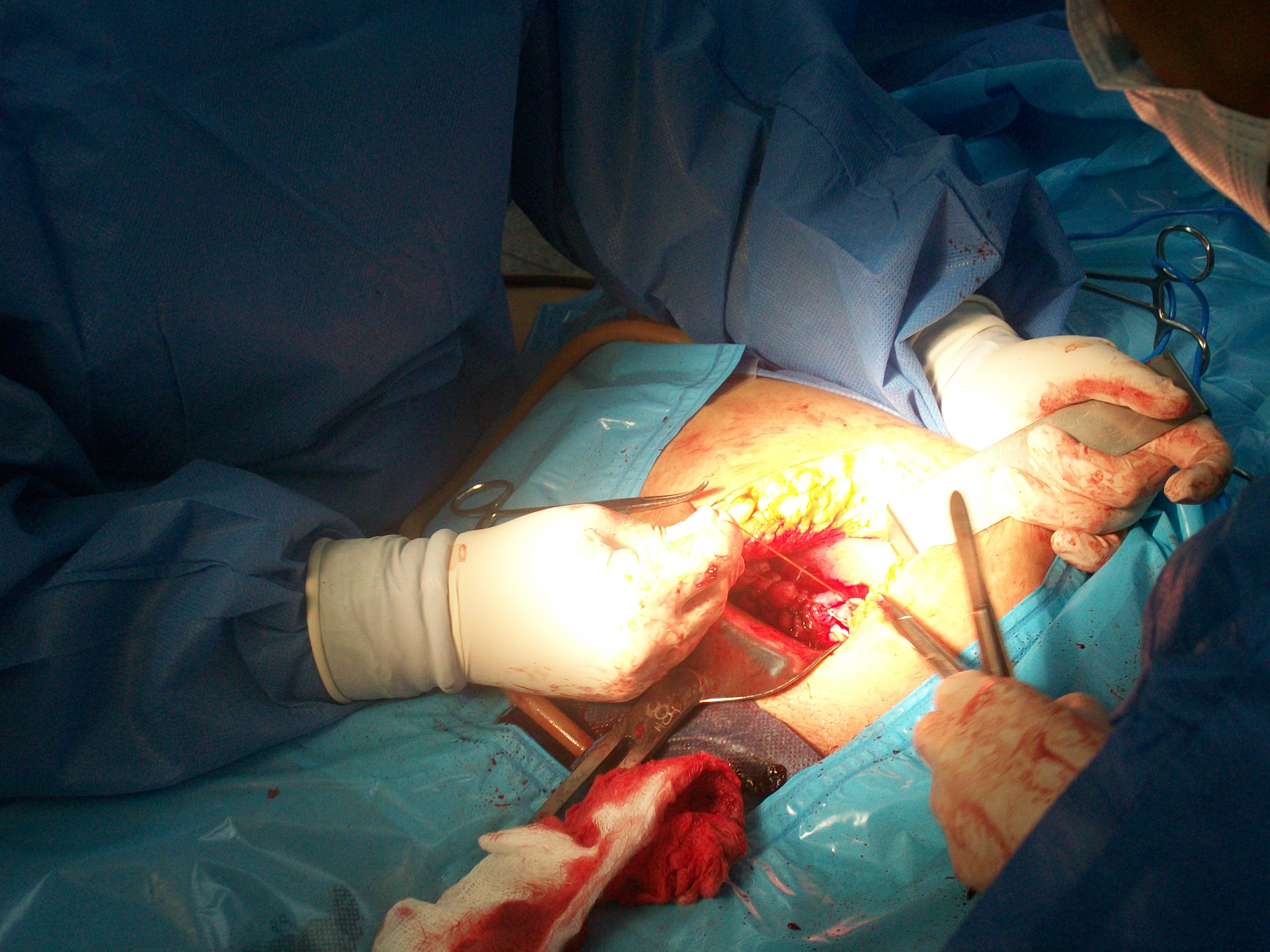
The babcock is at 2 o'clock in this picture.
The other two things are strings being
tied around the tube. The strings are clipped
and the tube between them is removed.
CCC 1857: For a sin  to be mortal, three conditions must together be met: "Mortal sin is sin whose object is grave matter and which is also committed with full knowledge and deliberate consent."
It was over before my analysis was over. So I said nothing. I still didn't cut the sutures. I went to confession before receiving communion. The conclusion of the priest was that this was remote and not "deliberate consent" enough to constitute mortal sin, but I was very, very determined not to let this happen again. It was careless not to say anything to the attending. I did better in the past, when I spoke up discreetly before a mirena insertion. But this wasn't the worst thing that happened.

Birth Control on an Away Rotation

Fourth-year med students occasionally spend weeks at a time at other med schools or residency programs. These "aways" are often done to make a positive impression on the residency program there and are called "auditions" in that case.

I was doing an audition rotation at a school and got waaay too close to prescribing contraceptives. I didn't realize that the clinic would be so pro-birth control, but I found more than 75% of the patients taking some form of hormonal birth control, and a strong culture supporting "safe sex" with 100% condom usage. I was at a loss.

I was on a month-long rotation trying to get people to like me. Med students are always sent into the room first; if I go in first and share all my contraception-why-not knowledge and then the attending goes in, the patient will ask one of two things: "So, is that med student just crazy?" or "Have you been lying to me, doc?" Worse, the patient will decide not to use contraceptives (yay), the attending will ask why (uh-oh), and the patient will explain that "the med student said...," and the attending will (annoyed) have to re-explain all the falsehoods and (red alert) rebuke the med student.

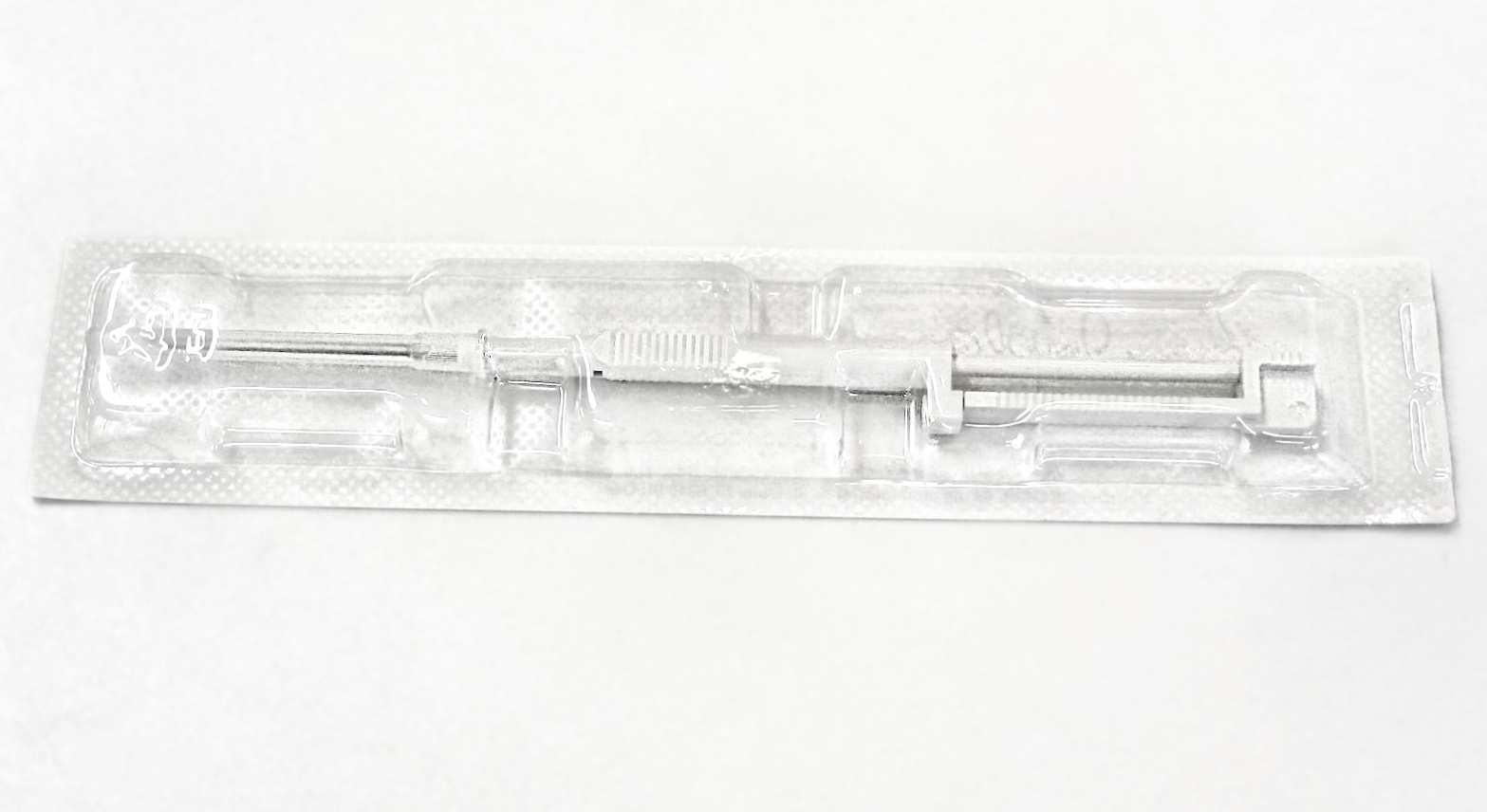
(Nexplanon)
You might argue that this course of action might have been good: it might have created a chance for me to bravely say, "Well, Dr. X, I was actually reading a paper that says (insert pro-family stuff here)...." But I expect those things would fall on deaf ears of the highly experienced, academic, and culturally blinded physicians I was working with. Worse still, I would have confused patients, possibly discredited the arguments against contraception, and possibly eroded their relationship with their physician.

So I clammed up and tried to say true things and not recommend contraception. I tried not to be excited when people were sexually active and using condoms and birth control. I tried to encourage people to think about whether they wanted to be pregnant and let that inform their decision to have sex. I was about the only one in the clinic to continuously tell teens that the most effective way to avoid pregnancy was to avoid sex. 

But I began to echo my attendings' speeches and advice about birth control as I counseled women about "the options," which was a requirement.  I was at fault for not knowing enough numbers to give to patients myself, though. I seemed to morph into someone who was pro-birth control: it decreases the risk of ovarian cancer and uterine cancer, I'd say, and the only side effect is possible irregular periods. When people asked me about future fertility, I said that "our professional organization [ACOG] instructs us that future fertility is not affected." (That was the most painful thing.) Working twelve-hour days in this place for four weeks wore down my defenses.

The ultimate result was the day I was almost running the adolescent medicine clinic and writing notes and plans (only missing the formality of writing the script and signing it) that included birth control of all flavors. After that, I found myself crying in a confessional again. This time, although the priest never said "that was a mortal sin," he did extract a firm purpose of amendment and my intention to say the penance. And he did tell me that I, like pharmacists, lawyers, and some others, stand in danger of losing my soul in my profession. It sounds harsh, but as I knelt in the confessional I felt and knew that he was very, terrifyingly correct.

So, Catholic medical student: discreetly inform your intern/upper-level/attending/preceptor/whoever. If it's too late, you are allowed to say something like, "Oh, I prefer to just observe; I'm happy to explain afterwards." And if you get into a sticky long- but short-term situation like my away, you need to do a little research (I'm hoping to put something up here with quick facts on contraceptives, etc) and be unafraid. Don't break up doctor-patient relationships, but do offer an alternative. I'll share a positive story in the a next post (because I have one).

Saturday, August 30, 2014

Organ Donation: Is Your Soul Gone when Your Brain Dies?

I had some experience while on my trauma/acute care rotation with brain death and organ harvesting. One of my good friends was on the transplant service at the same time. "I think there's a harvest tonight," I said to him one day. A patient on our service, who had come in with severe brain damage after a hallucinogen-associated accident, had been declared brain dead. His family had consented to donation. I saw the organ donation representative with his binder and papers hovering around the room. And the patient's name disappeared from our check-out list (the list we keep of the patients so that we can hand them off to the night team). Sure enough, there was a harvest that night.

It sounds macabre, and it is. Late one evening, I was walking down the long hall of operating rooms to get a snack out of the physician's lounge. I passed by the screen at the front of the OR that displays all ongoing surgeries. Each operating room has a row, and the cases stretch out like long ribbons along the row, with every hour taking about three inches on the screen. Because it was 7:00 or 8:00 in the evening, no elective cases were scheduled. There was a laparoscopic appendectomy posted for the near future: it was about eighteen inches long on the screen. But at the bottom of the screen stretched an enormous band of orange, disappearing to either end of the screen. "HARVEST" was the procedure.

I walked down the hall. Outside the room's door were many styrofoam crates with plastic bags labeled "human organ for transplant" and advisories about temperature and transport. There was a liver box, a kidney box, a heart box, a box for blood.... No shades were drawn over the windows, so I looked in. The body on the table looked pale; I later realized that this was because blood was being taken. And instead of a cot or hospital bed waiting outside the door, as in every surgery, there was a long box on wheels. A tank, from the morgue.

The Catechism, in 2296 (in the section on Respect for the Person in Scientific Research) has this to say about organ donation:
Organ transplants are in conformity with the moral law if the physical and psychological dangers and risks to the donor are proportionate to the good sought for the recipient. Organ donation after death is a noble and meritorious act and is to be encouraged as a expression of generous solidarity. It is not morally acceptable if the donor or his proxy has not given explicit consent. Moreover, it is not morally admissible to bring about the disabling mutilation or death of a human being, even in order to delay the death of other persons.
I had heard the horror stories about people (rather than bodies) being harvested. But med school gave us training to recognize legitimate brain death. This included forceful reminders that that two physicians must agree on the criteria. But is brain death a suitable way to determine that the soul is gone?

Maureen Condic, Ph.D. wrote a helpful essay entitled "Life: Defining the Beginning by the End." Published in 2003 by First Things, the essay discusses the beginning of life by considering death. I was already a Condic fan, because of her phenomenal (and unsung) white paper on the beginning of life, and because I was a Vita Institute participant.

Condic highlights the distinction between cellular (or even organ) life and life of the organism. (Busy people read the bold.)
Brain death occurs when there has been irreversible damage to the brain, resulting in a complete and permanent failure of brain function. Following the death of the brain, the person stops...sensing, moving, breathing...although many of the cells in the brain remain “alive” following loss of brain function. The heart can continue to beat spontaneously for some time following death of the brain (even hearts that have been entirely removed from the body will continue to beat for a surprisingly long period), but eventually the heart ceases to function due to loss of oxygen....

The fact that the cells and organs of the body can be maintained after the death of the individual is a disturbing concept. The feeling that corpses are being kept artificially “alive” as medical zombies for the convenient culture of transplantable organs can be quite discomforting, especially when the body in question is that of a loved one. Nonetheless, it is important to realize that this state of affairs is essentially no different from what occurs naturally following death by any means. On a cellular and molecular level, nothing changes in the instant of death. Immediately following death, most of the cells in the body are still alive, and for a time at least, they continue to function normally. Maintaining heartbeat and artificial respiration simply extends this period of time. Once the “plug is pulled,” and the corpse is left to its own devices, the cells and organs of the body undergo the same slow death by oxygen deprivation they would have experienced had medical science not intervened.

What has been lost at death is not merely the activity of the brain or the heart, but more importantly the ability of the body’s parts (organs and cells) to function together as an integrated whole. Failure of a critical organ results in the breakdown of the body’s overall coordinated activity, despite the continued normal function (or “life”) of other organs. Although cells of the brain are still alive following brain death, they cease to work together in a coordinated manner to function as a brain should. Because the brain is not directing the [diaphragm] to contract, the heart is deprived of oxygen and stops beating. Subsequently, all of the organs that are dependent on the heart for blood flow cease to function as well. The order of events can vary considerably (the heart can cease to function, resulting in death of the brain, for example), but the net effect is the same. Death occurs when the body ceases to act in a coordinated manner to support the continued healthy function of all bodily organs. Cellular life may continue for some time following the loss of integrated bodily function, but once the ability to act in a coordinated manner has been lost, “life” cannot be restored to a corpse”no matter how “alive” the cells composing the body may yet be.
If that sounded interesting to you, I encourage you to read the rest. Condic goes on to talk about how this definition excludes persistent vegetative state (i.e. we can't argue that Terry Schiavo should die from agreeing that brain death = death), and that this definition does not hang on consciousness or cognitive function (i.e. we can't euthanize the unborn, the disabled, or the demented because we agreed that brain death = death). I disagree with a few of Condic's assertions, notably that we cease to think upon brain death. (who, with the light of faith on matters like the communion of saints, would say that the soul, separated, cannot think without the brain?) But the rest of her work is medically excellent as far as I, eight months from M.D., can see. This is also philosophically sound as far as I, a bachelor in philosophy, can see.

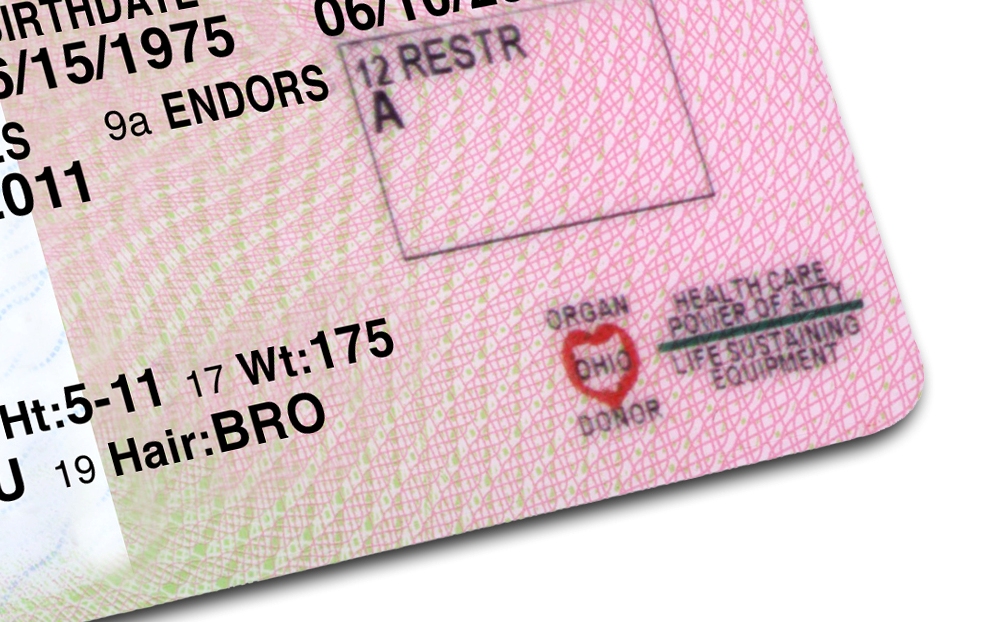
When I initally got my driver's license, I was still undecided about organ donation. I renewed it recently, and I'm now a donor. I encourage you to prayerfully consider donation, too. Besides saving up to 8 lives, you could also bring closure to your family after your death, all in accord with Catholic teaching, sound philosophy, and accurate medicine.

(Spoiler alert: that's not my license at left.)

Thursday, June 12, 2014

The Third Year Manifesto, last part: An Analysis

There are days that I want to ask the hospital at large: “When do I get my personhood back? When am I treated like I have the dignity that everyone else does?”

I want to be comfortable where I work. I want to be safe to be myself and express my limitations. Instead, I cork up dozens of questions a week. I’ve violated the sterile field a half dozen times and don’t bring it up. I hate being told that I can’t do something because being so uninvolved, it's not what I’m paying for, and I have more to offer. I hate being told that I can do something because I will be watched, I will fear derision and misunderstanding, I will fumble out of fear, I will put on my game face and fumble out of incompetence, or I will get lucky and be deluded so that the next fumble hurts more.

I want is to be satisfied with the way my life is going. I want the basic esteem of others. “Oh,” is all I wish that people would think when they saw me, “she’s a medical student. You know, those people can’t do much. But they sure try.”

#

Once, I caught myself apologizing to someone in these exact words:

“I’m so sorry for taking up so much space!”

After uttering this ridiculous sentence, I went out the nearest door in a polite rush. Only after the door shut behind me did I shake my head and think, “what a stupid thing to say. I’m taking my own personhood away; apparently, I don’t need anyone else’s help.”

So, now that it is the fourth year of medical school, I am deciding: no one is taking my dignity away, least of all me. If they demean me in the OR, they are doing something inappropriate. I will graciously excuse them, like one ignores a person passing gas.

I am determined never again to agree with the lie that I am a worthless idiot. That lie leads to an psychological hell.

Part of the reason I became such a doormat/basket-case of self-critical emotions and permitted everyone else’s criticisms (petty or cruel) to sink me, was that I had a lousy idea about humility. I had this glorified picture of religious life in somewhere between 1600 and 1900 in which saints were made by kissing floors. Didn’t St. Bernadette, St. Jeanne Jugan, St. Therese, and many others have to be grossly misunderstood and abused to become saints? Don’t you have to believe all the derogatory things people say about you if you want true humility? Yeah! So, I was excited because I’d heard (correctly) that the third year was a lot like a floor-kissing novitiate.

But there is a basic misunderstanding there. Cultures that file away at personal dignity crowd out holiness! A person tossed around in such a culture becomes so distraught over himself and convinced of his incapacity that he can’t have the magnanimity a saint needs to become like the all-loving God. Believing himself to be a microscopic locket—always too small, always wanting, always disappointing—this miserable man can’t imagine becoming a vault, a temple.

It is a lie of Satan that I am worthless. I want to do great things for God. I want God, I want to be like Him, and I expect He will make us that way. So if I ever stoop to another floor for a kiss, it will be because Jesus is there, waiting to kiss me back and make me His gorgeous, eternal, perfect bride.

Wednesday, June 11, 2014

Third Year Manifesto, Part 2: Stories

In which I vent all the stories that I've kept bottled up so as not to be a whiner. The last part of this trio of posts is coming tomorrow.

#

I obediently submitted to being taught how to insert a Foley every time I inserted one. Today (the first day of fourth year) was the first time no one approached me and said, “oh, let me show you how….” It was disorienting. Wasn’t someone going to smother me with their preferences?

I breathed. I felt free! But the freedom was not to last. As I proceeded, I heard a very distinct “hmpf!” behind me, in the same tone people use when they raise an eyebrow and say “well, that’s interesting!” and really mean something much less benign.

#

The first vaginal delivery I attended on L&D, I did what the clerkship director told me to do: I protected the perineum and stayed close, in case I could actually be allowed to deliver the baby. This is called, good-naturedly, “being aggressive,” and it’s a good quality in medical trainees.

In that first delivery, a senior resident and an intern were also there. I guess if I were more shrewd, I would have known that it was bound to be the intern’s delivery. But who was I to know that what the clerkship director told me wasn’t right?

The senior resident decided to put an end to my aggressiveness. She put her hand on my hands and pushed them away from the field. Pushed. No exaggeration; the equivalent force could have shoved a gallon of milk several feet. The embarassment (and the sheer force) moved me to the back table for the rest of the delivery. When she asked me later, “did you see how the baby did xyz during abc stage?” I felt like saying, “No, of course not. If you want me to see things, don’t push me away.”

#

When a gentler resident was graciously allowing me to suture subcutaneous tissue in the OR, I put my needle driver down on the field, with the needle still in it. It was the first time I had ever done this, because it was the first time I had to cut off my needle to tie. (It was the first time I wasn’t using 4-0 and subcuticulars in the skin). The scrub tech slapped my hand, chiding me verbally. I blushed with angry embarassment underneath my mask, but tractably apologized, etc. Then, she said these words exactly (I remember them and you’ll see why):

“There are some people,” she said self-righteously, “who’ll slap your hand for that. I won’t, but there are some.”

I tried not to stare at her blankly. I guess it never dawned on her that she, SHE had ACTUALLY (not metaphorically) slapped my hand. I guess people who use that phrase end up acting on it without realizing it?? She has been the only one to do that.


#

One day in surgery I learned that the scrub tech, the scrub-nurse-in-training, and I were all within a few years of each other. I was the oldest. I was paying, snipping, uncomfortable, and chastised during the surgery. The other two, who were allowed to take a lunch break (during this six-hour surgery), were paid and thanked.

The fact that I’m paying to be there seems to some surgeons to mean that I’m not to be thanked and that I’m automatically incompetent. It seems to say, “she can’t do anything.”

“No, no,” one surgeon said when I reached for a towel to drape a patient. The scrub tech, who had offered me the towel, knew me better than that surgeon. He was being a pal, and he knew I have seen patients draped dozens of times and I could do it. But no! “She’s a medical student, she doesn’t do that,” the surgeon said.

“Excuse me, Doctor Bossy-Pants,” I burned to say. “I am a medical student and I can do that. Watch!” But it’s her sterile field, it’s her OR time, I’m her responsibility and (the real reason) she’s grading me. So I didn’t do that. I backed down. I abased myself.


Tuesday, June 10, 2014

The Third Year Manifesto, Part 1: Cutting Suture

I will now discuss the stuff of third year that is not happy and glamorous. Having a blog places slight pressure on a person not to whine. But not to disclose the negative parts of medical school would be dishonest. So it’s time to air a few grievances, and (because I can’t seem to not do this) discuss morality and holiness at the same time.

At some point during my third year, I got very demoralized. It’s hard for a person who wants to do great things well (and is used to doing great things well) to find herself unable to hope even for mediocrity.

One response to this predicament: Ah, what a chance to grow in humility!

THIS IS AWESOME.
"Ah," goes this response, "I have had many peers, past and present, who have struggled to get the things I’ve gotten, like A’s and letters of recommendation and leadership positions and success…. Now, God is making me more like them, to help me see that they are my brothers in everything. I have nothing of my own and am happy to have God, because I truly lack nothing."

Another and much more human response to this predicament:
THIS IS TERRIBLE.
In its severest form, this disappointment becomes sadness, loneliness, isolation, depression, and despair.

It was a war between these two responses for the second half of third year. However, it is old news that 1) I am a little soul and 2) there's a war going on in me between holiness and not-holiness. God is exerting Himself to the maximum and employing all kinds of things (sacraments, virtues, habits, circumstances, living people, dead people, people I’ve never laid eyes on, angels, and even me) to make me like Himself. On the other side are all kinds of things (occasions, vices, habits, circumstances, living people, dead people, people I’ve never laid eyes on, angels, and especially me) persuading me to stay in my nice little hidey-self-in-hell-hole.

But morality aside for a teensy moment: seriously! This year was so demoralizing at times!

Do you have any idea what it is like to stand in a surgery, not allowed to do anything except trim suture? Somebody ties a knot around [whatever], and I come in with scissors and snip it. That is 90% of my intraoperative action. This is especially painful because I’ve been given great responsibility and responded rather well to in the past. I wish I could speak my mind in those ORs.

“You know, I am a person.”

Snip.

“With an intellect.”

Snip.

“A rather good intellect.”

Snip.

“And I have pretty good hands, too. Did you know I paint? And I’m handy around the house.”

Snip.

“And if you let me stick-tie the ovarian vessels/close the fascia/dissect adhesions/use a bovie/debride dead tissue/MANY OTHER EXAMPLES, I bet I could do it.”

Snip.

The worst part is, I am not even permitted to stupidly cut as I like. I am chided because I am not doing it properly. Since the clinical years of medical school are a dizzying merry-go-round through services and surgeons, I can never acquire expertise in one thing. Many have pretened to, but no one ever has, given me a comprehensive lesson in how to properly cut all types of suture in all places according to the preferences of all surgeons. (I expect even the Eternal Father would have difficulty with this one. Just kidding, Abba.)

“Whoa!” says one surgeon. “Too short.”

Or again, the surgeon is uncomfortably silent after I cut. I timidly ask, “too long?”

At least I have never cut someone’s knot. There was once when I took the blame for a broken knot. A few minutes after I snipped, one of the resident’s knots came undone. To save the resident face, I said, “Oh, I cut your knot, didn’t I. I’m sorry.”

I became the queen of taking flak this year. There was an “Oh, thank you,” after every correction; there was a sincere-sounding “I’m sorry,” after every action someone objected to.

Today, while snipping, I grew less and less successful. I began to wonder whether there was a problem with the scissors. Surgeons and residents are quick to ask for a different instrument if the one they’re holding does something silly or inefficient. Not being a surgeon or a resident, I waited out my silly, inefficient instrument for a good five more snips. While I waited, a new scrub tech clocked in. This meant I lost the rapport I’d built up with the first one (my pulling a gown and gloves, helping in setup, etc) I didn’t think anything of this at the time, but now I wonder whether er shift change made a difference in the answer I received when I eventually asked, “Do you have another pair of scissors?”

There are at least four pairs of scissors in almost every set. I know because I know their names: curved Mayos, Mets, tenotomies. There are also Potts and Dietrichs, but even I wouldn’t use those for suture (now I’m just showing off how many types of scissors I can name without looking things up). The suture scissors are called “heavy sciz” by some, but their real name is straight Mayos. Technically, you’re supposed to use the straight Mayos for stuff, like foam, suture, and mesh. Cutting these undelicate things with the better scissors would dull the blades and damage tissue. But I’ve seen surgeons get frustrated with a pair of straight Mayos. They drop them to purposefully exclude them from use, then start to use the curved Mayo’s or the Mets. I’ve even seen someone use the tenotomies. So certainly it would not have been absurd for me to use a different pair of scissors. But what did the scrub tech say?

“Is it the scissors, or is it you?”

I felt like exploding.

Please,” I wanted to say, “even if it is me, could you think of a different way to say it? Maybe ‘show me how you’re cutting’? Or maybe, just maybe you could humor me? I humor people to ridiculous extent. Could you just hand me the curved Mayos? Maybe then I’ll learn that it is, in fact, not the scissors. And you know what else? Even if it’s not the scissors, I don’t like that you said ‘me,’ as if I/me/my person is a problem. My technique might be lousy, but why the ad hominem? Why do I become a problem because I don’t cut suture properly? And anyway, who has taught me how to cut? No one! I have had to cobble things together myself!”

See the med student, doing nothing?
Oh wait, I forgot to get them in the camera view.
But I said, smiling doormat that I have become, “Oh, probably me.” And she said what I should have been doing. My success was unchanged: some good cuts, some lousy ones. In retrospect I think the scissors were fine and I was fine. The problem was that the incision was getting deep (down to the retroperitoneum) and therefore the sutures were getting further and further away from me. When you have to stand on tiptoe and crane your neck and reach to cut something, nothing works quite as well. I can’t wait to be the surgeon or the resident and have a legitimate place to stand so that I can see the operative field all the time.

Friday, May 23, 2014

Abortion Hurts Women: I've seen It.

This post conforms to the blog rules.
I witnessed emergency surgery on a woman with complications after abortion. Someone had perforated her uterus, and she was rushed to our hospital.

I only heard about the case incidentally. I was on a different service (not the gynecology service, and not even on my OB/GYN rotation). I happened to be down in the main OR, and I was just leaving when I saw one of the OB/GYN chief residents I knew. I’d been trying to arrange a meeting with him about residency program selection. I was eager to hear what he had to say, because I happened to know that this chief had interviewed specifically to avoid performing abortions, or “terminations” as OB/GYNs often say. We’d never gotten to talk because he was out of town for vacation, I was out of town for the cardiothoracic surgery rotation, etc. When he saw me, he seized the moment to sit down in the physicians’ lounge and give me a list of programs he liked and a list of programs he didn’t like.

As we were talking, I noticed that not only was he there, but so was the third-year GYN resident, their attending, and the medical student on gynecology. This meant they had a pretty intense case. (The rarer the case, the more likely the upper-levels are involved. And to have two residents in on a case is rare indeed.)

The third year resident (R3) noticed that I was counting and surmising. “Something's coming up from the ER,” the third-year said, to explain why they were all there.

“A perf’d uterus from an abortion,” the chief said. The attending sat wordlessly by, watching the television.

“Your dream case, right?” the R3 said to the chief, smiling. From his comment and tone, I surmised that the R3 was probably pro-choice, and was joking with the chief, who had never done an abortion but who (I guess?) needed to log one. “Are you going to count this as an abortion?” the R3 joked.

The chief smiled back good-naturedly. “Yeah,” he said quietly, “ ‘open abortion,’ ” he said, referring to how he would make his incision. What must it be like to be pro-life among pro-choice colleagues for four years of training?

I asked to observe the case, even though I knew I couldn't scrub in (because there was already a med student and two residents, and because I wasn't even on the gynecology service). The attending gave her permission, and I went to see the patient in preop. She lay there on the ER cot she'd come in on; next to her was her significant other. She looked like a woman in pain—physically and emotionally. The other medical student (the one actually on the gynecology service) was scrubbing, so I took my place at the foot of the table, behind a machine and next to the kick bucket (where the used/bloody sponges are tossed).

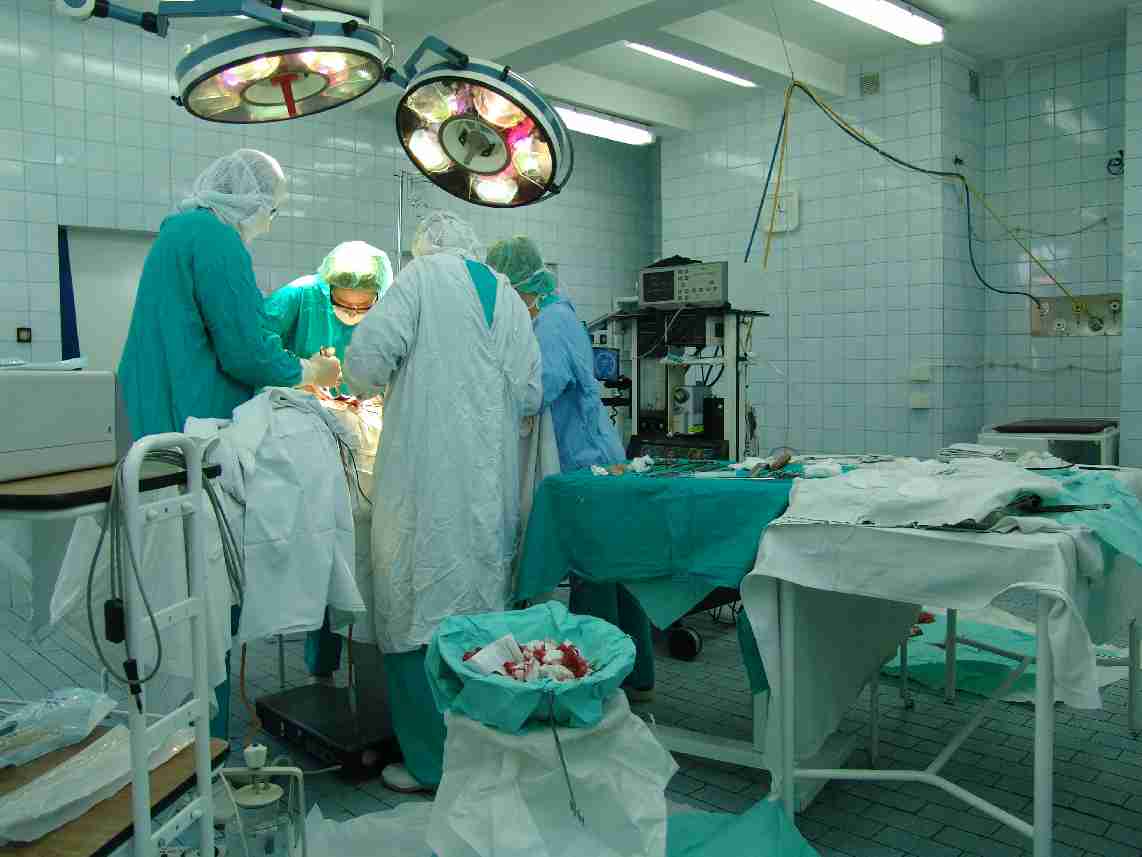
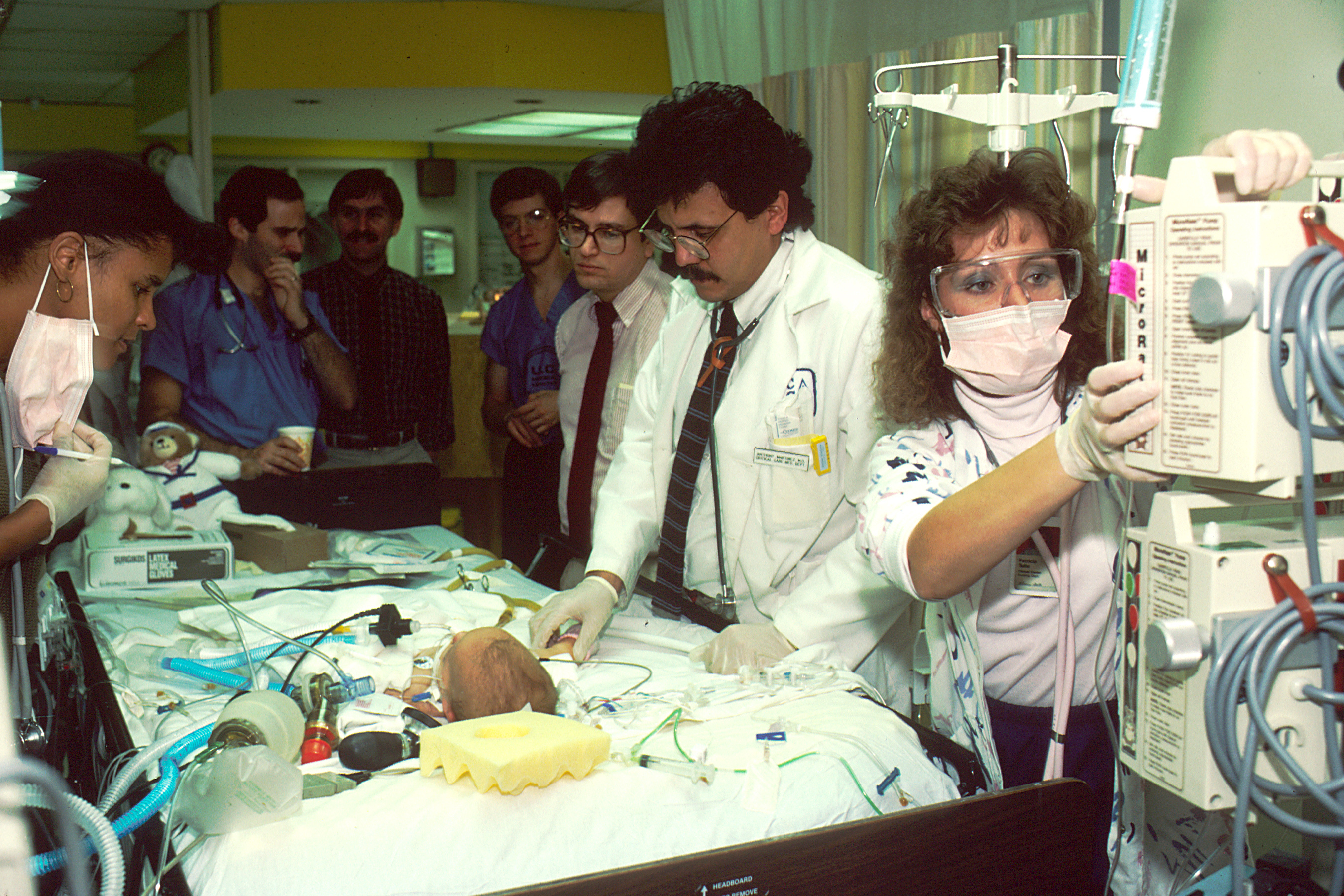
There were a dozen people in the OR. This is a stock photo.
Once the patient was asleep, the chief resident made a large midline incision. Blood and clots came out as he reached the peritoneal cavity. The anesthesiologist ordered two units of red blood cells. I literally had to be careful not to get splashed as bloody sponges were tossed into the kick bucket in rapid succession.

The chief and the attending opposite him pulled the incision open like an emergency C-section, and then the chief reached in to explore the patient’s body with their hands. The chief resident emerged and passed something to the scrub tech, who placed it on her mayo stand, just a foot away from me. It was the head and shoulders of a fetus—a tiny, perfect bust the size of a plum. Next, they found the uterus and pulled it up. I could see it: part of it was a healthy pink, but one corner was mangled, raw, purple, and bleeding. They then explored the surrounding organs, and found the sigmoid colon nearly transected, the proximal and distal limbs held together by a pencil-sized strand of mucosa or mesentery (I couldn’t tell). When they pulled that up, there was an instant of silence as everyone in the room mentally said something between “oh my gosh” and an explicit oath.

“We need colorectal,” the attending said commandingly.

“Colorectal?” repeated the circulator, lifting the phone.

“Stat,” replied the chief resident.

The other medical student, who had already been on the trauma service, turned to me and said, “that’s worse than I ever saw on trauma.”

Again, stock photo. The OB/GYNs didn't need
headlights or loupes (or that sternotomy
retractor), but the rest is accurate.
Then began the fastest and bloodiest hysterectomy I’ve ever seen (and the only supracervical hysterectomy I’ve ever seen). As they cut away the fallopian tubes and ovaries, I heard the anesthesiologist say, “can we get two units stat?” The OB/GYNS continued to work like machines, clamping vessels and cutting uterine muscle, while the anesthesiologist updated them: the patient’s blood pressure was dropping, and he couldn’t get it up. “We need a trauma tray,” he finished.

“Trauma tray!” confirmed the circulator.

The anesthesiologist was starting an arterial line at the patient’s wrist. Beneath the sterile towels he’d draped over her arm, I saw that her fingers and fingernails were white, like the bodies we’d dissected in gross anatomy. The patient had started as a beautiful shade of bronze—she must have lost a lot of blood to be sheet-white like that! I started to pray.

Colorectal arrived—an attending and two fellows. Because I was the only one in the room without a job, I gave them the one-liner presentation. “This is an **-year-old female with perforated uterus and sigmoid after therapeutic abortion earlier today.”

“I heard,” the attending said grimly. He and one of the fellow got gloves and gowns. The OB/GYN attending looked up at them, her bloodied gloves holding two enormous clamps that disappeared into the patient’s pelvis. Her expression was remarkably calm. “We’re almost done,” she said. “We’re taking out the uterus.”

At that moment, my pager went off. I thanked the attending and went to see the patient I was paged about. It was a very boring “trauma,” for which I did nothing and the patient was wheeled (completely stable) to the CT scanner. As soon as I was free again, I went back up to the OR. The case had just ended, and the chief was writing the post-op note in the physician’s lounge.

I only had one question for him: did she make it?

“Yeah,” he said. He told me about the remainder of the case, most of which I don’t remember. I talked with the medical student the next day and he had more information.

“It was a cornual pregnancy,” he said. “So whoever was doing the abortion was going to perforate the uterus no matter what.” He knew I was against abortion, and I expected he said this so that I didn’t go on an abortionists-are-so-incompetent march. What he said fit with the appearance of the uterus—one corner destroyed.

“She also got a colostomy,” the med student went on. “And she didn’t know that. So when I went to round on her this morning and asked her how she was doing with a colostomy, she didn’t know what I was talking about. And she was pretty upset when she found out.”

This woman lost her baby, her uterus, and part of her colon. Although her colon would probably be reanastomosed later, she currently had a colostomy and unexpected time away from work, plus a long new scar and postop pain. Add to this that she was not safe during this surgery: her blood pressure was very low during it, and I was afraid for her life.

*SIGH* Stock again; her baby would have been much
smaller, less developed, and in the horn of the uterus.
I was very unhappy for her. Laws were recently enacted in my area to require preop ultrasound. Would preop ultransound have shown the location of her fetus? Had it been done? Had it been done carefully and well? Did they rule out cornual pregnancy? Did they see it but think they could do it anyway? Did they tell her she had a cornual pregnancy? Did they really give good informed consent?

I left with the overwhelming feeling that abortion clinics don’t provide best medicine to patients. And I already this, but now it was impressed on me forever: abortion hurts women.

Sunday, January 19, 2014

Internal Medicine

This post conforms to the blog rules.I am one week in to my second month of inpatient medicine, and I am run-down. I have seen a lot of sick people and learned a lot. It has been exciting, emotionally draining, and physically taxing. I wish I could tell you the story of the man with an enormous malignant pleural effusion, the story of the man with a hemoglobin of 1.8, the story of the man whose foot was amputated in the middle of the night, the story of the man with a failing heart, the story of the woman who presented with flu and was found to have leukemia, the stories of the several people found down, the story of the pregnant woman with flu, the story of the man with the three-foot aortic dissection, and the story of the man I thought was having a heart attack but who was really lying to me about his cocaine use....

Daily Mass and meditation have been hard to get to, and that sends me into a tailspin of scrupulosity and humiliation. However, I was able to go Mass almost every day in the past week and formation is still going on. When you read this, please pray for my bishops; they are making some important decisions and need your help!

My schedule now looks like this:

4:50 Rise, MP
5:30 Drive to work
6:00-8:00 See patients and write notes
8:00-12:00 Round with resident or intern
12:00-1:00 Noon Conference with residents (Midday prayer doesn't happen during the week)
1:00-5:00 Lecture, studies, or other learning with resident or interns
7:00 Mass, EP
8:00 Home, mediation
9:00 Bed (NP doesn't happen much right now)

Unless I am on call (working 6:00-9:30), then I exempt myself from Mass and meditation.I am on call every fifth day, and this means that there are some days I work on Sundays and Saturdays. The day after call ("post-call") is also a workday, so if call lands on a Friday, I work Saturday (that happened this past week.) If call lands on a Saturday, I work Saturday and Sunday. The residents call this a "black weekend," but because of the way the call schedule works, it is always followed by a "golden weekend" of both Saturday and Sunday off. Obviously, when call was on Sunday once, I went to an anticipatory Mass.

When I'm on call, my team picks up the new patients coming in to the hospital. This means that I am sent down to the Emergency Room, with nothing but my notebook, pen, and stethoscope, and asked to write an admission note (an H&P or history and physical exam) on the person. This means I need to find out all about them. Why did they come in? If for pain, where/when/how/how bad is it, and what makes it better/worse? Have you had this before? What other problems do you have? Surgeries? Family history? What medicines are you taking? And then, I ask them the "review of systems," basically asking about every other medical symptom I can think of, even if unrelated to their chief concern, so that I have a complete picture and can make an accurate diagnosis. Then, I examine the patient and attempt to make a diagnosis. I meet the intern outside the patient's door or in the physician's work room in the ER, and "present" the patient. "Mr. So-and-so is a 45-year-old white male with a past medical history significant for diabetes and CVA in 2001 who presents with a four-hour history of dizziness...." I consolidate my whole interview and exam with the patient into a one-minute presentation that ideally ends with my assessment and plan. This is all terrifying, but fun.

Two days before the call day, I am "on codes." A "code" or "code blue" is called when a patient goes into cardiac arrest. I carry a special pager on code days that goes off whenever a code blue is called, anywhere in the hospital. When that pager rings, it flashes where in the hospital the code is, and I immediately drop everything and walk/run there. I have been to three total, I think. There are usually plenty of people at a code, so I usually stand in the background. I gave chest compressions once. All three times, the person died. (The survival rate to hospital discharge from a code blue is extremely, extremely bad--don't let the medical dramas fool you.)

What does a medical student do in the hospital? I come early and see the patients assigned to me (usually three, yesterday four). I go into their rooms, (usually) wake them up, and ask them how they're doing. I follow up on their pain, nausea/vomiting, breathing, constipation/diarrhea, urine output, medicines, etc. Then I examine them. It's amazing how natural this is becoming! Then, I update them on any test results that I have seen and they haven't been informed about yet. I always leave big news for the resident or specialist, but if there is something simple I can tell them, I do. I ask them if they understand everything that's been told to them. Often, the answer is "no," and I know enough to help them understand. Then, I ask if I can do anything for them, and if not I leave and find a computer.

I pull up their chart in the EMR and write a progress note, including what I think should be done for the patient that day. Should we continue the IV fluids? Should we give a diuretic? How long have they been on that antibiotic and is that enough? Should he be taking a beta-blocker for that telemetry strip? Should we try an enema? Should he have an ABG? Can we adjust the FiO2? Do we need to consult someone? Can they go home today? If they have multiple problems (and almost everyone does), this takes longer than the actual patient encounter. Juggling lung disease, dizziness, heart failure, and acute kidney injury (for example, as I am with one of my patients right now) is a very tricky business. Managing pain is another huge undertaking. And making sure all the medicines are working for the patient is work as well, especially when they are often on so many! I like to really prune back the list, but sometimes it's impossible. Admission for a single heart attack (with no other medical problems) earns a person about eight drugs, right off the bat.

I submit my notes before 8:00, which is when the interns review my notes and see those same patients. They usually formulate their plan without taking mine into account (my notes are more for my education than the patient's care), but I have had some take some of my text and use it in their notes! Sometimes I round with them, but more often I join the "upper-level," a second-year resident. She has to see all the same patients again, too, because she checks the interns' work (and the attending physician checks hers). This is how doctors train! Daily practicing medicine with less and less supervision.

Rounding with the upper-level, we present the patients outside the door or while walking and then go in and see the patient together. We are supposed to know everything about the person--down to the last lab test result. So, I carry around a single sheet of computer paper per patient, crammed with an organized and traditional shorthand full of medications, symptoms, and results for up to fourteen days. For example, writing numbers in the four "fishbones" at right gives me 22 test results. Because each result has its traditional place (the white blood cell count always goes to the left of the CBC fishbone), I don't have to write down "white blood cell count is" or even "WBC."

Noon conference is mandatory free lunch with lecture. Every day, we learn about something in medicine. I'm sure the upper-levels have heard some repeats, but repetition is the mother of learning. After noon conference, the med students have additional lectures and we also do practice questions or join the interns for some teaching. "Teaching" from a young doctor is different, depending on the doctor. With one of my interns, I trooped up to an ICU and we found a patient on a breathing machine so that he could give me a one-on-one mini lecture (with questions and practice cases all throughout it) on ventilator management. With another intern, we did practice board exam questions. With a third, I was left alone to read and do practice questions on my own.

As you can imagine, I'm learning a lot. This ended up being a respectably-long and mildly interesting post...I dive into IM again tomorrow and have a black weekend the next week, so I probably won't be blogging again soon. Pray for me, and for my bishops!

Saturday, December 28, 2013

Catching up: IM is hard

I am now ending my Christmas break and have finally decompressed enough to blog. (Or, I've finally realized that if I don't specifically carve out time to blog, it won't happen and all I will do is hang out with siblings, clean the kitchen, and do errands.) I am now one sixth of the way through internal medicine: two weeks down, ten to go.

Internal medicine (IM or "I med") is the meat and potatoes of the third year: it represents most of Step 2, and it teaches us basics of adult medicine. Our rotation is made up of one week of palliative care, two month-long rotations with an inpatient team of residents, and two weeks of outpatient care with a practicing physician in the community. Because our Christmas break landed in the middle of one of the month-long rotations, I have one fewer inpatient weeks and one additional outpatient week. (Cue the Alleluia chorus, because inpatient is much more intense and demanding than outpatient; this coincidence will give me more time to study and less time with resident team 1, which is keeping me hopping although I'm learning a ton.)

In one week on this residency team, I saw patients with stroke, sickle cell crisis, cellulitis, heart attack, heart failure, pericardial effusion, leukemia, sepsis, coma, and disseminated cancer. One patient died (I was not present).

The resident quizzes us a lot during the day, so studying is a must. We write notes on the three patients we see, and we see them before 8:00am, which means I'm getting up at 5:00, and that also means I'm usually missing Mass. I'm struggling to work until 5:00pm or 6:00pm, study, pray, and relax. IM is challenging me!

Formation is stressing living as Christ and being the Eucharist for others, though, so I am definitely getting a chance to do that. And St. Faustina says that one Eucharist lasts until the next, so I'm at peace as far as Mass goes. Praying the litany of humility (and just being a third year med student) is also helping me have realistic expectations of what I can and can't do, and how much I should or shouldn't know at this time in my life.

In other news, all during the OB/GYN rotation I either avoided or bumbled through explaining why I wouldn't prescribe contraceptives. Today, at coffee with my high school friends, one of them asked me about it and I explained *~beautifully~* why I thought what I did. Yay! I can have that conversation! (One down, a million to go.)

Monday, November 25, 2013

First Delivery!

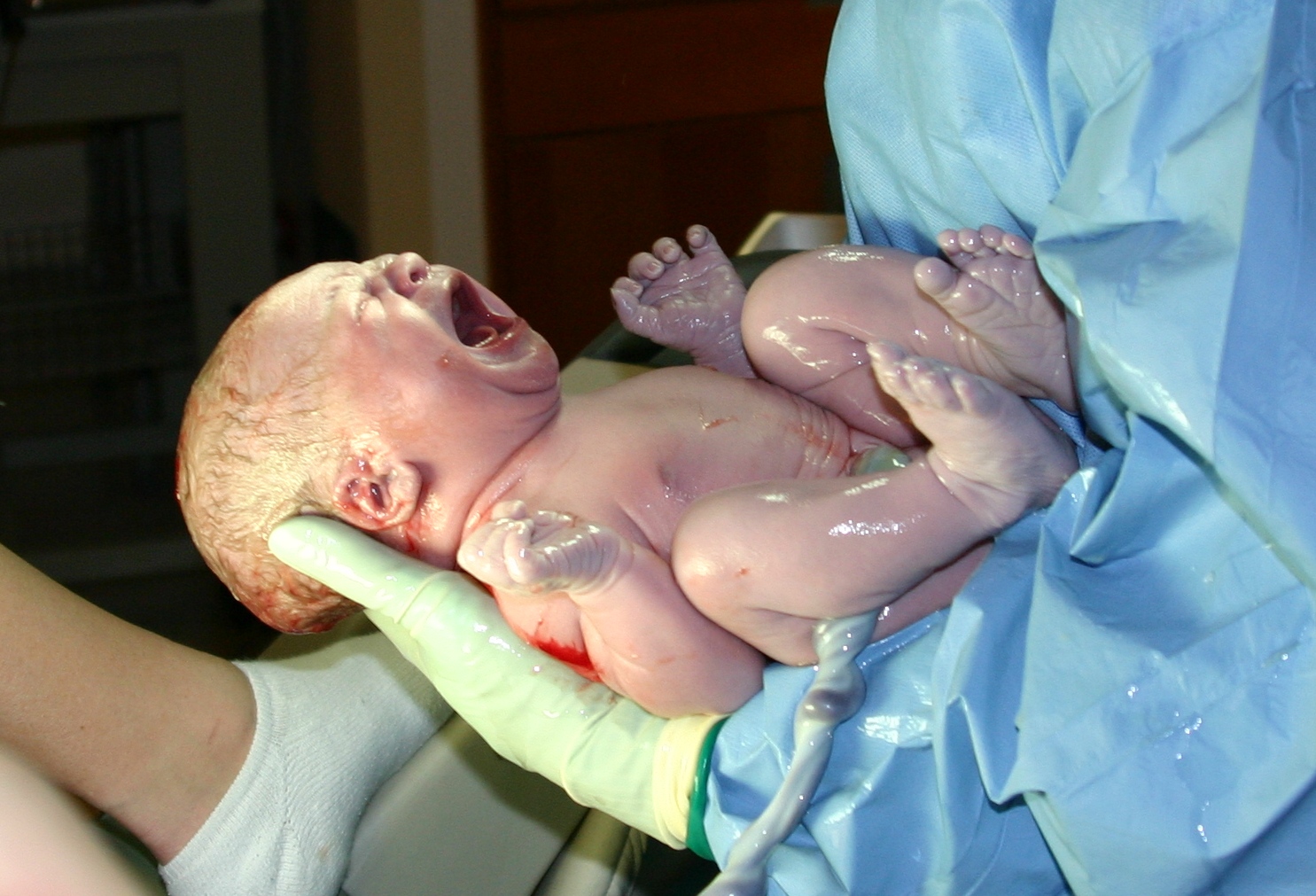
This post conforms to the blog rules.O I just got off 24-hour call, from 7:00am Sunday to 7:00am Monday. It was very eventful: I scrubbed in to four vaginal deliveries and two C-sections. And I delivered my first baby! And guess what his name was? I can't tell you because that would be breaking the law, but it may have been remotely related to one of my favorite people, and that made me really happy. Plus, the couple was really wonderful: the wife was beautiful, and was working really hard and keeping a great attitude the entire time. And the husband was kind and supportive, and when I handed him his child, he started to sniffle (hiding it as best as he could, which was not at all) and hadn't stopped sniffling when I left the room. They were young, and this was their first baby.

Positives and negatives: I also got shoved away (literally, my hand was boxed out of the field) from an earlier delivery, which was just although a little harsh. It was one of the interns' patients, and the intern had come on her day off between rotations to deliver the patient. I'd seen the patient before, and was just trying to do what our clerkship director told us to do by holding a sterile towel to the perineum. I'm constantly trying to find the "aggressive" that's looked upon as praiseworthy in surgical subspecialties; one one side is true getting in the way or overstepping what we're allowed to do, and on the other side is not getting experiences and looking uninterested or lazy. I guess my upper-level answered that question for me this time: get out of the way, this is the intern's delivery!

I was also in on a delivery where the mother had chorioamnionitis. The mom's body was palpably hot. The baby also had other complications like meconium staining and late decelerations. But her delivery was remarkable for a really supportive family.

The last delivery I was in on last night almost moved me to tears. The mother had been laboring for days in the inactive latent phase. Suddenly, she went from 3 centimeters dilated to completely dilated, and her pushing was extremely effective. She pushed seven times, and her baby was born! She played soft country music from her iPad during her pushing, and she turned the TV off. She had one female friend with her (a friend, not a doula, but serving pretty much the same purpose). What was most remarkable was how strong and clear her emotions were about the delivery: her love for that baby struck me with awe. When the baby was born and I placed it on her chest, her expression and her quiet almost-sobbing words of love made me tear up. And then, when the baby needed a little resuscitation a few minutes later because of some complications (baby is fine now), she was anguished. She controlled her anxiety, but just barely! And she spoke to her baby across the room (where the NICU team had him under a warmer with a respirator) by name, calling out softly and encouraging him to cry. And finally, when she got to hold him again, I could see that the entire world was turned off for her, and there was only she and her son. She wanted and needed nothing else. It made me think of God's attitude toward us, and it filled me with hope and joy and admiration, both for this woman and for God who created her and who created us, and who aches for and loves us each even more desperately than this.

Friday, November 22, 2013

OB/GYN: The Hard Questions

So, this rotation makes me ask all kinds of questions. The first one is the most fundamental. When does life begin? And related to that...
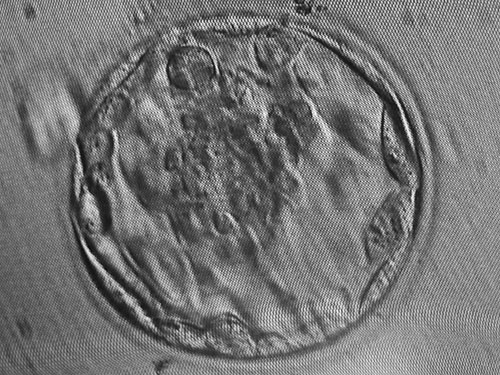
  • Should we be mourning miscarriages? Ectopic pregnancies? Vanishing twins? Partial molar pregnancies? Degenerated IVF blastocysts? What about blighted ova?
  • Is hormonal contraception ever useable in sexually active women? In any woman of reproductive age?
  • Are barriers licit to prevent STD transmission between spouses?
  • Is emergency contraception ever useable in victims of rape? Which forms? (Paraguard? Which isn't currently to be given to victims of rape?)
  • Is ovarian hyperstimulation licit?
  • Is IVF licit?
  • When is sterilization okay?
  • What should we do for women who shouldn't have more children?
  • What is parenthood? Genes, gestational carriers/surrogates, adoptive parents? How should men and women licitly become parents?
I need to read Dignitas Personae and Donum Vitae. Just as soon as I have some free time.

Saturday, November 16, 2013

Happenings in OB/GYN

Inside IVF
Two weeks ago I shadowed an OB/GYN who specialized in Reproductive Endocrinology and Infertility (REI). I observed half a dozen discussions about IVF, donor eggs, and donor embryos. And I had a personal tour of the IVF lab. It was surreal and confusing and heartbreaking.

Conception and Death
Last week I was rounding on the gynecology service, and was scheduled to scrub in on a ruptured ectopic pregnancy. The same day, I saw a patient with disseminated ovarian cancer who was being "withdrawn" from aggressive ICU care (heroic measures were stopped and she was allowed to die naturally only a few minutes after I listened to her heart and lungs). The beginning and the end of life, in one day.

Numbers
I have now been to 3 vaginal births and 5 C-sections (one of which was for twins). There was one C-section for prolonged rupture of membranes and severe intrauterine infection. The amniotic fluid gushed a thick purple, like blueberry syrup at IHOP, instead of a healthy clear. The inside of the uterus was mushy and white, instead of the typical mossy red. The baby was a preemie in frank breech, and the NICU team took him and (again, not as usual) didn't bring him back to the Mom before the procedure ended. I hope they do well.

Minefield
I ended up not scrubbing on that ectopic pregnancy case, but it created a small stir for me. When I was told I was scheduled to do it, I thought, "oh great! I am especially interested in ectopic pregnancy and tubal surgery!" This is I want to save early lives and give couples with tubal factor infertility an option besides IVF! Then I realized, "oh dear. What if the surgery planned is a salpingostomy, or salpingotomy?" Quickly, I looked at the patients records and saw that she was planned for salpingectomy. I breathed a sigh of relief.

No such relief for a recent C-section with post-partum tubal ligation. I was scrubbed in on a C-section and then discovered that the patient and her surgeon were planning sterilization. Now normally, it is the medical student's job to stand at the operating table and do menial tasks, such as holding retractors, suctioning, and dabbing the field with lap sponges. Perhaps the best of these menial tasks is cutting suture. For this task, I actually need to ask for an instrument from the scrub tech. "Suture scissors," I say, and hold out a hand. She slaps the plain-jane scissors into my palm, and I proudly cut the ends of the residents' or attendings' thread. A medical student is slacking or inattentive if someone else calls for the suture scissors.

For the tubal ligation, which involves cutting of four sutures, I folded my hands and stood at the table, simply observing and listening. I pretended to be forgetful of asking for the scissors. Once that procedure was done, though, I resumed cutting, retracting, and sponging for the rest of the C-section.

Call
I had my first night call last week. I worked a typical day on gynecology (I got to work at 4:50am for rounds at 6:00), and then had a dinner break from 5:00pm to 5:45pm, at which point I worked until about 7:30 the next morning, with a 45-minute nap somewhere in between. That was exhausting. I am not sure I've stayed up for 24 hours before that. Ever. And I've got to do that again tomorrow. Merp.

Overall, OB/GYN is good.
I like the clinic, I like the surgery, and I love deliveries. I don't like all the people I'm working with, and I don't like knowing so little about what I want to do. It's a little stressful, but overall I'm enjoying it. One thing I'm struggling with is how prayer fits in to a 60-hour work week. During the past week, I've been paging the hospital chaplain and receiving communion from him on days I can (and that means I missed two days!), and I've missed parts of the Liturgy of the Hours several times. Even so, I think I am doing God's will, and I have fewer occasions of sin, and my thoughts stray to Jesus more easily.

Tuesday, October 15, 2013

Academic Medicine 101

Before I started medical school, I had no idea that "academic medicine" is the segment of medicine that researches and teaches. Some physicians see patients all day, every day while others do research (either clinical, basic, or translational) or teach (e.g. lecture, and supervise the practice of residents and the visits and notes of medical students rounding under them). Most of my experience of academic medicine is with the teaching physicians. Let me tell you about it.


First of all, I haven't had my big academic rotation yet. This is the famous "Internal Medicine" rotation (shortened in speech to "IM" for some schools, "I-Med" for us). From what I hear, that is twelve of the most intense weeks of seeing patients, giving presentations, writing notes, being humiliated, and learning the minute mechanics of fluid and medical management.

Did you catch the "being humiliated" in there?

Although I haven't had IMed (and so I feel like I can't really talk about this?), I have had one week of adult inpatient and one week of pediatric inpatient. My attending last week (pediatric) literally said that medicine is taught by shame. "That's how you remember things," he said, "by being put on the spot." I like to think that it's not shame, but responsibility that teaches us. When a person in need, in front of you, is your patient and your attending asks you "how are you going to replace his potassium in light of his serum creatinine?" and you blanch and have no clue, you're going to learn it well and know it next time.

Last week, for instance, I had one week of pediatrics. I got up early to report to the hospital an hour before the attending scheduled "rounds." I was assigned one patient each day, and went to talk with them and examine them and prepare a presentation and admission orders, including IV fluids, drugs and doses, and special nursing instructions. (All of these orders were practice; none were actually carried out except if someone else, e.g. the resident or fourth year, had the same idea/agreed with me and ordered them.)

All the people standing behind the attending (who is actually
examining the patient) are the med students, etc. A nurse happens
to be adjusting the IV fluids at the same time.
"Rounds" is when the attending physician (the doctor in the leadership chair, over the third- and fourth-year medical students and residents on the "team") and the lowerlings meet to review everyone's work. Last week, there were three third-year students, one fourth-year (doing an elective in peds, his specialty choice), and a family medicine resident (doing a rotation in peds), along with a pharmacy student (?) and a recently-hired NP (rounding to get the feel of the unit, I guess) followed the attending from room to room. At each room, the lowliest person who'd seen the patient would present them. Each of the third-years saw one patient, the fourth year saw two or three, the resident saw almost all the patients, and the attending was responsible for all of them. This means that the patient I saw was seen by the fourth-year (sometimes) and the resident (frequently), so that when my presentation was over that person would add findings, challenge me, or critique my plan (instead of the attending).

When we came to my patient's room, the attending would face me and say, "go," or I would make eye contact with him and start presenting. "This is a 13-month-old white female who presents with a four-day history of vomiting," I'd rattle off. I'd then describe the history of the present illness (HPI), the pertinent positives and negatives, past medical/surgical history (including birth history for children!), currents meds and allergies, and my objective findings (vital signs, physical exam, labs, and imaging). Then, I state my assessment and plan. "This is a 13-month-old female with gastroenteritis. Plan is replace fluid losses with D5 one-half normal and attempt p.o. challenge today."

And then the education would begin. The attending critiques your presentation skills (if you're really new at this), asks for additional findings (and you better hope you have them), and corrects your plan (you feel awesome if this is all he has to say). Since I am new to this, I got lots of presentation-skills and additional-findings criticism.

Presentation skills are important because we're in medical school to learn to think in an orderly, analytical way about complex problems and not miss things. We're trained to think like a doctor by presenting and writing notes. Presenting skills are also important because communication to colleagues is made quick and safe by a universally-agreed upon format. The format in medicine is:
  • Patient ID sentence
  • Chief concern
  • HPI
  • Review of systems (ROS)
  • Past medical history (including birth history if pediatrics)
  • Past surgical history
  • Current meds
  • Family history
  • Social history
  • Allergies
  • Vital signs
  • Physical exam
  • Labs
  • Imaging
  • Assessment/Plan (A/P)
On the floor, you have to present confidently and quickly. The faster you go, the more knowledgeable you sound (although attendings aren't stupid and won't be fooled if you obviously skip a part of the presentation, a system on the ROS, or part of the physical exam) and the less chance you have of being interrupted. You really want to be able to finish that presentation and get that A/P critique, because that's the gold that makes you a better doctor. That's also the material that attendings want to talk about (not fussy details about presentations), so you make them happier while also looking good. Best of both worlds!

If your attending asks for additional findings, you are expected to produce them with ease. It looks sort of silly to shuffle through your papers, although that's better than having to say "I don't know" or "I didn't ask." We are supposed to know everything about our patients. (Was there green in the vomit? How far did it fly? What was her serum chloride on Monday? Did we get the results of the 99-technetium scan?) Not knowing a historical detail is not very excusable (it's a rookie mistake, only one level above the presentation skills problems); not knowing a lab result is only slightly less excusable. And one is looked upon as not up to snuff if you miss out on a social issue (e.g. illiteracy, bad home situation, poverty, mental illness, etc).

And A/P criticism, while desired, comes in very different flavors. "I think you forgot a decimal point on her IV fluids" is a lot better than "Now, if you give this potassium, you'll probably put this guy into acute kidney failure. You want that on your hands?" But even so, this is the best tier of criticism, and one hopes to reach it during every presentation.

One problem in this approach is stressed or nervous med students, or those who are shy or have thin skins or fragile self esteem, can get hurt. One girl last week cried! I have been lucky, since TAC and high school accustomed me to faking it till I make it (in terms of confidence, not A/Ps). I also have a good memory for medical knowledge. But I don't like that some med students have to learn by shame and embarrassment. I wish we could all take on responsibilities without being toughened by humiliation. Stay tuned for more about academic medicine in the spring, when I go "on the wards" for twelve weeks of I-Med.

Monday, October 7, 2013

Lacey's Story

This post conforms to the blog rules.While working at the psychiatric hospital in admitting, I was sent to speak with Lacey, a girl who came in with her mother. It was up to me to fill out the interview form, do the mental status exam, and decide whether the girl would be admitted to the mental hospital or not. Of course, I would present the case to my attending, who would check my work and (hopefully) catch my mistake, but I still felt like I was being handed a lot of responsibility.

I went to the waiting room and called the girl's name. A middle-school-aged girl and a young woman, baby on hip, stood and followed me to a room. After introductions, I asked Lacey what brought her in. She did not answer, but only looked out the window, away from me. His mother began to speak, and told me a long and convoluted story about marijuana, bad crowds, running away, and fights.

As the mother spoke, I looked at Lacey, who skillfully avoided eye contact with everyone. I had just finished two weeks on the alcohol and drug dependence ward, and so my soul was full of stories that began like Lacey's and ended with hard street drugs, divorces, dead loved ones, and dead dreams. I looked at her and wondered: will you go down one of those paths, or is this just a slightly-more-serious-case of teenage rebellion? And another possibility: is your mom the crazy one? She's the one doing all the talking.

The baby had fallen asleep on Lacey's mother's chest by the time the story was finished.

"Thank you so much for helping me understand," I told her. "I know it's been a long wait for you, but would you mind stepping out so that I can talk to Lacey?"

She left, and I turned to the silent teenager in front of me. She still gazed out the window. Was that a grave silence or a nonchalant silence or a hurt silence or a panicked silence or...?

"Lacey," I said, "I want to hear your side of the story."

Nothing.

"What your mom told me...does that match what happened?"

Nothing. I tried one or two more times. Still nothing.

"Well," I said, taking a new tack, "pardon me while I fill out some paperwork." And so I sat there, across the table from her, checking boxes on the mental status exam. I wanted to show her I wasn't afraid of silence. Several minutes passed.

"You know," I said at last, trying to speak like one seventh-grader to another (or one medical student to another), "I can't make you stay. Finally, you decide whether we can help you or not. Do you think you need help? Do you want to stay?"

A few more seconds of nothing, then Lacey's eyes moved from the window to his lap. Then she nodded. My heart soared, partially with elation at successfully communicating and partially because I thought she really could use the help.

"Okay," I said softly. I didn't follow Lacey after this, but I won't forget this interview soon. Pray for her if you read this.

Friday, September 20, 2013

Don't Rock the Boat! Homosexuality and Gender Identity, Medically Speaking

This post conforms to the blog rules.Caution while challenging the freedom of gender identity! You get called in with three attendings and they have a very polite discussion to make sure you toe the party line.

After our lecture on psychosexual disorders during the psychiatry clerkship, the faculty physician asked whether there were any questions. She is a prim older woman, an excellent and compassionate clinician that I had the privilege of shadowing for a week.

I piped up, because she had just talked about gender identity disorder. "I know homosexuality isn't in the DSM-IV," I said, "but I'm confused about the stage a gay or lesbian person is in right before they come out, when they're uncomfortable in the societal role they're in. Isn't that GID? What I mean is, why is GID a disorder and not homosexuality?"

Oops. I didn't mean to finish that way. I wasn't trying to evangelize or start anyone's wheels turning. Seriously. I just wanted to know how this was consistent. (It turns out there is an answer and I understand that this is sort of consistent now. More on that below.)

Well, the prim psychiatrist asked my peers whether they could answer, and they could. After I had been given an answer, the professor said we could take a break until the next lecture. I stood to get a glass of water as my peers also stood to stretch or get a snack. But I was stopped before I got my drink by the lecturer, who said, "why don't we go ask Drs. J and K about your question?" I obliged, and followed her to another room, where two other psychiatry faculty were lunching and talking.

The lecturer and I sat down, completing the four points of a square. "I will share with you," she said to her colleagues, "a question [mmatins] brought up about gender identity disorder." They mused. They gave the same answer my peers had.

Somehow I got the impression I was being given a talking-to. I was suddenly acutely conscious of my conservative dress and crucifix. Perhaps it was the arrangement of the room, or the abruptness and apparent formality of the meeting, or the fact that they gave the same answer my peers had, or the fact that I was alone with three faculty members, all of whom (I am reasonably confident) disagree with me about whether homosexuality is a disorder.

Anyway, nothing happened and everything was pleasant. I and the professor giving the next lecture left the room. Just an interesting experience....

So, FYI, GID is something described in younger patients (i.e. children under twelve) who are uncomfortable with their gender and its non-sexual dimensions such as dress, play, and future societal role. Homosexuality is described in patients who are sexually attracted to members of their sex. They can identify as masculine or feminine, a unique combination of both, a fluid (throughout life) combination of both, or neither but the defining characteristic of homosexuality is sexual attraction to members of the same sex. GID patients are uncomfortable in their bodily gender; homosexual patients are sexually attracted to the same sex.

It's not impossible that a person with GID be later attracted sexually to persons of their same original biological sex, nor is it impossible that a homosexual person have some discomfort with all the accoutrements of their biological sex. But these persons may carry two diagnoses. I still do not understand why "trans" adults cannot be diagnosed with GID. My attending raised this question but I didn't press it.

So, the moral of the story: pray for children with GID whose parents may be tempted to permit the children to undergo sex-change surgery. Pray for "trans" adults with undiagnosed (not-medically-real-according-to-DSM5) GID who are doing the same thing. Pray for LGBQ adults, who are attracted to members of the opposite sex. And be careful as we (prayerfully and charitably) rock the boat.


AS ALWAYS THIS BLOG IS NOT TO REPLACE THE CARE AND DIAGNOSIS OF TRAINED PROFESSIONALS.

Wednesday, September 18, 2013

A day in the life of Family Medicine

Whew! Family Medicine is over and I am now 12 weeks into third year. I am so tired! This post is not unified or well written; it's a journal entry and nothing more. My advise: skim or skip.

Most of the mornings started at 8:00am in Family Med. I would go to 6:30 am Mass and then drive to a suburban hospital where there was a family practice group and a family practice residency program. I spent two weeks in the group and two weeks with the residents. A week of lectures and one week with the residents on their inpatient medicine service rounded out the clerkship.

I would eat breakfast in my car, parked in the church parking lot. Sometimes, I would see my mom as she arrived for work at 7:30 (she works at the primary school associated with our parish). I arrived at work at 7:45 and started clinic at 8:00.

I liked working in the residency clinic more than the group practice because it was more education-driven. I was also more like my preceptors: in the group, I worked with a doc who'd been practicing for ten years before I was born. He was so experienced (and maybe a little sloppy) that he hardly collected any history before announcing a diagnosis. He also typed with two fingers, and so was really slow with the EHR. I pitied him--even though I had about twenty minutes of training, I picked up at least as much as he had in the few weeks I was with him!

I was closer to the residents' age and experience level and, although I always treated them with the respect their degree and position commanded, I felt more comfortable imagining myself in their shoes. "Family medicine wouldn't be so bad," I thought, when I worked with them. (When I worked with the older doc, I thought, "this definitely isn't for me.... Advising all these old people to take mustard when they have a cramp even if they have stage III CKD and typing notes until 12:00am...no thanks.")

Morning clinic would wrap up around 12:30 or 1:00, and clinic would resume at 1:30 or 2:00.

During the day I would see between five and ten patients: I would read their chart a little before tapping on the door and introducing myself. I'd ask them what they came in for and question them about their health or problems, and then I'd decide how to examine them and perform the exam. I documented my findings in the EHR and excused myself to "present" the person to my preceptor.

"Mr. So-and-so is a such-and-such-year-old white male with a history of hypertension and diabetes who comes in today complaining of a four-day history of tingling in his feet," I might say. I would describe the pain (or the cough, or the relevant details of his chronic disease) and then the pertinent positives and negatives, before describing my physical exam. "His heart has regular rate and rhythym without murmurs, gallops, or rubs, and his lungs are clear to auscultation bilaterally." Then I was supposed to say my assessment and plan, but frequently I didn't have to do this.

(Parenthetically, it's funny to write all that out, because all that text would become "Pt is a XXyo WM with 4d h/o tingling in bilateral feet....Heart: RRR s MGR, Lungs: CTAB" in the EHR)

The preceptor would ask me questions to which I usually didn't know the answers ("Does he have a family history of heart disease?" "What do you make of his elevated LFTs?"), and we would go see the patient again together. I liked seeing patients myself, making plans for them, and educating them. I really disliked presentations and not knowing enough.

I usually stayed past 5:00pm and got home tired and hungry. My family eats when my dad comes home, which is variable...so that caused some friction until mom told me I should just eat when I get home so that I can go and study. I would get to bed at 10:00 or shortly thereafter following night prayer. Usually, no recreation unless I stole some time to talk with my family, ride bikes, blog, or read.

I enjoyed working the inpatient week because I again got to see patients myself, examine them, and write notes in their charts with my own baby assessment and plan. However, this week I wasn't able to attend Mass, and so I asked our parish priest to give me the Blessed Sacrament before Mass began so that I could go to work early for shift change and rounding.

I was constantly readjusting and struggling to fit in all the things I thought I needed to do: morning and evening prayer, midday prayer, meditation, Mass, formation, work, and family took so much time that studying was almost eclipsed! I saw the result on my NBME, sadly. I would study on Saturdays and on occasionaly weeknights, but it never seemed to be enough. I always felt behind! Family Med contains so many subjects (acute and chronic diseases of every organ system in all ages and both genders! Mwaha!) that I was only confident in about a dozen by the end of the clerkship.

Where is God's will for this time in my life? I feel like I'm working two full-time lives: a medical student who needs to work and study, and a consecrated virgin in formation, who needs to study (different things!) and pray. And both are suffering because of the other! I work but I am tired because I don't get enough sleep and exercise; I study, but only a little bit, so that my work suffers; I study the Catechism (but am ten days behind) and listen to my Faith Foundations lectures (but they go in one ear and out the other b/c I listen to them in the car) and go to formation (where I am so tired they have been letting me go early); and I pray, but am so distracted and tired that I don't perceive God's presence. What needs to change???

My expectations, perhaps? Please pray for me, so that I can see God's will. I finally have a spiritual director here, and hopefully we will meet soon to talk about all this.

On to pediatrics!