Showing posts with label REI. Show all posts

Saturday, December 30, 2017

OB/GYN Ethics 301

In OB/GYN Ethics 101 I went over topics for medical students, residents rotating through OB/GYN settings, and OB/GYN interns. In OB/GYN Ethics 201 I reviewed topics for OB/GYN residents in generalist settings. Now I need to review a few subspecialty concerns with a fine-toothed comb, especially those not focused on pregnancy and maternal/fetal vital conflicts.

Please remember that I'm not a moral theologian. I'm one resident talking to another, and I am happy to engage in discussion and to retract whatever is in conflict with Church teaching.

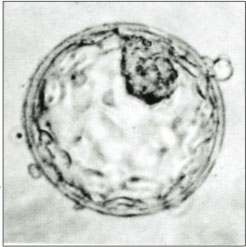
REI

Img credit: RWJMS IVF Program, Wikimedia commons.
As in OB/GYN 101, observation of almost everything is okay. Observing gives you a better ability to talk to non-healthcare practitioners (e.g. patients, parishioners, priests, even ethicists) about things they may never see.

You can participate in and perform follicle scans, simple procedures such as transvaginal cyst drainage, medical management with provera (or other progestins), letrozole (or other aromatase inhibitors) clomid (clomiphene), follistim (urofollitropin), trigger shots (b-hCG), GnRH pumps, and anything else that won't have post-fertilization side effects.

You can participate in prenatal genetic diagnosis (or screening) with great caution. PGD is a biopsy of a large percentage of a human embryo's body; it's a significant procedure for that little person, but in itself it's a biopsy, not an act of killing or mutilation. If you know or suspect that the embryo being tested may be rejected (destroyed or cryopreserved), this may be proximate cooperation in evil and you may incur some of the guilt in that act. It's rare that the embryologist would let you do this, anyway.

You can observe but not participate in semen washing, egg harvests, and intrauterine insemination (IUI). These replace or interrupt intermediate steps in sex (semen washing replaces filtering and capacitation of sperm; egg harvest interrupts local motion of eggs; and IUIs replace local motion of sperm after ejaculation. (To clarify for those who have done bench research: semen washing of animal samples or of human samples intended for research does not carry the same gravity, even if the human samples were obtained through masturbation. The participation in masturbation is remote, mediate, material cooperation in the evil and does not confer guilt in the act.)

Family balancing by selecting embryos after prenatal genetic diagnosis is immoral; family balancing that includes embryo destruction is gravely immoral. Selective reduction is gravely immoral. Avoid witnessing destruction of embryos or selective reduction. Counsel against selective reduction.

The standard of care is now clomid/IUI for unexplained infertility, followed by homologous or heterologous IVF with embryo transfer (ET) if that doesn't work. But you'll find a lot of acronyms in Catholic bioethical literature. These are mostly from the early days of IVF when people were attempting to find techniques that boosted success rates. Eventually, REIs and ASRM realized that IVF/ET was easier and nothing else made a difference, except for ICSI (see below). Bearing that in mind, here is a quick list of acronyms, defnitions, and comments that you might encounter from bioethicists:
  • GIFT/TOTS: gamete intra-fallopian tube transfer, not permissible because it replaces the marital act, if sex is every involved (e.g. by collecting sperm in a perforated condom) it is only accidental
  • ZIFT: zygote intra-fallopian tube transfer, ethically analogous to ET, which transfers an embryo into the uterus (see below)
  • LTOT: low tubal ovum transfer, moving an egg from the ovary to the isthmus of the fallopian tube or even to the uterus, without removing it from the body is LICIT when there is intention of fertilizing it with an act of intercourse and not IUI.
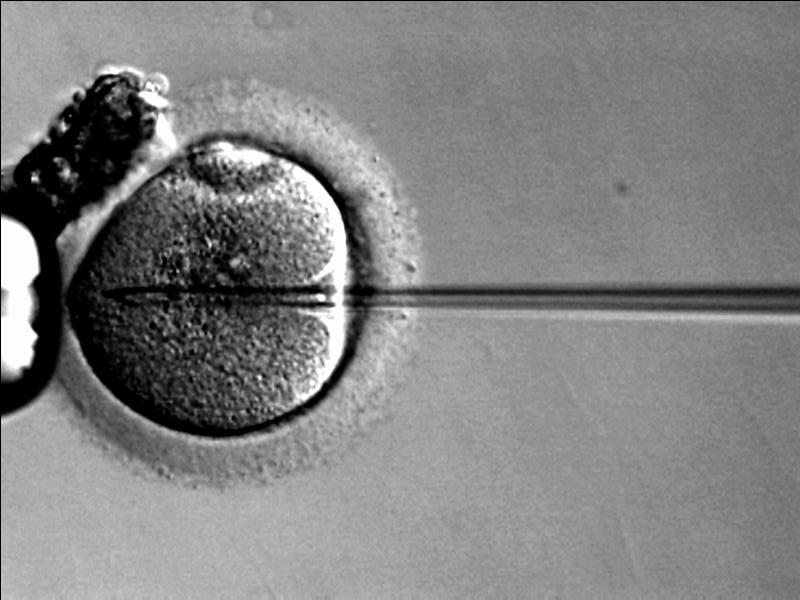
Img credit: RWJMS IVF Program, Wikimedia commons.
Intracellular sperm injection (ICSI) injects a sperm directly into an oocyte (see left). It's used for very abnormal or poorly motile sperm and low sperm count. It replaces part of the sexual act and is not licit; do not participate, although you may observe.

Embryo transfer is a slightly hot topic within bioethics. However, I don't see it as that contentious. Fertilization has already occurred, and the sex act has been totally replaced. The local motion of the embryo into the uterus is actually a step in gestation. It seems that ET, therefore, is not illicit and you should actually rejoice that an embryo is being given its rightful place instead of being condemned to that "absurd fate" of cryopreservation.

INVOcell is a new technology being marketed as "mini-IVF," and it basically replaces the embryology lab with a small plastic capsule carried inside the patient's vagina during a several-day incubation period. This conserves funds used to pay an embryologist, maintain sophisticated lab incubators, and maintain multiple federal standards. INVOcell still involves removal of the egg from the patient or use of a frozen egg, masturbation or sperm donation, fertilization outside the body, and ET. It can still involve PGD and embryo destruction or cryopreservation. Treat INVOcell as you would IVF.

Third party reproduction is use of a gestational carrier or use of donated gametes. As a trainee, there is little to nothing you can do about it, as most couples will come to their REI already with a gestational carrier in mind or will elect to use donated gametes without your counseling. If offered the opportunity to counsel on third party reproduction (especially gestational carriers), offer the patient the complex legal truths surrounding these entities, and recommend they speak to a lawyer, to trusted friends and spiritual leaders, and to seriously consider the possibility of adoption.

Transgender medicine is a misguided effort to alleviate real suffering that individuals feel due to a mismatch between their phenotypic sex and their psychological perception of their gender. Hormonal treatment in these cases, like in cases of fertile women seeking contraception, is manipulation of a healthy organ and not medicine. Surgical transition is mutilation of healthy organs. Do not participate.

Sexual Health

There is a lot of material in treatment of orgasmic disorders that amounts to pornography and masturbation. You may teach a woman the location of her own organs with diagrams and even with a mirror, but be very careful to maintain clinical professionalism and (obviously) always have a chaperone in the room. You may explain the function of these organs and how women experience orgasm (including how they experience it differently). With the magnificent teachings of the theology of the body, reassure women that sex is good, that it is meant to be enjoyed.

You may recommend a patient to psychological or psychiatric services for comorbid disorders. Be careful when recommending her to mental health services simply for her sexual dysfunction, as they may recommend illicit methods to become more comfortable with sexuality. Do not refer her to explicit websites or video series. Do not recommend self-stimulation. Do not recommend experimentation with more than a spouse.

Psychiatry

A relatively prominent problem that has come up since I've started this blog is quality of psychiatry services. Some mental health professionals, especially those who adhere to the whims of the APA, not only have incorrect ideas of sexuality but also have incorrect ideas spirituality and medications. Others are incompetent.

I've seen OB/GYN residents and fellows of all stripes struggle with conflicts with consultants. Bottom line is: if you don't think the provider will offer benefit to your patient, don't consult them. Consult someone else. If there is no one else, use experts available in other venues (online, prior institutions) to answer your clinical question.

Vulvar care

As with sexual health, anything amounting to masturbation should be avoided. In general, the other meds, lubricants, behavioral modifications, and hygiene counseling in vulvar care is licit.

End-of-life (GYN oncology)

Futility of surgery: many, many times residents in my program have operated while not being excited about it, although we're young and maybe don't understand everything. If your conscience moves you to protest a surgery based on a patient's medical fragility, say so and consider escalating it to the ethics committee if you have an appropriate way to do so.

Some oncologists do not give percentages for success for treatment unless a patient asks. Others always deliver expectations. If a patient asks for a percentage of success, always give an evidence-based, up to date number or offer to ask someone for the answer and do not rest until the patient gets an answer or says she doesn't want one after all. If you believe someone is being led to chemo or to hospice out of a wrong idea of percentages of success or failure, ask the attending and ask the patient what their view of the situation is, before wading in.

Ethics committees are great except when they're ineffective or pancretist. When faced with an ethics committee that cannot find the moral truth, many trainees are powerless. It is licit to withdraw your opposition in the face of impossible odds, but it is best to make it clear that you still maintain your position and beliefs.

Hospice is great except when its not. Sadly, since I've started this blog I've realized that not all hospice programs are focused on the patient's autonomy. If hospice personnel at the program that will be covered by the patient's insurance demand code statuses that the patient does not want, or demand POLST or other documents the patient does not want, offer to provide similar services (e.g. narcotic and benzo scripts, DME scripts, megace/nutritional scripts, anticholinergics) through the resident clinic or another venue. Never participate in physician-assisted suicide. Counsel actively against it.


Saturday, September 30, 2017

Why is IVF wrong? (Minor premise and Conclusion)

This post is a defense of the minor premise of a syllogism begun in "Why is IVF wrong? (Question and Minor Premise)." The premise is: All conception must be through sex, and this post takes the syllogism to its conclusion.

I just think blastocysts are lovely.
Img credit: Nina Sesina, Wikimedia Commons
In a way, this is the only premise necessary and the syllogism melts into an enthymeme. The original question was "can we use IVF?" and I reply, "no, sex is the only way we should conceive." The major premise was necessary to establish the fundamental difference between sex and ARTs, but this premise is the key. This is also the trickier premise because it relies on natural law and revelation, two things that our culture (and therefore I) are/am not that great at.

For a foundation, we don't prove that revelation is true, we receive it. We hold it with the same faculty that holds a Euclidean proof, but not because we have a demonstration of it. Rather, we hold revealed truths as gifts because the authority they carry is stronger than demonstration (Summa I.1.8). Our only job when it comes to studying and arguing about revealed truths is to defend parts of revelation based on other parts and show that the conclusions are cohesive and holy (for instance, defeat Arianianism by citing John 1:1,14, 1:30, and 8:58, or to point out that the Incarnation is a suitable medicine for our fallen condition for the reasons Athanasius cites). So I cannot demonstrate that sex is the only way which we can conceive, but I can show it in revelation and show that it is cohesive and holy.

To begin formally: reproduction involves creation and thus is a divine act. New embryos' souls are the only instance we still see of ex nihilo creation of a new substance. Like all creation, it is properly a divine act. It is God's to decide how His act proceeds, and He chooses to share it with us in a certain way. The way he shares it involves sex, so sex is like Him (it's life-giving, exclusive, and faithful as intended) and it's like us (surprisingly animal, but sublime). "Say," you might object, "how do we know that sex is the 'way' He chose? Maybe He just chose sperm egg fusion, in which case IUI and GIFT would be okay. Or maybe He just chose pronuclear fusion, in which case ICSI would be okay. How do you know He didn't choose something less inclusive?"

Img credit: Rugby 471, Wikimedia Commons
Actually, He chose something more inclusive: He chose marriage, including preparatory chastity and intramarital fidelity. We know this from revelation, especially Genesis, the Song of Songs, Mathew, and the letters of St. Paul. The revelation cited above is best expounded in Dignitas PersonaeDonum Vitae, section 8 of Persona Humana, and Man and Woman He Created Them (in decreasing order of high- to low-yield as far as time spent reading the entire thing). Persona HumanaMan and Woman He Created Them, and Donum Vitae in particular cite scripture and magisterial authority. So revelation supports the premise.

Moreover, it is also cohesive with the rest of theology. This whole plan is like God: fiercely, uncompromisingly faithful, especially in its faithfulness to children. For this reason, neither marriage nor sex can be intentionally interrupted or replaced by a third party or nonsexual act. Sex looks so ordinary to us but it's on the level of angelic war--it's God's other way of making saints. Cloaked in normalcy, sex is actually a mechanisms of salvation history that is almost beyond our human capacity. This is why the Church seems so preoccupied with sex--it's hard to see what is right and wrong!--and why it seems to say "no" to so much. But this is why divorce, contraception, IVF, and surrogacy are wrong.

The final syllogism is a second-figure Cesare with a slightly complicated predicate in the minor premise.
No ART is a sexual act.
All conception must be through a sexual act.
Therefore, no conception can be through a sexual act.
In addition, remember that there are other big concerns with IVF (embryo construction predisposes to seeing people as products/things rather than persons, embryo destruction, and embryo freezing), but you asked about the act itself, as if it were used in the best possible circumstances: a sacramentally married couple with good intent and who only desire embryos to be made who will be implanted and refuse to destroy embryos (success rates probably less than 40% with those caveats).

Friday, September 15, 2017

Why is IVF wrong? (Major Premise)

Img credit: Mr. J Conaghan, Wikimedia Cmns
Recently a very articulate medical student, with the mind of faith, asked about the Catholic doctrine oHumana Vitae's prohibition of contraceptives. Why can't infertile couples have the procreative aspect of sex using a medical procedure? Isn't this being open to the procreative aspect? The difference in time (if having the procreation through IVF) is not willed by the couple. Isn't this the same or better than leaving one component entirely missing through a failing of nature?
f conception, asking why the Church does not permit artificial reproductive technologies or techniques (ARTs). The student accepted that sex is unitive and procreative and meant for marriage; moreover, the student agreed with

I really love hearing from medical students who are seeking understanding in the mind of faith. As the student pointed out, an infertile or subfertile couple does not disobey God's law by having sex, even though there is a disorder inhibiting the fruits of the procreative aspect. But the reason why the Church teaches that IVF is wrong is that sex is the only act which is legitimately procreative, the only way we are meant to conceive. We can syllogize to this conclusion with two premises. The major premise is that ARTs are not sex.*

Img credit: Cancer Research UK, Wikimedia Commons
Let's establish an analogy between sex and eating. Eating has two aspects, the gustatory (analogous to unitive) and nutritive (analogous to procreative). One is the enjoyment of food that only a rational creature can have, while the other is an important but more biological motivation. Just like infertile or subfertile couples, some people can't taste very well or can't taste at all, but that doesn't make eating wrong for them. I propose an imaginary neck cancer patient who physically has trouble eating and has a tube placed through his skin and into his stomach (a PEG-tube or G-tube). He tastes nothing, but he stops losing weight and he's receiving appropriate nutrition through tube feeds.

I thought it was interesting that the student called ARTs (e.g. IUI or embryo transfer) "procreative acts" in the original question. This is exactly right! These things can lead to babies, so they're procreative acts. But they are not sexual acts: they are professional, medical acts without foreplay, climax, orgasm, etc. Our G-tube patient gets liquids pushed through his tube (a nutritive act), but he's not eating. Medical parlance and common sense reflects this: we won't say "he's eating" until he's using his mouth. G-tube feedings aren't eating; ARTs aren't sex or sexual acts.

Moreover, ARTs cannot be aspects of sexual acts. When our G-tube patient starts a tube feed, he's nourishing himself, but he's not doing "the nutritive aspect of eating." He's not eating at all, and he can't complete aspects of one action while doing a related but separate action. Similarly, if an infertile or subfertile woman has an IUI, she may be procreating, but she's not doing "the procreative aspect of sex." They are separate acts and one's intention to view the acts together do not knit them together. ARTs cannot be viewed as aspects of sexual acts.

The minor premise, "All conceptions must occur through sex," is defended in the next part.


*By "sex," I mean heterosexual sex using reproductive organs, not oral or anal intercourse.

Saturday, July 15, 2017

Third party reproduction

This post conforms to the blog rules.About a year ago, a gestational carrier of twins was admitted to our antepartum wing. Her condition required a long-term stay and she was not in her home state. To make matters more complicated, the presenting twin was not vertex. There was heated disagreement between the intended parents and the gestational carrier about mode of delivery because my attendings recommended a cesarean section for the twins. The carrier did not want a C-section. The physicians' hands were tied: we couldn't do a C-section on a non-consenting woman without committing assault and battery. But the agreement signed (while not designed for this state) did specify that the gestational carrier was to comply with physician recommendations on mode of delivery.

To translate into colloquial terms: about a year ago, a surrogate carrying twins for a gay couple came to our hospital while out of her home state. Because the first twin was not head-down and for a few other reasons, my attendings recommended a C-section for delivery. There was a painful, days-long disagreement between the surrogate and the couple, because the surrogate didn't want to have a surgery. We couldn't do a C-section without the surrogate's consent, but the contract signed by the surrogate and the couple said we should have been able to. ("Surrogate" is not a term preferred by the ASRM or third party reproduction lawyers.)

The ethics committee was, as I recall, rather unhelpful. No member of the healthcare team ever saw the agreement signed between the intended mothers and the gestational carrier. All residents whose names were not already in the chart were encouraged not to open the chart or see the patient out of concern for legal repercussions. The intended mothers of the children became rather forceful, asking that the healthcare team discuss matters with them before discussing them with the patient and lurking around the floor to catch any healthcare providers who might be discussing the case of their children. When it once appeared that the twins might suffer some adverse neurologic outcomes because of the disagreement, one of the mothers stated she did not want the child if there was brain damage.

All of this was a rather unpleasant ethical case that ended as well as it could, since the gestational carrier agreed to a C-section eventually and both babies were born. I have many dissatisfied feelings about the way all five people's lives changed during this pregnancy episode. I began to wonder whether the true nature of things (a contract about goods belonging to the adults) came out in the unpleasantness.

Recently my program has been adding more IVF experience for us. A few months ago I drove out to the IVF clinic of the new professor we'll be working with. As luck would have it, there wasn't much on the schedule and I didn't have to explain much. Although I've written about being "inside IVF" before, this one afternoon included actual experience of ARTs (two IUIs and an embryo transfer). Since I know how these procedures are done, in a way it wasn't earth shattering. But in another way, it was painful. By the end of the morning I felt nauseous and had to talk aloud with the Lord in the car about the experience.

Unfortunately, this isn't the end of this topic. I haven't covered it much on my blog, as I've mostly focused on contraception and sterilization. But now that I'm becoming a third year resident, who will spend two consecutive months on the REI service, it will become a topic of much more discussion.