Showing posts with label overwork. Show all posts

Saturday, February 29, 2020

Why Medical Matins was private, even after residency was over

As you may have read, this blog was private from December 2017 to February 2020. While I was thus censored by my institution, I continued smilingly recruiting for it, and then serving as a chief resident. It made the last year and a half of residency (already difficult because of the responsibilities of the role of an upper-level resident, the added weight of administrative chief duties, and the process of applying for fellowships) a white martyrdom.

Inside the Student Jail, Heidelberg, Germany.
CC License. Wikimedia Commons.
Gradually I opened up to more people about this event. But during it, I could tell few people how painful this was: two friends in the residency, one attending who happened to also be a personal friend, my family, and a few friends outside the program. I want to share a short post which was originally written on March 23, 2018. Writing this post two years ago, during outward silence, felt like scrawling on the walls of a strange prison. The topic of the post was what I should do with the now-private Medical Matins.
What should I do with the blog itself? I am tempted to post a lot of very unedited content while the blog is private, then launch it again as public when I am no longer employed by this institution (and no longer bound by amiable agreement not to publish it). I am tempted to leave the blog derelict, floating in the massive amount of online content, for others to find. I want this so that I don't have to do any more work, and yet so that others can think well of me if they find the good things available on the blog. 
I know derelict internet things die, and I don't want Medical Matins to die. It's a helpful outlet for me. The blog gives me an occasion to pray the litany of humility (which I set as the default text of each post before I replace it with the actual content of the post), and then organize my thoughts and prioritize my emotions using the blog.
And I think Medical Matins is good for others. At least half a dozen (I've never counted and I'm trying not to over-estimate) medical students and others have contacted me through this site to ask about pro-life and pro-NFP residency. And it's been found by others who have disagreed, and resulted in dialogue.
So why, you might ask, didn't the blog pop back up in July 2019 after I graduated from residency? Well, at the close of residency, I didn't ever want to fight anyone, ever, again. I didn't want to be called into offices, I didn't want to give explanations, I didn't want to be chastised. I didn't want to diplomatically meet with others about whether my chastisement was just. I didn't want to write letters and discuss issues. To show you why I felt so deeply cowed, here is some more writing from March 2018, three months after I took down Medical Matins. I wrote this post into a draft which remained unpublished for the past two years. (It's also important that you know that I wrote it after a long week of nights, and after some additional personal disappointments, and I know my emotional milieu was messy.)
Should I continue blogging? It has caused me so much pain. This is a blog about my experiences, and I always return to that mission when I feel like a post has strayed. And the experience of my blog being censored is one of the most painful experiences of my residency. Why would I not write about it? Why would I not continue to write after this censorship is over?
I'll tell you why. I am an introvert, I am vain, and I am proud. This is a terrible combination in someone made to fulfill a public vocation, to train long into adulthood and be corrected by others, and to witness publicly to unpopular truths in an unfriendly culture. My introversion and faults are punishingly heavy because of my recent mistakes and failures, with a background of my censorship and another large-scale issue that I might open up about soon. My soul's problems can be a prison, without anyone's censorship! A prison that I am sadly used to, and one that I am striving to grow out of. The introvert grows quickly exhausted with people, and the vain person grows depressed and angry with failure. Perfectionist, the vain and proud cannot cope with failure. So I walk into a prison of my own making whenever I am corrected, disliked, or discovered as less-than. This is one reason why I don't think I can restart MM--I can't spring back when I have so many prison doors between me and the future.
Dore's depiction of Lucifer, as described by Dante in the Inferno.
CC License. Wikimedia Commons 
Faith shows the reality in all this turmoil. Humility makes me acknowledge that yes, I am correctable, not always likeable, and lesser in many ways. But Christ welcomes me in my humility and does not wait for me to become loveable to embrace me. In a way, I say "Thank God!" because to be loved before becoming worthy of love is a warm relief in the coldness of others' disapproval. But in a way, my pride interferes with God's unconditional love and says "But I want to perfect in se, I want to be admirable before I approach God." 
I stand where Satan stood, able to lock myself into a self-made prison. Let me avoid it. I must let go of the desire for any merit in myself and only look to love God and find comfort in doing His Will. If I do this, I will find strength to fight again. I will find the ability to restart MM if that is what God wants.
Inside the Templar's Prison.
CC License. Wikimedia Commons
Let's pull up that litany of humility one more time:

O Jesus! meek and humble of heart, Hear me.
From the desire of being esteemed, deliver me, Jesus.
From the desire of being loved...
From the desire of being extolled ...
From the desire of being honored ...
From the desire of being praised ...
From the desire of being preferred to others...
From the desire of being consulted ...
From the desire of being approved ...
From the fear of being humiliated ...
From the fear of being despised...
From the fear of suffering rebukes ...
From the fear of being calumniated ...
From the fear of being forgotten ...
From the fear of being ridiculed ...
From the fear of being wronged ...
From the fear of being suspected ...
That others may be loved more than I, Jesus, grant me the grace to desire it.
That others may be esteemed more than I ...
That, in the opinion of the world, others may increase and I may decrease ...
That others may be chosen and I set aside ...
That others may be praised and I unnoticed ...
That others may be preferred to me in everything...
That others may become holier than I, provided that I may become as holy as I should…

Please pray for me as I continue occupying this small part of the internet with my own opinions, for my own good and perhaps the good of others.

Thursday, November 30, 2017

Burnout: There is No Fix

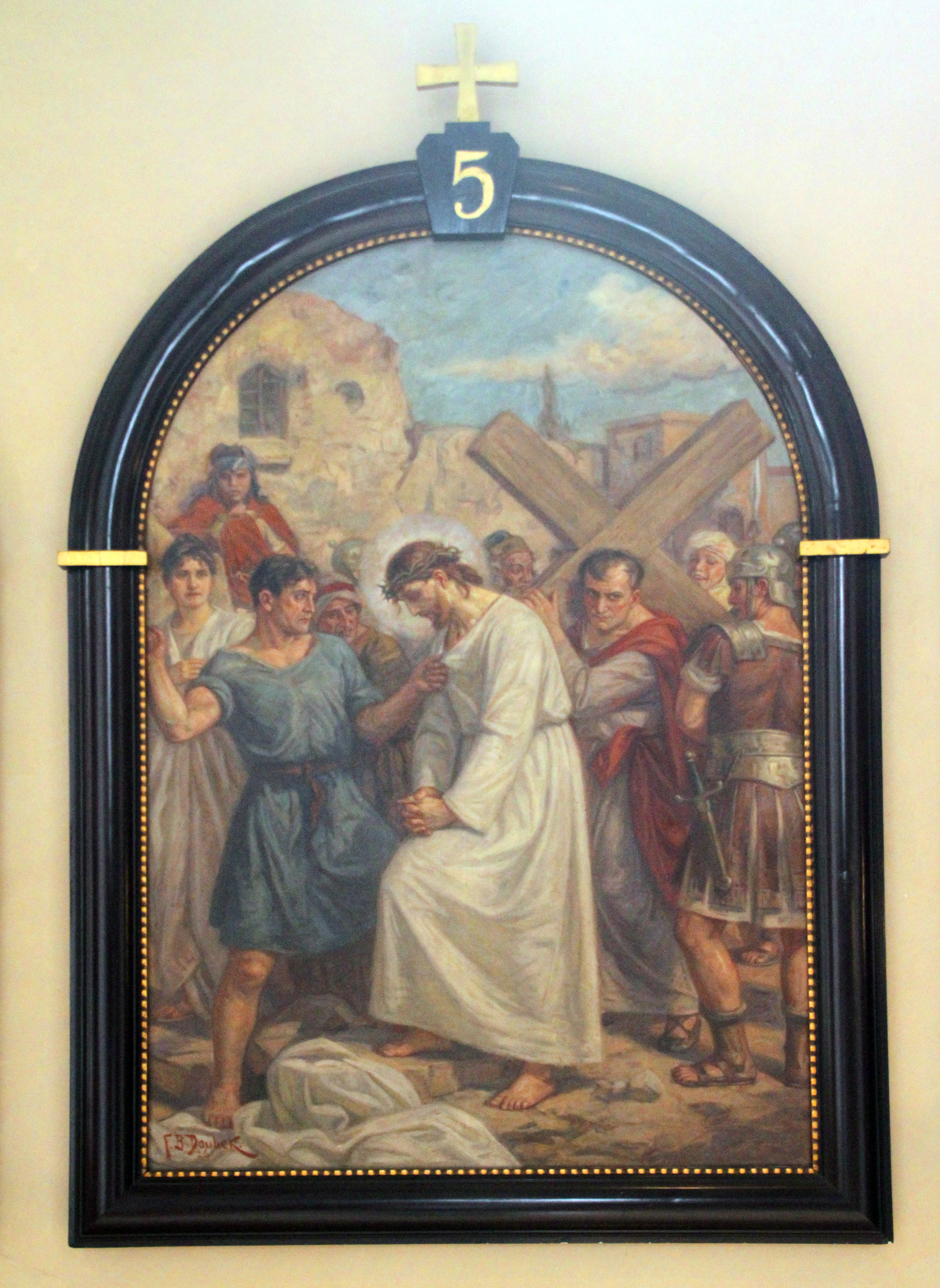
I like the contrast between how resigned Simon
is to this situation, and how resigned Christ is.
I couldn't go to the recent CMA conference, but several friends told me it was great. It focused heavily on burnout, as have the past five or so years. One of my parishioners, a family med resident who attended, reported that the talks were very holy and quoted lots of saints, but finally she didn't feel like there was a real "fix" to burnout.

My experience of the last two CMA conferences I've attended have been similar. Lots of discussion of personal holiness and the sacraments. Lots of discussion of holistic medicine and the importance of relationships and integrity in practice. Lots of discussion of hope, courage, and mercy for times of desolation. Not a lot of easy fixes. And I think that reflects the truth.

There is no easy fix for burnout. There's rest, hobbies, leisure, exercise, healthy eating, meditation, good marriages and friendships, and patience through desolation. None of those are easy. You have to force yourself to make time to rest (and then actually use that time to rest), you have to force yourself to exercise, you have to force yourself to develop relationships, you have to force yourself to pray. There is a lot of violence in pursuing the virtuous life. And, if you believe Augustine (and I do), we never get to the easy part of habitual virtue by ourselves. God's grace makes a way for us to become saints.

There's a small amount of relief whenever you acknowledge an unpleasant truth, be it some personal imperfection or some fact you can't control about the outside world. There is no "fix" for burnout, just the continued pursuit of a virtuous life and patience through desolation.

Sunday, October 15, 2017

Quick Takes as Fellowship Comes Closer

#1

Professionals of all stripes use LinkedIn. Basic science researchers use ResearchGate. Private physicians use Doximity. And, of course, everyone still needs a paper CV or resume. This sets up an obvious problem for the (hopeful) academic physician with a strong community presence. Aware that tl;dr has its own meaning, I affectionately call this resume problem "TLDR." Whenever I have something to put on my CV, it has to go in four places: Text, LinkedIn, Doximity, and ResearchGate. (And I haven't even mentioned the fact that NRMP, the "common app" for residency and fellowship, makes you build yet another CV in its system.)

#2

This month I went to wedding, two conferences, and a strategic planning meeting. One of the conferences overlapped with call, so I flew back through recently-flooded Houston the night before I showed up for a 24-hour shift. I feel like I'm always leaving friends and family behind, never present to them. All in all, I am traveling 4 out of the 5 weekends of this month. (I spent the other weekend TLDRing.)

#3

Hello Internet is a podcast by CGP Grey and Brady Haran. I used to watch a lot of YouTube science, so I knew the creators and listened to a bunch of the podcast while collecting data for a research project. One interesting episode talked about time management across four categories: work, family, health, and friends. Grey made these categories analogous to four lightbulbs, and posed the question of time management in terms of how bright (or dim) each bulb is or should be, given limited wattage for all four. He related personally that his "health" bulb hadn't been on in the early years of starting a successful YouTube channel. As I listened to the podcast, madly collecting data, I felt similar. I, too, am self-employed in a way. I'm in that phase in my career that involves aggressive self-improvement. I'm looking for excellent skills, rare opportunities, good connections, advantageous relationships, and strategic projects. And that "health" bulb is really dim! I'm trying to turn it up a little, but the wattage limit and my chronic ambitious habits are making it really hard.

#4

I'm homesick. When I applied to residency, I had few incentives to stay in my hometown because the public hospital rejected my ethical choices, the good private hospital had residents I didn't want to work with, and I thought the other private hospital was a dead-end career choice. Now I might be able to wedge my way back in, and I'd really like to. I don't like being the stranger at Christmas, that "older sister" who is never present to my siblings' lives. I want to be near my parents and be in the city I know and love. I can't tell how important these feelings are, though. Should I prioritize training in this important stage in my career? Should I go somewhere for the sake of a key mentor or a key set of experiences? And the all-important question: will they take me?

#5

You know the fable of the man who started with a piece of straw and ends up a millionaire? I feel that way sometimes. I started in homeschool and traded up to a good private elementary school. This allowed me to trade up to an academically decent but philosophically terrible private high school. From there, I could have jumped academically higher (and philosophically lower) into college, but instead traded overall "up" to TAC. But TAC is a "straw" in terms of the rest of the world. (All the Thomists may now laugh at TAC being straw.) But I was still able to trade up to get into medical school. From a community program, I traded up again to an academic residency. I wonder whether fellowship will be another trade "up," or whether I've maxed out my potential. 

#6

Can I admit something? It relates to "maxing out potential." There is a barely perceptible but real glass ceiling over me because of my moral choices. I can't go to top places because they don't want someone with my "limits." I am not comfortable putting a list of places I'm blocked from online, because I still have steps left in my training and don't want to close doors. But I have this long-lasting frustration with being inferior. I guess it started at TAC: I felt like I took the moral high road, and my high school classmates who had gone to better colleges were getting into better med schools. Then from my state med school, I felt that again I was getting fewer competitive interviews. In any given city, there's a glass wall between me and the big hospital and the big research projects. It makes me irrationally hungry to go to those places and do that research. There is a lot more funding and networking in those places, and I could do more. Wouldn't it be good if I could do some animals studies to further the possibility of ectopic rescue? Wouldn't it be good if I could study methotrexate more?

#7

I look at the last quick take and part of me thinks: "Networking and funding are fancy words for power and money. Don't look to those things. The Lord doesn't want you to do things independently. He wants you to be His Bride and He will make all the rest possible for you, even if it requires more work and you do not meet with success." There is more purity of heart in this response, I think. Less slavishness to ambition and outward things. More peace. Please pray for me, that I can have this peace and trust in the Lord, rather than anxiety over worldly things that I miss because of adherence to the truth. Please join me in that trust, in whatever opportunity you have in your life.

I will start applying for fellowships in July of 2018. I will start preparing my application around December, when interview season for the entering intern class of 2018 is over. Please pray for me! If there are priests reading, please consider saying a Mass for me.

Friday, June 30, 2017

Residency pre-Fellowship is Different (A Rant)

You know I work an average of 70 hours per week, and you can guess that making time to study is hard. You might not know how much there is to study. And did you also know that I'm expected to go to one conference per year and publish 1.5 peer-reviewed publications per year?

Let's start with the stuff that ACOG puts out. There are 79 Practice Bulletins and 236 Committee Opinions. Those are usually three- to fifteen-page documents, including references and tables. That sounds almost manageable, but then the Guidelines for Women's Health Care is 907 pages long and the Guidelines for Perinatal Care is 599 pages long. There are also seven Task Force documents, only one of which I've even opened (the Hypertension in Pregnancy report, which is a hundred pages long). Te Linde's is 1300 pages, Gabbe's is 1200, as is Creasy's. And then there are landmark papers that we are supposed to know.

Our program recently started giving us "homework" because our CREOG scores went down. I do not think this is the right answer for me. The answer is no more wasted lecture time, let me privately study and read. Don't give me extra materials, let me work through what I'm responsible for first.

And I'm also supposed to study obstetrics and gynecology while researching and furthering the field. This seems stupid in several ways, and I suppose the old way of doing it was that attendings did research and used medical students and residents as peons so that they could learn how to do it. I can't memorize study designs and statistical tests while also trying to memorize pelvic anatomy! In fellowship you have to do your own statistics and are usually responsible for higher-level study types (e.g. randomized controlled trials, bench science, etc), but you get a year without clinical responsibilities to do it. This week I clocked 70 hours and I presented a poster and submitted a manuscript.

Time spent researching is time not spent studying. Time spent reading a practice bulletin is time not spent reading a textbook (viewed by my program as better). Time spent reading a textbook is time not spent praying. This truth goes on and on for cleaning the house, sleeping, cooking, exercising, and recreating.

Recently I had a mentor meeting and we talked about the juggling act. "Residency is a different animal for you, compared to your peers who don't want to do fellowship," she said. "It's a fundamentally different thing." In my opinion it's fundamentally crazy. </rant>

Sunday, April 30, 2017

Eleven Cents

I am struggling with a frustrating reality: a person hoping to do research to build up the culture of life has to do twice as much work as a person who hopes to do amoral clinical research. Becoming a clinician-scientist is hard enough. They have to see enough patients, do enough surgery (when applicable), and earn enough grant money to make their institution value them. This means they have to stay on top of their clinical game. And like it or not, this usually means they have to choose result- and revenue-generating research topics.

Becoming an academic physician who also builds up the humanity of the unborn or builds up the science behind FABMs is even harder. Those topics don't make money and don't make friends, so these people either can't overtly do this research (i.e. they have to cloak it as MIGS or MFM) or they have to do amoral popular research in parallel. In my limited experience of successful pro-culture-of-life physicians, there is a proportion involved: the more pro-life/pro-family research you do, the more amoral research you do. The more you cloak your pro-life/pro-family research, the less you have to lead two lives to put bread on the table.

This initially made me very frustrated. Why should I have to do twice as much work as other people in order to do the research I care about? In this age of non-discrimination, why should I be effectively treated differently because of my beliefs? Of course, I realize that I'm not alone. I'm sure there are hundreds of MDs and PhDs who have pet topics that are non-fundable because they are too obscure, too unstudied, or not flashy enough to earn grants. But still! This is different. Want to do research that builds up humanity and saves the world? Tough luck.

This makes me think of a story from my childhood. I was at a big family reunion as an early teen. I have a lot of cousins that span almost two decades in age, and we were all at the pool. There was a wading pool for the little cousins and a regular pool for the "big kids." Most of the kids who could swim were in the big kid pool. Then the reunion held an event: all the adults tossed coins into the pool and the kids could keep any that they picked up.

The competition in the "big kid" pool was fierce! I was bumping into people and the coins I was diving for would get picked up by someone else. I think I ended up with a penny and two nickels. I was actually pretty pleased with myself.

I was pleased, that is, until I went over to my dad, who was with my younger sister by the wading pool. My younger sister was with the little kids and had collected almost a dollar, just by bending over and picking up coins. She hadn't even gotten her face wet. I was so angry! I worked so hard to get eleven cents and my younger sister, who had no appreciation for money anyway, had easily collected almost ten times what I got! And I hadn't even realized that the wading pool was an option. My pleasure turned into hurt.

My dad took the chance to teach me something I have thought about several times since then. "There will always be people who get eleven cents with lots of work and people who get dollars without doing much," he said. Later in life, he would add, "We're called to be faithful, not successful." So I'll try to apply this attitude to work. I will do what I can to pursue my calling faithfully.

Tuesday, February 28, 2017

Most emotional delivery of my life

This post conforms to the blog rules.I was recently in a delivery with an attending and the baby was extremely stressed out and had failed an operative delivery. We went back for a C-section. We ended up doing a "red" (emergent) C-section even though heart tones weren't down in the OR, because the mother started to have a seizure. Between her tonic-clonic activity and the baby's profound asynclitism, molding, and caput, it was the hardest C-section I've ever done. I couldn't get the baby's head out, so my attending tried. She couldn't, so I tried. I couldn't, so she tried again. Everyone was screaming. And meanwhile, because it was a red section, the room was in chaos. My chief was pushing from below and another attending was called. The original attending couldn't get it out, and I tried one more desperate time (all the while screaming for a Murless) and got it out.

It looked dead, but it had a good one-minute Apgar. It's doing fine now, and so is mom. I spent the rest of the C-section crying, though, because I thought the baby was dead. Five minutes feels like so much longer when your brain is screaming, "the kid's heart rate is slow, the kid is dying!" And that baby was more limp than any other baby I've seen.

Except, perhaps, for the vaginal breech I did the other month. That was awesome.

All's well that ends well, but that C-section was the worst delivery I've ever been in. Please pray for me. The 19-day streak that I mentioned at the end of the last post turned into a 26-day streak followed by one weekend and another 24-day streak. I am so tired!

Wednesday, February 15, 2017

Seven Quick Takes

This post conforms to the blog rules.It's been quite some time since I did seven quick takes, a blogging/sharing technique created by Jen Fulwiler in the peak of her blogging days. (It's a cheap way to write a quick post when you're studying for CREOGs.)

#1
I have begun to realize that unity among pro-lifers is harder than I thought. I went to a huge benefit dinner for a (very successful) evangelical pro-life group, and I had to will myself to keep smiling. There was so much talk about how God would save America and how America was going to become great. There was so much talk about proselytism. As a Catholic, I know that God promised His Church would survive, not that my decadent country would survive. And I'm around to evangelize by example, not by discussing acceptance of the Lord with women in crisis. 

But I don't have to love everyone's tactics. Pro-life needs unity.

#2
Speaking of unity, Christian unity would be great for the culture, too. I've mentioned before that a lecturer I had in med school defended the LGBTQ community (awkwardly, and not to the enjoyment of the LGBTQ in the audience) by pointing to Christian disunity. He was attempting to explain how LGBTQ Christians should be comfortable with Leviticus, and expansively pointed to the number of denominations there are. The bible means whatever you want! 

At this point I'd settle for SSPX or the Orthodox Church coming into whatever communion with the Roman Catholics as is possible.

Here's something to help Christian unity: pray for an increase in your desire for Christian unity. Pray that the disunity will start to be painful to you, rather than just a bummer fact. Schedule this prayer for every time you pass a church of another denomination. Simply pray as you drive: "Lord, unite us."

#3
Are there any college students or PhD candidates reading? I would like a Catholic PhD so that I can fund bench research in mitochondrial replacement, methotrexate mechanism of action investigation, naprotechnology basics, and ectopic rescue. This is a big call--tell friends and relatives I'm looking.

#4
I have several friends who are rapidly becoming more and more accusatory of the Pope. We don't owe him affection, guys! We owe him filial obedience in matters of faith and morals. In the middle ages and renaissance the papacy was super messed up, but Catholics like St. Hildegard, St. Catherine and St. Joan continued to respect it supremely. They respected it because they worshipped Christ and trusted in His decision to establish the office. Let's do the same.

#5
Speaking of Pope Francis, there was a break-out session at the CMA conference about his theology. According to the presenter, his work is a type of Christian personalism, a theology of encounter. Authentic encounter leads to renewal of life and joy, in the pope's view, and a God-given mission follows on this renewal. The Christian mission is always one of mercy, the pope has said, and everyone is called to this mission of mercy. 

Moreover, the pope emphasizes frequently that the privileged starting place for our evangelical mission is with the poor. This is because the mission is modeled on Jesus, the "man for others," and thus will entail suffering as we accompany others into the Father's arms. This break-out session was largely drawn from Evangelii Gaudium, but much of Pope Francis' other work echoes these themes.

#6
I started cantoring at my parish a few months ago. I haven't cantored since middle school, and have been saddened by the weakness and loss of range in my voice since residency. My parish desperately needed cantors, so I volunteered.

I was shocked at how much stage fright I've developed! I can do a crash C-section fearlessly but I'm shaking while singing the Ave Maria that I sung at age ten in front of a packed church? It shows me a well of timidity (a form of pride) that I didn't know I had. I've been trying to care less and less about "human testimony" (Jn 5:34), and this is another chance to do that. Plus, it definitely confirms that I am an alto. I tried so hard to be a soprano as a kid, and now there's no doubt left.

#7
I had a wonderful, consoling, productive vacation. This makes me want to be a better doctor, but it also makes me want a calmer schedule. In particular, it makes me dread my upcoming 19-day run without a golden weekend. Say a prayer!

Friday, December 30, 2016

Control and Being a little Legislator

I have realized that I can't control anything, and I'm trying to live with that.

This is as much a psychological milestone as it is a spiritual one. Human beings can't influence most of what happens to them: we can't change the weather, we can't change history, and we can't change the people around us or their choices. Christians embrace this like they embrace the inevitability of suffering: they see that God has made it a way to go to Him.

It's refreshing to admit I can't control a lot. As a doctor, I can't control who will page or call me and whether it means I get out of bed on call. I can't control who will walk into my clinic or how long they'll need to talk about it. I can't control who will come into triage or the ED and whether they'll need a complicated workup or a surgery that day. At the most extreme: I can't control how placentas and cancers grow and I can't stop babies and women from dying. There's a vulnerability that can be exhausting (another patient? I already need to see twelve. Another ultrasound? Another phone call?). It's hard to maintain generosity and avoid being lazy. Also increasingly since residency is the inability to control my body: I can't just stay up as long as I want--my body turns off after 36 hours on and I miss meetings that I schedule after that.

The doctor-patient coin has two sides. I can't control how my doctor interprets the evidence on re-scoping versus empiric titration. I can't control what she'll find on that colonoscopy, either. I can't control what the meds will do, I can't control whether I develop extraintestinal manifestations, and I can't control whether or when I'll lose my colon or get cancer. (I also can't control the past, which includes a lot of knowledge about UC that I sort of wish I didn't have.)

And there are a scattered other few things. I can't control whether my siblings will stay Catholic, whether my married friends will stay married, whether my archdiocese will close my parish, whether the state will stop payment from CMS to my hospital....

There are some things that I can control a little more, but always weasel out of my grasp. I can't always seem to control the cleanliness of my apartment. Sometimes it looks like six frat boys live there and I can hear my German-standard cleanliness mother (who had us wipe the microwave and oven doors as part of the list of things to do with the dishes) tsking in my mind. Mom, I think I've wiped the oven once and vacuumed three times since moving here.

Then there are the things I wish were in my control and might be in my control, but I don't think my will is disciplined enough. These are all the parts of the life of virtue that I think I could do better on, even though my life now in residency tempts me to excuse all kinds of stuff. I have to learn to live like a saint even while working my current schedule. What if I died in residency? What will be my excuse that I didn't possess my own heart in each moment, form my conscience, and use every opportunity to love God and calmly grow in virtue?

But my old approach to virtue doesn't work now. (Lots of people said this about med school, that they're undergrad method of studying didn't work in med school. I didn't have to make that transition from TAC, but perhaps it'd have been better if I did, because I'd have recognized this need for something new sooner.) I can't legislate little changes any more. 

In med school, I wanted to be able to floss every day, so I made a little law for myself, invented a method for predisposing myself, created positive self pressure (a dental appointment), and unconsciously created negative pressure (shame). And it worked. The same thing worked for a lot of pious practices and projects. Now I can't get myself to floss, even though I applied all the same interventions. The same problem exists for a lot of my pious practices and projects. I don't know why this is, but I have a strong hunch: the core battle of my life, chronic exhaustion, makes it hard to pressure myself to do things. There's not enough energy for sustained enforcement upon myself. 

But the other day I had a realization. Considering the relationship between myself and God, I am never the legislator. God makes the laws and He stands under the reality in which I exert my free will with His help. This helped me realize what doctors of the Church and saints have long known: all that is needed for holiness is to follow one's conscience in each moment. When each opportunity to floss presents itself, I accept His grace and take care of my body. And because God's will is less totalitarian than man's, I might even decide (shocker) that flossing is not indicated in certain situations. (Do you floss after 30 hours at work? I fall into bed.)

Monday, April 11, 2016

Objections (and New Sidebar Gadget)

"You live at a breakneck pace. It stresses me out."

"How can you be a good consecrated virgin with all this work?"

"How can you be a good doctor when you're doing these side projects?"

The first objection comes most often from my body. Ulcerative colitis and residency don't play together well. A UC colon loves a predictable schedule, well-cooked and wholesome food eaten slowly. Those things are basically impossible in OB/GYN residency, where I'm eating quickly between triage patients and deliveries and trying not to have an episode of diarrhea during a C-section.

The second and third objections come from my conscience. I work a lot, and not by choice. I worked 2430 hours in the 244 days between July 1 and February 29. That's 11.6 hours for six days a week, with a seventh day off (and includes the days I was not at work while on vacation). I'd like for things to calm down so that I can focus more time on my relationship with Christ. I could work to the bone my entire life and never get to know the man who saved me and stooped to make me his little consecrated virgin. That would be a horrible tragedy.

I am also pursuing several projects on the side, including a video (done with shooting by the time this comes out!), a set of brochures (should be done with this one completely by the time this post hits), home improvement, blogging for two sites (including this one), keeping up the scholastic life (which includes writing and submitting essays to various journals), research (don't remind me about the phone calls I have to make for my research right now...), and attempting to network with others fighting for the culture of life (which involves archdiocesan events, meeting people for dinner and coffee, and emails). How can I take care of patients when I am so tired and have to finish all these notes so quickly? How can I study and be a good learner when I'm trying to get four doctors with crazy schedules to Chicago to shoot a video?

I just thought this picture was funny.
My response to these? Part of me argues that I'm in a rare time in my life when I can spring back from fatigue after working these hours, and I can spend this much energy on things. But the other part of me completely concedes that the objections are true and I'm doing it all wrong. 

It's unrealistic to respond by promising I'll never go to another pro-life or pro-family event, or that I'll never write another paper. I need to establish a new balance of work, leisure, and prayer.

Part of being less overwhelmed is beginning to assume that the duties of adult life (taxes, car maintenance, housecleaning) are not a project and are just like brushing teeth: no big deal, just gotta do it.

The other part is limiting my projects. I used to limit myself to five active projects in medical school. This may sound like a lot, but I remember when I said "no" to eleven awesome-sounding opportunities in one week. It was a good lesson: not everything that sounds awesome is really important to a career (much less to a life). I'd like to introduce you to a new side-bar gadget: the Project Kitchen. I'm not allowed more than two active projects, with up to four on the back burners.