Let me tell you what it's like to be a Catholic millennial.
I am an older millenial, who remembers the days of dialup, and I'm obviously stuck in the past of the individual blogger. I remember the language of the "new springtime in the Church," the new Advent, language of the 90's and early 2000's. But I didn't realize that during my lifetime, the Church would have to pick up so many pieces we didn't know existed after the sexual revolution and after Vatican II. No matter what you think of the council, you have to acknowledge that we have a nuclear fallout level of cleanup to do. This post catalogs my realization of the size of the work to do, and my thoughts about it.
Some people may have realized that Vatican II would lead to radically irreverent liturgies (think "clown masses"). That is a travesty, but it's largely over. The disappearance of these liturgies was more or less spontaneous: there were outcries, there were reprimands, there was unhealthy silence on the matter, and then the people interested in those types of things left Catholicism behind in favor of openly irregular parishes, non-Catholic charismatic communities, or life without religion. Every time that something like this happened again (beach Mass, dog "receiving communion," etc) the conservative whack-a-mole arose again, but its machinations usually weren't needed. Slowly, parishes and parishioners that favored those things aged. Even now, those ideas and that architecture are being phased out.
A residue of bad architecture, bad catechetical materials, and liturgical carelessness remains. A casualness about parish announcements, extraordinary ministers, and the Real Presence persists. Even priests who would never experiment with the Mass ended up committing subtle and not-so-subtle irreverences and liturgical abuses, probably through poor formation. Mass even without gross ("clown") irreverence is, in most English-speaking Novus Ordo rites, celebrated more like an important human tradition (think Memorial Day salutes to the dead) and less like an act of divine worship (think Crucifixion). It's hard for priests to fight this, although for the good it is becoming easier and they are making it easier for others.
Some unexpected effects of the radically irreverent liturgies include the steep rise in unbelief among those who still call themselves Catholic. This seems stranger to me than those who want the moniker but want contraception or divorce. The Real Presence is an entirely intangible belief that (while difficult) has no real-world perceivable gains by its denial, as might contraception or abortion. Why are we denying it now, all these years after the Enlightenment has taught us that the physically measurable and useful is all that is? Why now, all these years after much of protestant theology has made Christianity out to be symbolic and practical for prosperity? I see it tied to a failure in orthodoxy and orthopraxis. We didn't do it or say it (lex orandi) and we don't believe it (lex credendi). Humans are cultural animals: when we aren't inculcated to the truth, it's much harder to grasp.
Another unexpected effect of radically irreverent liturgy is the fragmentation of conservative liturgical groups. The more decades pass between the origin of the SSPX and the present day, the more difficult it becomes to untangle all the events, souls, and teachings (both praiseworthy and troubling) involved. Add the FSSP and various media outlets (Church Militant, the Remnant) and it's a dizzying cacophony of voices that all want orthodoxy back, but are opposed to each other in various ways for various reasons, whether good or not.
In the aftermath of Vatican II, there was an enormous breakdown in trust in an authority, followed by the unveiling of significant scandal which further compromised current ecclesial authority. This breakdown in trust seeds discontent among allies, a purism that makes it hard to work together. This not only affects Catholic organizations, but others of similar mission, such as pro-life organizations. Certainly, many good ministries and collaborations have arisen, such as the Ruth Institute and Women Speak for Themselves. But so much damage has been wreaked among the most important organizations, such as SSPX and groups of sedevecantists, has been far more deleterious than the perceived benefits from other organizations. In particular, I have perceived a rise in sedevacantism since Francis became pope. I imagine this is like what St. Augustine felt among the Manicheans or Pelagians, or St. Nicholas among Arians. When I meet one who says he is "Catholic," is He like me? It is a very wounded Church we live in.
And I predict that after covid-19, Mass attendance in many parishes will drop even further. Where there is no belief in the Real Presence or the authority of the Church, why will there be Mass attendance when people have seen how little their lives are impacted without a homily on the values they hear about in TED talks or in the online sermons that were already being put out weekly by the nondenom church nearby?
Some parishes which are better catechized or more tightly-knit may not suffer this. But I expect this double blow (the "spirit of Vatican II" and the abuse scandals) has had and will have had far-reaching effects for parish life. It has had and will have effects in ministries like EWTN, Word on Fire, Church Militant, and others. Is had and will have more effects on individuals and their vocations to married life, consecrated life, and holy orders.
We will be picking up the pieces for a long time, and we will discover pieces (like sedevacantism and conservative infighting) that we never expected to have to glue back together.
Showing posts with label the sacred. Show all posts
Showing posts with label the sacred. Show all posts
Monday, June 22, 2020

Monday, May 15, 2017
A Plea for SSPX
My coworkers are primarily practical atheists. But even most of my Catholic friends find it hard to get all the Catholic culture right. Not everyone can keep FSSP and SSPX straight, or Miles Christi and Regnum Christi separate. I guess I should be glad they have heard of Dominicans. There are few that know about Carmelites.
 Honestly, there is a spectrum of knowledge of Catholic gossip. A few of the retired virgins I know seem to be familiar with every bishop, cardinal, church scandal and church document, and they will remark on what each one has said about each other one. Honestly, I don't know what Cardinal Sarah said last Tuesday or that such-and-such did an irregular thing and now has such-and-such canonical status. Not that it's bad to care about these things. The Church is the way to salvation and the mother of souls. Of course Church happenings matter. But I don't keep track of a lot of them.
However, there is something that is near to my heart. I love the extraordinary form. Irreverent and ill-prepared liturgies make me sad and angry. I have had classmates and coworkers in SSPX. So for my part, I would love for SSPX to come back into complete union with the larger Roman Rite. Please, please help the rest of your brethren understand the majesty of the Eucharist. Please spread the patrimony of the ages built into the 1962 Missal. Breathe into us your love for chant, your attentiveness to God, and your awareness of the differences between women and men and children. It's more important than we can comprehend.
However, there is something that is near to my heart. I love the extraordinary form. Irreverent and ill-prepared liturgies make me sad and angry. I have had classmates and coworkers in SSPX. So for my part, I would love for SSPX to come back into complete union with the larger Roman Rite. Please, please help the rest of your brethren understand the majesty of the Eucharist. Please spread the patrimony of the ages built into the 1962 Missal. Breathe into us your love for chant, your attentiveness to God, and your awareness of the differences between women and men and children. It's more important than we can comprehend.
Sunday, January 19, 2014
Internal Medicine
 I am one week in to my second month of inpatient medicine, and I am run-down. I have seen a lot of sick people and learned a lot. It has been exciting, emotionally draining, and physically taxing. I wish I could tell you the story of the man with an enormous malignant pleural effusion, the story of the man with a hemoglobin of 1.8, the story of the man whose foot was amputated in the middle of the night, the story of the man with a failing heart, the story of the woman who presented with flu and was found to have leukemia, the stories of the several people found down, the story of the pregnant woman with flu, the story of the man with the three-foot aortic dissection, and the story of the man I thought was having a heart attack but who was really lying to me about his cocaine use....
 Daily Mass and meditation have been hard to get to, and that sends me into a tailspin of scrupulosity and humiliation. However, I was able to go Mass almost every day in the past week and formation is still going on. When you read this, please pray for my bishops; they are making some important decisions and need your help!
My schedule now looks like this:
4:50 Rise, MP
5:30 Drive to work
6:00-8:00 See patients and write notes
8:00-12:00 Round with resident or intern
12:00-1:00 Noon Conference with residents (Midday prayer doesn't happen during the week)
1:00-5:00 Lecture, studies, or other learning with resident or interns
7:00 Mass, EP
8:00 Home, mediation
9:00 Bed (NP doesn't happen much right now)
Unless I am on call (working 6:00-9:30), then I exempt myself from Mass and meditation.I am on call every fifth day, and this means that there are some days I work on Sundays and Saturdays. The day after call ("post-call") is also a workday, so if call lands on a Friday, I work Saturday (that happened this past week.) If call lands on a Saturday, I work Saturday and Sunday. The residents call this a "black weekend," but because of the way the call schedule works, it is always followed by a "golden weekend" of both Saturday and Sunday off. Obviously, when call was on Sunday once, I went to an anticipatory Mass.
_2007-03-03.jpg)
Two days before the call day, I am "on codes." A "code" or "code blue" is called when a patient goes into cardiac arrest. I carry a special pager on code days that goes off whenever a code blue is called, anywhere in the hospital. When that pager rings, it flashes where in the hospital the code is, and I immediately drop everything and walk/run there. I have been to three total, I think. There are usually plenty of people at a code, so I usually stand in the background. I gave chest compressions once. All three times, the person died. (The survival rate to hospital discharge from a code blue is extremely, extremely bad--don't let the medical dramas fool you.)
What does a medical student do in the hospital? I come early and see the patients assigned to me (usually three, yesterday four). I go into their rooms, (usually) wake them up, and ask them how they're doing. I follow up on their pain, nausea/vomiting, breathing, constipation/diarrhea, urine output, medicines, etc. Then I examine them. It's amazing how natural this is becoming! Then, I update them on any test results that I have seen and they haven't been informed about yet. I always leave big news for the resident or specialist, but if there is something simple I can tell them, I do. I ask them if they understand everything that's been told to them. Often, the answer is "no," and I know enough to help them understand. Then, I ask if I can do anything for them, and if not I leave and find a computer.
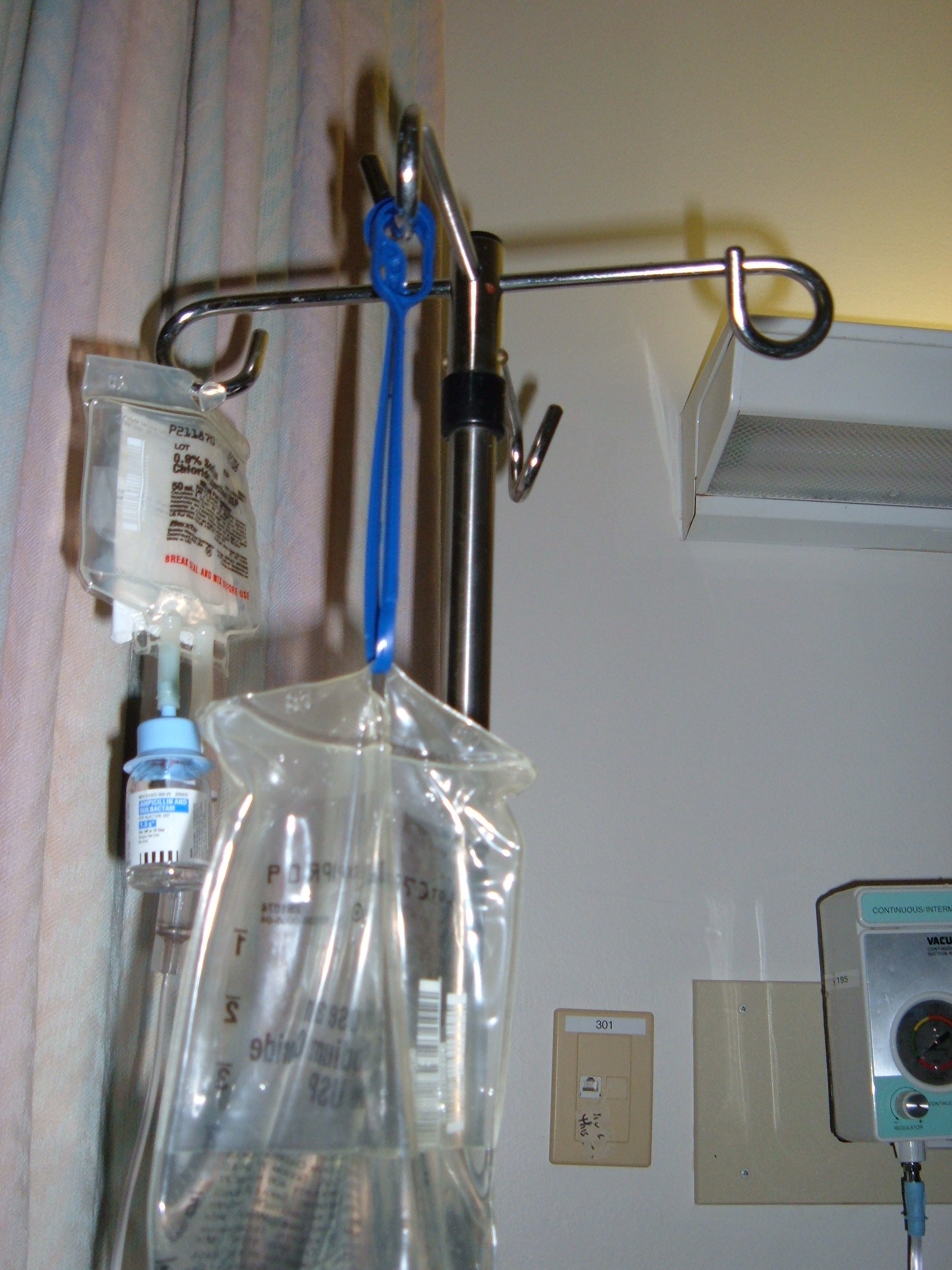
I submit my notes before 8:00, which is when the interns review my notes and see those same patients. They usually formulate their plan without taking mine into account (my notes are more for my education than the patient's care), but I have had some take some of my text and use it in their notes! Sometimes I round with them, but more often I join the "upper-level," a second-year resident. She has to see all the same patients again, too, because she checks the interns' work (and the attending physician checks hers). This is how doctors train! Daily practicing medicine with less and less supervision.

Noon conference is mandatory free lunch with lecture. Every day, we learn about something in medicine. I'm sure the upper-levels have heard some repeats, but repetition is the mother of learning. After noon conference, the med students have additional lectures and we also do practice questions or join the interns for some teaching. "Teaching" from a young doctor is different, depending on the doctor. With one of my interns, I trooped up to an ICU and we found a patient on a breathing machine so that he could give me a one-on-one mini lecture (with questions and practice cases all throughout it) on ventilator management. With another intern, we did practice board exam questions. With a third, I was left alone to read and do practice questions on my own.
As you can imagine, I'm learning a lot. This ended up being a respectably-long and mildly interesting post...I dive into IM again tomorrow and have a black weekend the next week, so I probably won't be blogging again soon. Pray for me, and for my bishops!
Monday, October 21, 2013
I Wish I'd Known
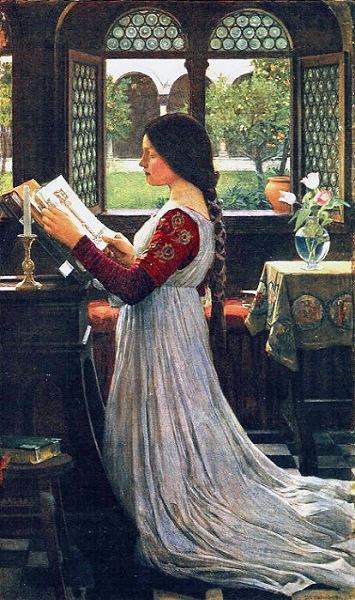 |
| Prayer will make you beautiful! It might not give you flowing dark hair, though. Sad face. |
I've thought about this several times recently: I listened to a talk from the School of Faith (get the talk by creating a login here; it's Faith Foundations I Lesson 9) and I read this post about prioritizing prayer and then I heard my parish priest give a homily saying pretty much the same thing just yesterday.
Do you live an age-appropriate prayer life? This article might be a good help towards a beginning to grow up into spiritual adolescence. And asking someone who is a little further along in the journey was helpful for me; hopefully God will (or has already) placed this person in your life. If not, pray that He will!
Now you know what I wish I'd known. God bless you today!
Sunday, September 22, 2013
Mass for the Primitive Pagans Today
I recently went to Mass in a Christian community emerging from a pretty entrenched pagan culture. It was primitive and there were some (less than Christian) parts of the culture that shone through in their particular celebration of the Mass...but on the whole it was actually pretty beautiful to see that many of them were using the faith to christen their culture, themselves, and their children.
Mass was in the vernacular with a few Latin parts (just Agnus Dei, actually). I admire these people for learning even little bits of a language that must seem totally foreign to them.
 The church building was no classic European cathedral, that's for sure! I would criticize them for their very mediocre architecture, but that probably wouldn't be fair to the people actually worshipping in the space. They probably don't have as rich a patrimony as Michelangelo! So yes, the Church was all brown and plain, but that's not the most important thing, no?
The music....well, it was no Gregorian chant. There was quite a bit of percussion with instruments native to the people, as well as some strings and lots of voice. It's very important to this society that each person has an equal dignity, so everyone in the congregation sings and says as much as possible in the Mass (they might have stuck in an extra "Amen" in the Eucharistic prayer?). This includes the hymns, so sometimes quality is sacrificed for participation. Theologically, there's better stuff (Adoro Te, Christus Vincit, O Sacred Head are some favs of mine) and even musically, there's better stuff, but they use hymns written by their people and I think they might be better for it, at least until they grow into the Chuch's rich musical heritage.
The people sit in family units, which I think has to do with this culture's historical foundation on the family in agriculture. Or maybe they sit in family units just because they travel to Mass that way from home. Who knows! But either way, it's a quiet and helpful way to reinforce the sacredness of the family.
 Also of note, they exchange an already culturally-established sign of peace. (I've also seen a Korean community give peace by bowing. That was really fun. Do Europeans kiss?) They also do this at the Our Father with their neighbors, even though it isn't in the Ritual. Is this bad? Not sure...you could argue that they're adding to the Mass, which not even priests should do, but you could also arguing that they're Christianizing an otherwise secular gesture.
There is a great understanding of the sacredness of space in this culture, so it's natural for them to have LOTS of space between the people and the altar, and for this to be totally cool. (In contrast, some Africans or Hispanic cultures love to go right up to tabernacles and monstrances to touch and pray.) Here, there's a definite "holy of holies" and something untouchable about the Blessed Sacrament. That attitude in their culture (that everyone has their space and you don't trespass) is probably from their history, but it's serving them well at Mass!
Everyone is quiet during the homily. Academic achievement is prized in this culture, and I suppose that's probably helping them. On the other hand, they love partying, so perhaps a third of them are dozing off or distracted, bored. I wonder which one will win out as this little community continues in faith!
Hmm, there are female altar servers and women on the altar. Don't get me wrong, I love women. But I don't think this culture has a huge understanding of priestly celibacy and the otherness of Holy Orders as alter Christus capitis. There hasn't been much interest amongst the young men in vocations to the priesthood, either. Could it be that the female presence on the altar is a sign or symptom of this misunderstanding? I hope the gentle teaching of the Church can help the whole community understand the value of celibacy and the value and uniqueness of the priesthood.
 Although there is much singing during the Communion of the faithful, almost everyone is reverent. There is no altar rail in this church and the people mostly receive in the hand, although some receive on the tongue while standing. Almost everyone receives communion. Maybe this is a childlike trust; possibly, some are receiving our Lord unworthily, but who am I to judge? I leave it in the hands of the pastor of this young little flock. There was a great deal of singing (even by the people) after all had received--which is not ideal, since some moments of silent communion are appropriate with the Divine Guest--but this is a child's form of prayer, so that might be the intention and the best thing to do. Some of the people abstained from singing and were silent.
After Mass, there was an enormous hubbub as everyone talked about life, children, schools, activities, and everything else. What a vibrant community! There are flowers at statues of our Lady, the Sacred Heart, St. Joseph, and St. Anthony. I think I'll go back soon.
This might not come as a shock to you, but I am describing my home parish in the post-Christian west. Does your home parish impress you when conceived of as a small and newly-converted community in a deeply pagan culture? In some ways, that is what we are. So two pieces of advice:
Mass was in the vernacular with a few Latin parts (just Agnus Dei, actually). I admire these people for learning even little bits of a language that must seem totally foreign to them.

The music....well, it was no Gregorian chant. There was quite a bit of percussion with instruments native to the people, as well as some strings and lots of voice. It's very important to this society that each person has an equal dignity, so everyone in the congregation sings and says as much as possible in the Mass (they might have stuck in an extra "Amen" in the Eucharistic prayer?). This includes the hymns, so sometimes quality is sacrificed for participation. Theologically, there's better stuff (Adoro Te, Christus Vincit, O Sacred Head are some favs of mine) and even musically, there's better stuff, but they use hymns written by their people and I think they might be better for it, at least until they grow into the Chuch's rich musical heritage.
The people sit in family units, which I think has to do with this culture's historical foundation on the family in agriculture. Or maybe they sit in family units just because they travel to Mass that way from home. Who knows! But either way, it's a quiet and helpful way to reinforce the sacredness of the family.

There is a great understanding of the sacredness of space in this culture, so it's natural for them to have LOTS of space between the people and the altar, and for this to be totally cool. (In contrast, some Africans or Hispanic cultures love to go right up to tabernacles and monstrances to touch and pray.) Here, there's a definite "holy of holies" and something untouchable about the Blessed Sacrament. That attitude in their culture (that everyone has their space and you don't trespass) is probably from their history, but it's serving them well at Mass!
Everyone is quiet during the homily. Academic achievement is prized in this culture, and I suppose that's probably helping them. On the other hand, they love partying, so perhaps a third of them are dozing off or distracted, bored. I wonder which one will win out as this little community continues in faith!
Hmm, there are female altar servers and women on the altar. Don't get me wrong, I love women. But I don't think this culture has a huge understanding of priestly celibacy and the otherness of Holy Orders as alter Christus capitis. There hasn't been much interest amongst the young men in vocations to the priesthood, either. Could it be that the female presence on the altar is a sign or symptom of this misunderstanding? I hope the gentle teaching of the Church can help the whole community understand the value of celibacy and the value and uniqueness of the priesthood.

After Mass, there was an enormous hubbub as everyone talked about life, children, schools, activities, and everything else. What a vibrant community! There are flowers at statues of our Lady, the Sacred Heart, St. Joseph, and St. Anthony. I think I'll go back soon.
This might not come as a shock to you, but I am describing my home parish in the post-Christian west. Does your home parish impress you when conceived of as a small and newly-converted community in a deeply pagan culture? In some ways, that is what we are. So two pieces of advice:
- To traditionalists: do not worry. Our culture is now mission territory; don't be shocked that we have primitive churches. Instead, sweetly nurture the poorly catechized and see the good in them to help increase it.
- To those who have no idea what a "traditionalist" is: you might also not know how amazing the Church's history, liturgy, and theology can get (not to mention the art). Strive for maturity in the faith and dig into the patrimony of our Church.
Monday, August 5, 2013
An Open Letter to Christians
Dearest sibling,
Recently I attended a lecture by a man who claimed to be a deeply religious Christian but lived against some of its tenets. When an audience member asked him about the disparity, he shrugged off the difficulty as ethereal. "Look at Christianity," he said. "People have all kinds of interpretations and translations. Some people include books that others don't." He effectively said, "Christianity isn't one thing, it's a free-for-all, so I make of it what I choose. And that goes for any of my other actions! I do what I choose, and it is good."
Dear Christian, this goes against what we believe. We do not choose what is true and what isn't! We are chosen, we are added to the Lord--conformed to Him, made like Him! It is a beautiful, saving obedience. We know this, and we hope to spread this knowledge to others so that they, too, can be safe in holiness.
I call us to unity. We are giving scandal to the world by being so separated. We are lending credence to faults and sins that pain our Lord! We must stop it, and we must put effort into stopping it!
On my way to work I drive down a block with six churches of various denominations on it. Flanking both sides of the street and one right next to the other, they stand like detached body parts of a man horribly wounded. How can we stand to see our Jesus like this? I call us to knock on our brothers' door: knock on the door of the church nearest you and set up a meeting. Talk about what you have in common. Talk about unity in the next fifty years. Talk about stitching our Lord's wounds closed. And talk about setting an example of love, unity, and radical holiness to our world.
With a fond embrace and with Jesus among us,
Your sister in Christ

Dear Christian, this goes against what we believe. We do not choose what is true and what isn't! We are chosen, we are added to the Lord--conformed to Him, made like Him! It is a beautiful, saving obedience. We know this, and we hope to spread this knowledge to others so that they, too, can be safe in holiness.
I call us to unity. We are giving scandal to the world by being so separated. We are lending credence to faults and sins that pain our Lord! We must stop it, and we must put effort into stopping it!
On my way to work I drive down a block with six churches of various denominations on it. Flanking both sides of the street and one right next to the other, they stand like detached body parts of a man horribly wounded. How can we stand to see our Jesus like this? I call us to knock on our brothers' door: knock on the door of the church nearest you and set up a meeting. Talk about what you have in common. Talk about unity in the next fifty years. Talk about stitching our Lord's wounds closed. And talk about setting an example of love, unity, and radical holiness to our world.
With a fond embrace and with Jesus among us,
Your sister in Christ

Friday, July 5, 2013
Thoughts on Psychiatry
Phew! There has not been much time to blog lately. Two weeks ago, my first rotation started. Since then, my schedule has approximately been:6:00am: wake up, drive to Mass
6:30am: Mass, Morning Prayer, and drive to the hospital
8:00am: see patients with my attending and one other student
12:00ish: lunch, Midday Prayer, and sometimes commuting to another place.
Afternoons were very variable: since I just finished two weeks on the alcohol and drug dependence unit, I often got out before 3:00. But on Wednesdays, I worked until 11:00pm in Admitting (and I would go to an evening Mass the following day so that I could get some extra sleep). Three afternoons, we had lecture, so I got out at 4:00 or 5:00. Since I am living at home now, I
Some time during the day: 30 minutes of Meditation
9:50pm ish: Night Prayer
10:00pm to 12:30am: bed
There have been about a hundred stories I wanted to retell here. I had no idea that opportunities for "medical matinses" would come so thick and fast in the third year. In almost every patient I see a huge, magnificent, intricate tale that deserves treatment by Homer or Hugo! I'm very grateful to be living at home because people are willing to listen to me, and that has replaced some of the function of this blog (good thing, too, because talking with someone has a much smaller activation energy or barrier cost than writing a blog post, in terms of time).
But I've also struggled with this rotation. I have had a sheltered life, and to see so many dysfunctional families, so much drug and substance abuse, so much poverty and desperation, and so much mental illness all in two weeks was a little overwhelming. There was a woman around my age seeing and screaming at her hallucinations, while I was trying to talk to her. There was a young man who can't accept his diagnosis because it doesn't fit into the reality created by his psychosis, so he can't see that he needs medicine. There was a little girl with new-onset intrusive thoughts, who cried in my arms because she was so afraid of her own thoughts and scared of all the other (even worse) pathology on the pediatric unit. And then there were all the addicts, with pasts full of loss and with futures of fragile sobriety (and I could never tell when they were lying to my face). Will the ones I got close to be safe on the outside?
I was struck by how human everyone is (and I've talked about that before). For instance, I spoke with at least two men who came in with homicidal ideations. In both of the conversations that I am thinking of, I was not afraid, but only filled with compassion and love.
I'm also in the process of pursuing my vocation, which means I'm in formation one night a week and trying to use Sundays for formation, too. I'm navigating the city and trying to attend daily Mass and Adoration in the midst of a crazy schedule. I am living more and more of the particulars of my future life, and it's hard and wonderful. I might post my vocation story here...we'll see.
Monday, February 11, 2013
Dark Diagnoses and Extraordinary Forms
A man came into the office, I saw him, and he left with a diagnosis that will either accompany him or hurry him along his walk towards death. And although he feared a diagnosis like that (or at least, his wife did), I truly don't think he expected to get it. His major goal of the day was to figure out what was wrong and fix it, so that he could get back to the way life was before his symptoms were bothering him. But instead, he walked out of the clinic with a dark diagnosis.
His 'dark diagnosis' is one of many that I store in a mental box in a corner of my growing art. Myasthenia gravis, multiple sclerosis, diabetes, some cancers, HIV/AIDS, hepatitis C, congestive heart failure, chronic obstructive pulmonary disease, etc. I am not the master of these diseases, but I am the one who sees the signs of them and shakily opens that slim black case and pulls out the corresponding diagnosis, handing it solemnly to the person as I introduce them to their unwanted companion.
Sorry for getting so very poetic so quickly.

And these dark diagnoses are a kind of death, because I must tell them, "Life is different now. I wish I had different news to tell you, but you can't go back to the way life was before."

I study this dark box often because these diagnoses have many effects and are chronic, debilitating, and common. Many times I had spoken with patients and they had said "and I have COPD" or "I'm diabetic." They already carried their darkness.

But I had never visited with someone, examined him, presented his case my preceptor, and heard that we must open that box. Hearing my presentation (which is made privately outside the patient's room), Dr. H's mouth fell open and he said with raised eyebrows, "You think maybe organ failure?" as if saying, "are you opening that black box?"
And I could have said, "Oh, no! Not that, not for him." I had though his symptoms were from a relatively benign condition. And I liked this patient. We were alike somehow, even though he was a huge man with the build of a sailor, a square jaw, and the bronzed skin and bleached hair of decades of work in the open sky. We had a good rapport. (Maybe because we were both choleric?)
But I instantly knew my preceptor was right: organ failure fit with the patient's story much better than my idea, although my idea was still on my differential. In that instant I swallowed my "No!" and answered aloud evenly and honestly, "I don't know, but..." and I continued with the presentation. I watched as every word I said corroborated Dr. H's diagnosis and the lid of that box opened wider and wider.
We walked into the room and I looked at the patient with different eyes. Now I recognized the signs of that diagnosis in him. Now I saw that he had a dark companion which he did not know about but I did. It was like I could see his future, and I saw that he would become a different man.
(Sadly or happily, this man didn't grasp the impact of that diagnosis. He was relieved to have a pill to start taking to fix the problem so that he could go back to work. Dr. H may have broken the news to him a little too gently for a man so choleric. But I won't go around asserting that I know how to break bad news better than a successful, experienced, and sensitive family doctor. I actually started to see the wisdom of Dr. H's approach: the patient may be more likely to come back for follow-up if he feels his goals were met. And coming back for follow-up is good for chronic and serious diagnoses. The impact of the disease might change based on how the patient fares in two weeks.)
And I can't help it: I have to draw a spiritual parallel because it's not actually a parallel, it's a true instance of what I'm talking about. We all have a dark diagnosis--much, much darker than anything in medicine's little box. The name for people with this chronic, hereditary, debilitating disease (the name for all of us): sinners. Our appetites are not the instrument we knew in Eden: they won't obey us, we can't rely on them.
 And alone with this condition, our future is completely black: we spiral down gradually to eternal death or separation from God, who is all that is loving and good. But God planned mercy, prepared us for it, and executed it beautifully by sending a Physician (or, better), the Cure Himself.
And now we work out the cure in our own souls day by day. Now we have to do special things and change the focus of our lives. And since it is simultaneously a kind of sacrifice, suffering, birth, death, heaven, hell, love, and is altogether of God, it sometimes takes extraordinary forms.
Wednesday, June 27, 2012
Where does Human Dignity Come From??
 |
| Dr. Daniel Daly |
As a high school volunteer in my local children's hospital, I remember standing in front of a plaque emblazoned with the patients' bill of rights. It began with:
______ Medical Center affirms each patient's right to receive care delivered in a considerate, respectful, dignified and comforting manner.Why? I wondered, as I stood there in my candy-striper polo. Why dignity? Where does dignity come from? Where do documents like the Universal Declaration of Human Rights base their claims on dignity?
That was the beginning of a many-year period of frustration with secularized healthcare that insisted on human dignity. I was glad, of course, that they maintained human dignity. However, I could not discover a source of that dignity, consistent with an agnostic or pluralistic worldview.
And, in fact, it is not to be found. Dignity without God is a relic of a post-Christian society. (A good relic, but an inconsistency.) Dr. Daniel Daly discussed the source of human dignity very lucidly. We are made in the image of God (“imago Dei”): we have intellects, imaging his omniscience; we are social, imaging his Trinity; we have free wills, imaging his will; we have inherent value, imaging his essential goodness. Because we image God, men have transcendent value which cannot be taken away. Moreover, we are all equally valuable, because we all share equally in human nature.
This value is different in kind from the value of the rest of enmattered creation. Non-rational animals, plants, and non-living creatures have intrinsic value--that is, they are good in themselves and should be loved as creatures of God and means to him. Men have this, and more. Men are persons. What is a person?
Friday, May 18, 2012
Icon progresses
 If you are like I am, you're curious about the method for painting icons. You've heard that there are steps and that it is a process of devotion. You've heard that icons are supposed to be "windows to heaven," not ordinary pictures. How does one open a window to heaven?
To be honest, in one way I don't know. There are probably many methods and many different schedules of prayer and painting and fasting.
But in another way, St. John of the Cross tells us that to clear a window for heavenly light to pass through, we must be detached from earthly things. So, to successfully paint an icon is to cling more closely to God throughout the process and to grow in love and purity. (Easier said than done? You bet.)
 That said, I am still interested in preserving, to the greatest degree doable, the traditional techniques for making an icon. I am trying to pray constantly as I paint, so I repeat the prayer to my Guardian Angel. Because I know so little about angels, I am also reading one article from the Summa for each step I complete. Here are the steps I have completed so far:
- Preparing the board: three coats of white paint (1Q106A1, A2, A3). Icons painted according to old traditions have white gesso instead of white acrylic paint.
- Painting the sides in brown (1Q106A4).
- Transfer of the line drawing to the blank board (1Q107A1)
- Painting the halo gold (1Q107A2). Isn't this interesting, that the first color to be placed on the board is the halo? In more traditional icons, the halo (and sometimes the background!) is gilded after application of red clay bole.
- Painting a red line around the halo (1Q107A3).

Here are some gems from the Summa:
"...the other kinds of enlightenment that proceed from man or angel [i.e. all teaching of any truth] are, as it were, dispositions to this ultimate form [God]."
 "...to him it belongs to change the will, to whom it belongs to bestow righteousness: for righteousness is the rightness of the will. But God alone bestows righteousness."
"...the angel's will is ever regulated by the Divine law which made the order in the angels..."
"The ecclesiastical hierarchy is derived from and represents the heavenly hierarchy."
"...the tongue of an angel is metaphorically called the angel's power, whereby he manifests his mental concept."
"The angels are ever speaking to God in the sense of praising and admiring Him and His works; but they speak to Him by consulting Him about what ought to be done whenever they have to perform any new work, concerning which they desire enlightenment."
Thursday, May 17, 2012
Latter Day Saints

But once, caught in Salt Lake due to an airport mishap, I visited Temple Square. I wandered around the grounds and looked at the buildings. Some were shoeboxy, but the Temple (left) was beautiful. I had just graduated from TAC and was feeling homesick for the Chapel of Our Lady of the Most Holy Trinity. I was surprised by the peace of the place, which (by the This Rock accounts) I thought would be crawling with evil. It was crawling with missionaries; I was slowly chased (I do not exaggerate) by a pair of women until my luggage became so heavy that I finally stopped to talk with them. They surprised me with one particular phrase: they spoke about promises they make to reach certain statuses within the Church and they said "promises we get to make," implying some love of holiness and devotion that I took me by surprise.
The more I learn, the more I think the Church of Jesus Christ of the Latter Day Saints is a remarkable phenomenon. Were it not for its cultural momentum, I am not sure it would still exist, since some of its canonical texts (which express some of its doctrines which differ from Catholicism and Protestantism) have been called into question repeatedly.
What is "cultural momentum?" (LDS is an entire culture!) Mormons enshrine the family, catechize seriously, and respect beauty. Am I shaking a finger at the Catholic Church for not doing these things? No. The Church has done these things on an unprecedented scale for two millenia (behold, as the tiny fraction that I have experienced, the CMA and TAC; for more, I again recommend Thomas Woods). The fact that Mormonism is so successful is actually a plug for the truth of the Church's teaching.
Since my This Rock days I have had a Mormon classmate, read about the Golden Plates, and watched a documentary about the Book of Abraham (which you can find here, on the blog of Fr. Dwight Longenecker, who has a good post about Mormonism here). This post isn't meant to be apologetics; it's an observation--"gee, the Mormons are special and it's because they have some really important and beautiful things right."
Tuesday, May 15, 2012
First Icon: my Guardian Angel
 |
| Two wax paper tracings of the fresco I am copying |
 |
| Madonna with 54¢ of cull lumber (five 3.25x4" pine boards) |
I really wanted to do this right. I read that some iconographers follow schedules of fasting and prayer. I didn't want to treat the process frivolously, mistreat the sacred, fail in obedience, innovate on top of holy traditions, etc, etc.
However, I also recognized that my desire to paint a holy person comes from a good intention, to spend time thinking about holiness in members of Christ's body and to exercise my devotion in a physical and visual way.
And I looked at the big picture: the Church has no partiality to one style or another (she is, after all, universal). In fact, just looking at the icons attributed to St. Luke one sees extreme variation across time and cultures. Materials, style, method--all these are accidental. What is essential to an image that will increase devotion in the painter and the future beholders is devotion and right intention.
With this in mind, I started last Friday. I am painting my guardian angel, with whom I barely converse at all and whom I barely know. The pattern I chose to copy is an Italian fresco (rather late considering the reported ancient source of many icons). This fresco, more than many other patterns that I could imitate, showed a masculine and attentive figure, with a face communicating significant activity. I will continue to post to record future progress.
Tuesday, May 8, 2012
Anatomy: Reverence for the Body
 |
| Source. (Not our school's lab.) |
Last semester (as a new M1) I noticed the M2's rotating between tanks, helping groups find the phrenic nerve or the thoracic duct. The gunner in me thought gee, that would be cool, but my overwhelmingly negative feelings about anatomy lab made me never want to set a non-required foot in the place.
As I read the offer I had occasion to complete my thoughts about anatomy lab. Why did I have such a rough time in anatomy? One word...
Wednesday, April 18, 2012
Inspid Chapels
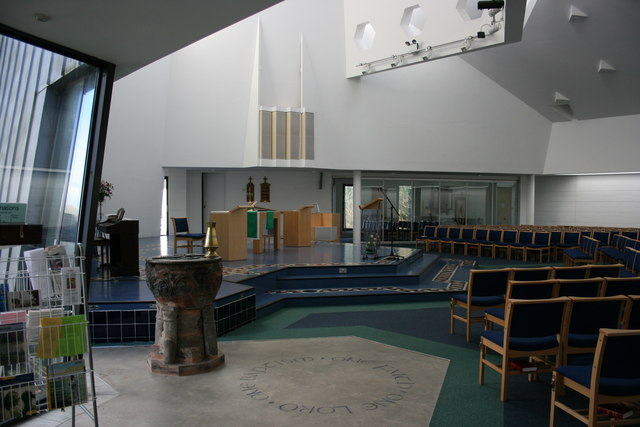 |
| This was not the hospital chapel, but it captures some of its qualities. |
My usual reaction to insipid chapels is annoyance, injury, loathing. Badly proportioned rooms offend my Euclidean mind. Misarranged and temporary furniture imply hastiness and miserliness. Ugly altars, ghastly stained glass, Picasso tabernacles, and Puritan decorations make me want to scream. All these, associated with twenty-minute Masses and liturgical “freedoms,” make me boil.
But as I prayed before Mass, I thought about this reaction. I recalled that I recently learned that there are laws prohibiting things like permanent furniture (e.g. pews) in some of these chapels.
I discovered this at Notre Dame when I was struck by their dedication to consistent architecture. ND’s newer buildings have very similar external architecture to older ones (high-pitch slate roofs, warm brick, stone molding, gothic arches, and statuary). However, chapels in the older buildings are charming, tiny versions of ND’s central gem, the Basilica of the Sacred Heart (below: the basilica's altar); in contrast, chapels in the newer buildings are variations on the insipid chapel. When I observed this to a fellow participant in the Vita Institute, I was told that chapels built into buildings designed for other purposes (e.g. office buildings, hospitals, or dormitories) are restricted. At any time, these chapels must be able to be deconstructed so that the room can used for another purpose. (We will not rant today about such laws; it’s off-topic and I don’t know enough about them.) Certainly this doesn’t excuse everything about these chapels, but it does give me pause.
 Once I had the occasion to reconsider my crusade against insipid chapels, I realized that they have their beauties. I saw an example in my high school experience of an ugly chapel that helped me grow in grace.
My high school had an insipid chapel (before it was converted into a math classroom). It was a small room and the long axis of the room was parallel to the altar. This meant people angled their bodies sharply to face the priest or the Eucharist. The tabernacle was an undecorated octagonal prism of whiteish marble that rose starkly from the ground to the far right of the altar. Above it (in the angled ceiling) was an awkwardly-placed skylight. The sanctuary lamp stood beside it, having nowhere else to hang or rest.
Once I had the occasion to reconsider my crusade against insipid chapels, I realized that they have their beauties. I saw an example in my high school experience of an ugly chapel that helped me grow in grace.
My high school had an insipid chapel (before it was converted into a math classroom). It was a small room and the long axis of the room was parallel to the altar. This meant people angled their bodies sharply to face the priest or the Eucharist. The tabernacle was an undecorated octagonal prism of whiteish marble that rose starkly from the ground to the far right of the altar. Above it (in the angled ceiling) was an awkwardly-placed skylight. The sanctuary lamp stood beside it, having nowhere else to hang or rest.Don’t groan yet! I had not yet experienced real architectural beauty, so I was pre-snobbery. Blissfully unimpeded by the architectural imperfections, I used to go to this chapel to pray the rosary in the mornings. I knelt in front of the chair immediately before the tabernacle, not more than three feet from our Lord.
My imagination transformed the scene. The monolithic tabernacle became the foot of the cross planted in the barren ground of Golgotha. The rest of the cross as well as Our Lord’s body was beyond my physical sight, lit up in sunlight and bathed in mystery. I could only see it in my mind’s eye. The sanctuary lamp, standing beside this cross and placed between me and Christ, became Our Lady. I began to understand the tilt of her head in icons, the place of our Mediatrix in our lives.
Remembering that insipid chapel, I realize something about my attitude toward all ugly chapels. I only stand to gain by receiving others’ works (like their chapels) with meekness.

However, my attitude of militant dislike or righteous whining may lose me graces, like the understandings I gained about Our Lady’s place in salvation history I received, praying in my high school chapel.
Monday, April 2, 2012
Beauty of Espousal to Christ
Quickie post before I buckle down to studying...just in case you think the exterior beauty of consecrated life does not exist (as I am tempted to when I see nuns in suits), think again. Today I found the website of the Adoratrices du Cœur Royal de Jésus-Christ Souverain Prêtre. And my mouth dropped open to see photos of our rich and ancient traditions exemplified as
- This sister professed temporary vows (scroll down and look at her face!) in 2011
- These two postulants became novices the same year
Friday, January 13, 2012
Veils
I just read a great post at Catholic Sistas about veiling. At TAC, perhaps 20% of female students veil. I began to wear one myself as a sophomore, but during the summer and Christmas holidays I got so many looks and felt so pressured by my parents that I stopped veiling at Mass. Only after Mass would I go to the day chapel, veil, and make my thanksgiving.
Over the summer, I lost my veil at one of the last daily Masses I attended before moving out. I have lost things before and benefited from discontinuing them for a time (I feel as though Our Lady almost took my Little Office book away when it was stressing me out). So, I reluctantly but peacefully stopped veiling.
I wish more parishes and women would take up this custom! It is an antidote to feminism—a mark of a woman's sacredness and likeness to Christ. (Sacred objects are covered, like chalices, tabernacles, altars, and priests. Sacred topics are the same way, and even people of civil importance are formally gowned.) My veil began as a mark of specialness, then humility, then a tool to create privacy in my soul during Mass. Finally, it became a sign of sweet submission, and exclusive belonging to Christ. For this reason, I look forward to taking it up if I am confirmed in my vocation to consecrated life.
For more on veiling, check out a comprehensive review of the custom by Fish Eaters. Then, enter this raffle to win a free veil.
Over the summer, I lost my veil at one of the last daily Masses I attended before moving out. I have lost things before and benefited from discontinuing them for a time (I feel as though Our Lady almost took my Little Office book away when it was stressing me out). So, I reluctantly but peacefully stopped veiling.

I wish more parishes and women would take up this custom! It is an antidote to feminism—a mark of a woman's sacredness and likeness to Christ. (Sacred objects are covered, like chalices, tabernacles, altars, and priests. Sacred topics are the same way, and even people of civil importance are formally gowned.) My veil began as a mark of specialness, then humility, then a tool to create privacy in my soul during Mass. Finally, it became a sign of sweet submission, and exclusive belonging to Christ. For this reason, I look forward to taking it up if I am confirmed in my vocation to consecrated life.
For more on veiling, check out a comprehensive review of the custom by Fish Eaters. Then, enter this raffle to win a free veil.
 |
| We veil Our Lord, we veil the altar servers, and we veil women (I see at least two). What an honor! Truly, women are treated as a glory. (1 Corinthians 11.) |
Sunday, August 21, 2011
At Knock: Our Lady of Silence - Vultus Christi
I enjoyed this article about Our Lady of Knock. One doesn't hear much about this apparition, but this message (holy silence gazing on God) is sorely needed for salvation. Mary teaches us this in the Gospels, and in this apparition she shows us again.
Subscribe to:
Posts (Atom)